Why Postgres Is Eating the Database Stack (Again) in 2026
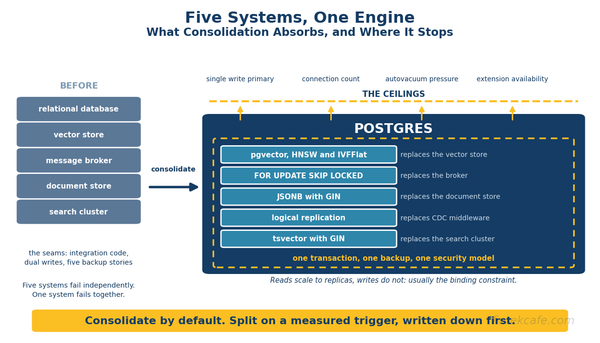
Postgres is winning workloads it had no business winning in 2020. A framework for CTOs evaluating data-platform consolidation around one engine in 2026.
Strategic intelligence across AI, infrastructure, payments, and technology leadership.
Postgres is winning workloads it had no business winning in 2020. A framework for CTOs evaluating data-platform consolidation around one engine in 2026.
Section 1033 sets the US open-banking trajectory through 2030. A framework for what it mandates and what it changes for banks, fintechs, and aggregators.
Per-token prices look comparable. They are not. Three hidden cost drivers reshape the real LLM inference economics for enterprise buyers in 2026.
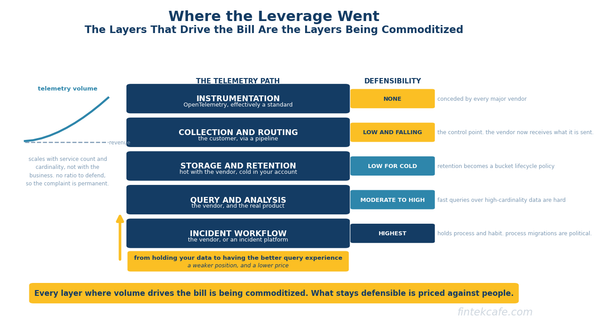
Observability spend now rivals compute at many fintech and SaaS firms. A framework for what drives the bill, the vendor landscape, and how to fix it.
BNPL was invisible to the bureaus. That invisibility is ending in 2026, and the repricing of the model is just beginning. Three structural shifts.
Three patterns compete for enterprise LLM budgets. A framework for fine-tuning, RAG, and long-context across cost, latency, refresh, and governance.
Confidential computing moved from PowerPoint to procurement in 2025. In 2026 the actual fintech use cases are showing up. A CISO and treasurer playbook.
The SWIFT MT to MX coexistence window closed November 2025. A framework for the bank tech-stack rewiring that follows through 2027.
AI agent frameworks demo well and break in production. Three structural failure modes, a comparison of LangGraph, CrewAI, AutoGen, and what to use instead.
Service mesh adoption stalled in 2023. In 2026 the picture is different. A framework for Istio vs Linkerd vs Cilium for financial workloads.
FedNow crossed 1,400 institutions but mid-sized banks have stalled. Three friction points explain why, and a 2026 decision framework for boards.
Retrieval-augmented generation is the dominant pattern in enterprise AI. A framework for how RAG works, what it costs, and where it quietly fails.
Secondary markets already price 2024-2025 fintech Series B rounds 30 to 50 percent below last paper. A founder's playbook for the next twelve months.
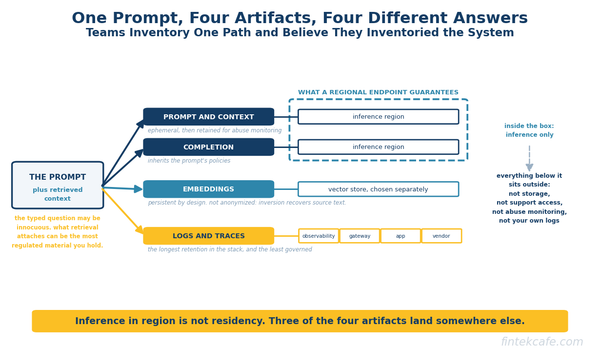
Edge computing for finance: the three workloads where low latency pays back the premium, the vendor comparison, and the decision tree to use in 2026.
Why most 2026 treasury AI pilots stall: bank-feed quality, the nine-month control review, and ROI measured against vendor demos rather than actuals.
How cross-border payments became real-time: SWIFT GPI, Wise, Ripple, and stablecoin corridors compared on speed, FX, and settlement risk across 2026.
Why most enterprise knowledge graph projects stall at six months: schema, ingestion, and consumer mismatch. The pattern top AI teams actually follow.
Vector search powers RAG and semantic retrieval. How embeddings, ANN indexes (HNSW, IVF, ScaNN), and hybrid search work, and when each beats keyword search.
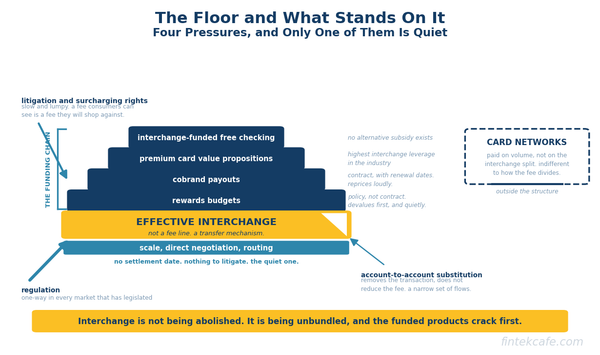
The interchange-only neobank is dead. Chime, Monzo, Revolut, and Nubank are converging on bank charters because durable revenue requires a balance sheet.
Corporate treasurers are running stablecoin pilots in 2026. A CFO framework for USDC, tokenized deposits, and where settlement risk really lives.
MongoDB, Elastic, and Redis each face a different 2026 squeeze: Postgres pgvector, OpenSearch maturity, and Valkey. Only one has a durable moat.
The $5 Trillion Infrastructure Nobody Talks About Every iPhone assembled in Zhengzhou, every container of Brazilian soybeans unloaded in Rotterdam, every batch of Vietnamese electronics shipped
The Problem With Waiting Two Weeks 59 million Americans do gig work. According to McKinsey's 2023 American Opportunity Survey, that's 36% of
Why Subscription Billing Is Harder Than It Looks "We just charge a card every month. How hard can it be?" That question has launched
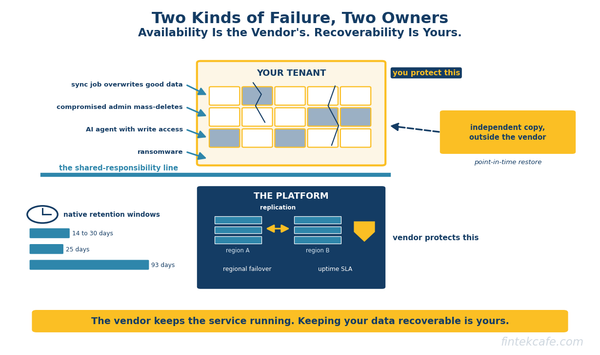
In January 2017, a GitLab engineer accidentally deleted 300 GB of production database data while trying to replicate data from production to a staging environment. GitLab
In 2023, Tobi Lütke - founder and CEO of Shopify - sent an internal memo telling his engineering team to stop building microservices and consolidate back
The question comes up in every board meeting at a data-driven company: why does the data team keep getting bigger? You hired four data scientists. Then
A service catalog is the precondition for every serious platform engineering effort. Why most IDPs stall without one, and a 90-day rollout plan.
Why CIOs in 2026 are quietly killing the AI pilots that marketing demanded. Four post-mortem patterns, the org dynamics, and which projects survive.
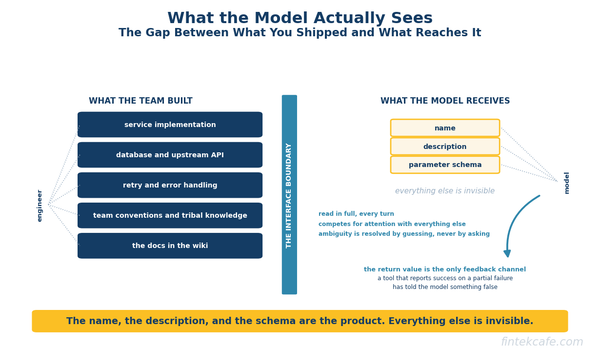
Model Context Protocol is becoming the USB-C of LLM tool integration. A framework for what MCP replaces, where it fits, and how to govern it.
The open table-format war ended in 2025. Lock-in moved up the stack to catalogs and engines. The four failure modes and a 2026 procurement checklist.
FedNow launched July 2023 as the Fed's instant answer to RTP. Three years in, adoption is real but stalling. Why mid-tier banks lag, what comes next.
Hyperscaler capex is running ahead of cloud revenue. Three scenarios for how the gap closes, and what enterprise AI buyers should demand in 2026.
Vector databases are the most over-purchased AI infrastructure of 2024-2025. Real scale thresholds, vendor tradeoffs, and a TCO model for three team sizes.
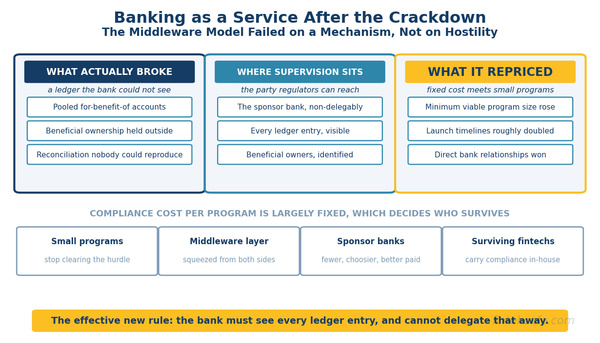
B2B SaaS vendors are quietly deleting embedded banking from their roadmaps. The economics never worked, and the regulators just made sure of it.
Most enterprise AI failures are eval failures, not model failures. Learn the three eval tiers, the golden-dataset problem, and an eval maturity model.
Most Internal Developer Platforms quietly fail. The four failure modes, what mature IDPs do differently, a maturity model, and a 90-day reset playbook.
ISO 20022 is the payments rails replacement that few outside operations discuss. The standard, the cutover, and what enterprises must do now.
Per-seat assumed humans were the unit of value. AI agents break that. Four emerging pricing models, who wins, and what buyers should demand.
Service mesh is one of the most over-bought infrastructure decisions of the last five years. A framework for when it pays off and when it does not.
Banks called stablecoins reckless for five years. JPM Coin, Citi Token Services, Project Agora: incumbents quietly built the rails themselves.
Agentic AI moves beyond chatbots to systems that plan and act. A framework for tiers, use cases, the four hard problems, and how to evaluate vendors.
Most enterprise RAG pipelines fail silently. Learn the four failure modes, evaluation methods that work, and when to use RAG vs fine-tuning vs agentic retrieval.
Centralized, embedded, or hybrid? Learn how to structure a modern data team with the right roles, reporting lines, and sizing for your company stage.
80% of embedded finance projects get quietly killed. The BaaS layer is consolidating, regulators are forcing reintermediation, and the unit economics never worked.
FinOps bridges finance and engineering for cloud cost management. Learn the three phases, unit economics, and when to hire vs buy a tool.
70-80% of fintech partnerships deliver less than 20% of projected revenue. The integration trap, incentive misalignment, and the partner manager anti-pattern explain why.
Learn why most AI Centers of Excellence fail and the operating model, staffing, and governance that make them work. Includes a 90-day kickoff plan.
The EU's DORA regulation is the most significant fintech regulatory shift since PSD2. Most companies aren't ready. Here's what it means and what to do about it.
Learn prompt engineering techniques that work for business tasks. Templates, chain-of-thought prompting, and real examples for strategy, analysis, and ops.
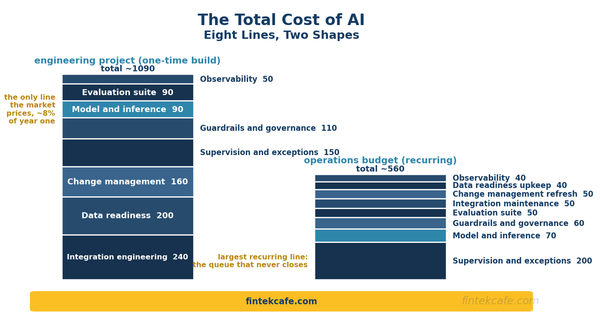
The hidden costs of building AI infrastructure in-house, from GPU economics to talent retention. What every executive needs to know before committing millions.
How VC funds raise money, pick investments, and make returns. Fund economics, term sheets, dilution, and what founders get wrong about fundraising.
Most companies claiming to be platforms with APIs are just vendors with a REST endpoint. Here's the difference and why it matters for your strategy.
Data lakehouses combine the best of data warehouses and data lakes. Learn the architecture, when to use one, and how Databricks and Snowflake compare.
Digital transformation failures aren't technology failures. They're change management failures. Here's where transformations actually die — and it's not the tech.
Most companies overspend 30-40% on cloud. Learn why your bill is too high and how to fix it with this executive guide to cloud cost optimization.
An opinionated playbook for new CTOs. Most fail because they change too much too fast. Here's the week-by-week approach that actually works.
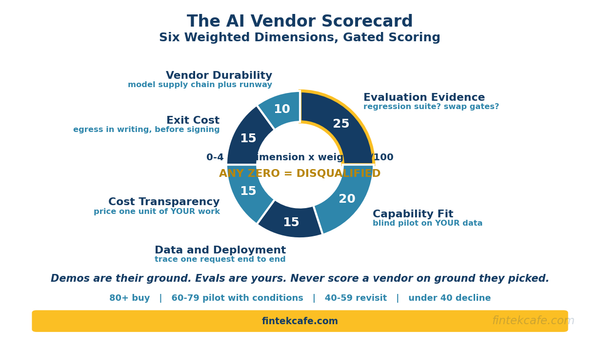
A 30-day framework for evaluating enterprise software. Includes vendor questions, red flags, negotiation tactics, and a total cost of ownership checklist.
Most enterprise AI vendors are selling snake oil. Here are the 5 lies they tell and the 3 technical questions that expose them instantly.
A step-by-step guide for CTOs and CIOs to present AI strategy to the board. Includes slide outlines, ROI frameworks, and common mistakes to avoid.
Open Banking promised a revolution. Adoption is low and APIs are fragmented. But the real winners are emerging in unexpected places.
A practical step-by-step framework for building an enterprise AI strategy, from maturity assessment to pilot selection, governance, and scaling.
87% of AI projects never reach production. The pilot-to-production gap isn't a technology problem. It's an organizational design failure.
What are CBDCs and how will they change banking? A complete guide to central bank digital currencies, from China's digital yuan to the EU's digital euro.
Per-seat pricing is dying, usage-based creates volatility, and most SaaS companies underprice by 30-50%. Pricing is the most underinvested function in tech.
What is cloud computing and why does it matter for your business? A plain-English guide to IaaS, PaaS, SaaS, cost models, migration, and security for executives.
A practical AI guide for CFOs. ROI frameworks, budget allocation, vendor evaluation, and why finance leaders who ignore AI will be replaced by those who don't.
What is the API economy? Learn how APIs power Stripe, Twilio, and Plaid, why API strategy matters for every business, and how to evaluate API partnerships.
The #1 reason enterprise AI fails is bad problem selection, not bad technology. Here's what successful deployments have in common and why most companies should buy, not build.
What is embedded finance and why are non-banks offering financial services? A complete guide to embedded payments, lending, insurance, and banking as a service.
Most companies overspend 30-40% on cloud. It's not an engineering problem. It's a strategy and governance failure that belongs in the C-suite.
What are AI agents and how do they differ from chatbots? A plain-English guide to AI agents for business leaders, with real use cases, risks, and evaluation criteria.
A practical framework for evaluating enterprise software when you're not technical. The 5 questions, red flags, and negotiation tactics every executive needs.
Technical debt isn't an engineering complaint — it's a capital allocation failure. Here's how executives should think about it.
A plain-English explanation of how LLMs like ChatGPT and Claude work. Written for executives who use AI daily but want to understand the technology.
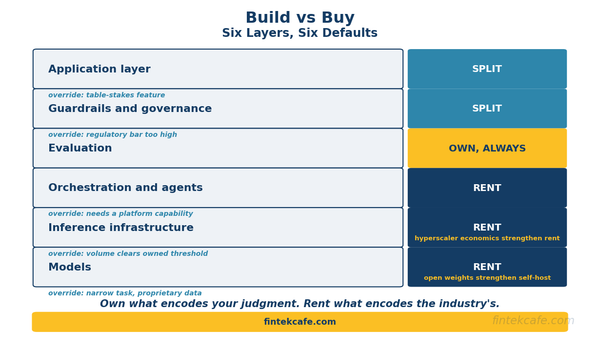
The standard build-vs-buy framework misses what matters most. Here's how executives actually make this decision — and a better way.
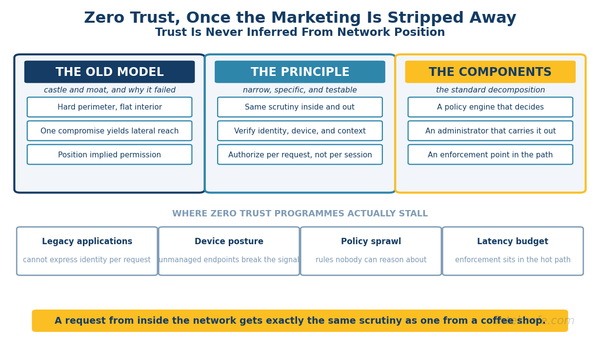
Zero trust security explained for business leaders. What it is, why it matters, and what you need to know without the technical jargon.
The AI agent gold rush mirrors SaaS in 2010. Most will fail for the same reasons. Here's what separates the winners from the wrappers.
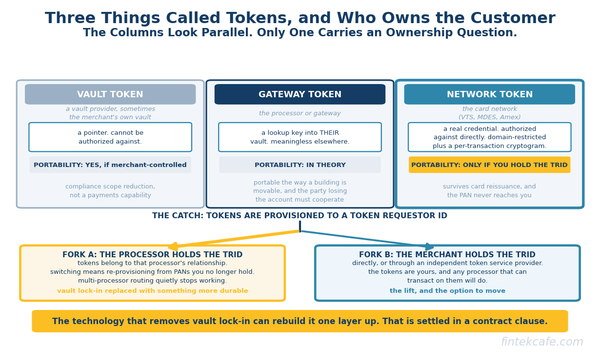
How digital wallets work, including Apple Pay, Google Pay, and Samsung Pay. Tokenization, NFC, security, merchant adoption, and what's next for mobile payments.
Apple Card's death wasn't about Goldman's losses. It was Apple realizing that being a bank is a terrible business for a tech company. The lesson is bigger than Apple.
How to get into fintech in 2026. Key roles, salary ranges, skills needed, top companies hiring, and how to break in from banking, consulting, or tech.
AI won't touch the CFO's judgment calls. But 80% of the work finance teams do today will be automated in 3-5 years. Here's what that means for your org.
Embedded finance explained for business leaders. How it works, real examples like Shopify Capital and Uber, the BaaS technology stack, and what it means for your business.
Stripe isn't a payment processor anymore. It's building the entire financial infrastructure layer, and that should terrify every bank executive reading this.
A balanced comparison of fintech vs traditional banking across technology, costs, regulation, innovation speed, and customer experience. Written for executives.
While fintech chases consumer payments, corporate treasury runs on spreadsheets. This $400B market is stuck in 1995. Here's who will crack it.
How do fintech companies actually make money? We break down 9 fintech business models with real examples from Stripe, Robinhood, Plaid, SoFi, and more.
The standalone neobank model is dead. The future of banking isn't a better bank. It's banking embedded where people already are.
A clear explanation of how payment gateways work, the full online payment flow from checkout to settlement, and how Stripe, Adyen, and Braintree compare.
The VC playbook is destroying fintech companies. The winners in 2026 are boring, profitable, and capital-light. Here's why.
Most AI strategies fail before they start. Not because the technology doesn't work. Because the organization isn't ready for it. McKinsey'
In 2023, the CFPB sent a clear message to every financial institution using AI for credit decisions: your algorithm is not above the law. Circular 2022-03
Plug-and-play ROI calculator for digital transformation initiatives. Input costs and expected benefits to generate board-ready projections with payback period, NPV, and IRR.
Three industry-standard prioritization frameworks (RICE, WSJF, MoSCoW) in a single spreadsheet with auto-calculated scores and stakeholder input aggregation.
A structured decision framework to evaluate whether to build in-house, buy off-the-shelf, or partner with a vendor. Includes weighted scoring matrix and board-ready summary.
Deep analysis across the systems, strategies, and economics that shape modern technology.
Premium Members Get: Exclusive deep-dive research · Architecture playbooks · Executive briefings · Full archive access