
The Interchange Floor Is Cracking, and Card Economics Do Not Survive It Intact
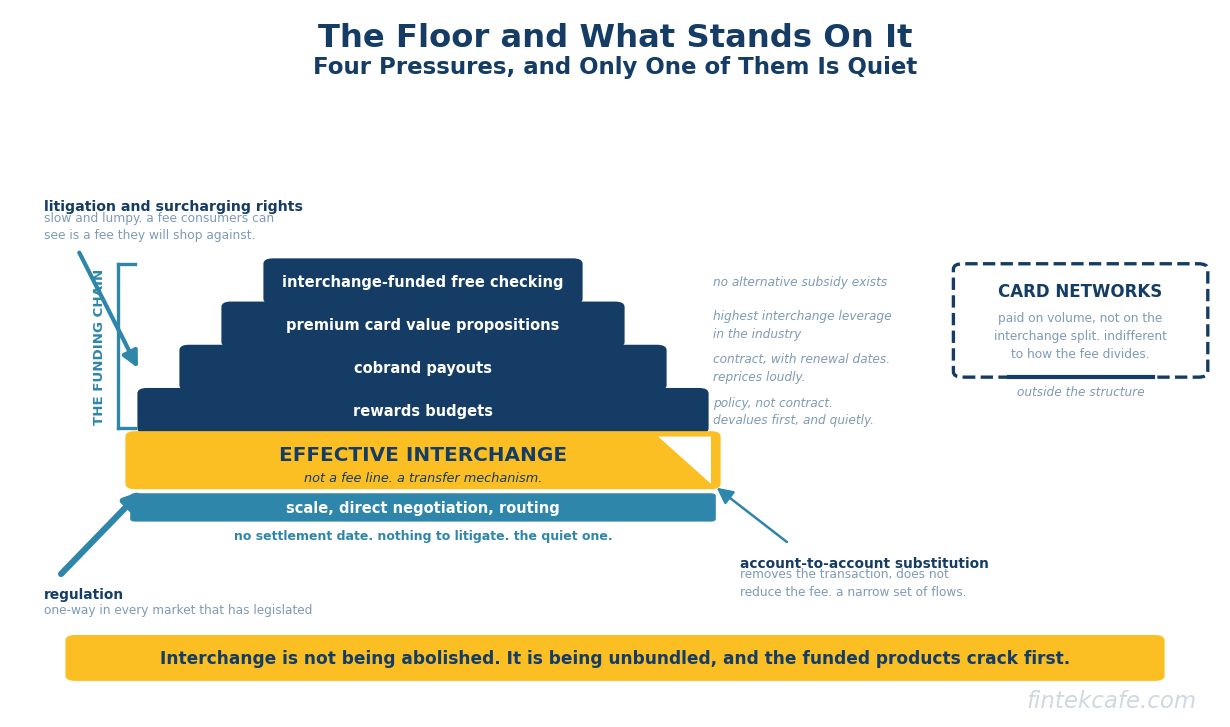
Every consumer-facing card economy in the world rests on one number staying roughly where it is. In the United States that number is an effective credit interchange rate between one and a half and just over two percent of the transaction, higher on premium and rewards products, and it funds the entire visible consumer proposition: the points, the lounge access, the cash back, the free checking account, the cobrand payout a retailer books as revenue rather than as marketing cost.
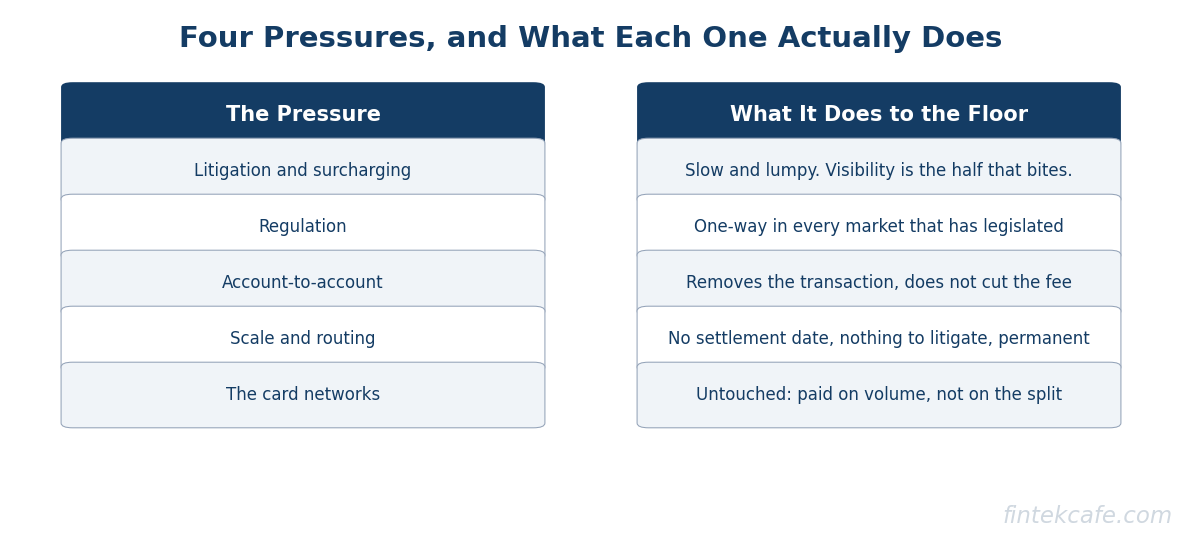
That number is now under pressure from four directions at once, and the pressures are not the same kind of thing.
The thesis is narrower than the usual prediction and more uncomfortable. Interchange is not being abolished. It is being unbundled: pulled apart into a negotiated component for the largest merchants, a visibly surcharged component at the point of sale, a regulated component in an expanding set of jurisdictions, and a substituted component in the categories where bank rails genuinely work. The losers are not the networks, who are paid on volume rather than on the interchange split and keep getting paid whichever way the fee divides. The losers are the issuers, and the fintechs built on issuer economics, whose product architecture is funded by a fee that is becoming negotiable.
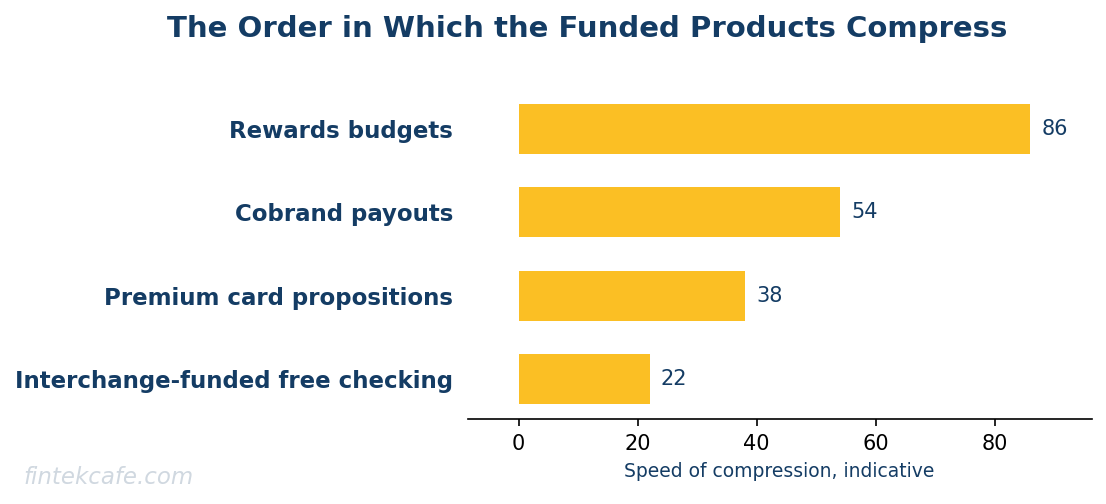
The part almost nobody traces is what happens next. Interchange does not fund a margin line. It funds a chain: rewards budgets, cobrand payouts, premium card value propositions, and the deposit products that were never profitable on their own. Compress the fee and the chain compresses in order, and the order is predictable.
Interchange Is a Funding Mechanism Wearing a Fee's Clothing
Interchange is the per-transaction fee the merchant's acquirer pays the cardholder's issuing bank. The network sets the rate schedule, the issuer collects the money, the merchant bears it inside a blended discount rate, and the network takes a separate and much smaller assessment. On a one hundred dollar US credit purchase the issuer typically keeps roughly one dollar sixty-five to two dollars twenty depending on card type, the network takes about a dime, and the acquirer and processor keep the rest of the blended rate. The mechanics are set out in the explainer on how interchange fees actually work and who pays them.
The strategically important fact is not the size of the fee but what it does. Interchange is the transfer mechanism that lets an issuer give away the consumer product. A card paying two percent back is not a product with a margin, it is a claim on interchange, priced slightly below the interchange the card generates plus revolver interest plus annual fees. Free checking at an interchange-funded neobank is the same structure running through debit.
Which is why the standard framing, that interchange is a cost merchants complain about, misses the exposure. The most leveraged party is not the merchant paying the fee. It is the issuer who has already spent it on a rewards obligation running for the life of the customer relationship while the funding arrives transaction by transaction. Issuers are short interchange the way an insurer is short claims: the liability is committed and the funding is not.
This is a Premium Article
Sign up for a Premium membership to read this article and get full access to strategic intelligence on technology and business.
Already a member? Sign in
Related Articles
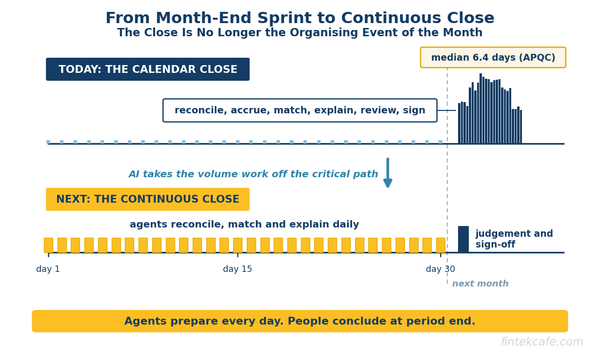
The Monthly Close Is Becoming Continuous, and the Finance Calendar Will Not Survive It
AI is taking the bottleneck work out of the month-end close. The close becomes continuous with a short sign-off, and finance, audit and the board change.
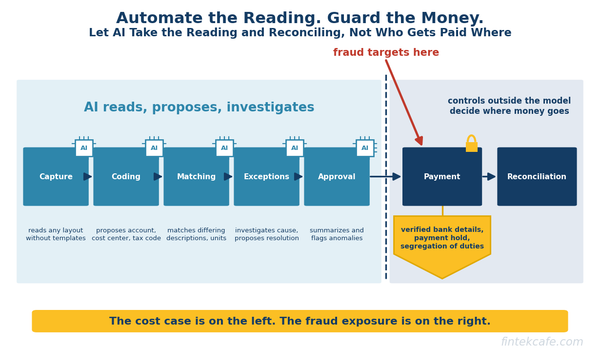
Accounts Payable Automation: What AI Can Actually Take Over in Invoice-to-Pay
What AI can take over in accounts payable, step by step from capture to payment, where the fraud risk grows, and which controls must stay outside the model.
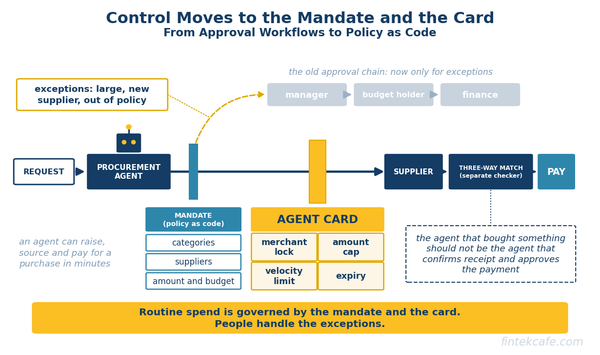
Procurement Is Where Agents Will Spend the Company's Money First
The first agents trusted with company money will buy for the enterprise. Control moves from approval chains to policy as code and card-level limits.