
The Total Cost of AI: A Framework for Pricing an AI Initiative End to End
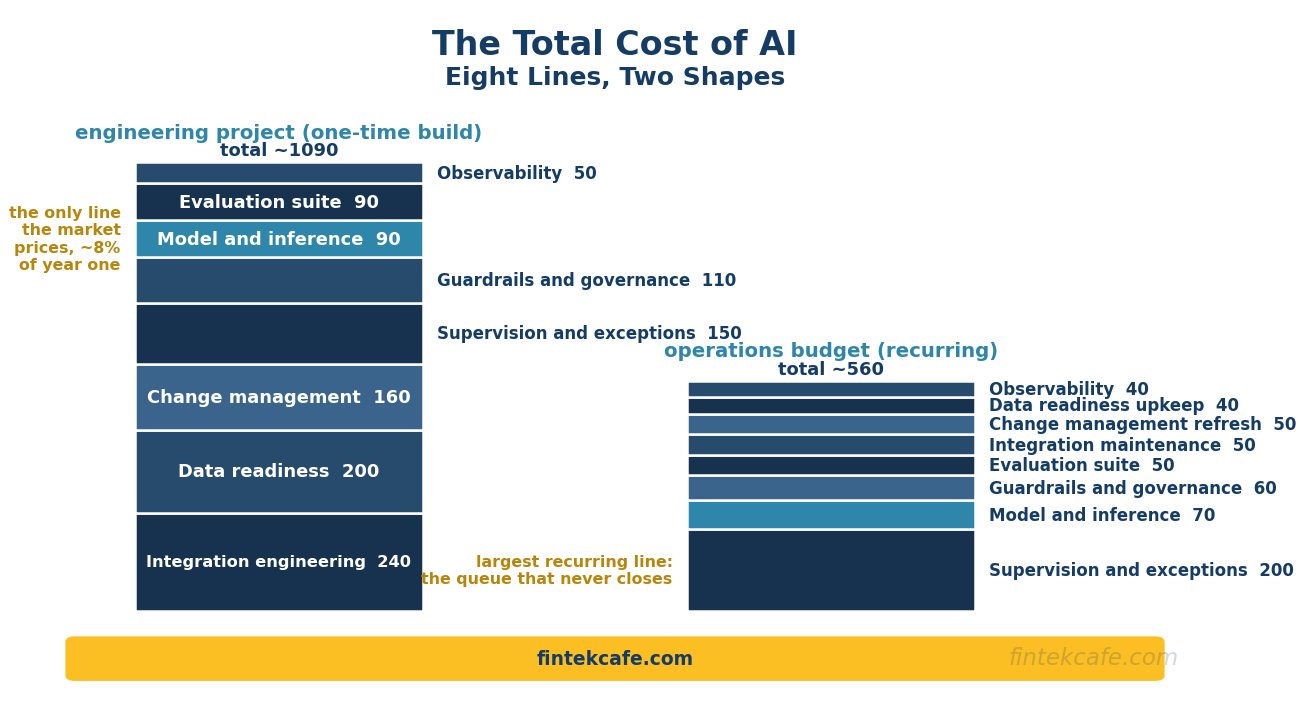
The total cost of an enterprise AI initiative is eight lines, and only one of them is the model: model and inference cost (the tokens, the licenses, the serving infrastructure), data readiness (making source data retrievable, clean, and permissioned), the evaluation suite (the golden datasets and scoring harness that make quality measurable), guardrails and governance (the safety layer plus the policy, review, and audit apparatus around it), integration engineering (wiring the AI into the systems and workflows where the work actually happens), supervision and exception handling (the humans who approve, correct, and catch what the AI gets wrong, forever), observability (tracing, monitoring, and cost attribution for every request), and change management (training, workflow redesign, and the adoption push that decides utilization). The one-sentence estimation rule that follows from a decade of enterprise software economics and the early cohort of production AI deployments: inference is rarely the majority cost at enterprise scale; the human-side lines, supervision, integration, and change management, dominate the true bill, and they are precisely the lines executives forget to price. A leadership team that prices only the model is estimating somewhere between a fifth and a third of the real number. Everything below expands the taxonomy: what drives each line, a realistic share of total cost for each, the estimation question an executive should ask, a worked example, and a build-buy-wait decision table.
Key Takeaways
- Enterprise AI cost is eight lines: model and inference, data readiness, evaluation, guardrails and governance, integration engineering, supervision and exception handling, observability, and change management. Pricing only the first is the single most common budgeting failure.
- Inference is the line that keeps falling and the only line the market talks about. Open-weight releases in the current cycle keep compressing it further while leaving the other seven lines untouched, which means the model share of total cost shrinks every quarter.
- The human-side lines dominate at steady state: supervision and exception handling is the largest recurring cost in most deployed systems, and change management decides whether the initiative produces any value at all.
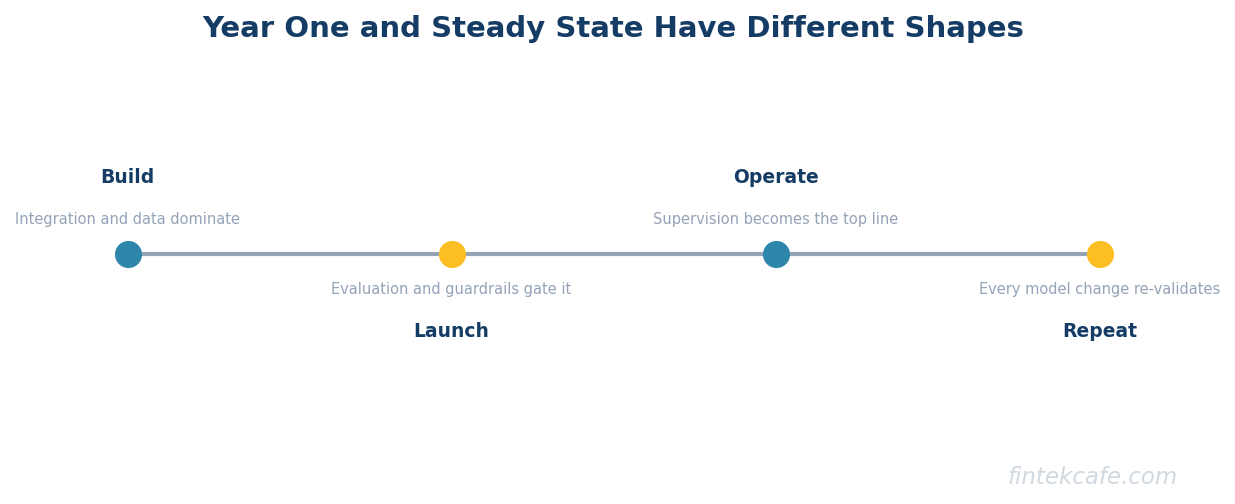
- Year one and steady state have different shapes. Year one is dominated by one-time engineering (data readiness, integration, evaluation build); steady state is dominated by recurring human cost (supervision, governance, model-change re-validation).
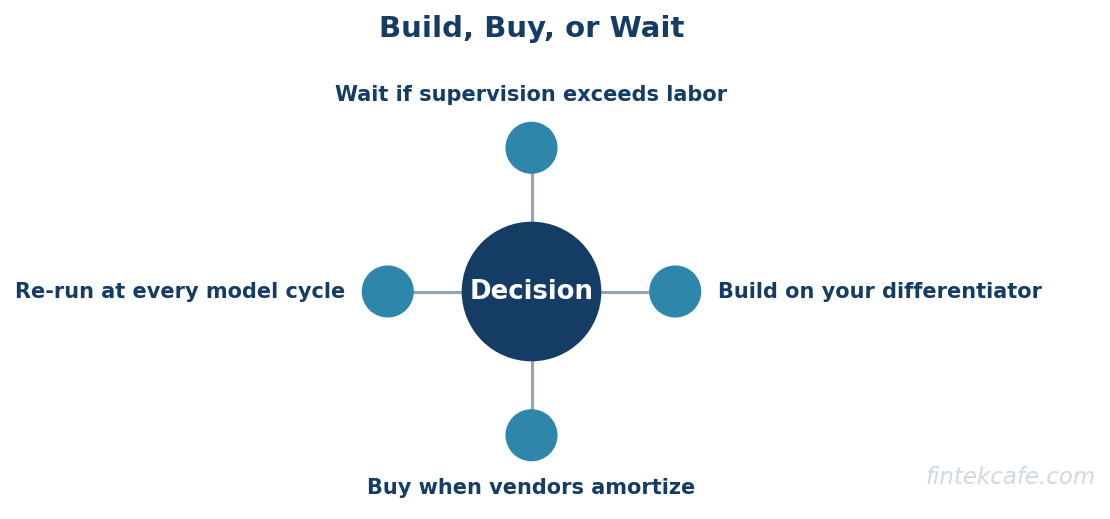
- The build-buy-wait decision falls out of the cost lines: buy when a vendor amortizes the expensive lines across many customers, build when your data or workflow is the differentiator, wait only when the supervision cost of current model quality exceeds the labor it replaces.
Why the Model Is the Cheapest Part
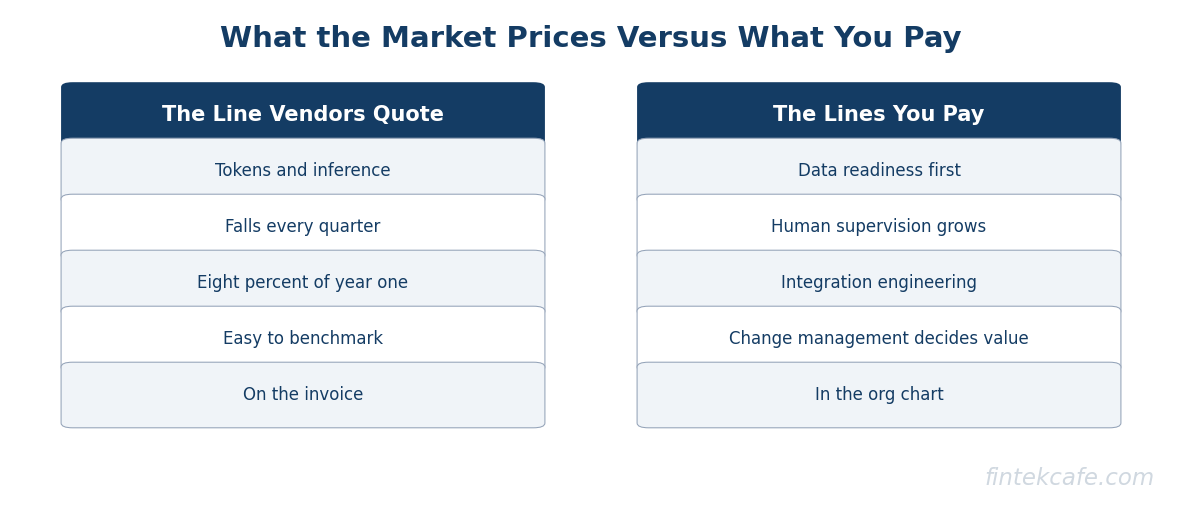
The pricing conversation around enterprise AI is stuck on the one line whose price is public. Token prices are printed on vendor pages, benchmark-per-dollar charts circulate weekly, and procurement teams negotiate model contracts as if they were negotiating the initiative. Meanwhile the actual budget disappears into lines that never appear on a pricing page: the four months of data cleanup before retrieval worked, the evaluation harness nobody scoped, the queue of exceptions a support agent still has to clear every morning, and the retraining of a thousand employees whose workflow just changed.
The evidence for the rule is convergent. MIT's Project NANDA reported in 2025 that roughly 95 percent of enterprise generative AI pilots showed no measurable profit-and-loss impact, and the dominant causes were not model quality but integration and workflow absorption, the unpriced lines. Gartner's 2025 projection that over 40 percent of agentic AI projects would be canceled by the end of 2027 cited escalating costs and unclear value: cost surprises, not model failures. And the direction of travel is one-way: during the week of July 20, the open-weight release wave continued with Thinking Machines' Inkling and Moonshot's Kimi K3, each landing frontier-adjacent capability at a fraction of prior serving cost. Every such release compresses the inference line further and leaves the other seven lines exactly where they were. The framework exists because the cheap line keeps getting cheaper while the expensive lines compound, and a budget built on the public line is a budget built on the wrong line.
The Eight Cost Lines
Each line below states what drives it, a realistic range as a share of total year-one cost (sourced where public data exists, labeled heuristic where the honest basis is practitioner consensus), and the one question an executive should ask before approving the estimate.
Line 1: Model and Inference
The tokens, the API contracts or GPU serving, and the routing infrastructure that picks which model handles which request. Driven by request volume, context length, and model tier. Realistic share: ten to twenty five percent of year-one cost at enterprise scale, heuristic, and falling; deployments that report higher shares are usually early-stage or unusually inference-heavy. The unit economics of tokens and context are covered in the hidden costs of LLM inference, and the cheapest lever is almost never a cheaper contract: it is routing and model distillation, which trades a one-time training investment for a permanently lower serving bill. The question to ask: what happens to this line if we route eighty percent of requests to a model one tier smaller, and what does that routing cost us in quality?
Line 2: Data Readiness
Making the organization's data retrievable, clean, current, and permission-aware, because the AI answers from what it can reach, and most enterprise data is not ready to be reached. Driven by source-system count, data quality debt, and access-control complexity. Realistic share: fifteen to thirty percent of year-one cost, heuristic, front-loaded, and the most commonly underestimated line in RAG-shaped initiatives. The question to ask: which specific systems must the AI read, and who has personally verified the state of the data inside them rather than the state of the architecture diagram?
Line 3: The Evaluation Suite
The golden datasets, scoring functions, and regression harness that turn quality from a demo impression into a number, built along the lines of what AI evals are and why executives should care. Driven by task count and the cost of expert-labeled examples. Realistic share: five to ten percent of year-one cost, heuristic, plus a permanent tail, because every model swap and prompt change re-runs it. Teams that skip this line do not save it; they pay it later as production incidents. The question to ask: before we ship, what number tells us the system got worse, and who owns keeping that number honest?
Line 4: Guardrails and Governance
The runtime safety layer, input filtering, output validation, permission enforcement, plus the human apparatus around it: policy, legal review, audit trails, and compliance mapping. Driven by regulatory exposure and the blast radius of a wrong answer. Realistic share: five to fifteen percent of year-one cost, heuristic, with the range set almost entirely by industry; a bank prices this line several multiples above a media company. The readiness gates in the AI agent readiness maturity model are effectively this line's checklist. The question to ask: what is the most expensive single wrong action this system could take, and what stands between the model and that action?
Line 5: Integration Engineering
Wiring the AI into the systems where work happens: the CRM, the ticketing queue, the codebase, the approval flow. Driven by the number and age of touched systems. Realistic share: fifteen to twenty five percent of year-one cost, heuristic, and the line with the strongest evidence behind its underestimation: the integration tax is the same force documented across the enterprise AI stack, where the model is one layer of eight and the wiring is most of the engineering. The question to ask: how many systems does the workflow touch end to end, and which of them has an API that was actually designed to be called?
Line 6: Supervision and Exception Handling
The humans who review AI output, approve consequential actions, correct errors, and absorb the cases the AI cannot handle. Driven by volume, accuracy, and the cost of an uncaught error. Realistic share: ten to twenty percent of year-one cost but the largest recurring line at steady state, heuristic, and the line that decides whether the economics work at all: an agent that resolves seventy percent of cases autonomously did not eliminate the support team, it converted them into a smaller, more senior exception desk that must be staffed forever. The question to ask: at the measured accuracy rate, how many human hours per week does review and exception handling consume, and does that number still clear the business case?
Line 7: Observability
Tracing every request end to end, monitoring quality and drift in production, and attributing cost per feature and team, the discipline detailed in the LLM observability and monitoring guide. Driven by request volume and stack complexity. Realistic share: three to eight percent of year-one cost, heuristic, and the cheapest insurance in the framework: it is the line that makes every other line's number verifiable, and it is how the FinOps practice extends to AI workloads, per the FinOps guide for finance and technology leaders. The question to ask: when a user reports a bad answer next quarter, can we reproduce exactly what the system saw and spent, or will we be patching blind?
Line 8: Change Management
Training the people whose work changes, redesigning the workflows the AI now sits inside, and driving the adoption that converts capability into utilization. Driven by headcount touched and workflow depth. Realistic share: ten to twenty percent of year-one cost, and the public benchmarks agree with the heuristic here: decades of enterprise-transformation research, from BCG's long-standing finding that the majority of digital-transformation spend belongs on people and process to the seventy-percent-of-effort rule of thumb its AI practice publishes, put the human-absorption share at half or more of total effort. An initiative that prices change management at zero is pricing utilization at zero. The question to ask: whose daily work changes, who tells them, who trains them, and what does the workflow look like on the day the AI is down?
A Worked Example: Support Automation at Mid-Market Scale
The shape matters more than the figures, so the table prices a representative initiative: a support-automation agent at a mid-market software company handling roughly fifty thousand conversations a month, resolving seventy percent autonomously at steady state, with all amounts in words and rounded deliberately.
| Cost line | Year one | Steady state (annual) | Shape |
|---|---|---|---|
| Model and inference | Ninety thousand | Seventy thousand, falling with each routing and distillation pass | Recurring, compressing |
| Data readiness | Two hundred thousand | Forty thousand upkeep | Front-loaded, one-time bulk |
| Evaluation suite | Ninety thousand | Fifty thousand, spiking at every model change | Build once, re-run forever |
| Guardrails and governance | One hundred ten thousand | Sixty thousand | Front-loaded policy, recurring review |
| Integration engineering | Two hundred forty thousand | Fifty thousand maintenance | Front-loaded, one-time bulk |
| Supervision and exceptions | One hundred fifty thousand | Two hundred thousand, scaling with volume | Recurring, the largest steady-state line |
| Observability | Fifty thousand | Forty thousand | Recurring, flat |
| Change management | One hundred sixty thousand | Fifty thousand for refreshers and workflow drift | Front-loaded, never zero |
| Total | One million ninety thousand | Five hundred sixty thousand | Model line is eight percent of year one |
Two readings of the table are the entire framework. First, the model line is under a tenth of year-one cost, which is why a cheaper model, even a free one, moves the total far less than executives expect: cut inference by half and year one falls by about four percent. Second, the year-one and steady-state shapes are different businesses: year one is an engineering project dominated by one-time build (data, integration, change management), while steady state is an operations budget dominated by supervision, and the initiative is only sound if the steady-state line beats the labor and error cost it displaced.
The Build, Buy, or Wait Decision
The cost lines convert directly into the sourcing decision, because build, buy, and wait allocate the same eight lines differently. Buying moves data readiness, integration, evaluation, and observability partially onto the vendor, priced into the subscription and amortized across the vendor's customer base; the diligence discipline for testing whether a vendor genuinely absorbs those lines is the AI vendor evaluation framework. Building keeps every line in-house in exchange for owning the differentiation. Waiting prices the option value of a falling inference line against the compounding cost of the lines that do not fall.
| Signal | Buy | Build | Wait |
|---|---|---|---|
| Workflow is common across your industry | Yes: the vendor amortizes integration and evals across many customers | No: you would be rebuilding a commodity at retail cost | No: waiting forfeits a proven saving |
| Your data or workflow is the differentiator | No: a shared product levels your edge | Yes: the expensive lines are also the moat | No |
| Model quality is the binding constraint | No: a vendor cannot fix it either | No | Yes: supervision cost at current accuracy exceeds the labor displaced; re-test every quarter |
| Governance exposure is extreme | Partially: vendor certifications help, accountability does not transfer | Yes, when auditability requires owning the stack | Sometimes: regulatory clarity may be the thing worth waiting for |
| Engineering capacity is scarce | Yes | No | Waiting does not create capacity; buy instead |
The wait column deserves the honesty the market rarely gives it. Waiting is only rational when the supervision line is the blocker, because that is the one line falling model costs and rising model quality genuinely shrink. Waiting because inference feels expensive is backwards: it is already the smallest major line, and the seven lines that dominate the bill, data readiness above all, can be built while waiting, which converts the wait into a head start.
Where the Ranges Come From, and How Much to Trust Them
A framework that quotes ranges owes the reader its epistemics. The inference share is the best-evidenced line, because token pricing is public and deployment telemetry is widely reported; the ten to twenty five percent range reflects mid-scale enterprise deployments and shifts down as volume grows and routing matures. The change-management share rests on the deepest evidence base, two decades of digital-transformation research converging on people and process as the majority of effort. The remaining lines are labeled heuristic deliberately: they synthesize practitioner consensus from the early production-AI cohort rather than audited data, and honest uncertainty on each is plus or minus half the stated range. What the ranges are for is not precision, it is proportion: they force every line to a number so that no line can hide at zero, and they make the estimate falsifiable, which a blank line never is. As deployments mature and FinOps-grade attribution reaches AI spend, the heuristic lines will firm up; until then, treat the ranges as priors to be updated by your own observability data, not as benchmarks to be defended.
How to Use the Framework
Price all eight lines before approving any AI initiative, with three disciplines. First, demand a number for every line, even a rough one: a line priced at zero is not an estimate, it is an assumption, and the supervision and change-management lines priced at zero are how ninety-five percent of pilots produce no measurable impact. Second, price year one and steady state separately, because the shapes differ and the steady-state number is the one the business case actually rests on. Third, re-price quarterly: the inference line falls with every release cycle, the supervision line falls with measured accuracy, and the decision that was wait can become build in two quarters. The organizations that get AI economics right are not the ones that negotiated the best token price. They are the ones that knew, before the first invoice, that the token price was never the bill.
FAQ
What share of enterprise AI cost is the model itself?
At enterprise scale, typically ten to twenty five percent of year-one cost and shrinking, under a tenth in integration-heavy deployments like the worked example above. The share falls every release cycle as open-weight and distilled models compress serving costs while the human-side lines stay fixed.
What is the most underestimated cost line?
Supervision and exception handling. It is small in the pilot, when volumes are low and enthusiasm is high, and it becomes the largest recurring line at steady state, because every percentage point short of perfect accuracy converts into a permanent human queue. Data readiness is the most underestimated one-time line.
Does a free or open-weight model change the framework?
It compresses one line out of eight. A free model still requires data readiness, evaluation, guardrails, integration, supervision, observability, and change management, and it typically raises the integration and observability lines because serving becomes your problem. Open weights are a lever on the smallest major line, not a discount on the initiative.
How do falling model prices affect the build-buy-wait decision?
They strengthen build and buy, not wait. The falling line was never the bottleneck, and the lines that gate value, data readiness and integration, reward starting early. Waiting is only rational when supervision cost at current model accuracy exceeds the labor displaced, and that test should be re-run quarterly.
Who should own the AI TCO estimate?
Finance and engineering jointly, under the same FinOps discipline that governs cloud spend: engineering owns the technical lines, finance owns attribution and the steady-state model, and the estimate is re-priced quarterly against measured usage rather than defended annually against a plan.
Related Articles
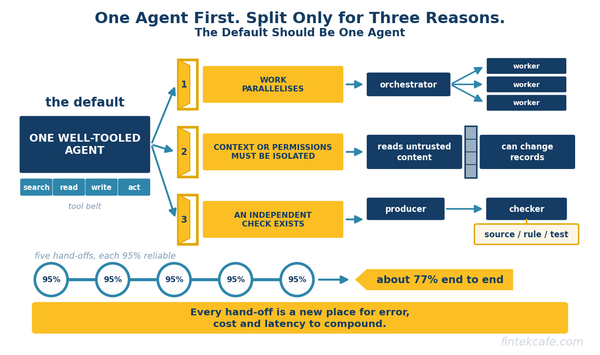
Multi-Agent Systems: When Splitting Work Across Agents Helps, and When It Multiplies Failure
Most tasks run better on one well-tooled agent. Multi-agent systems pay off only for parallel work, isolated context or independent checks.
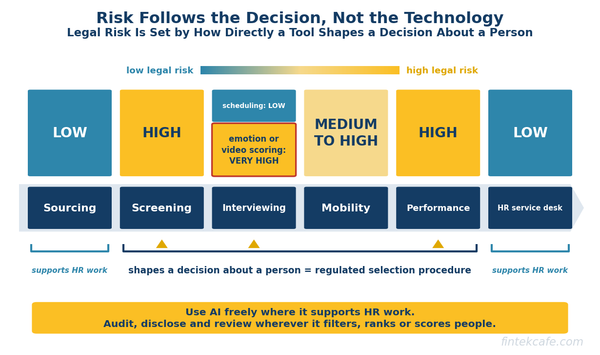
AI in Hiring and HR: Where It Helps, and Where the Legal Risk Sits
Where AI helps in hiring and HR, where legal risk concentrates, what NYC, the EU, Colorado, Illinois and California require, and which controls hold up.
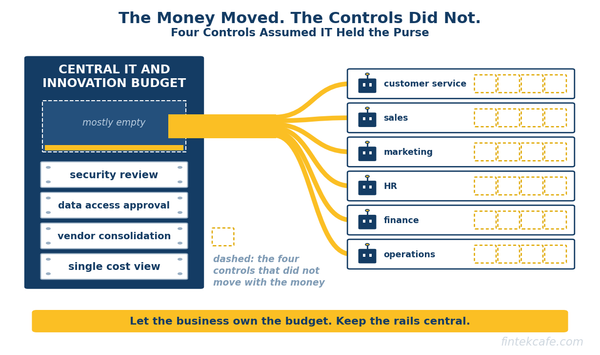
The AI Budget Is Moving From IT to the Business Lines, and Governance Has Not Followed
AI spend is moving from central IT to business lines. That ties cost to outcomes but breaks controls built for an IT-held purse. The model that works.