
Banking-as-a-Service Economics: Who Actually Makes Money
Every software company eventually gets the same pitch. Embed a bank account, issue a card, originate a loan, and turn a product that charges a subscription into one that earns on every transaction the customer makes. Banking-as-a-service vendors package the regulatory plumbing, the sponsor-bank relationship, and the ledger into an API, and the deck makes the math look irresistible: interchange on card spend, a cut of deposits, fees on payments, all flowing to a brand that never had to charter a bank. It reads like free margin bolted onto an existing customer base.
The contrarian read, and the one the last two years of consent orders and middleware failures have confirmed, is that the economics are both thinner and more fragile than the pitch suggests, and the money does not pool where founders assume it will. The brand sees the gross interchange number and models it as revenue. What actually reaches the brand is a residual, after the sponsor bank, the middleware, the card network, and the program's own compliance cost have each taken their layer. The durable profit in this stack sits with the parties that carry the balance sheet and the regulatory liability, not with the parties that own the customer interface, and that is the opposite of how most embedded-finance business cases are written.
This matters because the assumption that embedded banking is high-margin and low-risk is driving a wave of product decisions that will not survive contact with the unit economics. What follows is the actual margin stack from sponsor bank to brand, who is left holding the liability when a program breaks, why the post-Synapse reckoning repriced the entire layer, where the genuinely durable profit lives, and how to tell an embedded-finance feature that pays for its compliance cost from one that is simply expensive decoration.
The Margin Stack, Traced From the Bottom
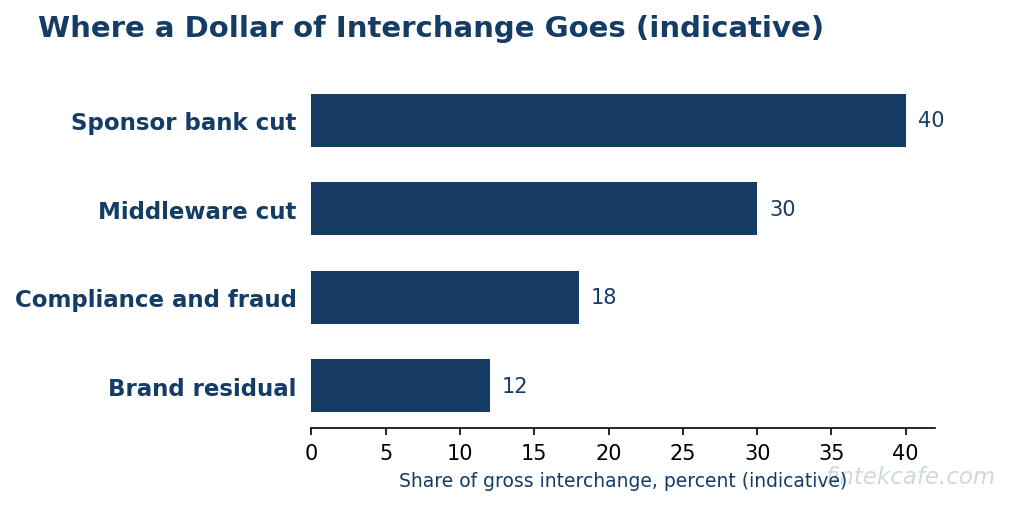
To see why the brand earns less than the deck implies, follow a single dollar of interchange from the moment a customer swipes a card to the moment a sliver of it lands in the brand's revenue.
At the bottom sits the sponsor bank. Embedded card programs almost always run through a small, state-chartered bank, and the reason is regulatory arbitrage that is entirely legal and entirely deliberate. Banks below ten billion in assets are exempt from the Durbin Amendment's interchange cap, so a debit card issued through a small sponsor bank earns materially more interchange than the same card issued by a large bank. This single fact explains the whole shape of the industry: the issuing layer is dominated by small banks precisely because their size is the asset being monetized. The sponsor bank holds the charter, holds the deposits, owns the regulatory relationship with the card network, and bears the ultimate compliance liability. For that it takes the first and most secure cut.
Above the bank sits the middleware, the BaaS platform that turns the bank's capabilities into an API. It abstracts the ledger, the card issuance, the compliance workflows, and the bank's archaic systems into something a software team can integrate in weeks rather than years. The middleware takes its margin in a mix of per-account fees, per-transaction fees, and a share of interchange, and its pitch to the brand is convenience: skip the eighteen-month bank integration and the compliance build, and pay for the shortcut.
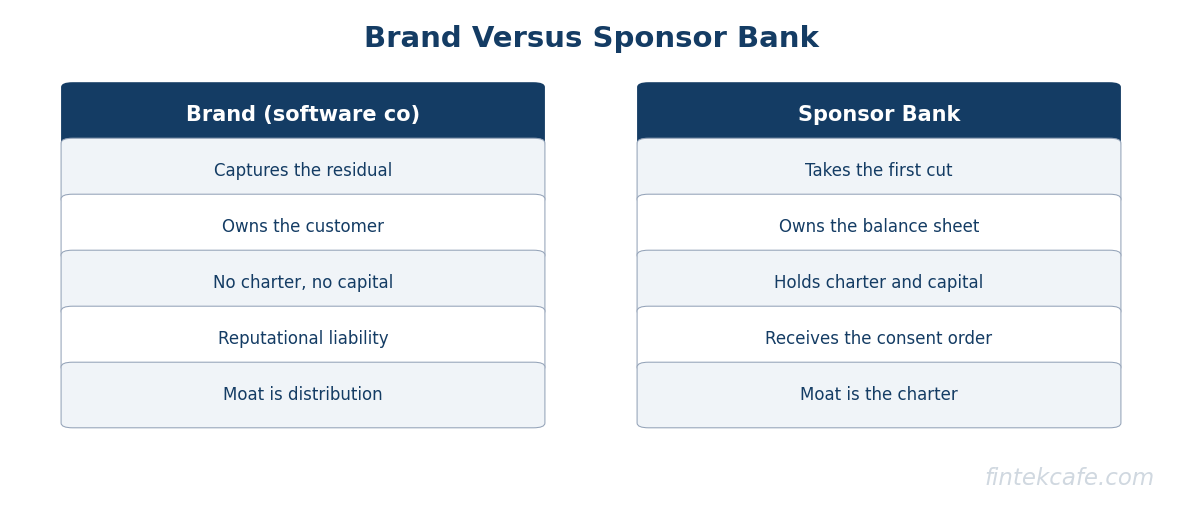
At the top sits the brand, the software company whose customers actually see and use the product. The brand owns the interface, the customer relationship, and the distribution. What it does not own is the charter or the balance sheet, which means it captures whatever interchange and deposit economics remain after the two layers beneath it have been paid. On a typical program, the headline interchange rate is not the brand's revenue. The brand's revenue is the residual, and the residual is thin enough that the program only works at real scale or when attached to a customer who transacts heavily.
The error in most embedded-finance models is to book the gross interchange as the opportunity and treat the sponsor-bank and middleware cuts as a small toll. In reality those cuts, plus the program's own compliance and fraud cost, are the larger part of the economics. The structural shakeout this produced across the sector, traced in the analysis of the embedded-finance shakeout, was the market repricing that residual downward as the hidden costs became visible.
This is a Premium Article
Sign up for a Premium membership to read this article and get full access to strategic intelligence on technology and business.
Already a member? Sign in
Related Articles
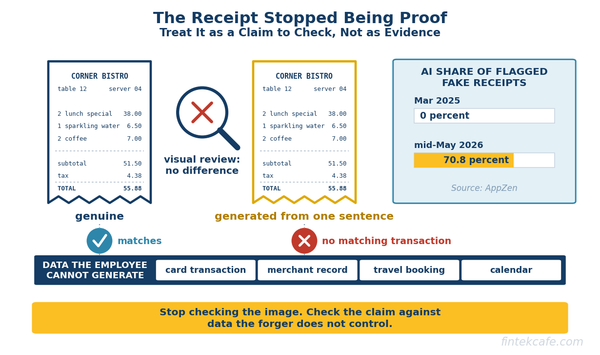
AI-Generated Fake Receipts: How Expense Fraud Changed and How Finance Teams Catch It
AI-generated fake receipts now beat visual review. How expense fraud changed, which detection still works, and the controls to use by company size.
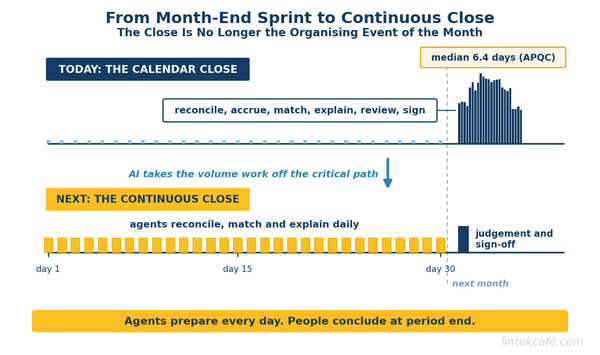
The Monthly Close Is Becoming Continuous, and the Finance Calendar Will Not Survive It
AI is taking the bottleneck work out of the month-end close. The close becomes continuous with a short sign-off, and finance, audit and the board change.
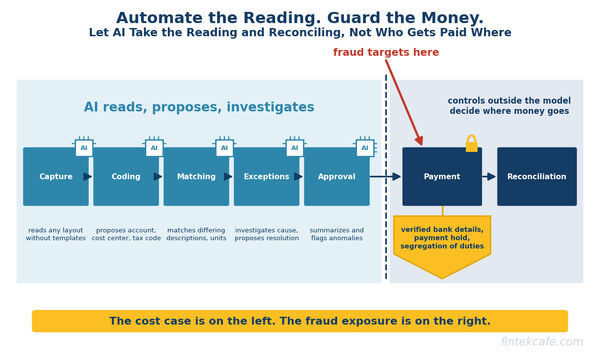
Accounts Payable Automation: What AI Can Actually Take Over in Invoice-to-Pay
What AI can take over in accounts payable, step by step from capture to payment, where the fraud risk grows, and which controls must stay outside the model.