
AI Underwriting: The Quiet Rewrite of Credit Decisioning
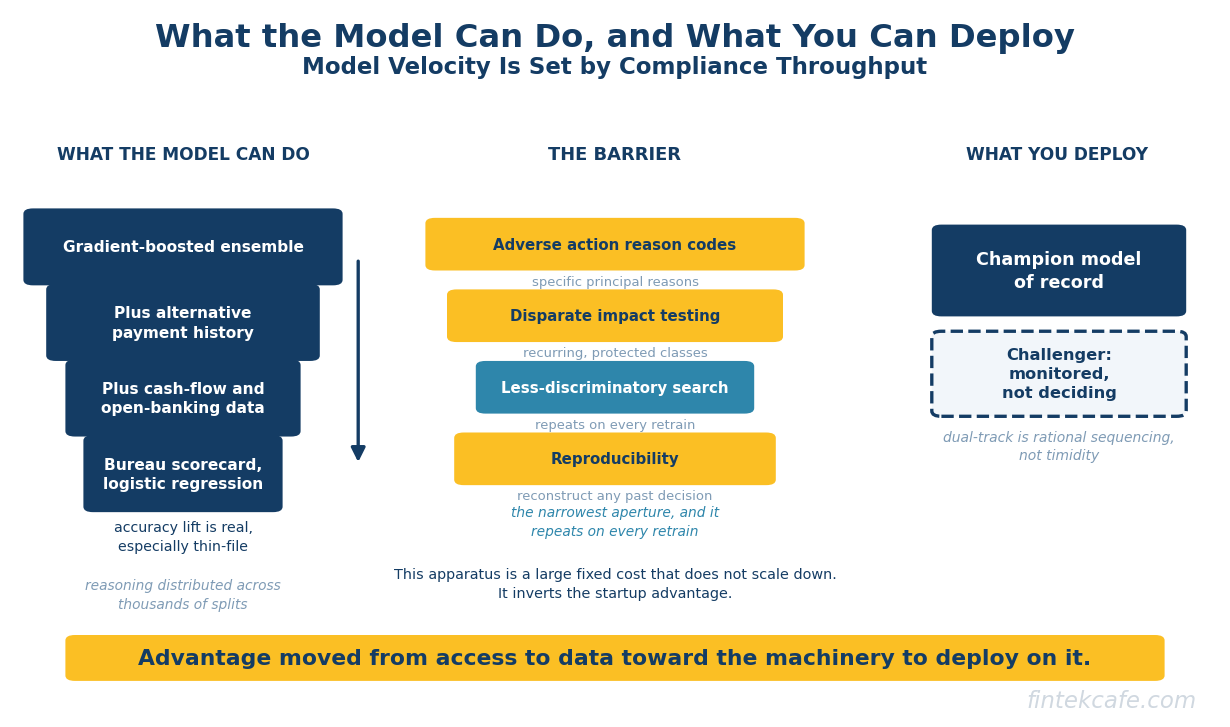
Credit decisioning has been rebuilt over the past several years, and almost none of the rebuild is visible from outside. The consumer still sees an application form and an answer. Underneath, the bureau score that used to be the decision has become one input among many, the logistic-regression scorecard that a credit risk officer could read line by line has been replaced in many portfolios by gradient-boosted ensembles nobody can read at all, and the data has shifted from what a consumer did with credit in the past toward what is moving through their bank account this month.
The obvious story about this is accuracy, and it is the least interesting one. Better-performing models are real, the lift is genuine on thin-file and near-prime populations, and every vendor deck leads with it. The story that actually determines who wins is the collision between what these models can do and what the regulatory framework permits anyone to deploy.
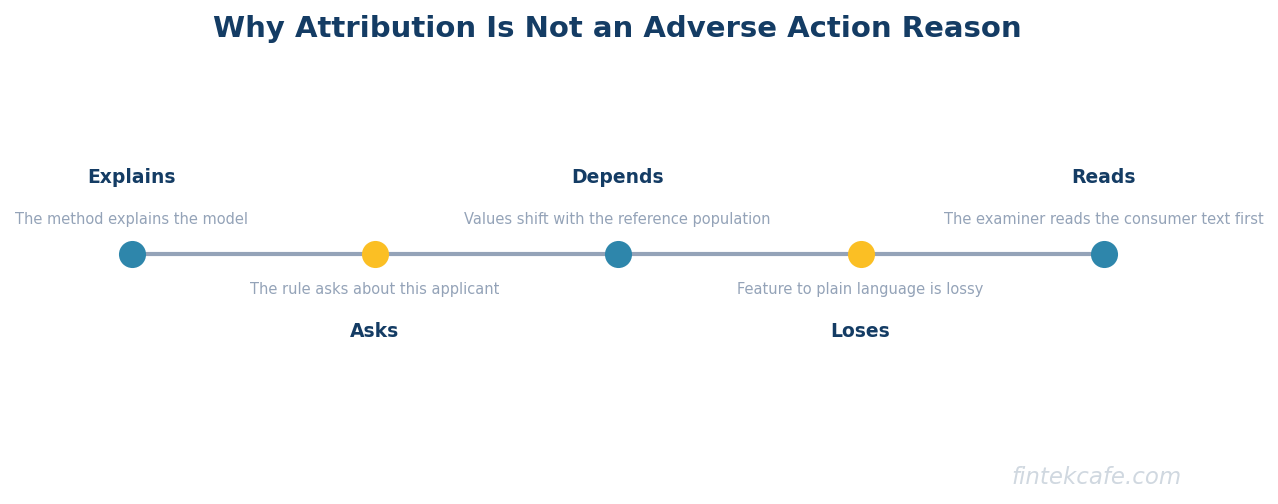
That collision has a specific shape. American credit regulation does not merely require that lending decisions be non-discriminatory in outcome. It requires that a denied applicant be told the specific principal reasons for the denial, that the lender be able to demonstrate the model does not produce unjustified disparate impact, and increasingly that the lender have searched for a less discriminatory alternative that would have served the same business purpose. Each of those obligations is straightforward against a scorecard with twenty weighted variables. Each becomes an engineering and documentation problem against a high-dimensional ensemble that recomputes feature interactions per applicant.
The strategic consequence runs against the usual fintech narrative. Underwriting advantage used to come from access to data and from willingness to model it aggressively, which favored startups. It is shifting toward the compliance machinery required to deploy a model at all, which favors scale, and punishes small lenders precisely where they used to win.
What Actually Changed
Cash-flow underwriting displaced bureau-score-first models for a large class of decisions. The bureau file describes how someone has handled credit. A bank transaction history describes whether they can afford this obligation now: income regularity and its volatility, expense patterns, balance troughs, overdraft frequency, and the timing relationship between inflows and outflows. For thin-file applicants, recent immigrants, gig workers with irregular deposits, and small businesses whose owner's personal score is a poor proxy for the business, cash-flow data carries signal the bureau file simply does not contain. Open-banking connectivity turned this from a manual document exercise into an API call, which is what moved it from pilot to production.
The model class changed, and explainability was the price. Scorecards persisted for decades partly because they were performant enough and largely because they were legible: a lender could point at a coefficient and explain it to an examiner. Gradient-boosted trees and ensembles outperform them on most portfolios, and their reasoning is distributed across thousands of splits. The industry did not decide explainability had stopped mattering. It decided the lift was worth building an explainability apparatus for, which is a different and much more expensive decision than it usually looks like in a board deck.
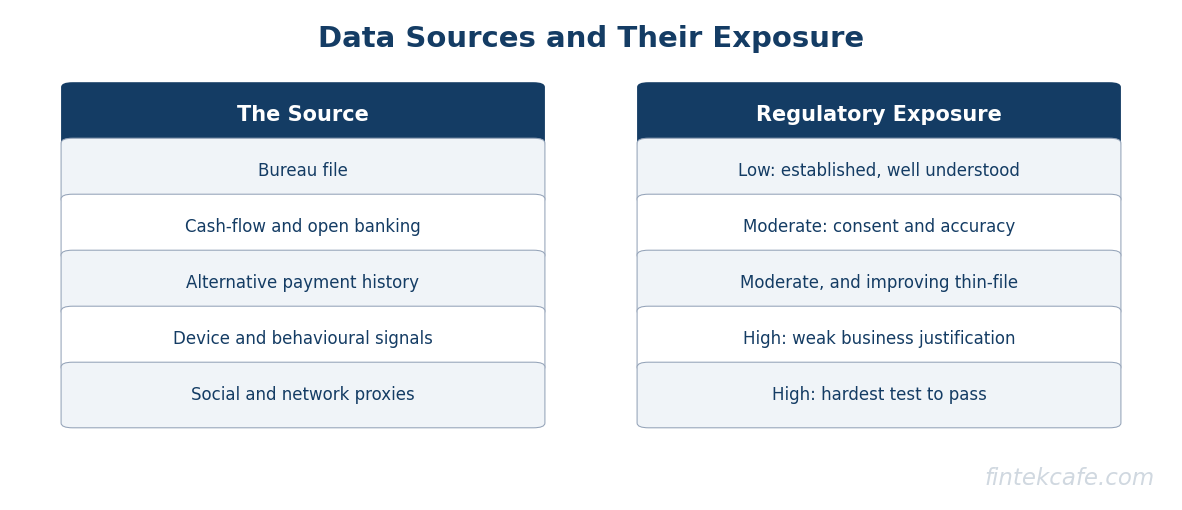
The data question separated into two very different questions. Alternative data covers both variables with genuine causal or behavioral relationship to repayment and variables that are statistically predictive because they correlate with something the law protects. Both improve a validation metric. Only one of them is deployable, and telling them apart is not a data science exercise. It is a legal and empirical exercise that has to be repeated every time the model is retrained, because the correlation structure of the population moves.
| Data source | Signal it carries | Regulatory exposure |
|---|---|---|
| Traditional bureau file | Demonstrated repayment behavior on reported credit obligations | Lowest; established framework, well-understood dispute and accuracy regime |
| Bank transaction and cash-flow data | Current affordability, income regularity, balance volatility, obligation timing | Moderate; permissioned access, data accuracy, and consumer-consent obligations |
| Rent, utility, and telecom payment history | Repayment behavior outside reported credit; strong for thin-file applicants | Moderate; furnisher accuracy standards and coverage that varies by population |
| Small-business accounting and payments data | Revenue trend, receivables quality, customer concentration, seasonality | Moderate; commercial exposure is lighter but fair lending still reaches guarantors |
| Education and employment attributes | Predictive in aggregate, and heavily entangled with protected characteristics | High; a well-known proxy risk that regulators have specifically scrutinized |
| Device, behavioral, and browsing signals | Fraud signal that is real; credit signal that is thin and unstable | High; weak business justification makes disparate impact hard to defend |
| Social and network-derived attributes | Marginal predictive value in most portfolios | Highest; effectively undeployable in regulated consumer credit |
The pattern is that the rows with the strongest regulatory exposure are also the rows with the weakest business justification, which is fortunate, because the disparate impact analysis turns precisely on whether a legitimate business need justifies the disparity a variable produces. A variable that is both discriminatory in effect and marginally predictive fails that test easily. The genuinely hard cases sit in the middle, where the lift is real.
This is a Premium Article
Sign up for a Premium membership to read this article and get full access to strategic intelligence on technology and business.
Already a member? Sign in
Related Articles
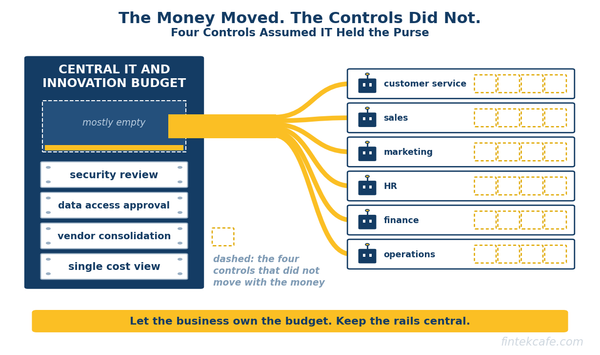
The AI Budget Is Moving From IT to the Business Lines, and Governance Has Not Followed
AI spend is moving from central IT to business lines. That ties cost to outcomes but breaks controls built for an IT-held purse. The model that works.
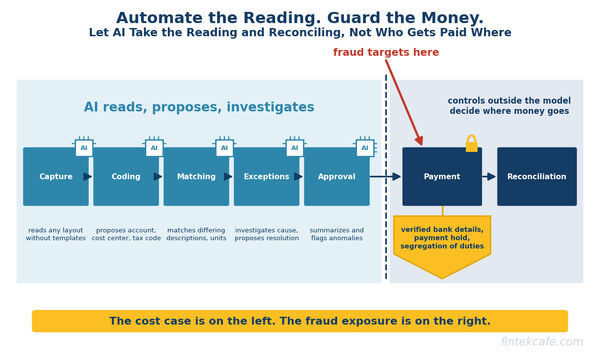
Accounts Payable Automation: What AI Can Actually Take Over in Invoice-to-Pay
What AI can take over in accounts payable, step by step from capture to payment, where the fraud risk grows, and which controls must stay outside the model.
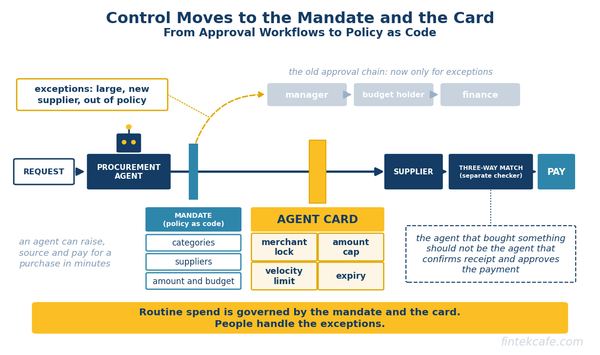
Procurement Is Where Agents Will Spend the Company's Money First
The first agents trusted with company money will buy for the enterprise. Control moves from approval chains to policy as code and card-level limits.