
Seat Pricing Is Dying: How AI Is Repricing the Software Industry
For twenty years, the software industry ran on one pricing assumption so universal it stopped being visible: value scales with headcount. Every CRM, help desk, design tool, and analytics platform priced itself per seat, because the seat was a decent proxy for the work being done. More employees meant more usage meant more value meant more revenue, and the entire financial architecture of SaaS, the revenue multiples, the net-retention targets, the land-and-expand playbook, was built on that proxy holding.
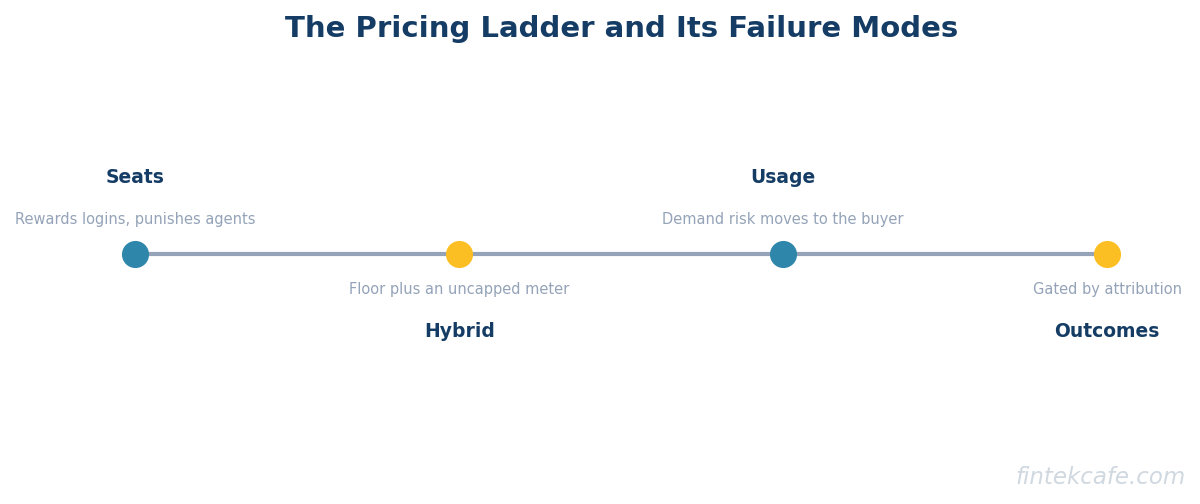
AI agents break the proxy at the root, not at the edges. When an agent resolves the support ticket, drafts the contract, reconciles the ledger, or writes the integration code, the work delivered goes up while the number of humans logging in goes down. Value and headcount, correlated for two decades, are now moving in opposite directions, and every SaaS income statement built on seats is exposed to the gap. A support platform priced per agent-seat faces a customer whose ticket volume is rising while its human agent count falls by a third. Under seat pricing, the vendor's revenue falls precisely as the value it delivers grows. No pricing committee survives that arithmetic unchanged.
The loud industry debate about "AI pricing models" is usually framed as a design question, as if the industry were collectively choosing the most elegant meter. The contrarian read is that it is not a design question at all. It is a distribution fight over who captures the productivity gain that agents create, vendor or buyer, and the pricing model is merely the weapon. Read every new pricing announcement through that lens and the confusing landscape becomes legible: most of the hybrid contracts buyers are signing today quietly hand the gain back to the vendor, and most buyers have not noticed, because the contracts are engineered to make the transfer hard to see.
Why Seats Worked, and What Specifically Breaks
The seat deserves a fair obituary, because it was a genuinely good mechanism for its era. It was forecastable for both sides: the buyer budgeted headcount anyway, so software cost rode an existing plan. It was cheap to meter: authentication is the meter. It aligned tolerably with value when software was a tool that amplified a human, because usage could not outrun the humans using it. And it gave vendors the expansion motion that defined the industry: hire more people, buy more seats, net retention above one hundred percent without selling anything new.
Three specific mechanisms are now breaking it, in order of visibility.
First, and most visibly, headcount-decoupled value. Agentic products do work rather than assist work; the distinction between software that recommends and software that acts, drawn precisely in the executive guide to agentic AI, is exactly the line where seat economics die. A copilot that makes a recruiter faster still prices tolerably per recruiter. An agent that screens candidates autonomously delivers more value with fewer recruiters, and each seat it eliminates was the vendor's own revenue.
Second, agents consume software through APIs, not through login screens. The seat assumes a human at a keyboard as the unit of consumption. When a customer's orchestration layer calls a vendor's product ten thousand times a day on behalf of three humans, the seat count measures nothing. The same inversion is arriving on the revenue side of commerce, where agentic buyers are reshaping payments; procurement of software itself will not be exempt. Software that is consumed by software cannot be priced by the human.
Third, the defensive contract. Vendors saw the exposure early, and the visible response across enterprise renewals is the seat minimum: multi-year commitments to a seat floor regardless of actual headcount, AI features bundled in exchange for the floor, and repricing clauses if seat counts fall below thresholds. The evidence from renewal negotiations through 2025 and 2026 is that these floors are now standard first-draft language from the large vendors. A seat minimum is not a pricing model. It is an admission that the pricing model no longer measures anything, converted into a hostage clause, and buyers who sign it have pre-sold their own AI productivity gains back to the vendor at list price.
This is a Premium Article
Sign up for a Premium membership to read this article and get full access to strategic intelligence on technology and business.
Already a member? Sign in
Related Articles
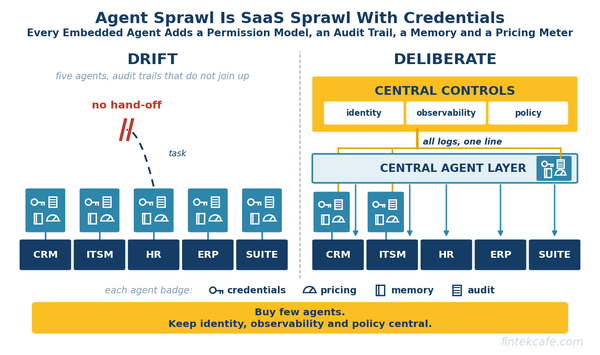
Every Software Vendor Now Sells an Agent, and Most Enterprises Should Buy Very Few of Them
Buying an agent from every system of record recreates SaaS sprawl one layer up. How CIOs should choose, and which controls must stay central.
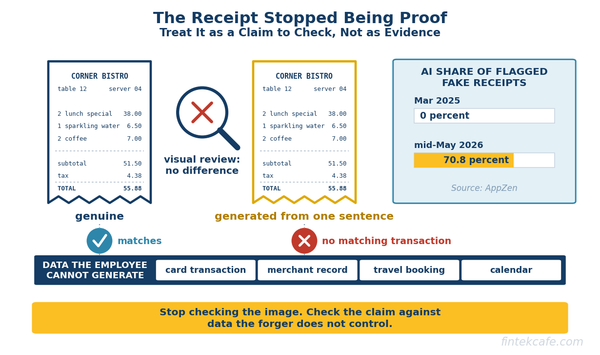
AI-Generated Fake Receipts: How Expense Fraud Changed and How Finance Teams Catch It
AI-generated fake receipts now beat visual review. How expense fraud changed, which detection still works, and the controls to use by company size.
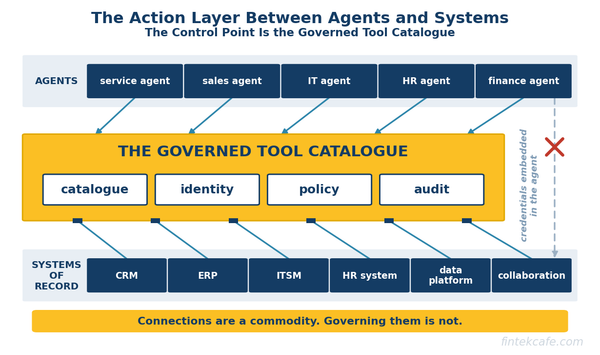
Integration Platforms Are the Quiet Winners of the Agent Era
Agents act through integrations. iPaaS and API vendors hold the connectors, credentials and audit trails, and MCP makes governing that layer worth more.