
Credit Card Surcharging: When Passing On Card Costs Is Legal, and When It Costs More Than It Saves
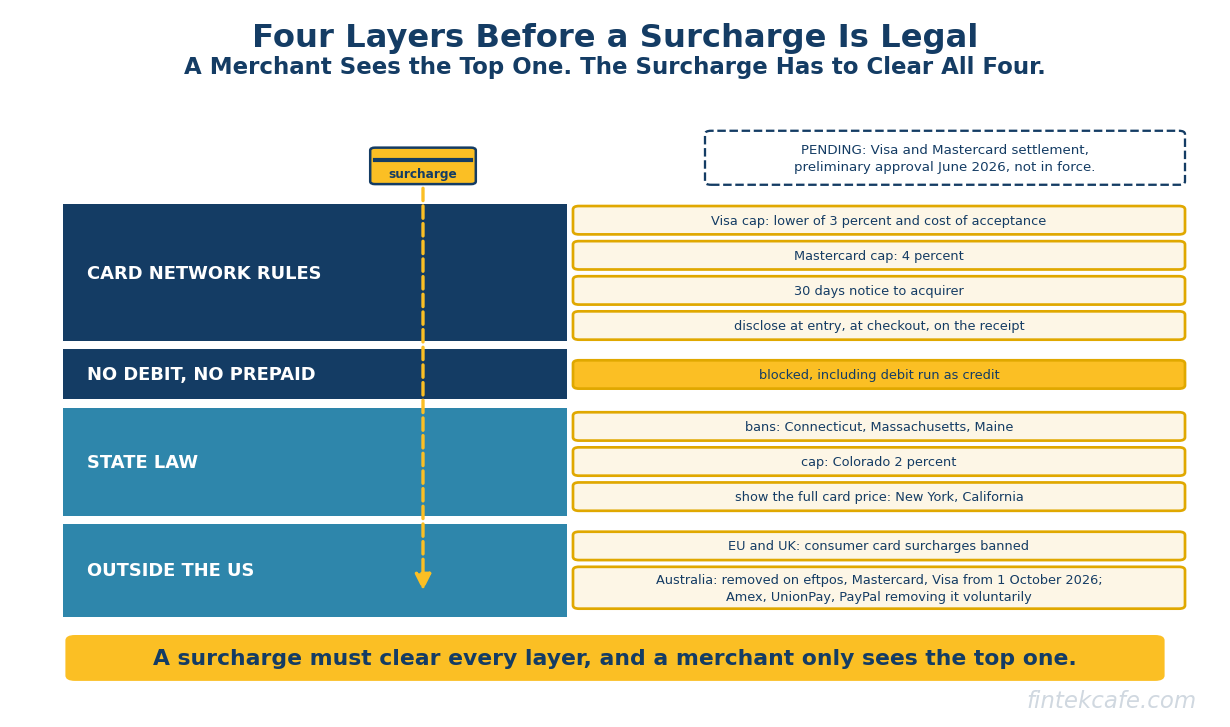
A credit card surcharge is a fee added to a purchase because the customer paid by credit card, and in the United States it is legal in most states, capped by Visa at 3 percent, banned outright in a handful of states, and never allowed on debit or prepaid cards. Merchant trade groups such as the National Retail Federation describe card acceptance as one of the largest operating costs many merchants carry after labor, so a surcharge looks like a free fix: move the cost to the customer who chose the expensive payment method. It is not free. It carries compliance obligations that vary by network, state and country, a customer reaction that differs sharply between consumer checkout and B2B invoicing, and an opportunity cost. The rulebook is also moving. A proposed Visa and Mastercard settlement that would expand surcharging rights received preliminary court approval in June 2026 and is not in force, and Australia removes surcharging on its designated card networks from 1 October 2026.
Key Takeaways
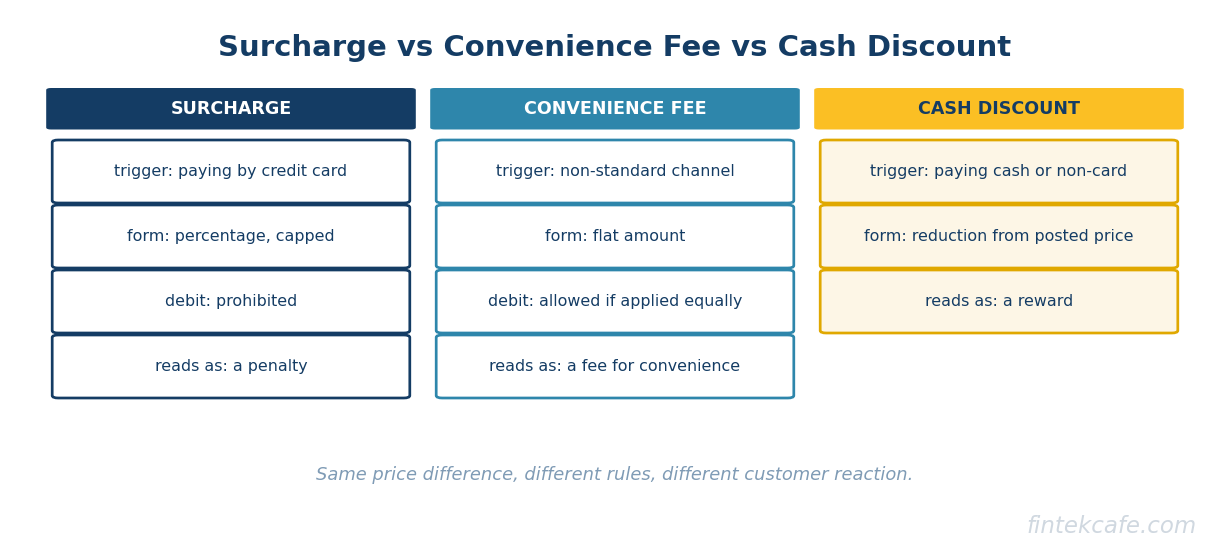
- A surcharge, a convenience fee and a cash discount are three different mechanisms with different rules. Merchants that blur them are the ones that end up out of compliance.
- The US rulebook has four layers: card network rules on caps, notice and disclosure; the prohibition on surcharging debit and prepaid cards; state laws that ban, cap or impose price-display requirements; and, for anyone selling abroad, a consumer card surcharge ban across the EU and the UK.
- Evidence from Federal Reserve researchers suggests card-preferring consumers rarely switch payment method at the point of sale, so a consumer surcharge mostly gets paid rather than steering behavior. In B2B, where the buyer has ACH available, it more often shifts the payment method.
- A surcharge pays for itself only while the sales it loses stay below a break-even threshold: credit share times acceptance cost, divided by gross margin. Thin margins actually raise that threshold, but thin-margin merchants tend to sit in the most price-competitive, debit-heavy categories, where the sales they would really lose are larger and the cost a surcharge can recover is smaller.
- The alternatives often beat it: steering to pay-by-bank, passing Level 2 and 3 data on commercial cards, moving from blended to interchange-plus pricing, and least-cost routing on debit.
Three Mechanisms That Merchants Blur
The first compliance failure is usually a naming failure. All three mechanisms below make card payment cost more than another method, and each is governed differently.
A surcharge is an amount added to the price when the customer pays with a credit card. It is percentage-based, applies only to credit, and is subject to network caps and state law.
A convenience fee is a flat fee for using a payment channel that is not the merchant's standard one, such as paying a utility bill online when the customary channel is in person or by mail. Under network rules it is tied to the channel, not the card type, and it is not a way to pass on card costs in a merchant's normal checkout.
A cash discount, sometimes called dual pricing, lists a regular price and offers a lower price for paying by cash or other non-card methods. Federal law protects a merchant's right to offer discounts for a method of payment, and it is permitted in states that ban surcharges, though some of those states regulate how the discount is presented.
| Dimension | Credit card surcharge | Convenience fee | Cash discount |
|---|---|---|---|
| What triggers it | Paying with a credit card | Using a non-standard payment channel | Paying with cash or a non-card method |
| How it is set | Percentage, capped by network rules and cost of acceptance | Flat amount, regardless of card type | Reduction from the posted regular price |
| Applies to debit cards | No, prohibited | Yes, if applied equally in that channel | Debit may be priced at the regular or discounted price, per disclosure |
| Legal in states that ban surcharges | No | Depends on state law | Generally yes, subject to disclosure rules |
| Main compliance risk | Caps, notice, disclosure, state bans | Charging it in the standard channel or as a percentage | Presenting it as a surcharge in disguise |
| Customer perception | Penalty for choosing a card | Fee for convenience, often accepted | Reward for paying another way |
The perception row matters as much as the legal ones. Consumers respond more negatively to a penalty than to a forgone reward of the same size, so the same price difference framed as a cash discount usually provokes less resistance.
The Surcharge Rulebook, Layer by Layer
Layer one: card network rules
In the United States, merchants have been permitted to surcharge Visa and Mastercard credit cards since the networks' 2013 class settlement with merchants. The current Visa rules cap a surcharge at the lower of 3 percent and the merchant's actual cost of acceptance, a cap Visa reduced from 4 percent effective April 2023, and require merchants to notify their acquirer at least 30 days before they begin, per Visa's merchant surcharging guidance. Mastercard's cap is 4 percent, also limited to the cost of acceptance. Both networks require the surcharge to be disclosed before the purchase, at the point of entry to the store or website and at checkout, and shown as a separate line on the receipt. American Express and Discover publish their own rules, and a merchant that surcharges one brand is generally expected to treat comparable brands consistently.
Merchants must also choose between surcharging at the brand level, all Visa credit cards for example, or at the product level, a specific category of credit card, and cannot mix the two.
Layer two: no surcharging on debit or prepaid
Network rules prohibit surcharges on debit and prepaid cards, including debit cards run through the credit networks or signed for rather than authorized with a PIN. It is a common violation in practice: a merchant that applies one card fee to every card transaction is surcharging debit.
Layer three: state law
State law sits on top of network rules, and it is where the recent changes are concentrated.
- Outright prohibitions. A small number of states prohibit credit card surcharges on sales. Connecticut prohibits surcharges based on method of payment and, since a 2022 amendment, specifies how cash discounts must be disclosed. Massachusetts prohibits surcharges on cardholders who pay by credit card. Maine prohibits surcharges on both credit and debit card payments, with exceptions for government entities.
- Caps below the network cap. Colorado permits surcharges but limits them to the lower of 2 percent and the merchant's actual processing cost.
- Price-display laws. New York's amended General Business Law section 518, effective February 11, 2024, requires a merchant that surcharges to post the total credit card price, inclusive of the surcharge, rather than adding it at the register, and limits the surcharge to what the card company charges the merchant. California's SB 478, effective July 2024, requires advertised prices to include all mandatory fees. The California Attorney General's guidance treats a card fee as not mandatory when the customer can avoid it by paying another way, but as mandatory, and therefore part of the advertised price, when the business accepts only cards.
State rules change often enough that any merchant operating in several states should confirm the current position in each with counsel before launch. Processor-published state lists disagree on edge cases, which is itself evidence that the details are unsettled.
Layer four: outside the United States
Merchants selling internationally face a different default. In the European Union, the revised Payment Services Directive requires member states to prohibit surcharges on consumer card payments whose interchange is regulated, which covers consumer debit and credit cards on the major networks. The United Kingdom has banned surcharges on consumer card payments since 13 January 2018 and extended the ban to other common consumer payment methods. Surcharging commercial cards remains possible in both, limited to cost.
Australia is moving to the same position. The Reserve Bank of Australia's March 2026 conclusions paper set out the removal of surcharging on eftpos, Mastercard and Visa debit, credit and prepaid cards from 1 October 2026, alongside lower interchange caps, per the RBA's published FAQ. American Express, UnionPay and PayPal are not regulated by the RBA, but the same FAQ reports that all three have decided to remove surcharging too, from 1 October 2026, with PayPal's rule taking effect on 5 October.
The pending US settlement, and why it is unsettled
In November 2025, Visa and Mastercard announced a revised settlement of the long-running US merchant interchange litigation. As reported by Payments Dive, it would give merchants new rights to surcharge and to decline some higher-cost credit cards, reduce the average effective credit interchange rate by ten basis points for five years, and hold standard consumer credit card rates at 1.25 percent over an eight-year term. Coverage of the terms describes a surcharge allowance of up to 3 percent. Judge Brian Cogan of the Eastern District of New York granted preliminary approval on June 9, 2026.
It is not in force. In September 2026 the Merchant Payments Coalition reported that 978 businesses and associations had filed objections asking the court to withhold final approval, and at least one trade group has said it would appeal an approval. A merchant should not design a surcharging program around rights that the settlement would grant until final approval is granted and any appeal is resolved.
What the Evidence Says About Customer Response
The case for surcharging assumes it does one of two things: either customers switch to a cheaper payment method, or they pay the surcharge and the merchant recovers its cost. The evidence says which one happens depends heavily on context.
Consumer checkout
A January 2026 working paper by Claire Greene, Oz Shy and Joanna Stavins of the Federal Reserve Banks of Atlanta and Boston, Merchant Steering of Consumer Payment Choice, used consumer diary data to test how far merchants can move customers off their preferred payment method. It found that consumers make most payments with their preferred method, that cash discounts did not measurably change the probability of card-preferring consumers paying cash, and that surcharges and cash discounts, while more common than a few years earlier, remained relatively rare at the point of sale. An earlier Federal Reserve study it cites, by Borzekowski, Kiser and Ahmed, found a 12 percent decline in debit card use when banks charged an average fee of 1.8 percent on certain debit transactions, which shows that payment-method fees can move behavior when they are large and persistent.
The practical reading for an in-person consumer merchant is that a surcharge mostly gets paid. That recovers cost, in the most visible way possible. Whether that costs sales depends on how easily the customer can buy the same thing elsewhere without the fee.
Online checkout
For ecommerce, reliable public data on the conversion effect of a surcharge is thin. Checkout is the point of maximum price sensitivity and a competing merchant is a tab away. The absence of a solid published number is a reason to test before rolling out, not to assume the effect is small.
B2B invoices
B2B is where surcharging most often works. The buyer's accounts payable team typically has ACH or bank transfer available, pays large invoices where 3 percent is a meaningful sum, and has a policy view on fees. A surcharge on card payments therefore tends to shift the payment method rather than be paid, which, for a supplier whose goal is to stop paying card fees on large invoices, is the intended outcome. The risk is to the relationship, not the transaction: buyers that pay by card to extend payment terms or earn rebates may treat a surcharge as a price increase and negotiate accordingly.
The break-even arithmetic
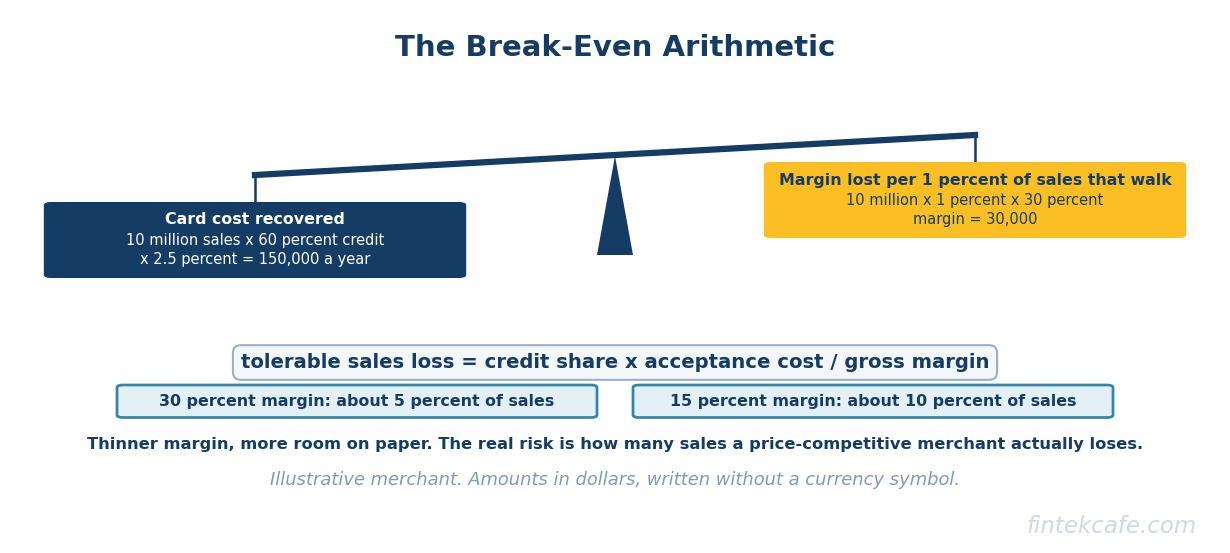
A surcharge is worth imposing only if it recovers more than the gross margin it loses. Take an illustrative consumer merchant with 10 million dollars of annual sales, 60 percent paid by credit card, a credit card acceptance cost of 2.5 percent, and a 30 percent gross margin.
- Credit card cost recoverable by a surcharge: 10 million times 60 percent times 2.5 percent, or 150,000 dollars a year.
- Gross margin lost for each 1 percent of sales that walk away: 10 million times 1 percent times 30 percent, or 30,000 dollars.
- Break-even: the surcharge stops paying once it costs about 5 percent of sales, before counting implementation and compliance cost.
For a merchant with a 15 percent margin, the break-even doubles to about 10 percent of sales, because each lost sale costs half as much gross margin. The general rule is that the tolerable sales loss equals the credit share times the acceptance cost, divided by the gross margin, so on the arithmetic alone a thinner margin makes a surcharge more forgiving, not less. What makes thin-margin merchants poor candidates in practice is what the formula leaves out. Their categories, such as grocery, fuel and commodity ecommerce, are the most price-competitive, so the sales they would actually lose are larger, and their high debit share shrinks the credit share a surcharge can touch. The threshold says how much loss a merchant can absorb; only a test says how much loss it will get.
Alternatives That Often Beat a Surcharge
Surcharging treats card cost as fixed and moves it. Four alternatives reduce it, and they do not carry the customer-facing downside.
Steer to pay-by-bank or ACH
For recurring payments, large tickets and B2B invoices, account-to-account payment removes interchange entirely. Offering it prominently, with a cash-discount-style price difference where permitted, often moves more volume than a surcharge because it is framed as a benefit. The mechanics and adoption barriers are covered in pay-by-bank payments.
Pass Level 2 and Level 3 data on commercial cards
Visa and Mastercard offer lower interchange categories for commercial card transactions that include enhanced data such as tax amount, customer code and line-item detail. B2B merchants that do not pass it are often paying a premium a gateway configuration change would remove.
Move from blended to interchange-plus pricing
Many small and mid-size merchants pay a blended or tiered rate that bundles interchange, network fees and processor margin into one number. Interchange-plus pricing passes interchange and network fees through at cost and shows the processor's markup separately, which exposes the markup to negotiation. A merchant that does not know its effective rate split between interchange and processor margin is negotiating blind.
Route debit to the lowest-cost network
Under the Federal Reserve's Regulation II, US debit cards must be enabled on at least two unaffiliated networks, and since July 2023 that requirement explicitly covers card-not-present transactions. Merchants whose processor supports least-cost routing can send eligible debit transactions to the cheaper network. The structural reasons interchange rarely falls on its own, and why network competition is the lever that works, are examined in interchange floor pressure and the economics of payment networks.
A Decision Framework by Merchant Type
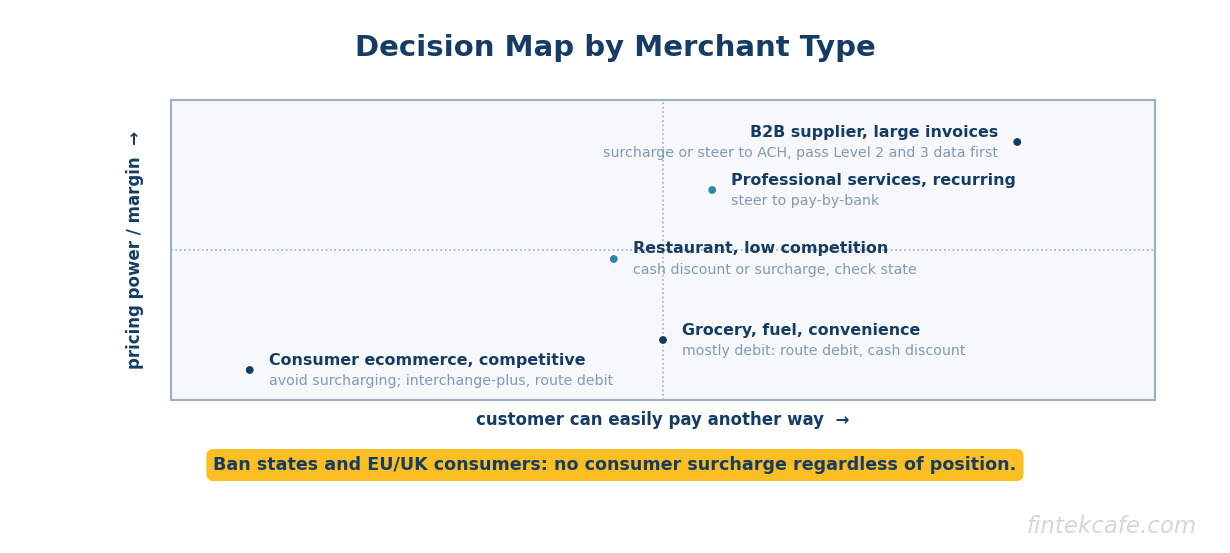
| Merchant type | Typical card mix | Recommendation |
|---|---|---|
| B2B supplier, large invoices, commercial cards | High credit share on large tickets | Pass Level 2 and 3 data first; then surcharge credit or offer ACH at the invoice price, where state law allows |
| Professional services, recurring billing | Mixed, rising credit | Steer to ACH or pay-by-bank with a clear price difference; surcharge only if steering fails |
| Consumer ecommerce, competitive category | High credit share | Avoid surcharging; renegotiate to interchange-plus, route debit, test pay-by-bank |
| Restaurant or local service, low competition | Mixed | Cash discount or surcharge can work; post all-in prices where state law requires, and check the state list |
| Grocery, fuel, convenience | High debit share | Surcharge recovers little because debit cannot be surcharged; focus on debit routing and cash discount |
| Merchant in a ban state, or selling to EU and UK consumers | Any | No surcharge on consumer cards; use cash discount where permitted and price card cost in |
| Government, education, utilities | Mixed, many channels | Use the network convenience fee or service fee programs designed for these sectors |
The position, and its tradeoff
For most consumer-facing merchants, surcharging should be the last lever pulled, not the first. Renegotiating pricing, routing debit correctly and steering the willing to pay-by-bank reduce card cost without making the customer pay a visible penalty, and they carry no state-by-state compliance map. Surcharging earns its place in B2B, where the buyer has a cheap alternative and the goal is to move the payment method, and in consumer businesses with pricing power where the break-even sales loss is comfortably above what the merchant would realistically lose.
The tradeoff is that the alternatives are slower and less certain. A surcharge recovers cost the day it switches on; a pricing renegotiation depends on leverage, and pay-by-bank adoption depends on the customer. A merchant under immediate margin pressure may rationally surcharge first and optimize later. It should do so knowing that a surcharge cannot touch debit, is barred in some states, and in consumer checkout is paid by its most loyal card-preferring customers rather than avoided by them.
Frequently Asked Questions
Is it legal to charge a credit card surcharge?
In most US states, yes, within network caps: Visa limits surcharges to the lower of 3 percent and the merchant's cost of acceptance, and Mastercard to 4 percent. A small number of states, including Connecticut, Massachusetts and Maine, prohibit them, Colorado caps them at 2 percent, and states such as New York require the total card price to be displayed up front. Surcharges are never allowed on debit or prepaid cards, and consumer card surcharges are banned in the EU and UK.
What is the difference between a surcharge and a convenience fee?
A surcharge is a percentage added because the customer paid by credit card, and it applies only to credit cards. A convenience fee is a flat fee for using a non-standard payment channel, such as paying online when the merchant's normal channel is in person, and it applies to every payment method accepted in that channel. A convenience fee charged in a merchant's standard checkout, or as a percentage, is effectively a surcharge and is treated as one.
Can a business charge a fee for debit card payments?
Not as a surcharge. Card network rules prohibit surcharging debit and prepaid cards, including debit cards processed through the credit networks. A business can offer a cash discount, charging a regular price to all card users and a lower price for cash, subject to state disclosure rules, and some states such as Maine prohibit surcharges on debit explicitly.
Does the new Visa and Mastercard settlement change surcharging rules?
Not yet. The settlement announced in November 2025 would expand merchants' rights to surcharge and to decline some higher-cost credit cards, and it received preliminary court approval in June 2026. Nearly a thousand merchants and trade groups filed objections in September 2026, and final approval and any appeals are still pending, so current network rules continue to apply.
Should a business add a credit card fee?
It depends on who the customers are and what else is possible. B2B sellers with large invoices often benefit, because buyers switch to ACH. Consumer merchants in competitive markets usually do better by moving to interchange-plus pricing, routing debit to cheaper networks and steering customers to pay-by-bank, since a surcharge pays for itself only if it loses fewer sales than its break-even threshold, which is the credit share times the card cost divided by the gross margin.
The Bottom Line
Credit card surcharging is legal in more places than many merchants assume and cheaper than it looks in fewer. The legal question is answerable with a checklist: network caps and notice, no debit, the state list, the price-display laws, and a different answer entirely for consumers in Europe, the UK and, from October 2026, Australia. The commercial question is harder, because a surcharge moves cost rather than removing it, and it moves that cost onto the customers least inclined to avoid it.
The merchants that come out ahead treat card acceptance as a cost to be engineered down before it is passed on. They know their effective rate, route debit, pass the data commercial cards reward, and offer a cheaper way to pay. Once that work is done, a surcharge is sometimes still the right call. It is rarely the right first one.
Related Articles
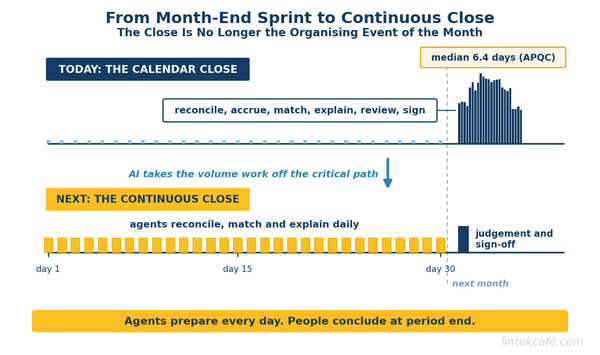
The Monthly Close Is Becoming Continuous, and the Finance Calendar Will Not Survive It
AI is taking the bottleneck work out of the month-end close. The close becomes continuous with a short sign-off, and finance, audit and the board change.
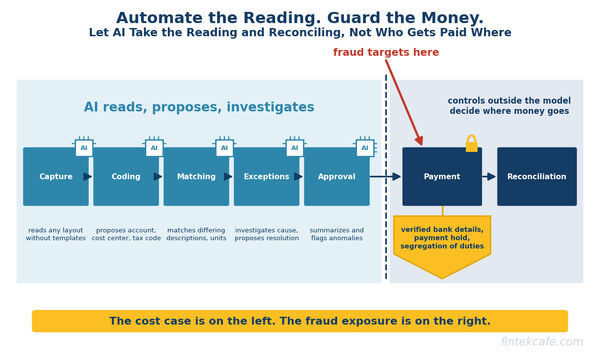
Accounts Payable Automation: What AI Can Actually Take Over in Invoice-to-Pay
What AI can take over in accounts payable, step by step from capture to payment, where the fraud risk grows, and which controls must stay outside the model.
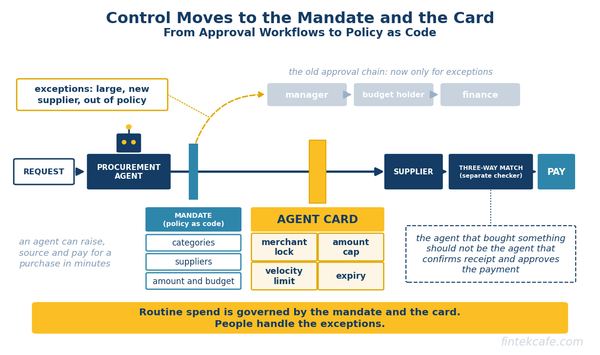
Procurement Is Where Agents Will Spend the Company's Money First
The first agents trusted with company money will buy for the enterprise. Control moves from approval chains to policy as code and card-level limits.