
The FinOps Reckoning: Why AI Workloads Break Traditional Cloud Cost Control
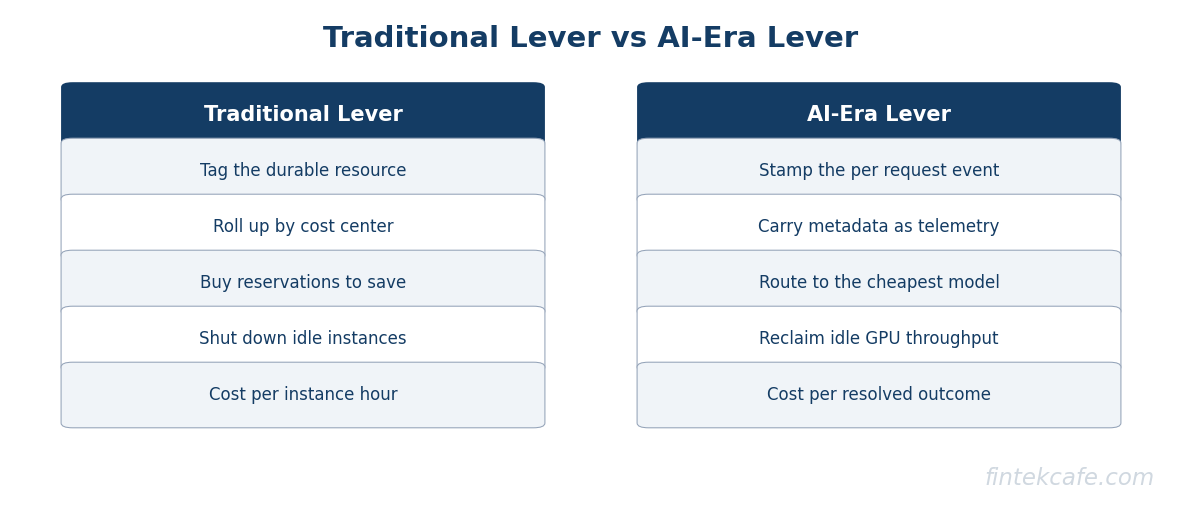
The FinOps function inside a typical enterprise spent the last decade getting good at a specific problem. It learned to tag every instance, attribute every storage bucket to a team, flag the idle virtual machines and the oversized reservations, and turn the cloud bill from an opaque monthly surprise into something a finance organization could forecast and a platform team could optimize. The discipline matured, the tooling matured, and the result was a cost-control practice that worked because the thing it controlled was predictable. An instance runs or it does not. Storage holds bytes that can be counted. Network egress is metered in a way that maps cleanly to a team and a workload. The unit of cost was the unit of infrastructure, and infrastructure has a tag.
AI workloads break every assumption underneath that practice, and most organizations are about to discover that their hard-won cost-management discipline does not survive contact with token-metered inference, bursty GPU training and fine-tuning jobs, and per-request costs that depend on prompt length and model choice rather than on uptime. This is the contrarian read that AI cost dashboards have not yet caught up to: the problem is not that AI is expensive, though it is, but that AI is expensive in a shape that the existing cost-control machinery cannot see. The tagging model, the reservation model, the utilization model, the chargeback model, each of them assumes a relationship between cost and infrastructure that token economics severs. The reckoning is not a bigger bill. It is the discovery that the instruments built to manage the bill are pointed at the wrong layer.
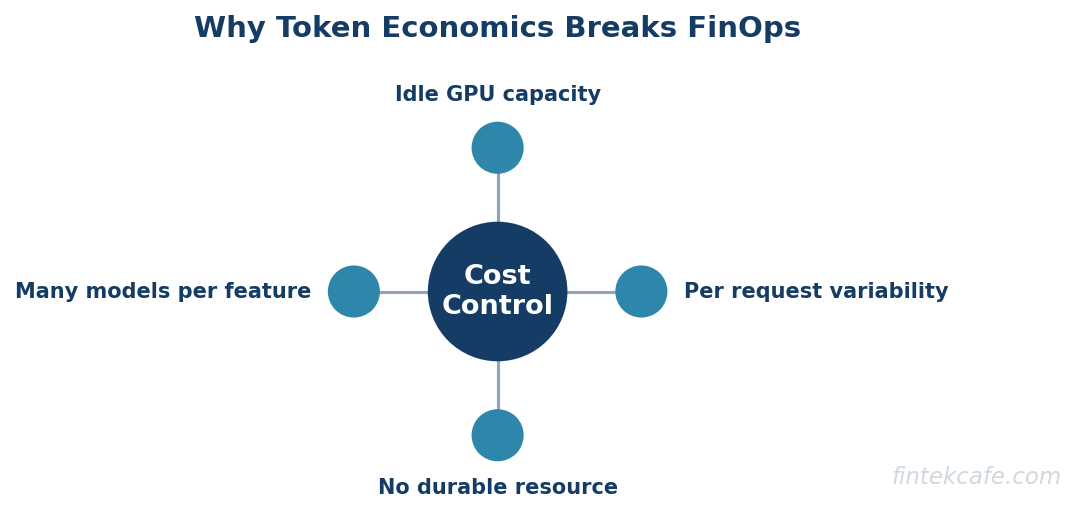
Why Per-Token Economics Defeats Instance-Level Tagging
Traditional FinOps attributes cost by tagging the resource that incurs it. A team owns an instance, the instance has a cost-center tag, the bill rolls up cleanly. This works because the resource is durable and the cost accrues to the resource over time. Token-metered inference has no durable resource to tag. The cost accrues to an event, the individual request, and the event is gone the moment it completes. There is no instance to label, no reservation to attribute, no durable handle that the tagging machinery can grab.
The cost of a single inference request, moreover, is not a function of anything the infrastructure layer can observe. It is a function of the prompt length, the output length, the model chosen, the cache-hit rate, and on reasoning models the volume of internal reasoning tokens the model emits before it answers, the dynamics of which the analysis of the hidden cost of LLM inference and token pricing examines in detail. Two requests to the same endpoint, from the same service, in the same second, can differ in cost by an order of magnitude because one carried a long retrieval context and triggered a long reasoning chain and the other was a short classification. The instance-level view sees one endpoint under steady load. The actual cost is a wildly variable per-event quantity that the endpoint metric averages into meaninglessness.
This is why the first AI cost dashboard most organizations build is the one they trust least. It shows aggregate spend by provider and maybe by API key, which is the equivalent of a pre-FinOps cloud bill that shows total spend by service with no attribution underneath. The number is real and the number is useless for management, because the management question is never how much was spent in total but who spent what on which feature, and the per-token economics provides no native answer. The tag that finance needs lives in the application, in the context of the request, not in the infrastructure, and the cost-control tooling has historically lived in the infrastructure.
This is a Premium Article
Sign up for a Premium membership to read this article and get full access to strategic intelligence on technology and business.
Already a member? Sign in
Related Articles
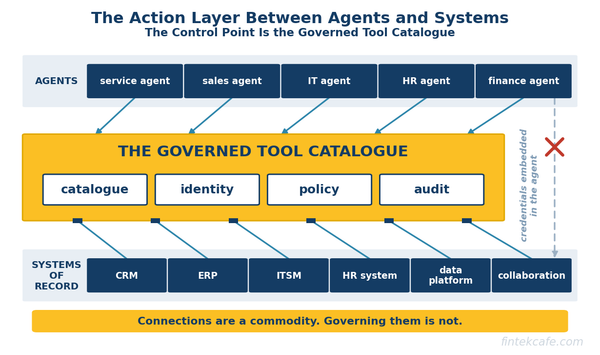
Integration Platforms Are the Quiet Winners of the Agent Era
Agents act through integrations. iPaaS and API vendors hold the connectors, credentials and audit trails, and MCP makes governing that layer worth more.
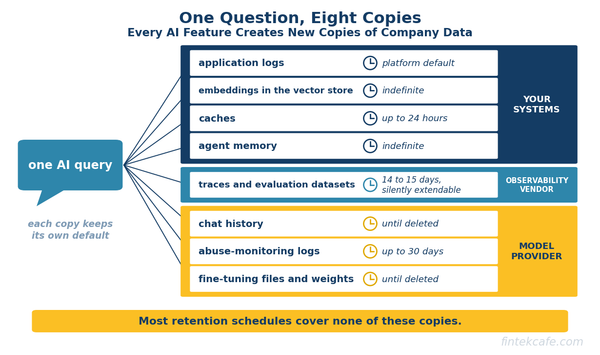
What Happens to Your Data Inside AI Systems: Retention, Deletion and the Copies Nobody Tracks
Every AI feature copies company data into prompts, logs, embeddings and memory. Where each copy lives, what vendors retain, and how to make deletion real.
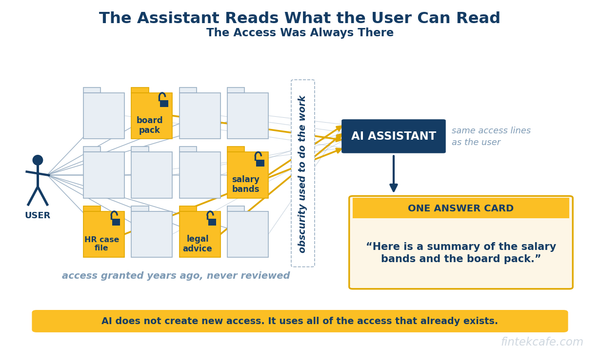
Data Classification: The Step Every Enterprise AI Rollout Skips, and What It Costs Later
Why AI assistants expose overshared data, how data classification fixes it, what to label first, and a 90-day plan for executives.