
The AI Build vs Buy Framework: A Decision Model for Every Layer of the Stack
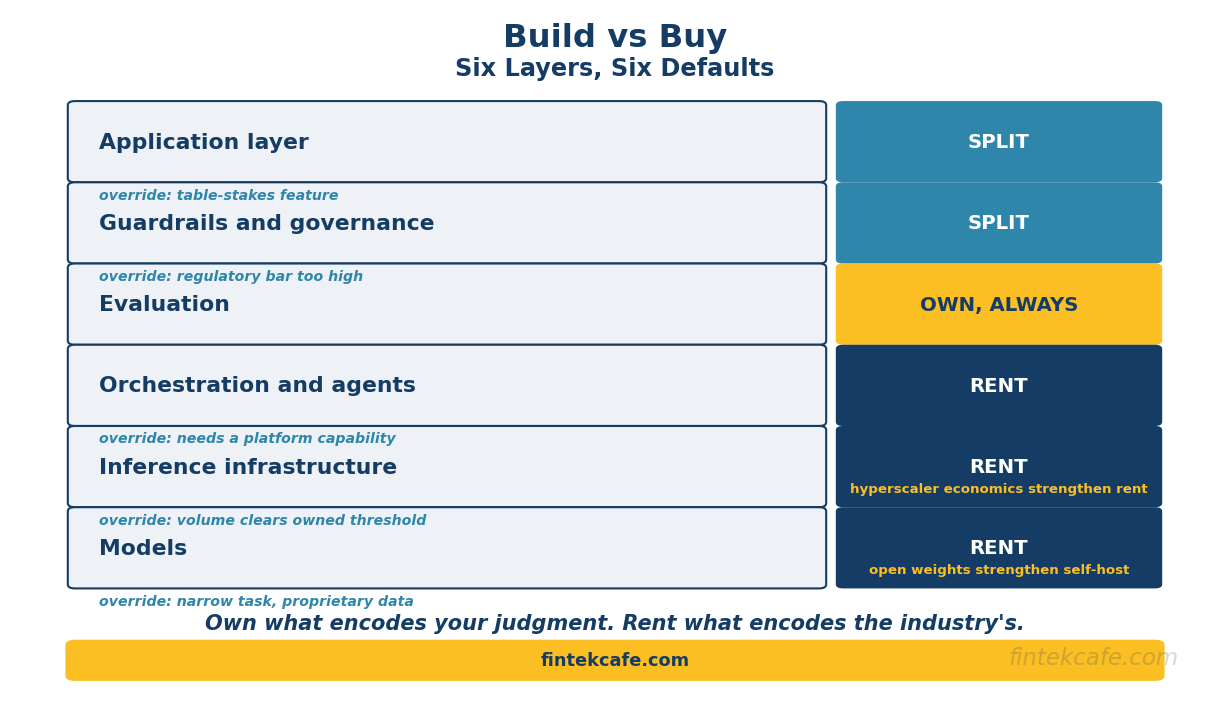
Build versus buy for enterprise AI is not one decision, it is six, one for each layer of the stack, and each layer has its own default: rent the model, rent the inference infrastructure, be cautious about lock-in when choosing an orchestration and agent framework, always own your evaluation suite, own your governance policy but rent the enforcement tooling that implements it, and build the application layer wherever it touches the thing that actually differentiates the business. Every default has a named condition under which it flips, and the single sentence that generates all six defaults is this: own what encodes your judgment, rent what encodes the industry's. A model, an inference stack, and most agent frameworks encode the industry's accumulated engineering, so rent them. Your evaluation criteria, your governance policy, and the application logic that touches your differentiation encode your judgment about your business, so own them, always. Everything below expands that one paragraph into six layers, each with its default, its override condition, its cost shape, and the trap that catches teams who treat the decision as one choice instead of six.
Key Takeaways
- Build versus buy for AI is six separate decisions, one per stack layer, not one strategic choice. Treating it as one decision is the most common planning error, and it produces either a wholesale build that reinvents commodity infrastructure or a wholesale buy that outsources the judgment the business is supposed to be selling.
- The spine sentence generates every default: own what encodes your judgment, rent what encodes the industry's. Models and inference infrastructure encode the industry's accumulated engineering; evaluation criteria, governance policy, and differentiation-adjacent application logic encode yours.
- Evaluation is the one layer with no override condition. Every other layer's default can flip under specific circumstances; owning your evaluation suite does not, because a rented eval suite is measuring someone else's definition of quality against your business.
- The override thresholds move quarterly even though the defaults are structural. Open-weight releases keep strengthening the self-host case at the model layer during the week of August 10, while hyperscaler capacity economics keep strengthening the rent case at the infrastructure layer, and a team that set its thresholds two quarters ago is applying stale math.
- The most expensive trap is building a model or a full orchestration platform because an early demo made it look easy. Demos hide the evaluation, guardrail, and maintenance cost that dominates total cost of ownership once the system reaches production.
Why This Is Six Decisions, Not One
Enterprise AI strategy documents routinely pose build versus buy as a single strategic fork, usually resolved by a slide about competitive differentiation. The framing is wrong at the root, because the six layers of a production AI system, laid out in full in the enterprise AI stack reference architecture, have different economics, different rates of commoditization, and different relationships to what actually makes a business defensible. A single build-versus-buy verdict applied uniformly across all six either reinvents infrastructure the market has already commoditized, which is expensive and slow, or rents out the judgment layer that was supposed to be the company's contribution, which is fast and worthless. The organizations getting this right are not the ones with a strong opinion about AI vendors. They are the ones that ask the build-or-buy question six separate times, once per layer, and let the answer differ.
The spine sentence is the filter that makes each of those six answers fall out mechanically rather than by committee debate: own what encodes your judgment, rent what encodes the industry's. Judgment, here, means a decision that only your business is positioned to make correctly: what counts as a good answer for your customers, what risk your organization is willing to accept, what the differentiating logic of your product actually is. Everything else, the mechanics of running a model, serving it fast, and chaining calls together, is engineering the industry solves once and sells to everyone, and paying to reinvent it is rarely a competitive advantage.
The Six Layers
Layer One: Models
Default: rent. Frontier and near-frontier model quality is now available through an API call, and training a competitive foundation model from scratch requires capital and talent concentrated in perhaps a dozen labs worldwide. Override condition: the workload has a narrow, stable task with abundant proprietary training data and a clear cost or latency reason a distilled or fine-tuned small model beats an API call at scale, the case made in full in the enterprise guide to model distillation. Cost shape: rented model cost is variable and usage-linked, falling every quarter as competition and open-weight releases compress prices; owned models carry a large fixed training and maintenance cost that must be justified by volume. The trap: building or fine-tuning a model because an early demo made it look tractable, then discovering that maintaining model quality against a moving frontier is a permanent research commitment, not a one-time project. The open-weight releases landing during the week of August 10 are the sharpest illustration of the layer's direction: every such release strengthens the self-host override case for narrow, high-volume tasks while leaving the general case for renting untouched, because a stronger free model makes owning cheaper without making owning necessary.
Layer Two: Inference Infrastructure
Default: rent. Serving models at scale, at acceptable latency, with failover and regional coverage, is a capital-intensive specialty that hyperscalers and neoclouds have built at a scale no single enterprise can match. Override condition: sustained, predictable volume high enough that owned or reserved GPU capacity beats on-demand pricing over a multi-year horizon, or a jurisdictional requirement that data and compute stay on sovereign infrastructure. Cost shape: rented inference is elastic and matches demand but carries a margin; owned or reserved capacity is a large upfront and ongoing commitment that only pays off above a volume threshold, and the wider capacity economics behind that threshold are addressed in the total cost of AI ownership framework. The trap: provisioning for peak demand on owned infrastructure and paying for idle capacity most of the time, which is the same overprovisioning mistake that drove a decade of cloud waste, now recurring one layer up the stack.
Layer Three: Orchestration and Agents
Default: be cautious, favor portability. Chaining model calls, managing tool use, and coordinating multi-step agent workflows is a fast-moving category where today's popular framework is routinely superseded within a year, and heavy investment in a proprietary orchestration platform's specific abstractions is a bet on that platform's continued dominance. Override condition: the organization's workflow complexity genuinely requires capabilities only a mature platform provides, such as sophisticated multi-agent state management at scale, and the switching cost of a thin, portable internal layer is judged higher than the lock-in cost of the platform. Cost shape: open-source and portable frameworks carry low direct cost but higher internal engineering investment; managed orchestration platforms carry subscription cost plus the compounding switching cost of proprietary workflow definitions. The trap: letting a demo's orchestration choice become the production architecture by default, so that the framework picked for a hackathon prototype is still load-bearing eighteen months later when a better pattern has emerged and migrating means rewriting every workflow definition.
Layer Four: Evaluation
Default: always own. This is the layer with no override condition, and the reason is structural rather than a matter of degree: an evaluation suite is the artifact that defines what a good answer means for your business, your customers, and your risk tolerance, the discipline detailed in full in why evals are the moat and not the model. A rented evaluation suite is measuring your system against someone else's definition of quality, which is not evaluation, it is a compliance checkbox wearing evaluation's clothes. Cost shape: building and maintaining golden datasets and scoring functions is a recurring engineering cost with no natural ceiling, because every model swap, prompt change, and new task expands the suite; the cost is real, and it is also the cost of knowing whether the system works at all. The trap: buying eval tooling bundled with a vendor's platform and treating vendor-default metrics as sufficient, which quietly outsources the one judgment call, what counts as correct for your business, that no vendor can make on your behalf.
Layer Five: Guardrails and Governance
Default: split the layer. Own the policy, rent the enforcement tooling. Deciding what the organization will and will not permit, what data can leave the system, which actions require human approval, is a judgment call about the organization's own risk appetite and regulatory exposure that no vendor can make correctly on the organization's behalf. Implementing that policy, the input filters, output validators, and PII detectors described in the broader guardrails literature, is commodity engineering that specialized vendors build once and sell to everyone, including deep integration with the readiness gates in the AI agent readiness maturity model. Override condition: regulatory or security requirements so stringent that no third-party enforcement tool can be trusted with the data path, forcing enforcement in-house alongside the policy. Cost shape: policy-setting is a fixed, largely one-time governance cost with periodic review; enforcement tooling is a recurring subscription that scales with request volume. The trap: buying a guardrails platform and treating its default policy templates as the organization's actual risk decision, which means the vendor, not the organization, has quietly set the risk tolerance.
Layer Six: The Application Layer
Default: build where it touches the moat, rent everywhere else. The application layer is where the AI system meets the actual product and the actual customer, and this is the layer where the spine sentence bites hardest: the parts of the application that encode what makes your product better than a competitor's are exactly the parts that must be owned, because renting them means renting your differentiation to whoever else rents the same vendor. Override condition: the AI feature is genuinely undifferentiated and table-stakes, in which case a vendor's off-the-shelf implementation is faster and cheaper with no strategic cost, verified against the criteria in the AI vendor evaluation framework. Cost shape: built application logic carries ongoing engineering cost but compounds as a durable asset; bought application features carry subscription cost and can be switched out, at the cost of never becoming anyone's competitive advantage. The trap: buying an off-the-shelf AI feature for the exact capability that was supposed to differentiate the product, because the vendor demo looked good enough to ship this quarter, which trades a long-term moat for a short-term launch date.
The Decision Matrix
| Layer | Default | Override condition | Cost shape | The trap |
|---|---|---|---|---|
| Models | Rent | Narrow, high-volume, stable task with proprietary data justifies distillation or fine-tuning | Variable, usage-linked, falling with competition | Building a model because the demo made it look easy |
| Inference infrastructure | Rent | Sustained volume clears the reserved/owned threshold, or sovereignty requires it | Elastic with margin (rent) vs large fixed commitment (own) | Overprovisioning owned capacity for peak demand |
| Orchestration and agents | Rent, favor portability | Workflow complexity genuinely needs a mature platform's specific capability | Low direct cost, higher internal engineering (portable) vs subscription plus lock-in (platform) | Letting a hackathon framework choice become permanent production architecture |
| Evaluation | Own, always | None | Recurring engineering cost with no natural ceiling | Buying eval tooling and accepting vendor-default quality metrics |
| Guardrails and governance | Own the policy, rent the enforcement | Regulatory or security bar too high for third-party enforcement | Fixed governance cost (policy) vs recurring subscription (enforcement) | Accepting a vendor's default risk-policy template as your own |
| Application layer | Build where it touches the moat, rent elsewhere | The feature is genuinely undifferentiated and table-stakes | Compounding asset (build) vs switchable subscription (buy) | Buying the exact feature meant to be the differentiator |
Why the Defaults Are Stable but the Thresholds Move
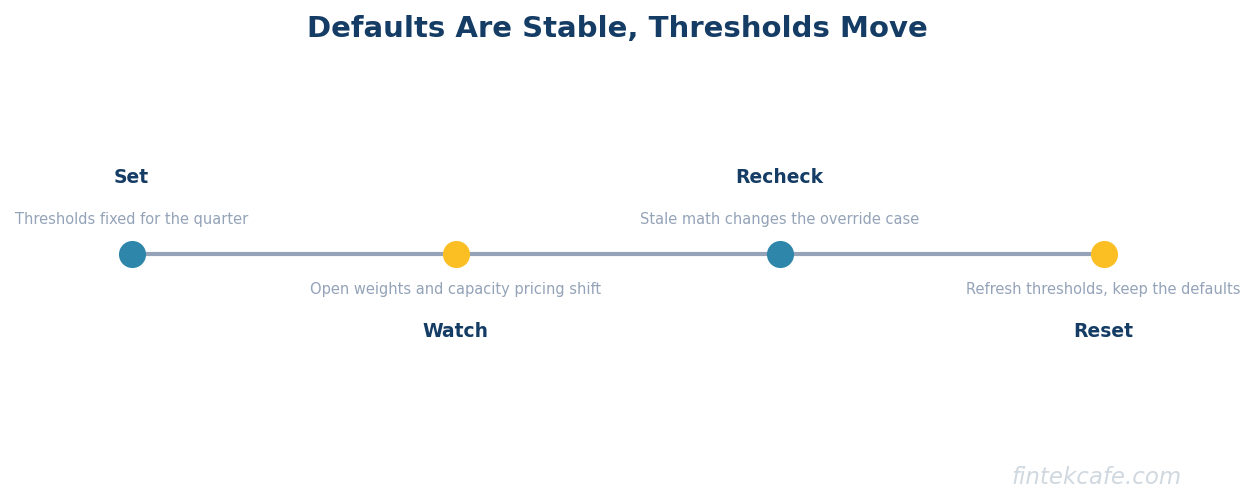
The six defaults above are structural: they follow from what each layer actually encodes, and that has not changed and is unlikely to change quickly. What moves, and moves quarterly, is where each override condition's threshold sits. Two forces are pulling in opposite directions during the current cycle. Open-weight model releases keep improving the self-host case at the model layer, because a stronger freely-licensed model lowers the volume threshold at which fine-tuning or distillation beats an API call, covered in the pricing-power shift documented in open weights and frontier pricing power. At the same time, hyperscaler and neocloud capacity economics keep strengthening the rent case at the inference infrastructure layer, because committed-capacity discounts and the sheer scale of hyperscaler build-out keep widening the volume gap a self-managed GPU fleet would need to clear to compete. A team that fixed its build-versus-buy thresholds two quarters ago at either layer is running stale math in at least one direction, and the correct operating discipline is to re-run the threshold test, not the whole framework, every quarter.
How to Use This Framework in a Strategy Meeting
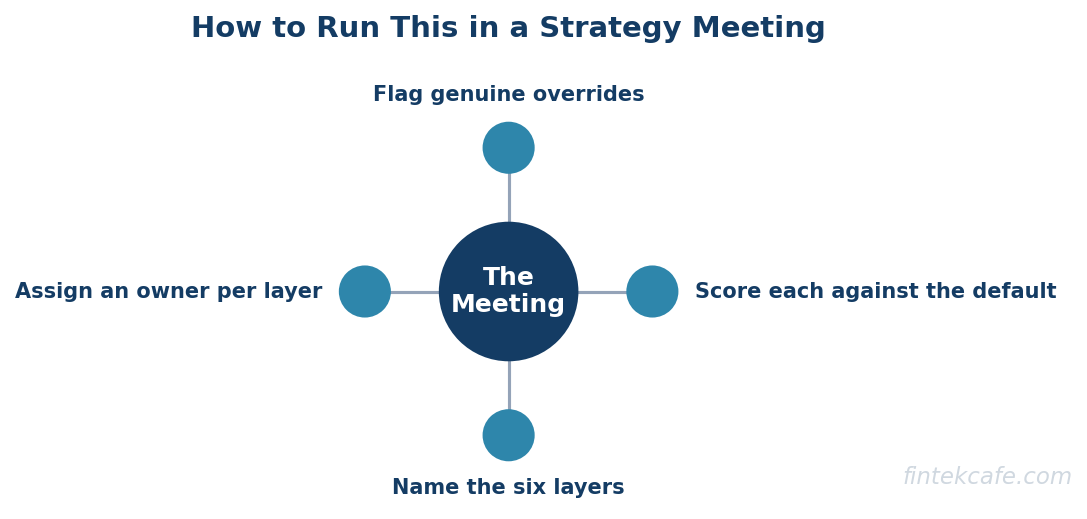
Run the six-layer table against your specific initiative before the strategy conversation drifts into a single build-or-buy debate. For each layer, state the default, then state explicitly whether your organization meets the override condition, with evidence rather than aspiration: a claimed volume threshold should be measured, not projected, and a claimed differentiation should be defensible to a skeptical board member. Where no override condition is met, take the default without further debate, because re-arguing a structural default from first principles every planning cycle is the actual cost most organizations are paying for treating this as one big decision instead of six small ones. Where an override condition is genuinely met, document the specific evidence that met it, because that evidence is what next quarter's threshold review will re-test.
The meeting fails in a predictable way when the six layers are not separated: someone raises a build argument that is true at one layer, the application layer's differentiation logic, and the room generalizes it to justify building at every layer, including the model and inference layers where the same argument does not hold. The discipline that prevents this is procedural rather than analytical: force the table onto a whiteboard or a shared document before opening the floor, resolve each row independently, and treat a proposal to deviate from a default as a motion that requires the override evidence attached, not a mood in the room. A strategy meeting that produces six rows of decisions with attached evidence has done the job the framework is for. A strategy meeting that produces one slide with a single build-or-buy verdict has not, no matter how confident the slide sounds.
What Changes as the Initiative Matures
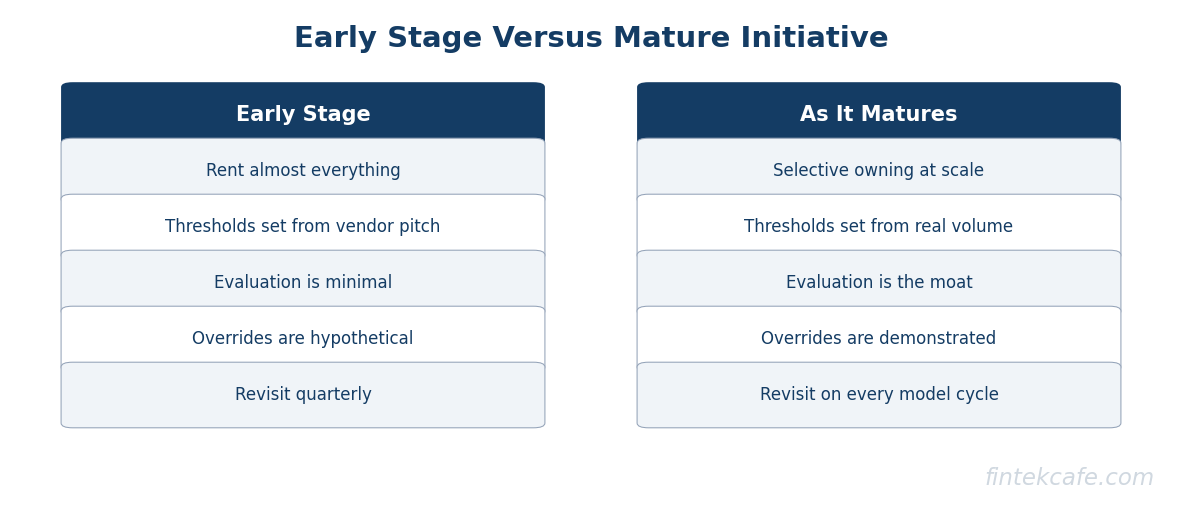
The six-layer answer for a pilot is frequently different from the six-layer answer for the same initiative at scale, and treating the framework as a one-time exercise misses that drift. A pilot rarely clears any override threshold: volume is too low to justify owned inference capacity, the task is too unstable to justify fine-tuning a model, and the application logic is still being discovered rather than differentiated, so the defaults hold cleanly across all six layers and the pilot should be built almost entirely on rented infrastructure. As the initiative scales toward production, the layers diverge. Evaluation and governance ownership should already be in place from the pilot, because retrofitting judgment onto a system already in production is far more expensive than building it in from the start. The model and inference layers are where the override conditions are most likely to activate as volume grows, and they are also the layers where the thresholds move fastest with the market, which is why a scaling initiative should schedule an explicit re-run of the model and inference rows, on measured production volume, at every major growth milestone rather than leaving the pilot-stage verdict in place by default.
FAQ
FAQ
Is there ever a case for building instead of renting a foundation model?
Rarely, and only at the model layer's edge cases: narrow, high-volume, stable tasks where an organization has proprietary training data a general model cannot access, and where the cost of a smaller, fine-tuned or distilled model clearly beats sustained API spend. Full ground-up frontier model training remains outside the reach of virtually every enterprise; the realistic override is fine-tuning or distillation, not training from scratch.
Why is evaluation the only layer with no override condition?
Because evaluation is not infrastructure, it is a judgment artifact: the definition of what counts as a correct answer for your business. Every other layer's rent option still lets you retain your own judgment somewhere in the system. A rented evaluation suite hands your judgment to the vendor that built the suite, which defeats the purpose of having one.
How often should the build-versus-buy call be revisited?
Quarterly at minimum for the model and inference layers, where pricing and capability shift fastest; annually is sufficient for governance and application-layer calls, which are anchored more to business strategy than to a moving technical frontier. The trigger for an off-cycle review is any major open-weight release or capacity-pricing shift, not the calendar.
What is the single biggest mistake organizations make with this decision?
Treating it as one decision. Organizations that resolve build-versus-buy once, at the executive level, and apply the verdict uniformly across all six layers either overbuild commodity infrastructure or underbuild the judgment layer that was supposed to differentiate the product. The six-layer split is the fix, not a refinement.
Does this framework apply the same way to a startup and a large enterprise?
The six layers and the spine sentence apply identically; what differs is where the override thresholds sit. A startup rarely clears the volume threshold to own inference infrastructure and almost never should build a model, but it can and should own its evaluation suite and its differentiation-adjacent application logic from day one, because those are the layers where its judgment, not its capital, is the scarce resource.
Related Articles
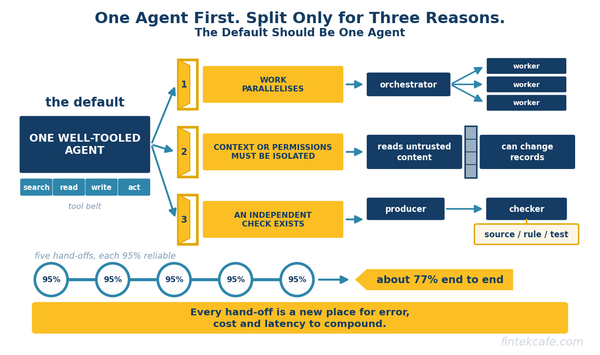
Multi-Agent Systems: When Splitting Work Across Agents Helps, and When It Multiplies Failure
Most tasks run better on one well-tooled agent. Multi-agent systems pay off only for parallel work, isolated context or independent checks.
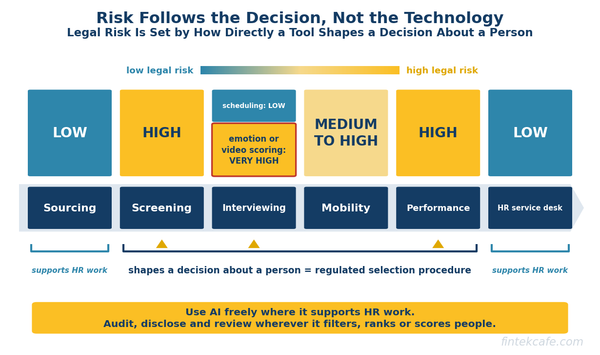
AI in Hiring and HR: Where It Helps, and Where the Legal Risk Sits
Where AI helps in hiring and HR, where legal risk concentrates, what NYC, the EU, Colorado, Illinois and California require, and which controls hold up.
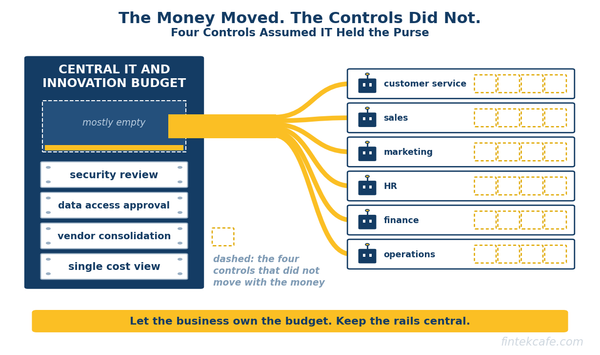
The AI Budget Is Moving From IT to the Business Lines, and Governance Has Not Followed
AI spend is moving from central IT to business lines. That ties cost to outcomes but breaks controls built for an IT-held purse. The model that works.