
Agentic Receivables: The Back Office Is Where Agent Payments Get Real
The industry's attention on agentic commerce has settled almost entirely on the consumer storefront: an agent browsing a catalog, comparing prices, and completing checkout on a shopper's behalf. It is the more photogenic version of the story, and it is also, for now, mostly stuck. The genuinely operational deployment of agent-initiated payments is happening somewhere far less glamorous: the B2B back office. Fiserv has partnered with Stuut to bring agentic AI to enterprise receivables. Plaid has partnered with Sierra specifically to move agents from conversation to completed business outcomes rather than just better chat. A wave of funded startups, Natural's thirty-million-dollar raise among them, is building agent-native payment rails aimed squarely at the same function. None of these deals are chasing the checkout agent. They are chasing accounts receivable.
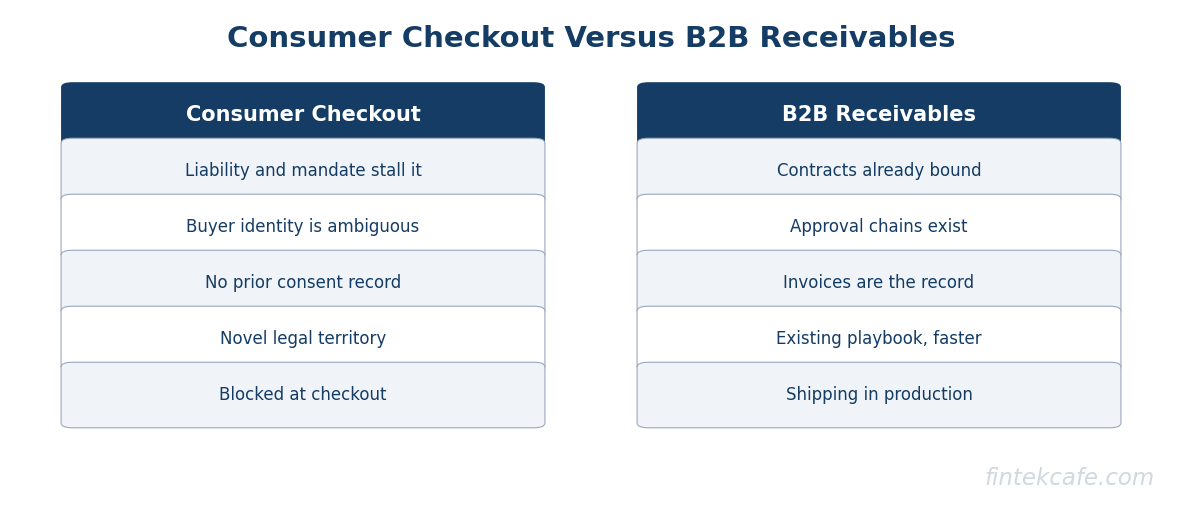
The contrarian read is that this is not a sequencing accident. Consumer agentic commerce is blocked on two hard problems, liability when an agent buys the wrong thing or gets defrauded, and mandate, proving an agent was actually authorized to spend a specific merchant's money in a specific way, and neither problem has a settled answer yet, a gap examined in the broader analysis of what happens to payments when the buyer is an AI. B2B receivables does not have either problem, because the counterparties are known contracts, the amounts are already invoiced, and the approval chains an agent would need to respect already exist as written policy inside every finance department on earth. Receivables was never going to be the hard case. It was always going to be the beachhead, and understanding why explains where agentic payments actually go next, well before the consumer version does.
Why Receivables Is the Beachhead
Three properties make accounts receivable the friendliest possible environment for an autonomous agent handling money, and none of them require solving a new trust problem.
The data is structured. An invoice has a fixed schema: amount, due date, customer, line items, payment terms. An agent does not need to interpret ambiguous natural language to know what is owed and by when; the ambiguity that makes consumer commerce hard, what did the shopper actually want, does not exist in a system built entirely from prior agreements.
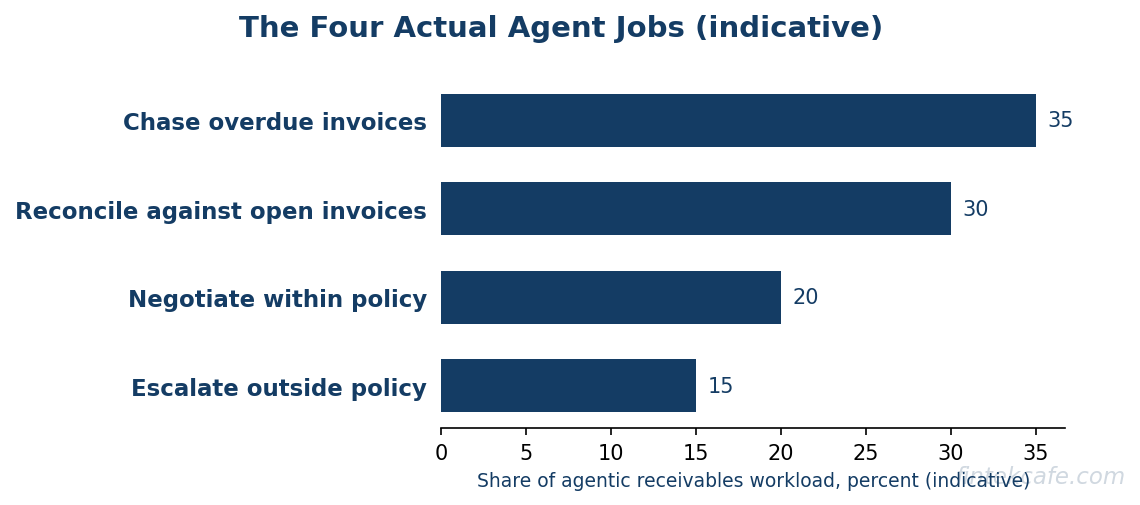
The actions are bounded. An AR agent's action space is narrow and enumerable: send a reminder, apply a payment, offer a payment plan within a pre-approved discount and term range, flag a dispute, escalate an exception to a human. Every one of these actions maps to something a human AR clerk already does routinely, under an existing policy, which means the agent is automating a bounded, well-understood task rather than inventing new authority.
The outcomes are measurable in numbers the finance function already tracks. Days sales outstanding, dispute resolution time, and cash application accuracy are metrics every CFO already reports on, so an agent's contribution shows up in existing dashboards rather than requiring a new measurement framework to prove its worth. This matters more than it sounds: a technology that improves a number the board already watches gets funded faster than one that requires inventing a new number to justify itself.
This is a Premium Article
Sign up for a Premium membership to read this article and get full access to strategic intelligence on technology and business.
Already a member? Sign in
Related Articles
Accounts Payable Automation: What AI Can Actually Take Over in Invoice-to-Pay
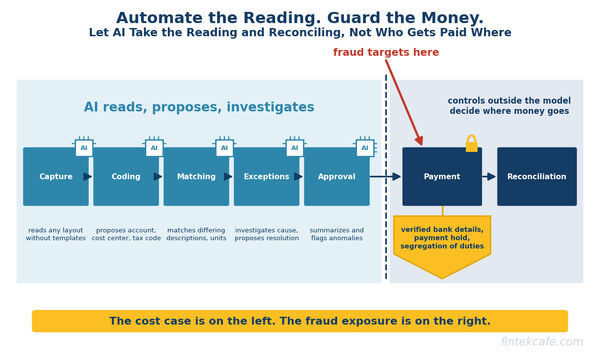
What AI can take over in accounts payable, step by step from capture to payment, where the fraud risk grows, and which controls must stay outside the model.
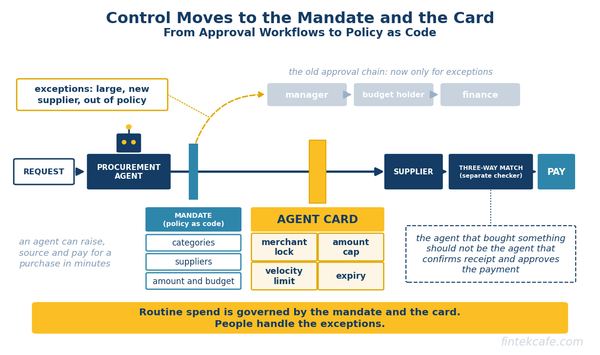
Procurement Is Where Agents Will Spend the Company's Money First
The first agents trusted with company money will buy for the enterprise. Control moves from approval chains to policy as code and card-level limits.
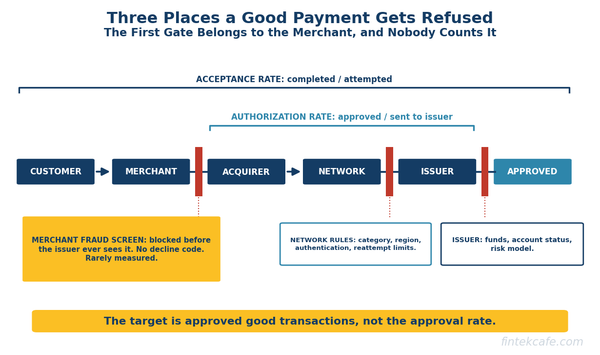
Why Card Payments Get Declined, and How Merchants Raise Their Approval Rate
Why card payments get declined, soft vs hard declines, and the levers that raise authorization rates without letting fraud and chargebacks rise with them.