
Sovereign Cloud: The Compliance Product Hyperscalers Love to Sell
Five years ago, sovereign cloud barely existed as a product category. Today it is among the fastest-growing lines the hyperscalers sell, with dedicated European entities, government-partnered regions, and sovereignty controls appearing across every major provider's catalog, priced at a premium and marketed with the language of national autonomy. Industry forecasts routinely project the sovereign cloud market growing at rates that would embarrass most software categories, into the hundreds of billions of dollars equivalent by the early 2030s.
The contrarian read, and the one a buyer should hold onto through every sales conversation, is that sovereign cloud is less a technology than a pricing tier. Underneath most sovereign offerings sits the same infrastructure, the same silicon, the same software stack the provider runs everywhere, wrapped in jurisdiction guarantees, personnel controls, and audit rights, and sold at a markup to buyers whose actual problem is regulatory anxiety rather than a defined technical requirement. That does not make the product worthless. Some regulated workloads genuinely need some of what sovereignty sells. It makes the product dangerous to buy imprecisely, because the premium is real, the constraints are real, and the protection delivered is narrower than the marketing implies. The discipline is knowing which layer of sovereignty a workload actually requires and paying for exactly that layer, no more.
The timing of this analysis is not incidental. The regime just changed. The UK has formally designated Microsoft, Google, AWS and Oracle as critical third parties under direct oversight of its financial regulators, the first time the hyperscalers themselves have become supervised entities rather than mere suppliers to supervised entities. The EU has been pushing the same direction through DORA's oversight framework for critical ICT providers and hardening data-residency expectations across member states. Regulators supervising providers directly changes the sovereignty calculus in ways that cut against the sales pitch, and the end of this piece returns to exactly that.
What Sovereign Offerings Deliver Versus What They Imply
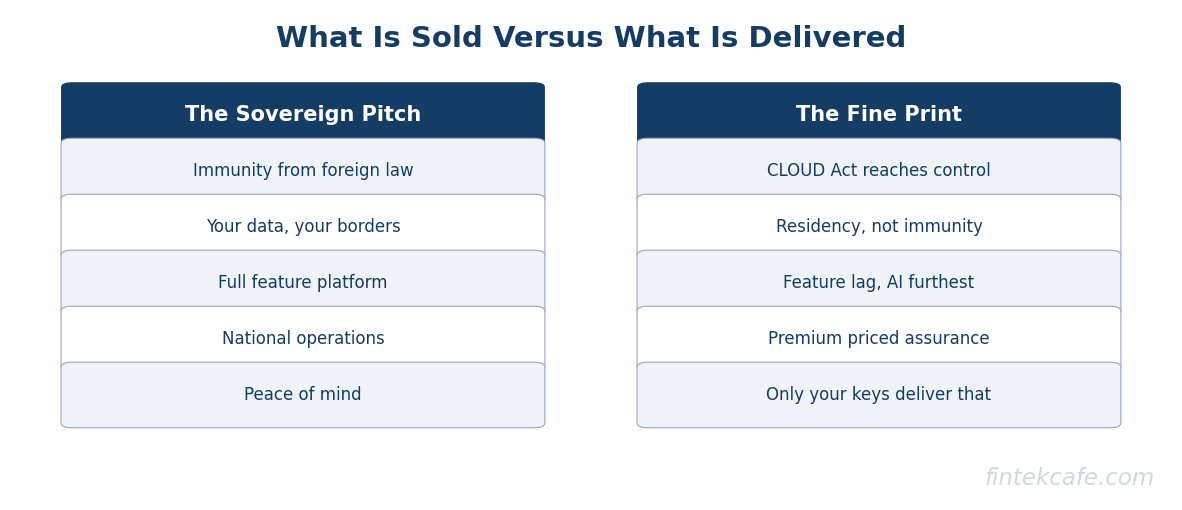
Start with the honest inventory, because the gap between delivered and implied is where the premium hides.
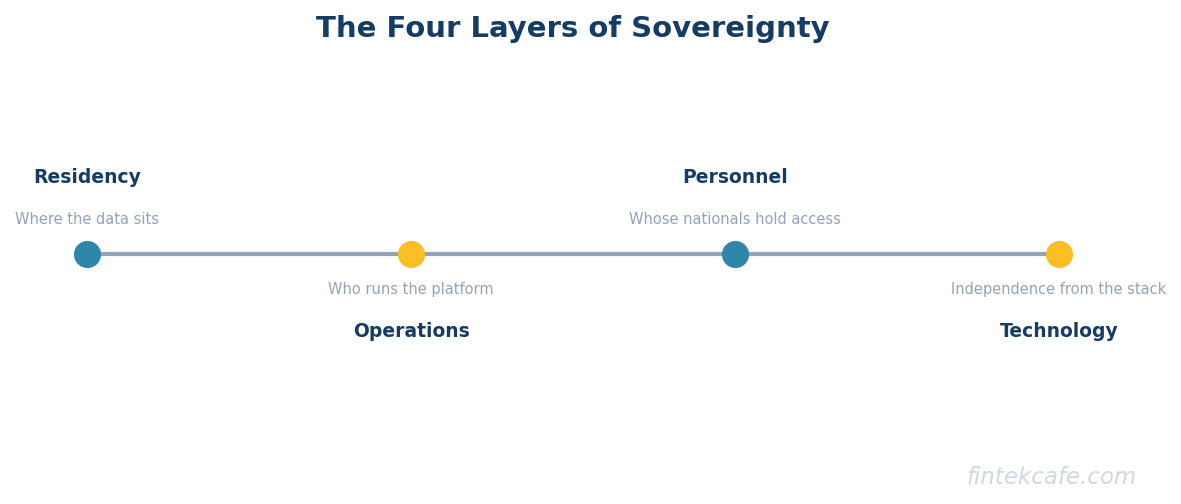
What sovereign offerings reliably deliver: data residency, meaning customer data at rest and usually in transit stays within a named jurisdiction; operational and support boundaries, meaning administrative access and support functions are staffed within the jurisdiction, sometimes with citizenship or clearance requirements; contractual audit and transparency rights beyond the standard enterprise agreement; and in the strongest variants, a legally separate operating entity, locally owned or governed, running the platform under license, so that the entity holding the customer relationship sits inside the jurisdiction's legal perimeter.
What the marketing implies but mostly does not deliver: immunity from foreign legal process. This is the CLOUD Act problem, and no data center location solves it. United States law asserts that a provider subject to US jurisdiction can be compelled to produce data in its possession, custody, or control regardless of where the data is stored. Locating the servers in Frankfurt or Paris does not, by itself, move the data outside that reach if the operating company remains a US entity or a controlled subsidiary. The stronger sovereign structures attack the control link, placing operations under a locally owned partner or trustee arrangement so the US parent arguably lacks possession or control. Arguably is the operative word: these structures are legal engineering built on contested interpretations, largely untested in court, and a buyer whose threat model is "a foreign government compels my provider" is buying a probability shift, not an immunity. Organizations find, when counsel walks through the mechanics, that the honest promise is narrower: sovereignty reduces the surface for foreign legal process and creates friction and notice where there was none, but the only data genuinely beyond a provider's compellable reach is data the provider cannot decrypt, which is a key-management architecture question, not a region question.
The second implication that deserves scrutiny is technological independence. A sovereign region running a hyperscaler's stack remains dependent on that stack: updates, security patches, control-plane software, and the roadmap all originate with the parent. Some European sovereign ventures market independence from exactly this, and the trade is stark, because leaving the hyperscaler stack means leaving most of its service catalog behind.
This is a Premium Article
Sign up for a Premium membership to read this article and get full access to strategic intelligence on technology and business.
Already a member? Sign in
Related Articles
Integration Platforms Are the Quiet Winners of the Agent Era
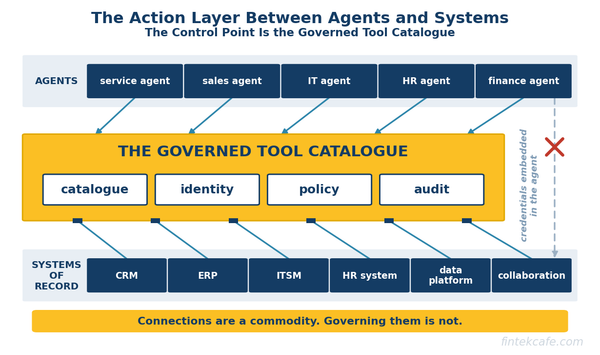
Agents act through integrations. iPaaS and API vendors hold the connectors, credentials and audit trails, and MCP makes governing that layer worth more.
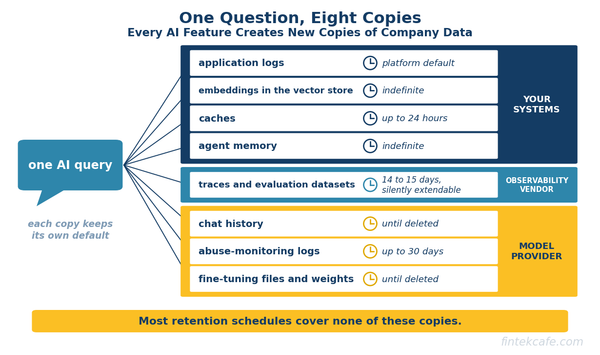
What Happens to Your Data Inside AI Systems: Retention, Deletion and the Copies Nobody Tracks
Every AI feature copies company data into prompts, logs, embeddings and memory. Where each copy lives, what vendors retain, and how to make deletion real.
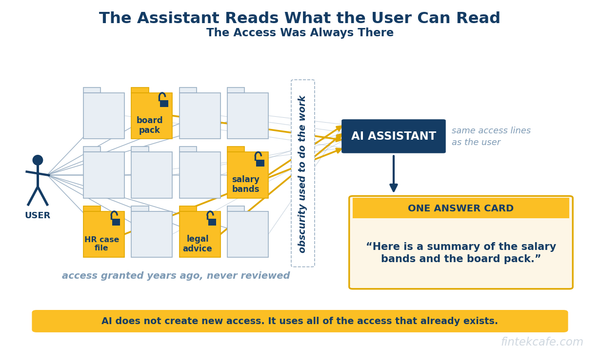
Data Classification: The Step Every Enterprise AI Rollout Skips, and What It Costs Later
Why AI assistants expose overshared data, how data classification fixes it, what to label first, and a 90-day plan for executives.