
Cross-Border B2B Payments: Why the Correspondent Stack Refuses to Die
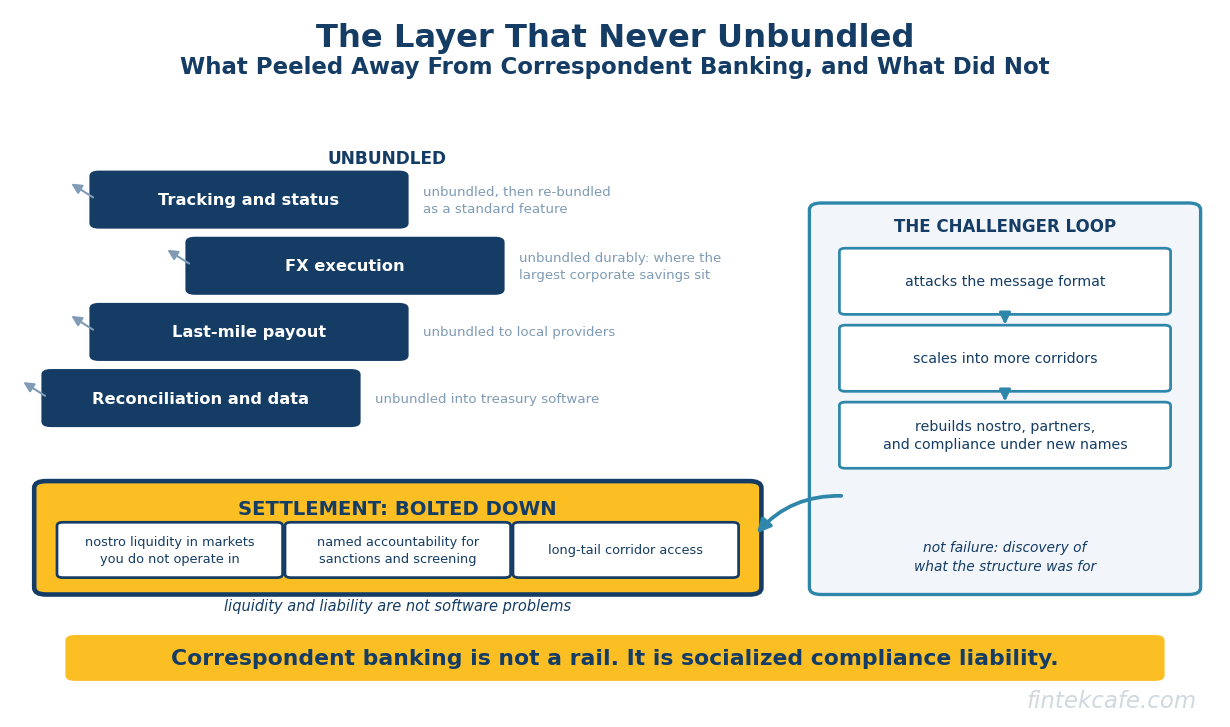
Every few years the correspondent banking network is declared obsolete. Tracking and same-day settlement through SWIFT gpi were going to remove the reason to leave it. Blockchain consortia were going to replace it with shared ledgers. Stablecoins were going to route around it entirely. Instant-payment scheme linkages between domestic real-time systems were going to make it unnecessary for whole regions. Each of these was announced as a displacement, each was technically real, and the correspondent stack still moves the overwhelming majority of cross-border business-to-business value.
The standard explanation is incumbent inertia, and it is wrong in a way that matters. The correspondent network is not a technology that a better technology can replace. It is a credit-and-compliance web wearing the costume of a payment rail. What a correspondent bank actually provides is a nostro account funded with real liquidity in a currency and jurisdiction the sending bank does not operate in, a willingness to perform sanctions and anti-money-laundering screening on the underlying parties, and legal accountability for having done so. The message format is the least important part of that arrangement and the only part the challengers initially attacked.
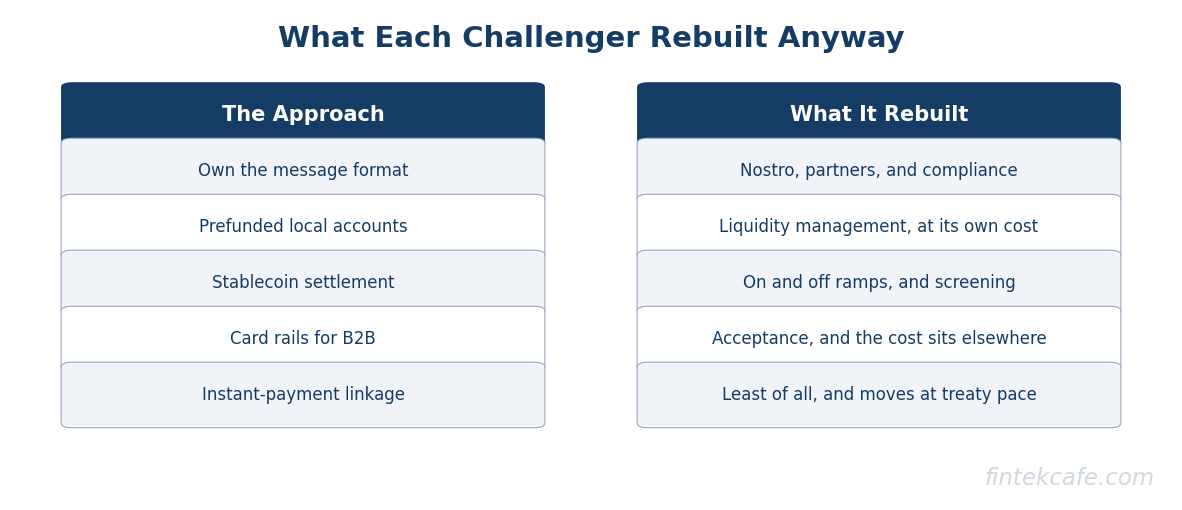
The thesis is that the correspondent stack persists because it socializes compliance liability across a network of institutions, each accepting a defined slice of accountability for the counterparties it knows. Every challenger that scales past a niche discovers it must underwrite that same liability, and rebuilds the same structure under a different name: pre-funded local accounts become nostro balances, local partner banks become correspondents, and the compliance function becomes the largest cost line. The unbundling that actually happened is real but narrower than advertised, and understanding which layers peeled off is the difference between a treasury strategy and a procurement fashion.
What the Correspondent Network Actually Provides
Three things, none of which is speed.
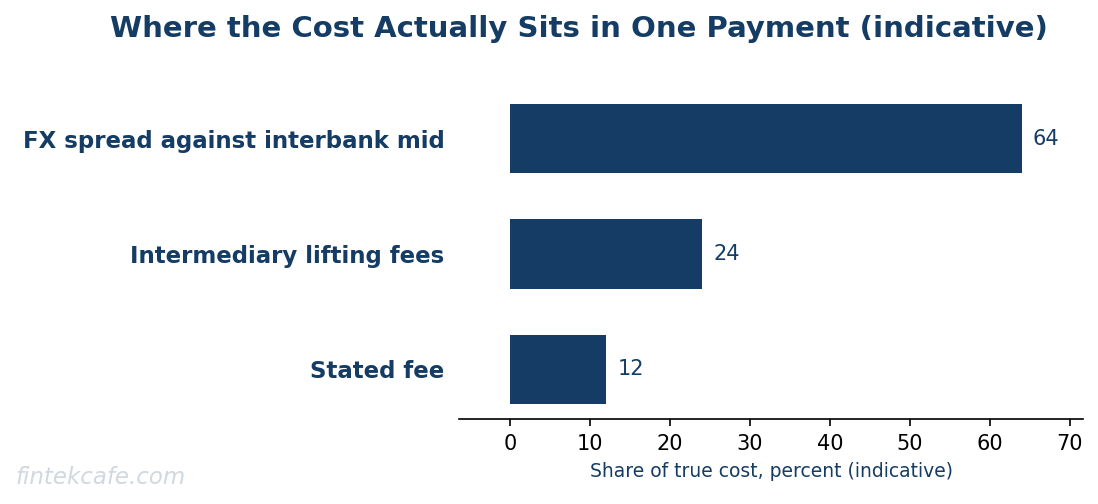
Liquidity in a place you are not. A bank sending value into a currency it does not hold needs an account with an institution that does, pre-funded with real money. Those nostro balances are trapped working capital, they carry an opportunity cost, and they are the single largest economic burden of the model. They are also what makes settlement possible without a shared ledger between parties who have no other relationship.
Compliance accountability with a named owner. Sanctions screening, anti-money-laundering monitoring, and know-your-customer obligations on the underlying parties attach to specific institutions in specific jurisdictions, with named liability. The correspondent relationship is fundamentally an agreement about who is accountable for screening what. This is the layer challengers consistently underestimate, because from outside it looks like a cost rather than the product.
Local market access, including the parts nobody wants. Reaching a beneficiary at a small bank in a thin corridor requires a chain of relationships that terminates somewhere unglamorous. The long tail of corridors is expensive, low-volume, and carries the highest compliance risk per unit of value, which is exactly why challengers start with the dense corridors and why the tail stays where it is.
The decline in active correspondent relationships over the past decade is the clearest evidence for this reading. Banks exited relationships not because a better technology arrived but because the compliance cost and liability exposure of maintaining them stopped being worth the revenue, a de-risking pattern that international bodies have tracked with concern for years. The network shrank toward its most defensible core. It did not get displaced; it got more concentrated, and the corridors that lost access got worse service rather than better alternatives.
This is a Premium Article
Sign up for a Premium membership to read this article and get full access to strategic intelligence on technology and business.
Already a member? Sign in
Related Articles
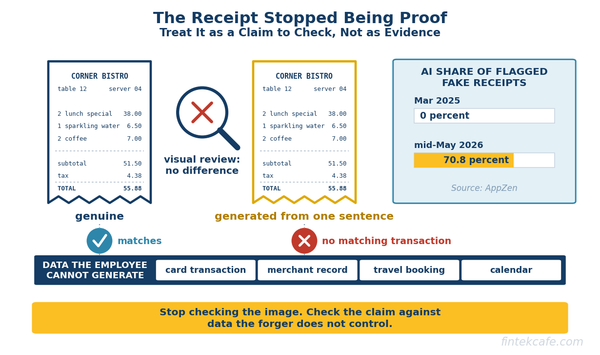
AI-Generated Fake Receipts: How Expense Fraud Changed and How Finance Teams Catch It
AI-generated fake receipts now beat visual review. How expense fraud changed, which detection still works, and the controls to use by company size.
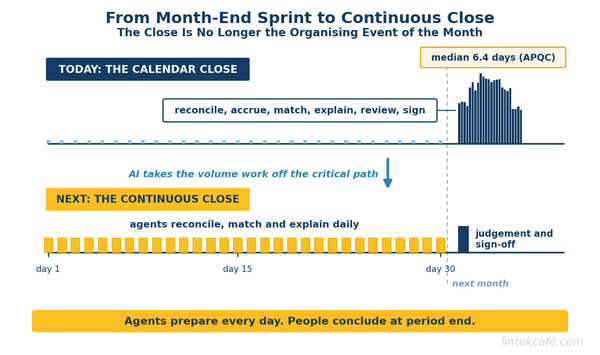
The Monthly Close Is Becoming Continuous, and the Finance Calendar Will Not Survive It
AI is taking the bottleneck work out of the month-end close. The close becomes continuous with a short sign-off, and finance, audit and the board change.
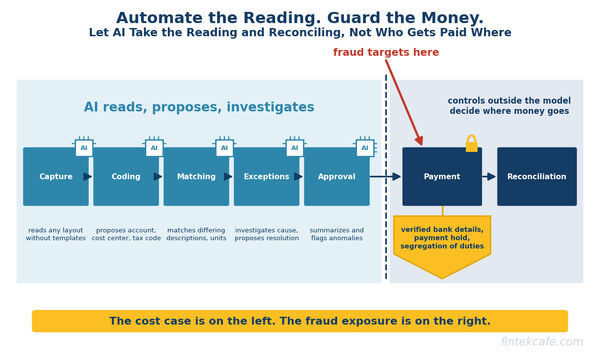
Accounts Payable Automation: What AI Can Actually Take Over in Invoice-to-Pay
What AI can take over in accounts payable, step by step from capture to payment, where the fraud risk grows, and which controls must stay outside the model.