
The Consortium Stablecoin: Why the Card Networks Are Funding Their Own Disruption
On its face, the announcement reads like an industry funding its own funeral. A coalition of more than one hundred forty companies, with Stripe, Visa, and Mastercard among the architects, has launched an open stablecoin consortium aimed squarely at the roughly three hundred twenty five billion dollar market that Tether and Circle split between them today, promising no-cost minting and redemption and shared governance over the rail. Card networks earn their margins from interchange-bearing transactions; stablecoins settle value with no interchange at all. Why would the tollbooth owners finance a free road?
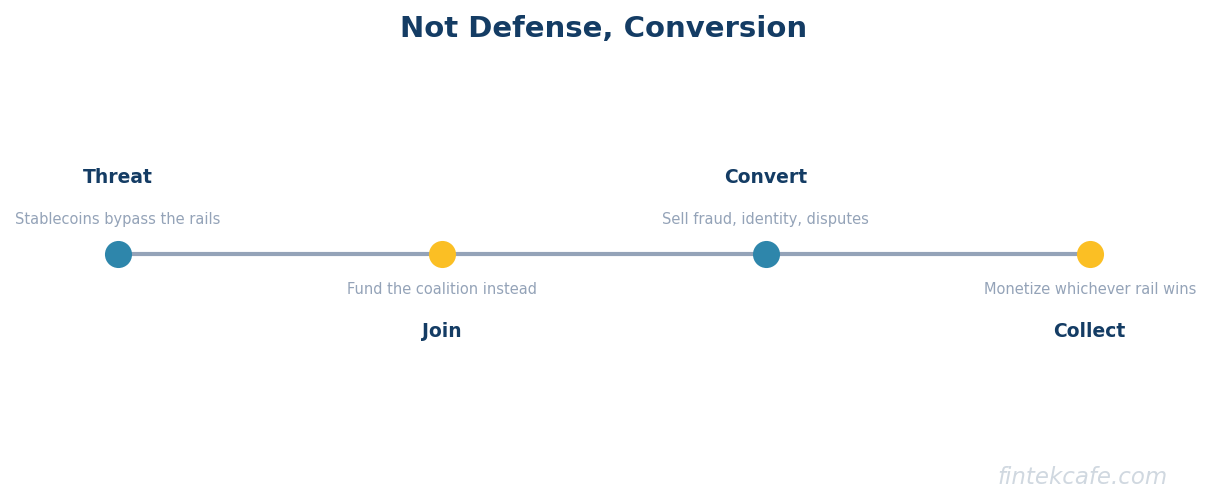
Because they have done it before, and it worked every time. The contrarian read on the consortium coin is that it is not a defensive hedge or an innovation-theater press release. It is the oldest playbook in payments, executed with unusual speed: when a new rail threatens the network, own the rail's governance before it owns you. Visa and Mastercard are themselves the product of that playbook, born as bank consortiums built to govern a rail no single bank could be trusted to own. The banks that formed them understood something the standalone stablecoin issuers are about to learn: in payments, the durable profits never sit in the rail. They sit in the rules.
Why a Consortium Coin Exists at All
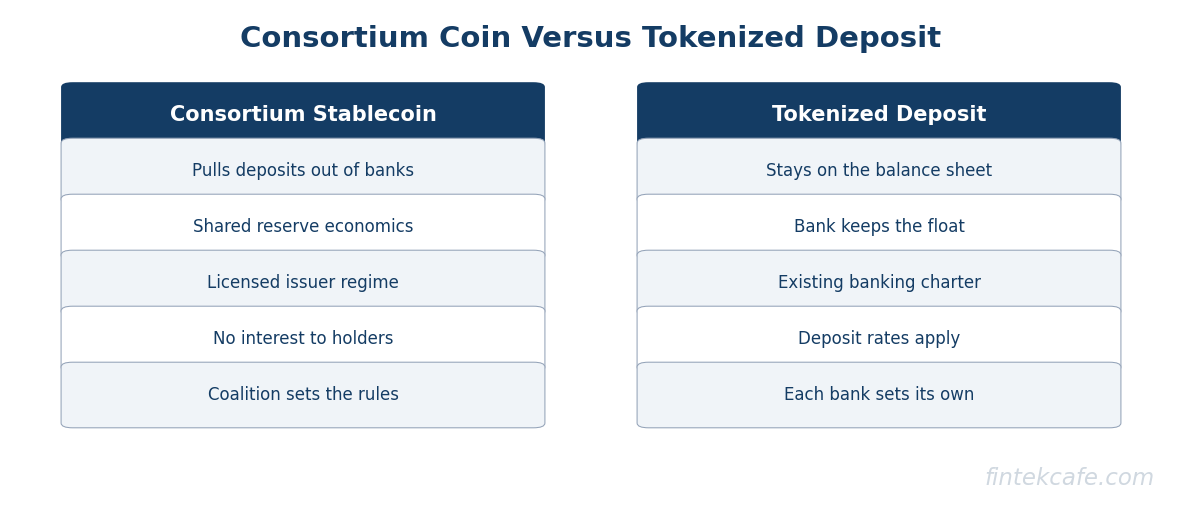
Start with what the consortium is actually attacking, because it is not stablecoins. It is seigniorage: the business model of the incumbent issuers. Tether and Circle earn their revenue from the float, investing reserves, overwhelmingly short-term US Treasuries, and keeping the yield while holders earn nothing. At recent rate levels that translated into extraordinary economics: Tether reported profits in the range of thirteen billion dollars for 2024 on a headcount smaller than a mid-size bank branch network, and Circle's public filings show reserve income as effectively all of its revenue. That yield spread is the product. The token is just the wrapper.
A consortium coin with no-cost mint and redeem and shared reserve economics is a direct strike at that spread. If the reserve yield is passed through to participants, or used to zero out the transaction costs, the standalone issuer's margin becomes the consortium's subsidy budget. This is the classic move of a buyer coalition against a monopoly supplier: the members do not need the coin to be a profit center, they need it to exist so that no one else's coin becomes the standard they rent. Stripe processes payments, Visa and Mastercard route them, banks settle them; every one of them would rather share a free rail than pay a toll on someone else's.
The mechanics of how stablecoins actually move and settle are covered in stablecoins explained; the strategic point is that the technology was never the moat. Reserves, distribution, and regulatory standing are the moat, and the consortium is an argument that one hundred forty distribution owners hold more of all three than any crypto-native issuer.
This is a Premium Article
Sign up for a Premium membership to read this article and get full access to strategic intelligence on technology and business.
Already a member? Sign in
Related Articles
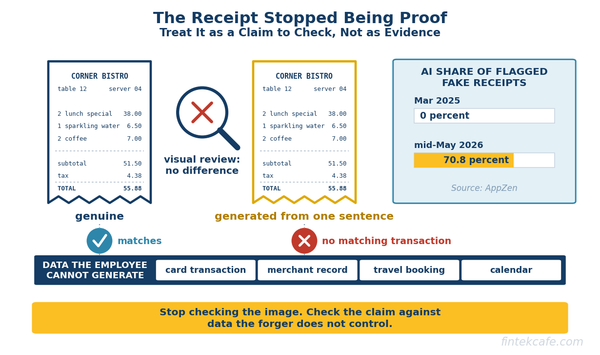
AI-Generated Fake Receipts: How Expense Fraud Changed and How Finance Teams Catch It
AI-generated fake receipts now beat visual review. How expense fraud changed, which detection still works, and the controls to use by company size.
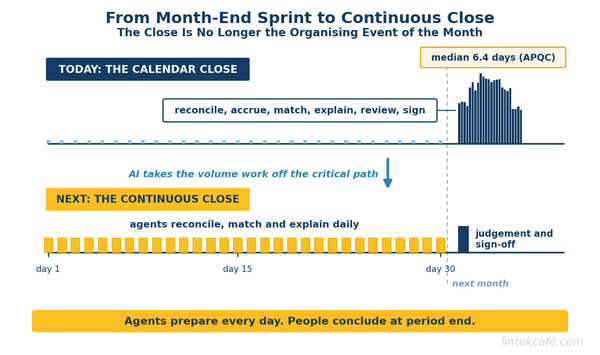
The Monthly Close Is Becoming Continuous, and the Finance Calendar Will Not Survive It
AI is taking the bottleneck work out of the month-end close. The close becomes continuous with a short sign-off, and finance, audit and the board change.
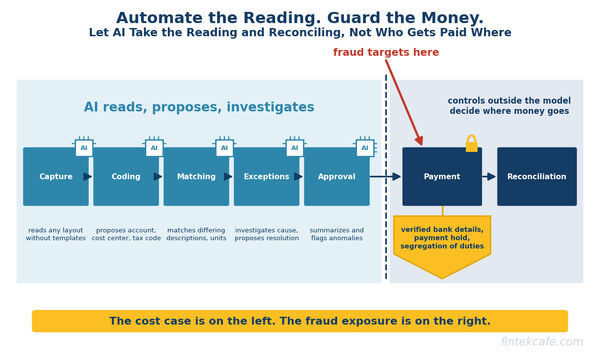
Accounts Payable Automation: What AI Can Actually Take Over in Invoice-to-Pay
What AI can take over in accounts payable, step by step from capture to payment, where the fraud risk grows, and which controls must stay outside the model.