
BNPL Grew Up: How Buy Now Pay Later Became a Balance Sheet Business
Buy Now Pay Later was pitched to investors as a payments company wearing a lending costume. Take a merchant fee of two to eight percent at checkout, underwrite the shopper in milliseconds, keep the loans to six weeks, and the credit risk was supposed to be a rounding error on what was really a transaction business: high volume, short duration, losses small and fast to surface. The costume was convincing enough that the sector traded on payments multiples through the boom, and the basic mechanics of the split-payment model, covered in how buy now pay later actually works, still describe the consumer's experience accurately.
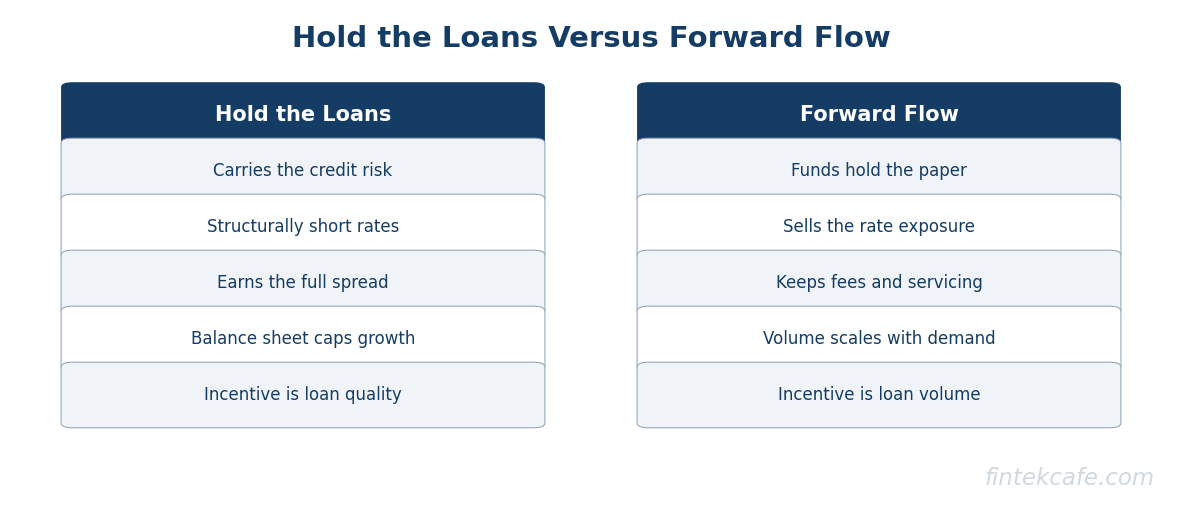
They no longer describe the business. BNPL quietly became a balance-sheet business, and the interesting question stopped being consumer adoption, which is settled, and became the two questions every lending business eventually answers: who funds the receivables, and who eats the credit cycle. Follow those two questions and the sector reorganizes in front of you, from a story about checkout buttons into a story about funding costs, forward-flow agreements with private credit funds, and the arrival of banks that were always going to win a fight about the cost of money.
The Model That Rates Broke
The original economics only worked in a world of free money, and it is worth being precise about why. A pay-in-four product generates a merchant fee once, up front, on a loan that lasts about six weeks. Annualize that and the revenue yield looks spectacular, but the product only compounds if the receivables can be funded continuously and cheaply, because the BNPL provider is fronting the merchant the full purchase price on day one and collecting from the consumer over forty-two days. The float has to be financed, permanently, at scale, and every basis point of funding cost comes straight out of a merchant fee that competition was compressing at the same time.
When policy rates went from zero to over five percent between 2022 and 2023, the sector's funding line repriced by more than most providers' entire net margin. Warehouse facilities, securitizations, and deposit alternatives all got more expensive at once, and the firms that had described themselves as payments companies discovered they had the liability structure of an unlicensed bank with none of a bank's funding advantages. The mechanism is the same one that runs through all of fintech, examined in how interest rates reshape fintech economics: businesses built on cheap wholesale funding are short a rate position they never priced. Klarna's swing from the boom-era peak to a valuation roughly eighty five percent lower in its 2022 down round was the sector's mark-to-market on that discovery, and its eventual New York listing in 2025 priced a business that had been rebuilt around cost discipline rather than growth at any price.
This is a Premium Article
Sign up for a Premium membership to read this article and get full access to strategic intelligence on technology and business.
Already a member? Sign in
Related Articles
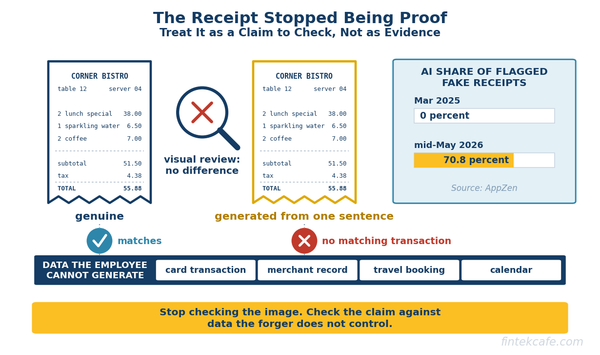
AI-Generated Fake Receipts: How Expense Fraud Changed and How Finance Teams Catch It
AI-generated fake receipts now beat visual review. How expense fraud changed, which detection still works, and the controls to use by company size.
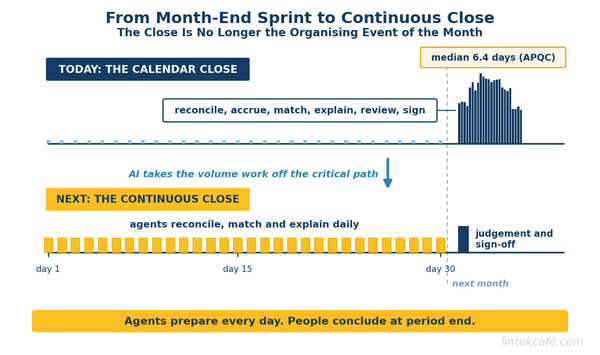
The Monthly Close Is Becoming Continuous, and the Finance Calendar Will Not Survive It
AI is taking the bottleneck work out of the month-end close. The close becomes continuous with a short sign-off, and finance, audit and the board change.
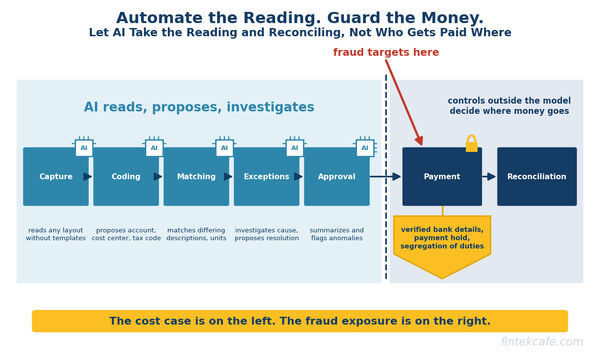
Accounts Payable Automation: What AI Can Actually Take Over in Invoice-to-Pay
What AI can take over in accounts payable, step by step from capture to payment, where the fraud risk grows, and which controls must stay outside the model.