
Hardware as a Subscription: The Financialization of the Device in Your Pocket
Apple is launching a lease-to-own device program in the United States, and Klarna is the balance sheet underneath it. Read as a checkout feature, this is a footnote: another payment option next to the trade-in program and the carrier installment plan. Read correctly, it is something bigger. The device in a customer's pocket is being converted from a thing that is bought once into a recurring revenue line that is bought perpetually, and the mechanism that makes that conversion possible, a BNPL specialist's underwriting and forward-flow machinery, is disappearing into invisible plumbing under the world's biggest consumer hardware brand. Apple gets a subscriber instead of a customer. Klarna gets distribution at a scale no marketing budget could buy. The device gets financialized, and almost nobody involved calls it a loan.
Three Ways to Pay for a Phone, and What Each One Actually Is
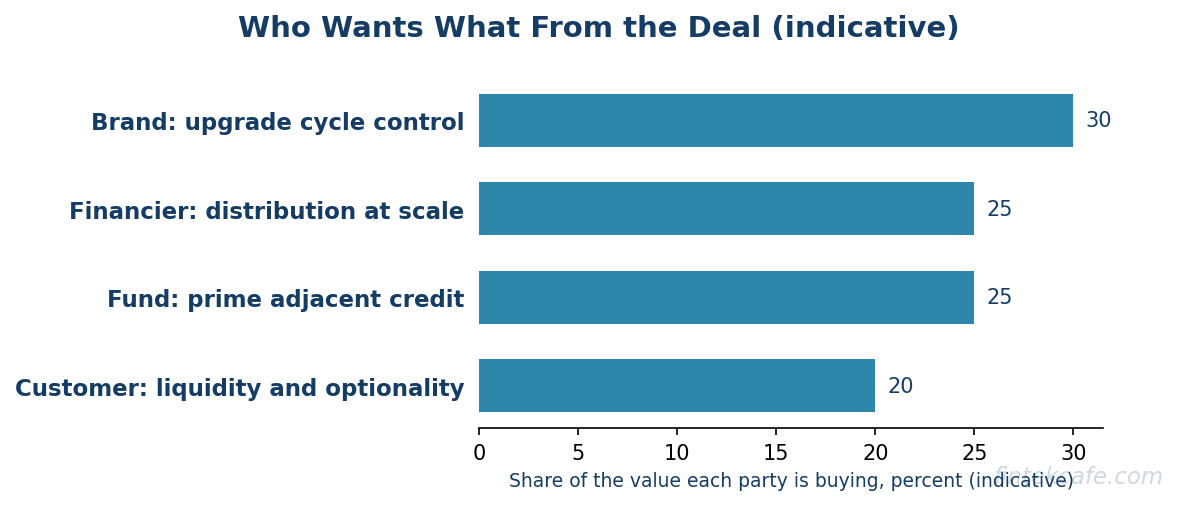
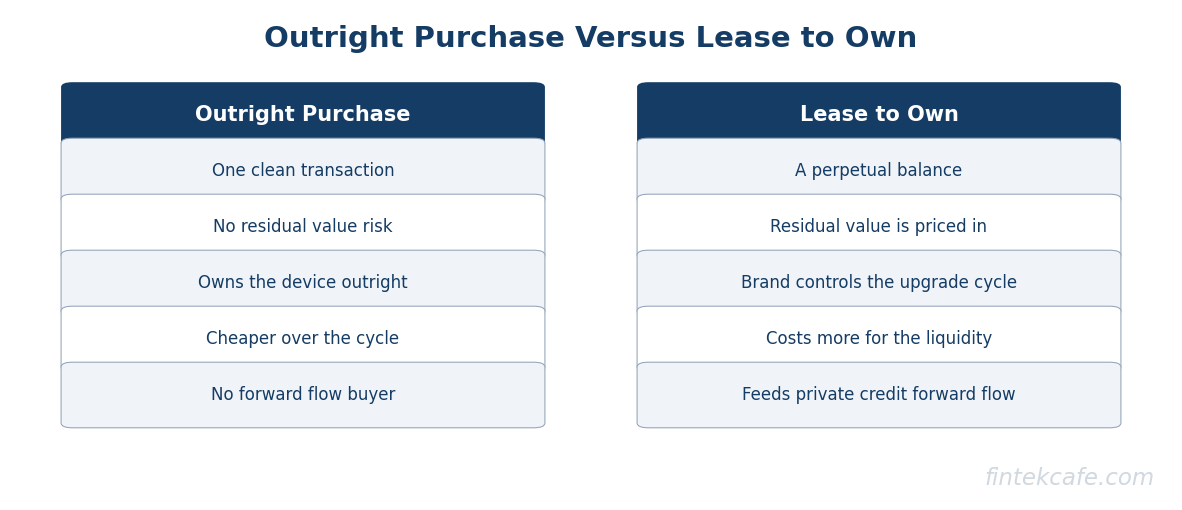
Outright purchase is the simple case: the customer pays once, owns the device outright, and carries no ongoing obligation. The seller books revenue immediately and holds no ongoing exposure to the device's fate. An installment plan splits the same purchase price into equal payments over a fixed term, typically zero-interest promotionally, with ownership transferring either immediately or at the final payment; the seller or its financing partner still books the full sale but now carries a receivable and a credit exposure to the buyer completing it. Lease-to-own is structurally different from both, and the difference is the whole story: the customer never owns the device during the lease term, payments are calibrated against the device's expected trade-in value rather than its full price, and at the end of the term the customer can pay a residual balloon to keep it, trade it in toward the next device, or return it. The financier, not the customer, holds the risk that the device is worth less at trade-in than projected, which is why lease pricing embeds a residual-value assumption that installment pricing never has to make.
That difference decides who owns the device, who holds the residual-value risk, and who books what revenue when. Outright sale and full-term installment both let the seller book full revenue up front against a receivable. Lease-to-own defers and reshapes revenue recognition around the residual, and it introduces an entirely new risk category, used-device valuation, that a simple installment book never carries. This is the same architectural fork that runs through consumer credit generally, examined in how buy now pay later became a balance-sheet business: the question that actually matters is never the payment schedule on the label, it is which balance sheet holds the risk once the label comes off. Financing device access rather than device ownership is also a variant of the broader shift documented in embedded finance, where a non-financial brand offers a financial product invisibly inside its own checkout, and the recurring-payment plumbing underneath the lease is the same infrastructure problem covered in how subscription billing infrastructure actually works: metering a recurring obligation, handling upgrades and early termination, and reconciling who is owed what when a lease converts mid-term.
This is a Premium Article
Sign up for a Premium membership to read this article and get full access to strategic intelligence on technology and business.
Already a member? Sign in
Related Articles
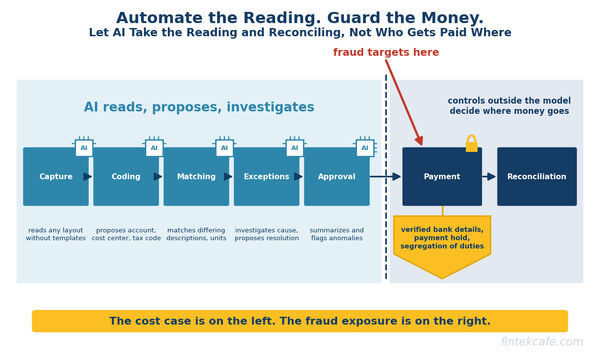
Accounts Payable Automation: What AI Can Actually Take Over in Invoice-to-Pay
What AI can take over in accounts payable, step by step from capture to payment, where the fraud risk grows, and which controls must stay outside the model.
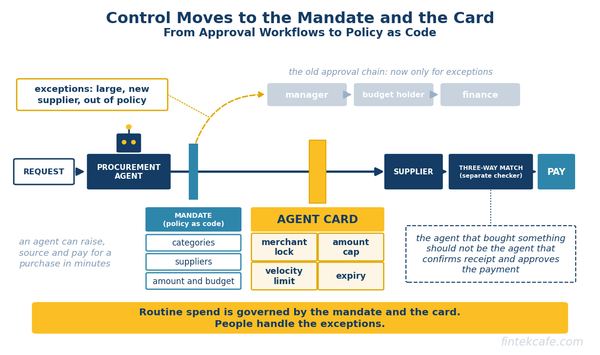
Procurement Is Where Agents Will Spend the Company's Money First
The first agents trusted with company money will buy for the enterprise. Control moves from approval chains to policy as code and card-level limits.
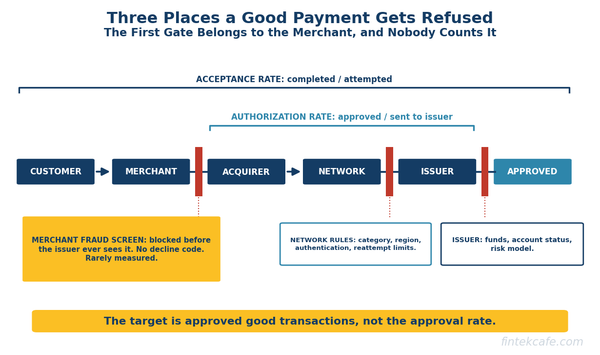
Why Card Payments Get Declined, and How Merchants Raise Their Approval Rate
Why card payments get declined, soft vs hard declines, and the levers that raise authorization rates without letting fraud and chargebacks rise with them.