
Document AI: When LLM Extraction Beats OCR Templates, and When It Does Not
The enterprise AI use case with the clearest path to production is not a chatbot. It is document AI: pulling the vendor name, invoice total, account number or policy date out of a document and writing it into a system of record, a task with a measurable right answer and a cost line that already exists. Executives are now being asked whether LLM document extraction should replace the template-based OCR and intelligent document processing tools that already do this job. The honest answer depends on the document mix, and the decisive variable is not average accuracy. It is whether the system knows when it is wrong. A template that cannot find a field returns nothing. A language model that cannot read a field will often return a plausible value, formatted correctly and delivered with the same confidence as a correct one. That single difference decides where each approach belongs, what controls LLM extraction needs before it touches money, and why the exception rate, not the per-page price, dominates the cost of every option.
Key Takeaways
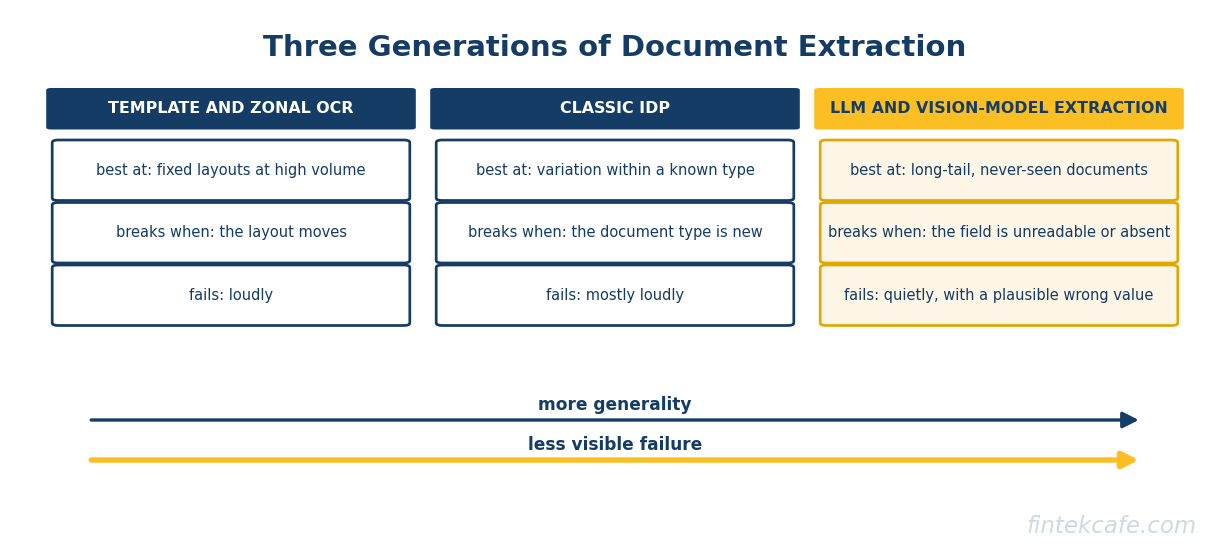
- There are three generations of document extraction, and each is best at something. Template and zonal OCR is cheap and exact on fixed layouts and brittle on everything else. Classic intelligent document processing (IDP) handles variation within a known document type. LLM and vision-model extraction handles documents it has never seen, and introduces confident wrong answers.
- The failure mode that matters is silent substitution. An extraction system that fails loudly is safe to automate around. One that fails plausibly needs validation designed specifically to catch it.
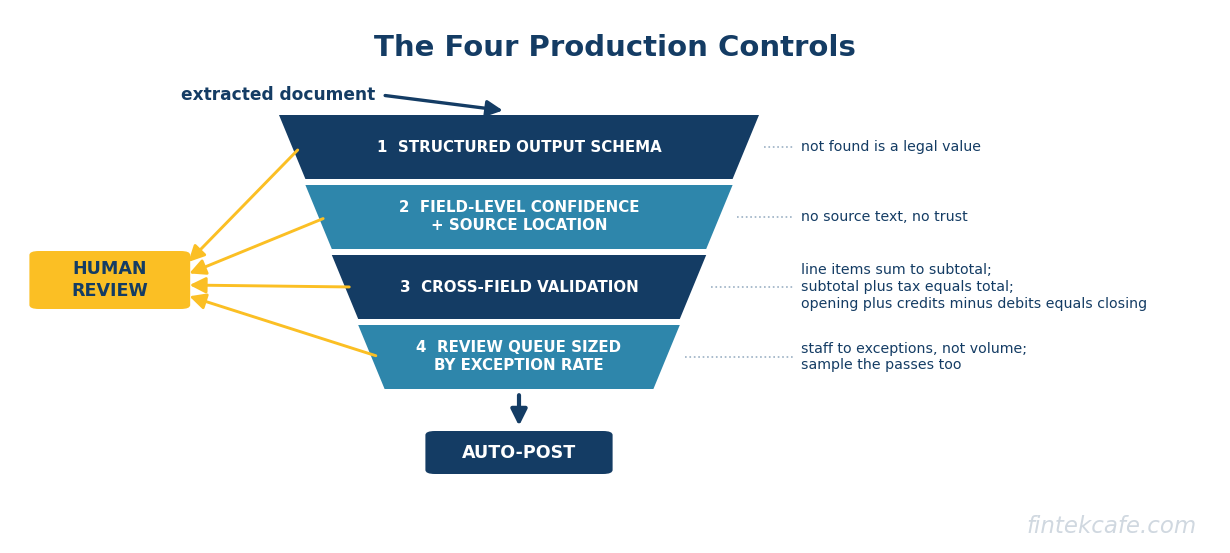
- Production safety comes from four controls: a structured output schema, field-level confidence, cross-field validation such as line items summing to the total, and a human review queue sized by exception rate rather than document volume.
- Exception rate dominates the cost arithmetic. A difference of a few percentage points in the share of documents that need a human is usually worth more than the entire per-page difference between a model call and an IDP licence.
- The defensible default for a finance operation with a mixed document estate is a hybrid: templates or trained IDP where layouts are fixed and volume is high, LLM extraction for the long tail, and one validation layer over both.
The Three Generations of Document Extraction
Document AI is the use of software to turn a document image or PDF into structured fields that a downstream system can use without a human rekeying them. The category has been rebuilt twice, and each rebuild moved the problem rather than removing it.
Generation one: template and zonal OCR
Optical character recognition converts pixels to text. Template extraction adds a map on top: the invoice number is in this rectangle, the total is in that one. When a supplier sends the same layout every month, this is close to perfect and extremely cheap, because the only intelligence involved is reading characters in a known location.
The brittleness is structural. A supplier redesigns its invoice, a scanner feeds the page at a slight angle, a second page pushes the totals block down, and the template reads the wrong rectangle. At scale, maintaining the template library is the real cost of the approach.
Generation two: classic intelligent document processing
IDP platforms replaced fixed rectangles with trained models that understand the layout of a document type. An IDP model trained on invoices learns that the total tends to sit near the bottom right, follows a label like "Amount due", and is the largest currency figure on the page. It handles a new supplier's invoice reasonably well without a new template, provided the document is still recognizably an invoice.
The boundary is the document type. IDP generalizes within the classes it was trained on and degrades sharply outside them. A lease agreement, a foreign-language customs form or a handwritten claim note is a new training project. Hyperscaler services price this generation per page: Amazon Textract, for example, lists form extraction at 0.05 US dollars per page and table extraction at 0.015 US dollars per page for the first million pages a month in US regions, per the AWS Textract pricing page.
Generation three: LLM and vision-model extraction
Large language models with vision input read a page the way a person does: they look at it, understand what kind of document it is, and answer a request such as "return the counterparty, effective date and termination notice period as JSON". No template, no training set for the document class. A document the system has never seen is handled the same way as one it has seen a million times.
That generality is real. It comes with the property the earlier generations did not have: the model generates its answer rather than locating it. When the text is legible, generation and location produce the same output. When the text is smudged, cut off, ambiguous or absent, generation produces something that looks like an answer.
| Dimension | Template and zonal OCR | Classic IDP | LLM and vision-model extraction |
|---|---|---|---|
| What it needs up front | A template per layout | Training data per document type | A prompt and an output schema |
| Best at | Fixed layouts at high volume | Variation within a known document type | Long-tail and never-seen documents |
| Breaks when | The layout moves | The document type is new | The field is unreadable or absent |
| How it fails | Loudly: empty or misplaced field | Mostly loudly, with low confidence scores | Quietly: a plausible, well-formatted wrong value |
| Ongoing cost driver | Template maintenance | Retraining and per-page licence | Per-page model cost and validation design |
| Explainability | Exact: the field came from this box | Good: bounding boxes and confidence | Weak unless the design demands source locations |
The Failure Mode That Decides Everything
Vendor comparisons report field-level accuracy on a benchmark set, which treats all errors as equal. In operations, errors differ by whether anyone notices them.
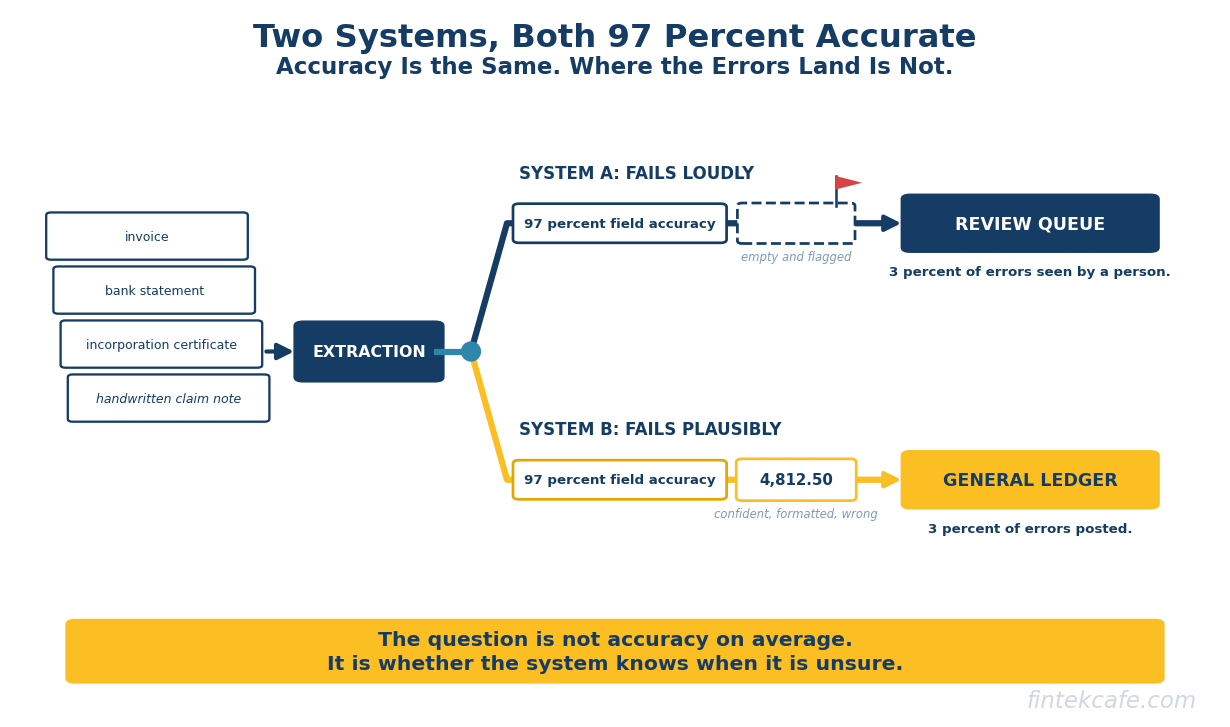
Consider two systems, each 97 percent accurate at the field level. System A, when it cannot read a field, leaves it blank and flags the document. Its 3 percent of errors arrive in a review queue. System B, when it cannot read a field, fills it with the most plausible value. Its 3 percent of errors arrive in the general ledger. The accuracy figures are identical and the operational risk is not remotely comparable.
LLM extraction tends toward System B by default. A model asked to return an invoice total will return a total, and on a page where the total is obscured, it may compute one from the line items, copy the subtotal, or pick the largest figure on the page. Each is a reasonable guess and each is wrong in a way that passes format validation.
The executive question is therefore not "how accurate is it" but "what fraction of its errors does it know about". A slightly less accurate system with well-calibrated uncertainty is safer to automate than a more accurate one that is confidently wrong. This is the same argument that makes AI evaluations a prerequisite for production rather than a research nicety: the eval set must measure how often errors are caught, not only how often they occur.
The Controls That Make LLM Extraction Production-Safe
Four controls, applied together, convert a generative extractor into something that can post to a ledger.
1. A structured output schema
Every extraction request should specify the exact fields, types and allowed values, and the model output should be constrained to that schema rather than parsed from free text. Current model APIs support schema-constrained generation natively, which eliminates malformed output as a failure class. The mechanics and the limits are covered in structured outputs for LLMs.
The critical design choice is to make "not found" a legal value for every field. A schema that requires a date forces the model to produce a date. A schema that allows a date or an explicit null with a reason gives it a way to say it could not read one, and a model given that option uses it far more often than a model denied it.
2. Field-level confidence and source location
A single document-level confidence score is not useful, because the decision to trust a document is really a decision to trust each field on it. Useful designs require the model to return, for every field, the verbatim source text and its location on the page, and treat a field whose value cannot be tied back to text on the page as unverified.
This is the single most effective control against silent substitution. A total the model computed rather than read will have no matching source string, and that mismatch is mechanically detectable. It also lets a reviewer see exactly where a value came from.
3. Cross-field validation
Financial documents are full of internal arithmetic, and that arithmetic is free validation. Line items should sum to the subtotal; subtotal plus tax should equal the total; the tax rate should be one that exists in the stated jurisdiction; a bank statement's opening balance plus credits minus debits should equal its closing balance; the IBAN check digits should validate. External checks add a second layer: the supplier exists in the vendor master, the purchase order number matches an open PO, the account holder name matches the application.
A document that passes schema validation, has source locations for every field and satisfies its internal arithmetic is very unlikely to contain a substituted value. A document that fails any of those checks goes to a person.
4. A review queue sized by exception rate
The human review step is not a fallback for when the AI fails. It is a designed component with a throughput requirement. The queue should be staffed against the expected exception rate, the fraction of documents that fail any validation, rather than against total volume, and that rate should be measured weekly by document type.
Two operating rules keep it honest. A sample of documents that passed every check should also be reviewed, since that is the only way to measure what the validations miss. And reviewer corrections should be logged as labeled data for the next model or prompt change.
The Cost Arithmetic, Once
Executives are usually shown the per-page price of each option. The per-page price is the smallest number in the calculation.
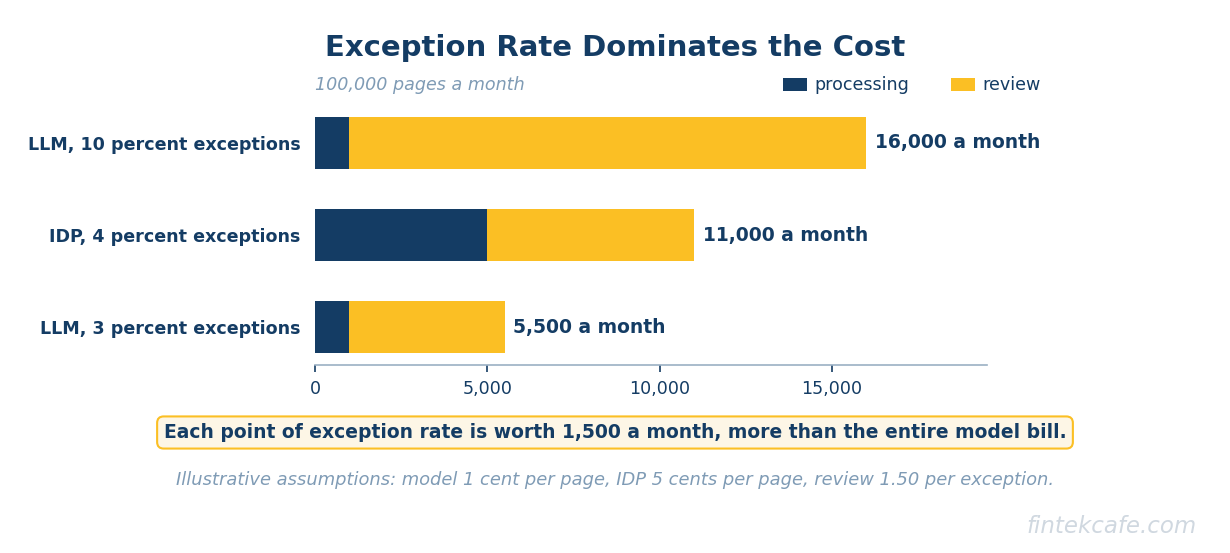
Take an illustrative accounts payable operation processing 100,000 pages a month, and three inputs, each stated as an assumption rather than a quote:
- Model extraction at one US cent per page, a plausible order of magnitude for a vision-capable model reading a one-page invoice, though actual cost varies widely by model and page density.
- IDP licence at five US cents per page, in line with the published hyperscaler form-extraction list price cited above.
- Human review at 1.50 US dollars per exception, which corresponds to roughly three minutes of a reviewer whose fully loaded cost is about 30 dollars an hour.
| Scenario | Processing cost per month | Exceptions per month | Review cost per month | Total per month |
|---|---|---|---|---|
| LLM extraction, 10 percent exception rate | 1,000 dollars | 10,000 | 15,000 dollars | 16,000 dollars |
| IDP, 4 percent exception rate | 5,000 dollars | 4,000 | 6,000 dollars | 11,000 dollars |
| LLM extraction, 3 percent exception rate | 1,000 dollars | 3,000 | 4,500 dollars | 5,500 dollars |
| Fully manual keying, every page reviewed | 0 | 100,000 | 150,000 dollars | 150,000 dollars |
The model is five times cheaper per page than the licence and can still be the more expensive option overall, because review cost scales with the exception rate and the exception rate is set by the document mix and the validation design, not by the model price. Every percentage point of exception rate in this example is worth 1,500 dollars a month, more than the entire model bill.
Two implications follow. The procurement conversation should be about exception rates by document type, measured on the organization's own documents, rather than about per-page prices. And investment in validation, which reduces false exceptions without letting real errors through, typically returns more than switching models. The broader method for counting the cost of an AI system over its life, including the review labor that pilots routinely leave out, is set out in the AI total cost of ownership framework.
Where Document AI Lands in Finance Operations
Three finance workflows account for most of the document volume in a typical fintech or bank, and they reward different approaches.
Accounts payable
Invoices are the canonical case. A large share of spend usually comes from a relatively small number of suppliers whose layouts rarely change, and a long tail of occasional suppliers, each with its own layout. That distribution argues for a hybrid: trained IDP or templates for the high-volume head, LLM extraction for the tail where building a template would never pay back.
The validations are well understood: arithmetic on the invoice, a vendor master match, and a match against the purchase order and goods receipt. Invoices that clear all three can post automatically. Extraction is also only the first half of the problem. Matching extracted invoices to payments and bank lines is a reconciliation task with its own failure modes, covered in payment reconciliation.
Statement ingestion for lending
Small business and consumer lenders ingest bank statements to underwrite on cash flow. Statement layouts vary by bank, often run to many pages, and contain dense transaction tables, which makes them a strong fit for LLM extraction and a poor fit for templates.
The trap is that extraction is not verification. A doctored statement, with a balance edited or transactions removed, extracts perfectly. The running-balance check catches crude edits, and document tampering detection, metadata analysis and, where available, direct bank data connections are separate controls. An LLM that reads a forged statement accurately has done its job and the lender has still been defrauded. Where open banking or data aggregation access exists, it should be preferred over statements for exactly this reason.
KYB document capture
Business onboarding requires incorporation certificates, registry extracts, ownership charts and proof of address, drawn from every jurisdiction a customer might come from. This is the environment LLM extraction was built for: high variability, many languages, low volume per document type, and no realistic prospect of a template library.
The error cost is also asymmetric. A misread director name can cause a sanctions match to be missed, which is a regulatory failure rather than an operational one. Extraction here should populate a case for an analyst on higher-risk tiers and auto-complete only where registry data independently corroborates the extracted fields. How verification depth should be tiered by risk is covered in KYB business verification.
A Decision Framework by Document Type and Error Tolerance
The recommendation depends on two properties of each document class: how much its layout varies, and what a wrong field costs.
| Document type | Layout variability | Cost of a wrong field | Recommended approach |
|---|---|---|---|
| Invoices from top suppliers | Low | Medium: wrong payment, recoverable | Templates or trained IDP, cross-field validation, auto-post on pass |
| Long-tail supplier invoices | High | Medium | LLM extraction with source locations and PO match, auto-post on pass |
| Bank statements for underwriting | High | High: credit loss, fraud exposure | LLM extraction plus balance check and tamper detection; prefer direct bank data |
| KYB and identity documents | Very high | Very high: regulatory | LLM extraction into an analyst case; auto-complete only with registry corroboration |
| Contracts and leases (key terms) | Very high | Variable, often high | LLM extraction with verbatim clause citations; human sign-off on material terms |
| Standard government or tax forms | Very low | Medium | Templates; LLM adds little and costs more |
| Handwritten claims and notes | Very high | Medium to high | LLM extraction, low auto-post threshold, measure exception rate before scaling |
The position, and its tradeoff
Replacing an existing IDP deployment wholesale with LLM extraction is rarely the right call for a finance operation. The better default is to leave working templates and IDP models in place on the high-volume head, route everything they reject or do not recognize to LLM extraction, and put the same validation layer over both. That design captures most of the benefit of generality on the long tail while keeping the exactness of the older approach where it already works.
The tradeoff is real: two extraction stacks cost more to operate than one, and the hybrid preserves template maintenance that a pure LLM approach would retire. For an organization whose documents are overwhelmingly long-tail, such as a KYB-heavy onboarding team, that overhead is not worth carrying and LLM extraction should be the primary path. For an accounts payable team whose top suppliers generate most of the pages, retiring working templates trades a known small cost for an unmeasured exception rate. The deciding measurement is the same in both cases: exception rate by document type, on the organization's own documents, before the contract is signed.
Frequently Asked Questions
What is the difference between OCR and document AI?
OCR converts an image of text into machine-readable characters. Document AI goes further and turns those characters into specific, labeled fields such as an invoice total or a contract end date, ready for a downstream system. Template OCR, classic intelligent document processing and LLM extraction are three generations of document AI, differing in how much document variation they can handle without being configured or trained for it.
Is LLM extraction more accurate than intelligent document processing?
On documents the IDP model was trained for, often not by a meaningful margin, and IDP tends to fail more loudly. On documents outside the IDP model's training, LLM extraction is usually far better because it needs no training for a new document type. The comparison that matters is not raw accuracy but the share of errors each system flags, since an unflagged error reaches the ledger and a flagged one reaches a reviewer.
How do you stop an LLM from inventing values in extracted fields?
Allow an explicit "not found" value in the output schema, require the verbatim source text and page location for every field, and reject any field whose value cannot be tied back to text on the page. Then apply cross-field validation such as line items summing to the total. Together these convert most silent substitutions into detectable exceptions routed to a human.
What does document AI cost per page?
Processing costs range from a fraction of a US cent to several cents per page depending on the approach and model; hyperscaler form extraction, for example, lists at 0.05 US dollars per page. Processing is rarely the largest cost. Human review of exceptions usually dominates, so a system with a lower exception rate can be cheaper overall even at a much higher per-page price.
Should an accounts payable team replace its existing IDP tool with an LLM?
Usually not wholesale. The stronger design keeps existing templates or IDP models on high-volume suppliers, sends the documents they reject or do not recognize to LLM extraction, and applies one validation layer to both. A full replacement makes sense only when most documents are long-tail and measured exception rates on the organization's own documents favor the LLM.
The Bottom Line
Document AI is where generative models earn their keep in enterprise operations, and it is also where their characteristic weakness is most expensive. A system that turns an unreadable field into a plausible one is not a better OCR engine. It is a different kind of component, one that has to be wrapped in schemas, source citations, arithmetic checks and a staffed review queue before it can be trusted with money.
The organizations that get this right stop asking which extraction technology is best and start measuring, per document type, the share of documents that need a human and the share of errors that reached the ledger anyway. Every decision in this piece, from hybrid architecture to vendor selection to reviewer staffing, follows from that measurement. Without it, any choice is a guess about a cost line that is larger than the software bill.
Related Articles
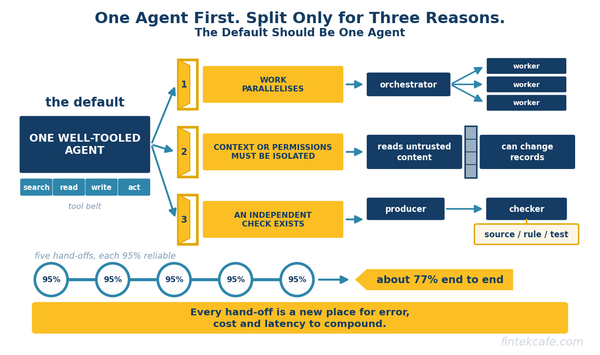
Multi-Agent Systems: When Splitting Work Across Agents Helps, and When It Multiplies Failure
Most tasks run better on one well-tooled agent. Multi-agent systems pay off only for parallel work, isolated context or independent checks.
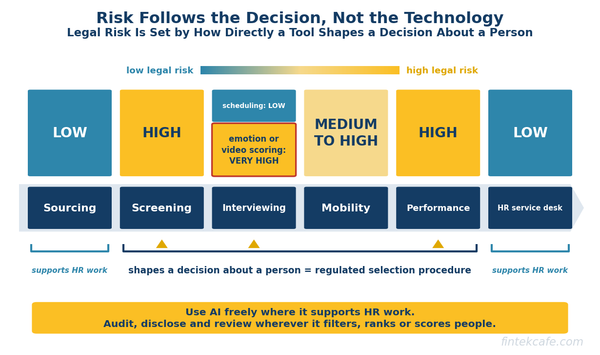
AI in Hiring and HR: Where It Helps, and Where the Legal Risk Sits
Where AI helps in hiring and HR, where legal risk concentrates, what NYC, the EU, Colorado, Illinois and California require, and which controls hold up.
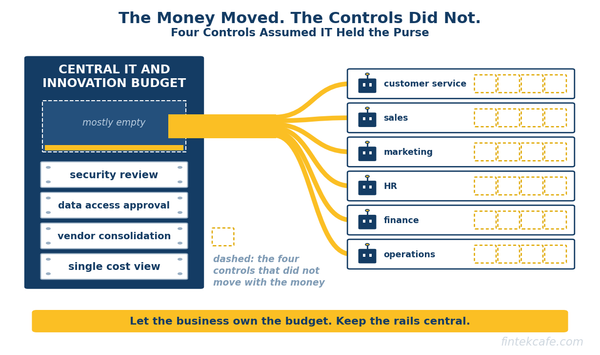
The AI Budget Is Moving From IT to the Business Lines, and Governance Has Not Followed
AI spend is moving from central IT to business lines. That ties cost to outcomes but breaks controls built for an IT-held purse. The model that works.