
Cloud Repatriation: The Workloads Quietly Leaving the Public Cloud
The cloud-first decade ended without a press release. No hyperscaler announced it, no analyst firm called the top, and no CIO stood on a stage to declare the era over. It ended the way most strategic defaults end: quietly, in budget reviews, when finance teams started asking why the largest line item in the technology budget kept growing faster than the business it supported, and the answer stopped being convincing.
Repatriation, the movement of workloads from public cloud back to owned or colocated infrastructure, is the visible symptom. It is also one of the most misreported stories in enterprise technology. The breathless version says companies are abandoning the cloud. The dismissive version says repatriation is a rounding error dressed up by vendors who sell servers. Both versions miss what is actually happening, and the miss matters because it leads executives to the wrong decision.
The contrarian read is this: repatriation is real, but it is not a rejection of cloud. It is the end of cloud as a default. For fifteen years the burden of proof sat on anyone who wanted to run infrastructure themselves. That burden has now flipped for a specific and identifiable class of workloads, and the organizations moving them are not retreating from modernity. They are doing arithmetic. The strategic question for a decision-maker is not whether to leave the cloud. It is whether the organization knows which of its workloads the arithmetic condemns, and whether it has preserved the option to act on the answer.
The Misreported Exodus
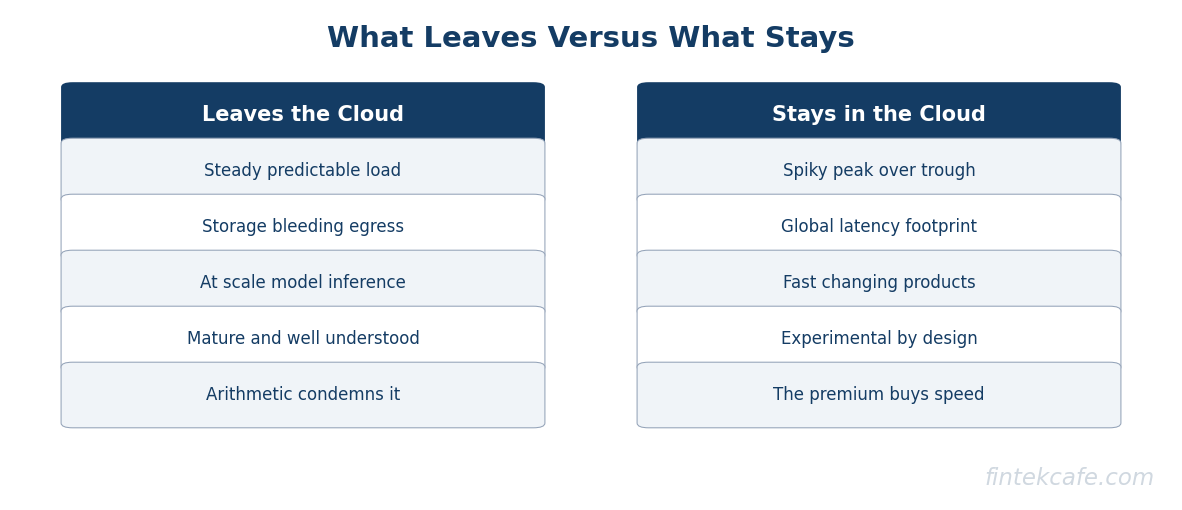
Start with why the story is so distorted. The loudest repatriation case studies come from companies with unusually stable, unusually large, unusually well-understood workloads: software firms serving predictable request volumes, storage-heavy businesses moving petabytes with known access patterns, media companies with traffic curves they can draw from memory. When such a company reports cutting its infrastructure bill by half or more after leaving the public cloud, the number is usually accurate. It is also close to a best case, because the company selected itself into the story. Stable load is precisely the condition under which owned infrastructure wins, so the firms that publicize repatriation are the firms for which repatriation was most obviously correct.
Executives who generalize from those case studies make one error; executives who dismiss them make the opposite one. The dismissal usually rests on aggregate cloud revenue, which keeps growing, as evidence that repatriation is noise. But aggregate growth and selective exit coexist without contradiction. New workloads, AI experimentation, and the long migration tail of enterprises still leaving data centers all push cloud revenue up while a quieter counterflow moves mature, steady-state workloads out. Industry surveys through 2025 and 2026 consistently find a large minority of organizations reporting that they have moved at least some workloads off public cloud, while almost none report leaving entirely. Both findings are exactly what the economics predict.
The deeper pattern is the one traced in the cloud cost crisis analysis: cloud overspend is a strategy and governance failure, not an engineering one. Repatriation is what happens when a subset of organizations finally treats it that way. Once infrastructure placement becomes a portfolio decision reviewed with the same rigor as any other capital allocation, some workloads fail the review.
This is a Premium Article
Sign up for a Premium membership to read this article and get full access to strategic intelligence on technology and business.
Already a member? Sign in
Related Articles
Integration Platforms Are the Quiet Winners of the Agent Era
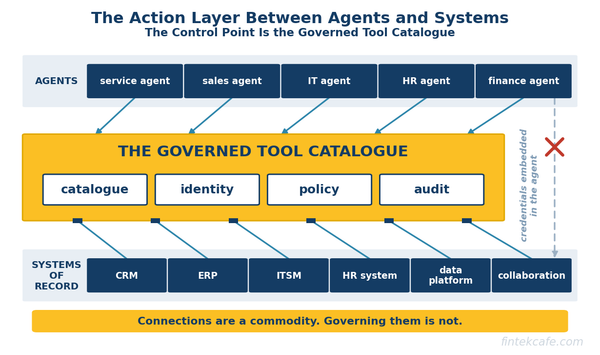
Agents act through integrations. iPaaS and API vendors hold the connectors, credentials and audit trails, and MCP makes governing that layer worth more.
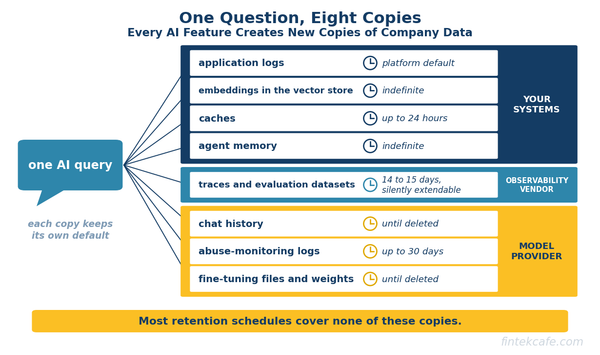
What Happens to Your Data Inside AI Systems: Retention, Deletion and the Copies Nobody Tracks
Every AI feature copies company data into prompts, logs, embeddings and memory. Where each copy lives, what vendors retain, and how to make deletion real.
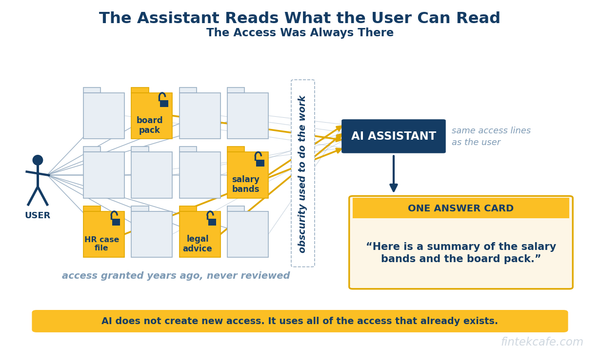
Data Classification: The Step Every Enterprise AI Rollout Skips, and What It Costs Later
Why AI assistants expose overshared data, how data classification fixes it, what to label first, and a 90-day plan for executives.