
Instant Settlement Is Quietly Eating the Float Business
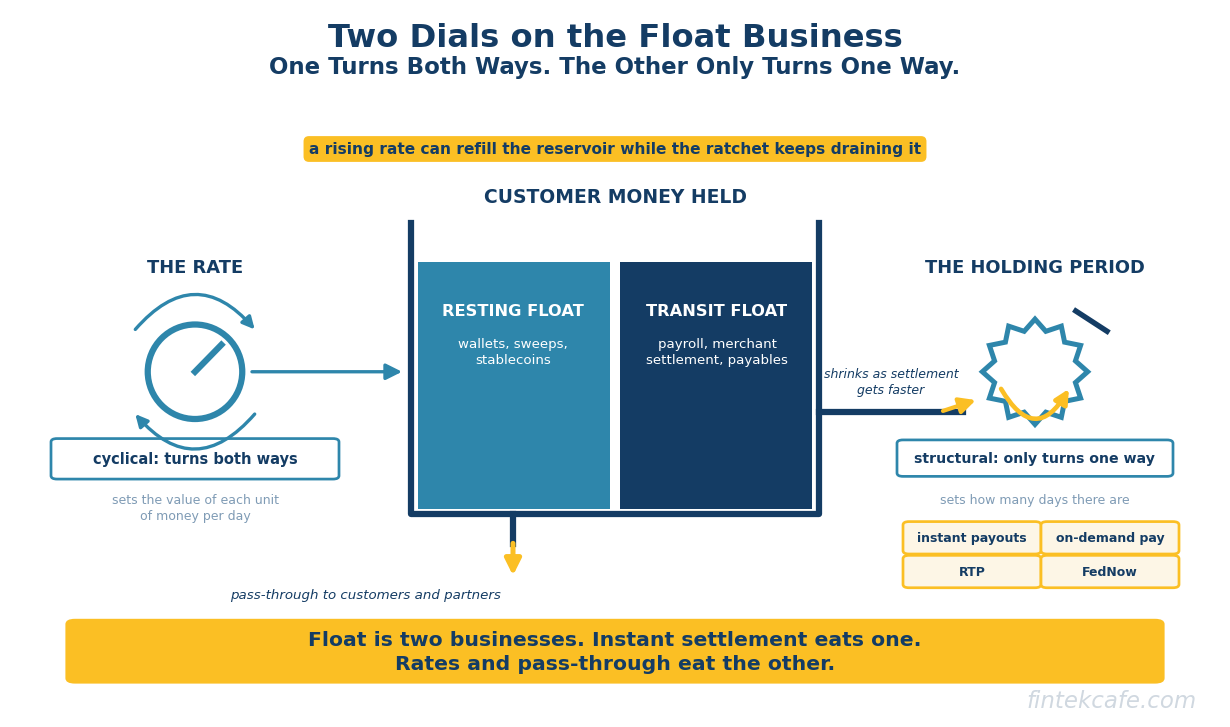
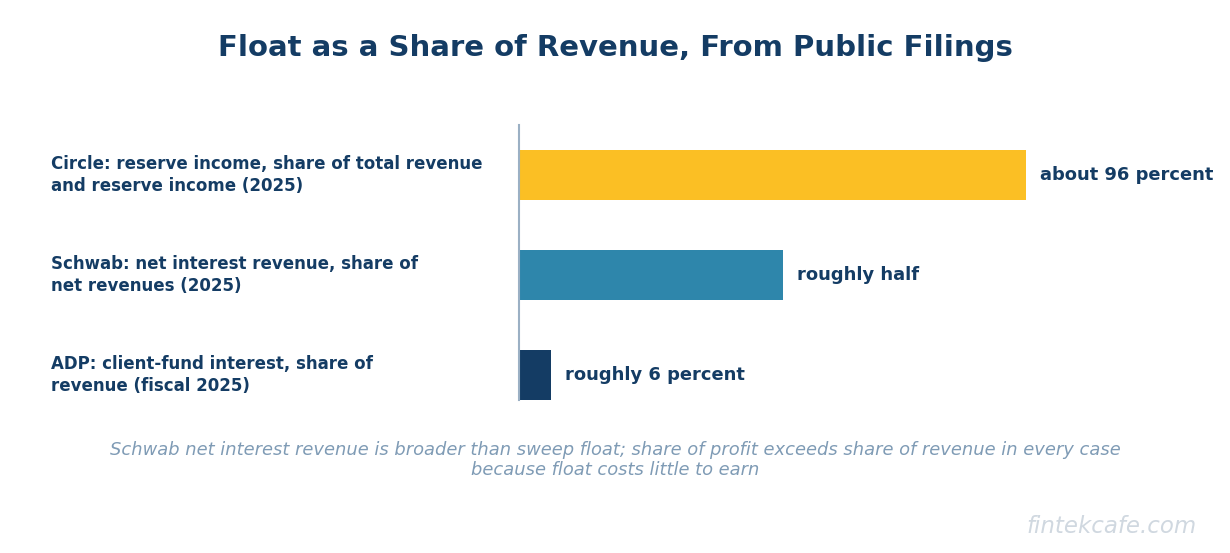
A large share of payments profit has never come from fees. It comes from holding other people's money for a while and earning interest on it. The payroll provider collects from the employer before it pays the employees and the tax authorities. The processor captures a card payment today and pays the merchant in a day or two. The wallet holds balances its users have not spent. The brokerage sweeps idle client cash into a bank account and keeps the spread. None of this appears in the pitch deck as a product. All of it appears in the income statement.
Float income is the interest a company earns on customer money it holds between receiving it and paying it out. It is close to pure margin: the cost of earning it is a treasury function and a custody arrangement, not a sales team or an engineering roadmap. That makes it the most profitable revenue most payments companies have, and the one they least like to talk about.
The thesis of this piece: float is being attacked on two fronts that move on different clocks. The interest rate is cyclical and swings both ways; the September 2026 rate increase is a reprieve for float holders. The holding period is structural and only moves one way. Instant rails and faster payouts are shortening it every year, and they do not reverse when rates rise. The companies most exposed are the ones whose reported unit economics never separated float from fees, because their investors and in some cases their own management cannot see how much of the business is a rate trade.
Two Kinds of Float, Two Different Threats
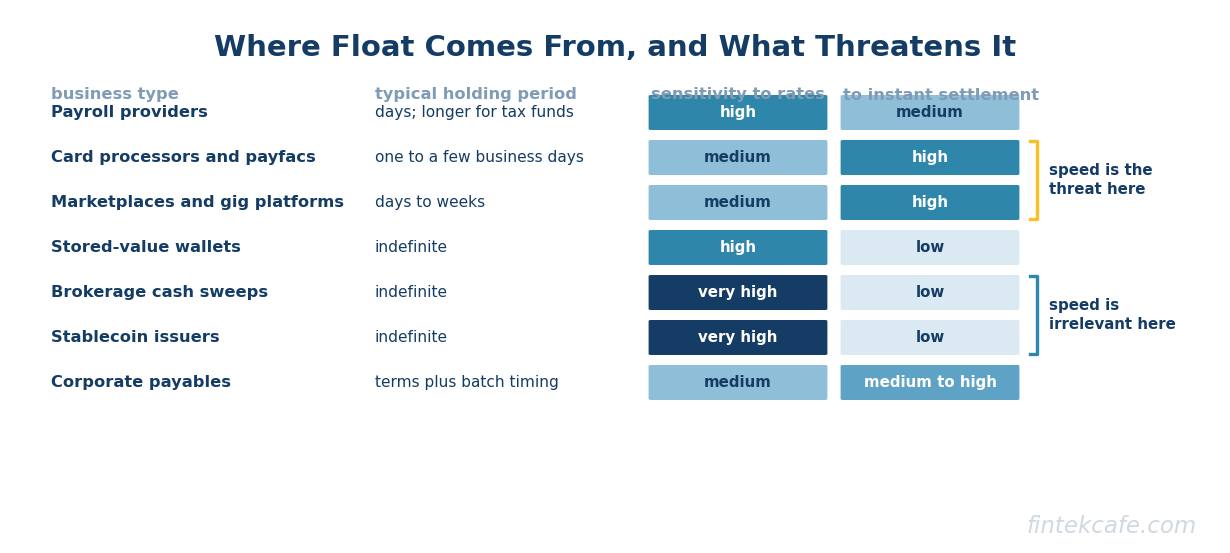
The analysis gets much clearer once float is split into two types that behave differently.
Transit float is money in motion: collected but not yet paid out, because the payment system or the contract builds in a delay. Payroll funds between debit and payday, merchant settlement between card capture and payout, and business payables timing all sit here. Transit float exists because settlement is slow. Make settlement fast and it shrinks.
Resting float is money that sits because the customer chose to leave it there: wallet balances, stored value, brokerage cash, stablecoins in circulation. Settlement speed barely matters to resting float. What matters is how much the holder earns versus how much it passes back to the customer, and whether competition or regulation forces that pass-through up.
The distinction matters because the two are threatened by different forces. Instant settlement eats transit float. Rate cuts and pass-through pressure eat resting float. A company can be heavily exposed to one and immune to the other, and a disclosure that reports "interest income" as a single number hides which.
This is a Premium Article
Sign up for a Premium membership to read this article and get full access to strategic intelligence on technology and business.
Already a member? Sign in
Related Articles
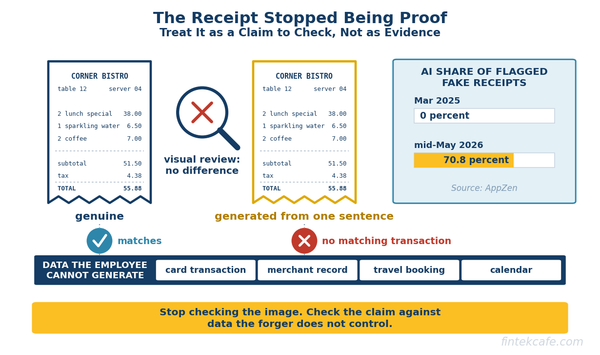
AI-Generated Fake Receipts: How Expense Fraud Changed and How Finance Teams Catch It
AI-generated fake receipts now beat visual review. How expense fraud changed, which detection still works, and the controls to use by company size.
The Monthly Close Is Becoming Continuous, and the Finance Calendar Will Not Survive It
AI is taking the bottleneck work out of the month-end close. The close becomes continuous with a short sign-off, and finance, audit and the board change.
Accounts Payable Automation: What AI Can Actually Take Over in Invoice-to-Pay
What AI can take over in accounts payable, step by step from capture to payment, where the fraud risk grows, and which controls must stay outside the model.