
Data Contracts: The Missing Interface Between Data Producers and Consumers
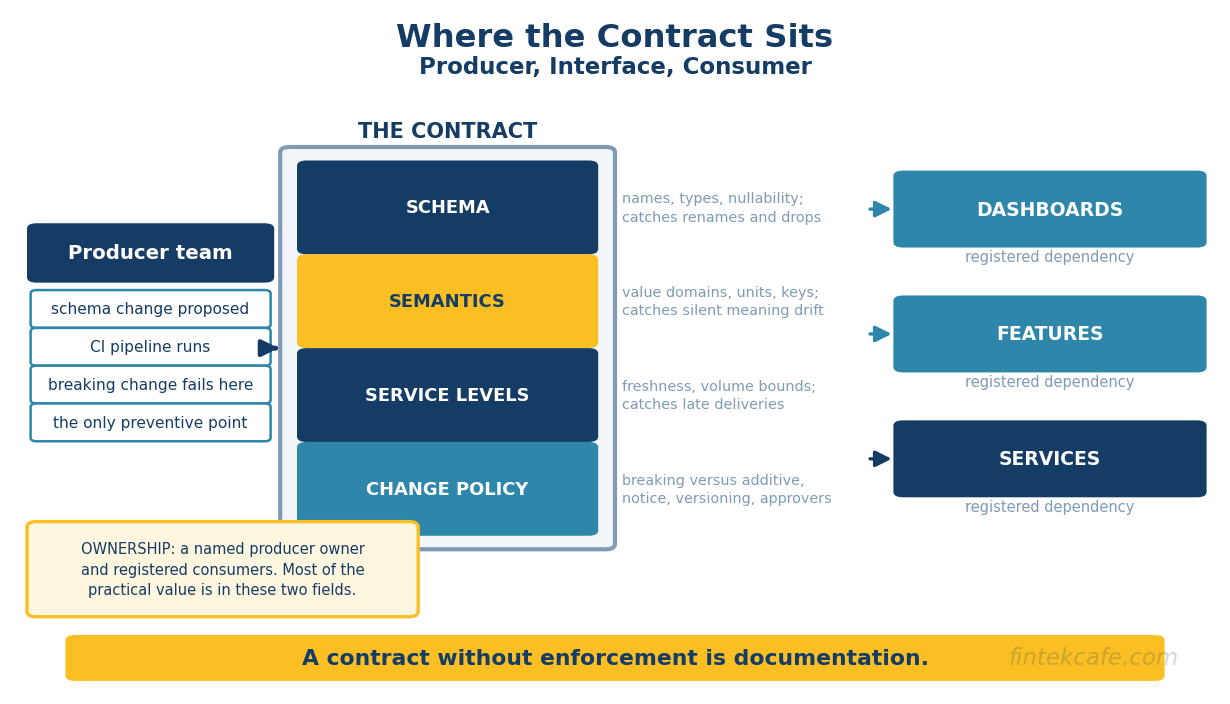
A data contract is an explicit, enforced agreement about the shape, meaning, and reliability of a dataset, published by the team that produces it and verified in CI before the change ships. The reason this matters is structural: in most organizations the interface between a service that writes data and the analytics and machine learning systems that read it is not an interface at all. It is an accident. A product engineer renames a column in a service database, ships it on a Tuesday, and discovers on Thursday that a revenue dashboard has been silently wrong for two days, because nothing in the deployment pipeline knew that anyone downstream depended on that column. Software engineering solved this problem for APIs decades ago by making the interface explicit and versioned. Data contracts apply the same discipline to data, moving schema breakage from something discovered in production to something that fails a pull request. This guide covers what a contract actually contains, where enforcement lives, how contracts differ from a data catalog, the organizational question of who signs and who pays for breakage, a pragmatic adoption sequence, and the failure modes that turn contract programs into paperwork.
Key Takeaways
- A data contract is an agreement, not an inventory. It specifies schema, semantics, freshness and volume expectations, and a change policy, and it is enforced automatically. A data catalog documents what exists; a contract commits a producer to keeping it that way and blocks the change that would break it.
- The critical design decision is where enforcement lives. A contract validated only at consumption time detects breakage after it has already happened. A contract validated in the producer's CI pipeline prevents it, which is the entire point, and is also why the hardest part of adoption is organizational rather than technical.
- Semantics matter as much as schema, and are more often omitted. A field that keeps its name and type while changing meaning, a status value that starts including a new state, a timestamp that quietly shifts time zones, breaks downstream logic without breaking any schema check.
- Adoption fails when it starts as a company-wide mandate. The sequence that works is to instrument the three to five highest-blast-radius tables first, prove that a contract caught a break that would otherwise have reached production, and let demand pull the program outward.
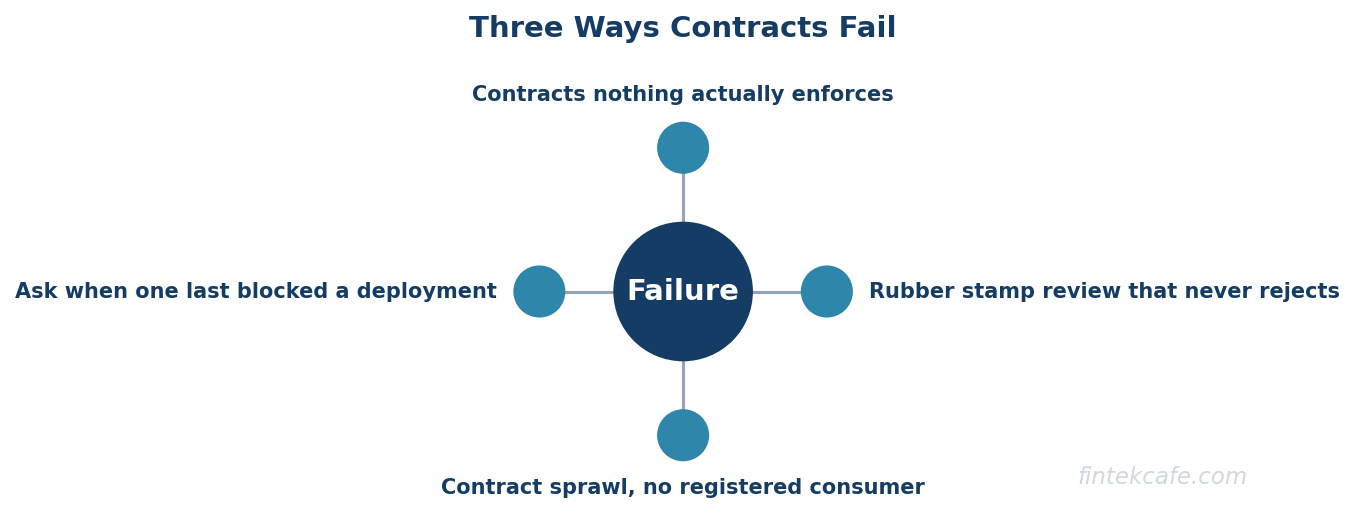
- The three failure modes are contract sprawl (hundreds of contracts nobody reads), rubber-stamp review (approvals that never reject anything), and contracts without enforcement (documents that describe intent while the pipeline ships anyway). All three produce the appearance of governance with none of the protection.
Why the Interface Was Missing in the First Place
Application teams have long understood that a public API is a promise. Break it and customers notice immediately, loudly, and in ways that reach leadership. That feedback loop is what produced versioning schemes, deprecation policies, and contract tests, the discipline covered in API versioning and deprecation.
The data path never got that loop. Analytics systems typically read from a replica of an application database or from an event stream the producing team considers an internal implementation detail. Nobody at the producing team signed anything. Frequently nobody at the producing team knows the consumers exist. The result is a dependency with all the coupling of an API and none of the guarantees: downstream teams build on a surface the upstream team believes it is free to change at will, and both are behaving reasonably given what each one knows.
Three shifts made this untenable. Data moved from reporting into operations, so a broken pipeline degrades a customer-facing feature rather than a slide. Machine learning features made breakage silent: a model fed a subtly changed distribution does not error, it just gets worse in ways nobody notices for weeks. And decentralized ownership, the pattern behind data mesh, multiplied producer-consumer pairs while removing the central team that used to absorb breakage manually.
That last shift turned data contracts from a good idea into a requirement. When a central data team owned every pipeline, it also owned every break, and fixing was invisible toil rather than visible failure. Distributing ownership without distributing an interface simply distributes the breakage, which is why organizations that adopt domain ownership without contracts often conclude decentralization made reliability worse. It did, and the contract is the missing piece.
What a Data Contract Actually Contains
A contract that specifies only a schema is a schema, and schema alone catches the least interesting class of breakage. Four components make a contract useful.
Schema. Field names, types, nullability, and whether a field is required. This is the base layer and the easiest to automate, since it can be derived from what already exists and diffed mechanically on every change.
Semantics. What the fields mean, in a form precise enough to detect a violation. The allowed set of values for a status enum, the unit and currency of a numeric field, the time zone and precision of a timestamp, what a null actually signifies, and which field or combination is the primary key. Semantic drift is the failure mode schema validation cannot see: a field that keeps its name and type while a new status value appears breaks every downstream conditional written against the old set, and no type check fires.
Service level objectives. Freshness (how stale the data may be before it is considered broken), volume (expected row counts, with bounds that flag both a collapse and an implausible spike), and completeness (which fields must be populated at what rate). These convert vague reliability expectations into thresholds a monitor can evaluate, and they are what allow a consumer to reason about whether a pipeline is late or simply dead.
Change policy. What counts as a breaking change versus an additive one, how much notice a breaking change requires, how versions coexist during migration, and who must approve. Without this the contract describes the present but says nothing about how it may evolve, which is the question that actually causes disputes.
| Component | What it specifies | Failure it catches | Enforcement point |
|---|---|---|---|
| Schema | Field names, types, nullability, required fields | Renamed, dropped, or retyped columns | Producer CI; schema registry compatibility check |
| Semantics | Value domains, units, time zones, key definitions, null meaning | Silent meaning drift that passes every type check | Producer CI plus data quality assertions on live data |
| SLOs | Freshness, expected volume bounds, completeness rates | Late, truncated, or partially empty deliveries | Continuous monitoring against the pipeline |
| Change policy | Breaking versus additive classification, notice period, versioning, approvers | Unannounced breaking changes; ambiguous escalation | Pull request review; registry compatibility mode |
| Ownership | Named producer owner, named consumer owners, escalation path | Orphaned datasets nobody will fix | The contract registry itself |
The ownership row deserves emphasis. A contract with no named producer owner is not enforceable, because there is nobody to hold to it, and a contract with no registered consumers cannot tell a producer who to warn. Most of the practical value of a contract program comes from these two fields alone, which is worth knowing before committing to elaborate tooling.
Where Enforcement Lives
A contract without enforcement is documentation. Three enforcement points exist, and the difference between them is the difference between preventing breakage and merely observing it.
Producer CI checks. The contract is a file in the producing team's repository, and a CI job compares every proposed change against it. A breaking change fails the build. This is the only enforcement point that actually prevents breakage, because it acts before the change ships, and it puts the cost on the team that has the context to make the change safely. It is also the hardest to adopt, since it means an application team's pipeline can now be blocked by an analytics concern, which is a real organizational negotiation rather than a technical one.
Schema registries. A central service holds the authoritative schema for each stream or dataset and enforces a compatibility mode: backward compatible (new schema reads old data), forward compatible (old schema reads new data), or full. Producers register schemas before writing, and incompatible registrations are rejected. This works especially well for event streams, where the registry sits naturally in the publish path. Its limit is that compatibility modes are structural, so a registry enforces the schema layer well and the semantic layer not at all.
Pipeline assertions and contract tests. Checks that run against actual data in the pipeline, asserting row counts, null rates, value domains, freshness, and referential integrity. This is where SLOs and semantics get verified, because both are properties of the data rather than of the schema definition. It is detective rather than preventive, but it is the only layer that catches semantic drift and silent quality decay.
The mature pattern uses all three: registry for structural compatibility, producer CI for change policy and review, pipeline assertions for semantics and SLOs. Organizations that adopt only the third get an alerting system that reliably tells them what already broke, which is genuinely better than nothing and frequently mistaken for having contracts.
Contracts Versus Catalogs
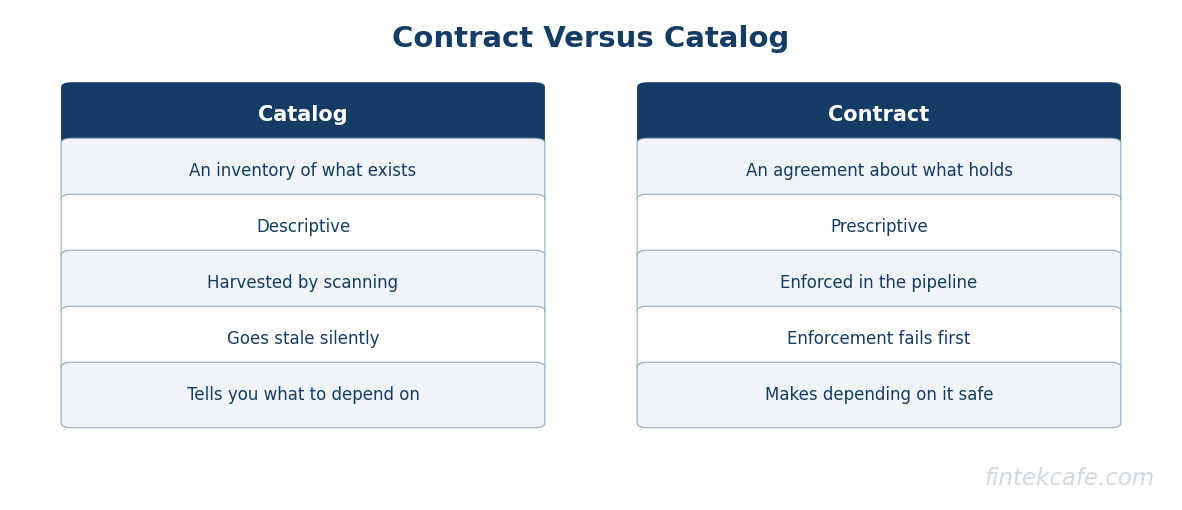
These get conflated constantly, and the distinction is simple: a catalog is an inventory, a contract is an agreement.
A data catalog answers what exists, where it lives, what the columns mean, who owns it, and what depends on it. It is descriptive, usually populated by scanning systems and harvesting metadata, and it goes stale silently, because nothing breaks when the documentation and the reality diverge.
A data contract answers what a producer has committed to and what happens when they violate it. It is prescriptive and enforced, and it cannot go stale in the same way, because the enforcement mechanism fails when the contract and reality diverge. That failure is the feature.
The two are complementary. A catalog is how consumers discover which datasets exist and which are worth depending on; a contract is what makes a dependency safe once chosen. The lineage graph a catalog maintains also tells a producer who sits downstream of a proposed change, precisely the input a contract review needs. Both sit on whatever storage layer the organization standardized on, and the consolidation of that layer, examined in what a data lakehouse is, is part of what made contracts practical: enforcing an interface is far easier with one authoritative copy of a dataset rather than six divergent extracts.
Who Signs, and Who Pays for Breakage
The technical design of contracts is largely settled. The organizational design is where programs succeed or fail, and it comes down to two questions.
Who signs? The producing team's owner commits to the contract, and registered consumers acknowledge their dependency. The acknowledgment matters more than it appears: an unregistered consumer is invisible to the change process, so the act of registering is what converts a hidden dependency into a managed one. In practice the largest early win of a contract program is often just discovering how many consumers a dataset actually has, a number that routinely surprises the producing team.
Who pays? This is the question that determines whether the program has teeth. If a producer breaks a contract and the downstream team absorbs the cost of fixing it, nothing changes, because the incentive to be careful sits with the party that bears no consequence. Making the producing team accountable for downstream breakage, through incident attribution, reliability metrics that include contract violations, or simply an expectation that they own the remediation, is what converts the contract from an aspiration into a constraint.
This is why data contracts are usually blocked at the leadership level rather than the engineering level. The engineering work is a schema file and a CI job. The organizational work is persuading a product team that their deployment pipeline may now be blocked by a consumer they have never met, and that argument is won by demonstrating cost, showing the incidents, the analyst hours, and the wrong decisions traceable to unannounced schema changes, rather than by advocating the pattern in the abstract. How ownership boundaries are drawn between platform, domain, and analytics teams is the structural context here, covered in modern data team structure.
A Pragmatic Adoption Sequence
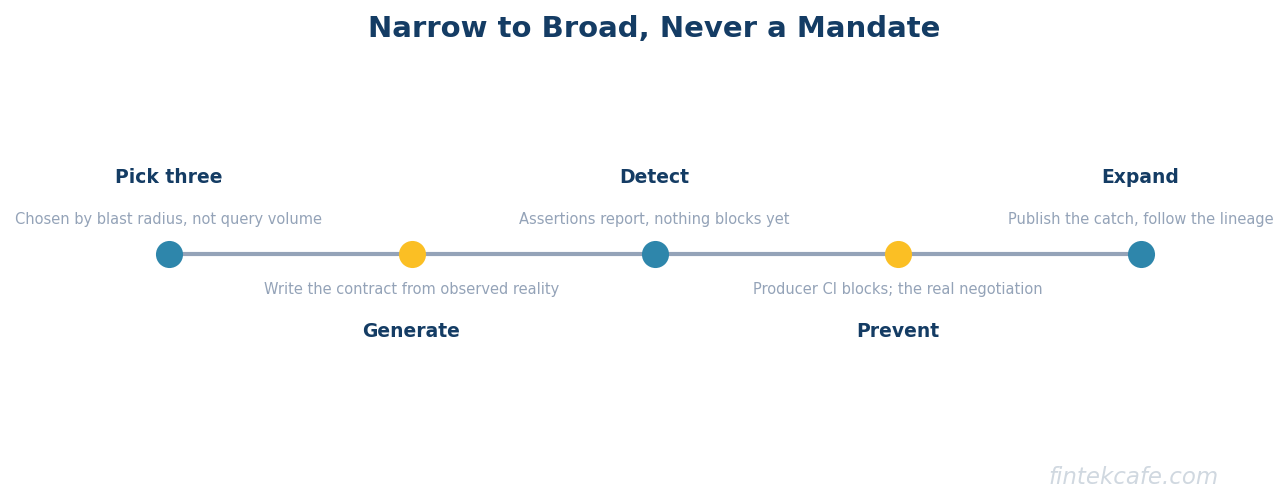
The failure pattern is the mandate: a policy declaring that all datasets require contracts by a given quarter, which generates hundreds of hastily written contracts nobody enforces and a lasting association between the phrase "data contract" and pointless overhead. The sequence that works is narrow and evidence-driven.
Start with three to five tables, chosen by blast radius. Not the most-queried tables, the most consequential ones: the datasets where a silent break causes a customer-facing failure, a regulatory misstatement, or a materially wrong executive number. Blast radius, not popularity, is the selection criterion.
Write the contract from observed reality. Derive the initial schema and value domains from what the data actually contains today rather than from what anyone believes it should contain. A contract negotiated in the abstract stalls; a contract generated from production and then reviewed takes a fraction of the time and immediately surfaces the fields whose behavior nobody could explain.
Add detective enforcement first. Run assertions against live data before blocking anyone's pipeline. This calibrates thresholds, exposes the pre-existing violations every dataset has, and builds the credibility needed for the next step. Turning on a blocking check that fires constantly on day one destroys the program.
Then add preventive enforcement. Once assertions are stable, add the producer CI check that fails a breaking change. This is the step that requires the organizational agreement, and it is far easier to win with a specific record of caught breaks than as a proposal.
Publish the catch. When a contract blocks a change that would have broken production, make it visible with the specific cost avoided. Demand from other consumer teams is what scales the program, and it only materializes if the wins are legible.
Then expand by dependency, not by decree. Extend contracts along the lineage of datasets already covered rather than alphabetically across the warehouse. This keeps every new contract connected to a consumer who wants it.
Build Versus Adopt
| Approach | What it is | Fits when | Real cost |
|---|---|---|---|
| Schema registry only | Compatibility enforcement on streams via an existing registry | The organization is event-driven and structural breakage is the main pain | No semantics, no SLOs, no change policy; covers one layer well |
| Data quality tooling with contract syntax | Declarative assertions on tables, run in the pipeline | Batch-oriented estates wanting fast detective coverage | Detective only unless deliberately wired into producer CI |
| Purpose-built contract platform | Contract definition, registry, CI integration, lineage, and enforcement together | Many producer-consumer pairs across independent domains | Vendor dependency; value depends entirely on CI adoption |
| Build in-house | Contracts as YAML in the producer repo, validated by an internal CI action | A strong platform team and unusual internal conventions | Ongoing maintenance of the thing that is not the product |
| Transformation framework tests | Assertions expressed inside the existing transformation layer | Contracts wanted with near-zero new tooling | Enforcement sits downstream of the producer, where prevention is impossible |
The last row is the common starting point and the common trap. Testing in the transformation layer is cheap because the framework is already there, and it catches real problems, but it structurally cannot prevent anything: by the time the transformation runs, the producer has already shipped. It is a reasonable first step and a poor destination.
The build-versus-adopt decision usually resolves toward adopting for the registry and enforcement plumbing and building only the organization-specific parts: which datasets are in scope, how breaking changes get classified, who approves, and how violations are attributed. Those are policy questions no vendor can answer, and they are also the parts that determine whether the program works. The general engineering context for where this sits in a data platform is covered in data engineering explained.
Where Contract Programs Fail
Contract sprawl. Hundreds of contracts generated by a mandate, most covering datasets with no consumers, each requiring maintenance. Review quality collapses because reviewers cannot separate important changes from noise. The defense is scope discipline: a contract for every dataset with a registered consumer, and none for the rest.
Rubber-stamp review. An approval step that has never rejected anything is not a control, it is latency. If reviews are approved reflexively, either the scope is too broad or the reviewers lack the context to judge impact. Both are fixable, and neither gets fixed while the approval rate stays at one hundred percent.
Contracts without enforcement. The most common failure and the hardest to see, because the artifacts all exist. Contracts are written, stored, and referenced in onboarding, and the pipeline ships changes regardless. The diagnostic is direct: find the last time a contract violation blocked a deployment. If there is no such instance, the program is documentation.
Schema-only contracts. Structural validation with no semantic layer catches renames and type changes while missing the drift that actually causes wrong numbers. A new enum value, a unit change, a redefined null: all pass every schema check and all corrupt downstream logic.
SLOs nobody responds to. Freshness and volume thresholds alerting into a channel with no owner and no runbook. Unactioned alerts train everyone to ignore the channel, which is worse than no threshold at all, because it produces false confidence that the data is monitored.
Frequently Asked Questions
What is a data contract in simple terms?
A data contract is an explicit agreement between the team that produces a dataset and the teams that consume it, covering the schema, the meaning of the fields, freshness and volume expectations, and the policy for changing any of it. The defining property is enforcement: the contract is checked automatically, so a change that violates it fails a build or an assertion rather than surfacing later as a broken dashboard.
How is a data contract different from a data catalog?
A catalog is an inventory that documents what exists and can go stale silently. A contract is an agreement that commits a producer to specific behavior and is enforced by tooling, so divergence between the contract and reality causes a visible failure. Catalogs help consumers discover and evaluate datasets; contracts make depending on one safe. Most organizations need both.
Where should data contracts be enforced?
In three places, for different reasons. Producer CI is the only point that prevents breakage, since it fails the change before it ships. A schema registry enforces structural compatibility on streams. Pipeline assertions verify semantics and SLOs against live data, which is the only way to catch meaning drift and quality decay. Enforcement that exists only downstream detects breakage rather than preventing it.
Do data contracts require a data mesh?
No, but decentralized ownership makes them urgent. In a centralized model one team owns every pipeline and absorbs every break as invisible toil. Distributing dataset ownership across domains distributes that breakage too, and without an enforced interface the reliability cost lands on consumers who cannot control it. Contracts are the interface that makes distributed ownership workable.
How many datasets should have contracts?
Start with three to five, chosen by blast radius rather than query volume: the datasets where a silent break causes customer-facing failure, regulatory exposure, or a materially wrong executive number. Expand along the lineage of what is already covered, driven by consumer demand. A company-wide mandate reliably produces sprawl, and unreviewed contracts are worse than none because they suggest a guarantee that does not exist.
The Bottom Line
Data contracts are not a new technology. They are the application of a decades-old software engineering idea, that an interface is a promise and promises should be explicit and tested, to a dependency that has been implicit for as long as analytics has existed. The tooling is the easy half.
The hard half is accountability: whether a producing team can be blocked by, and held responsible for, a consumer they did not choose. Organizations that answer yes get an interface, and reliability improves. Organizations that answer no get a document describing an interface, and everything else, the registries, the assertions, the review workflows, becomes an elaborate way of finding out what already broke.
Start narrow, enforce in the producer's pipeline, specify semantics rather than only schema, and treat every caught break as the evidence that funds the next expansion.
Related Articles
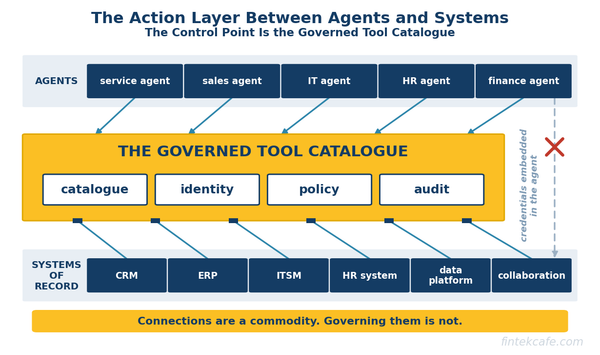
Integration Platforms Are the Quiet Winners of the Agent Era
Agents act through integrations. iPaaS and API vendors hold the connectors, credentials and audit trails, and MCP makes governing that layer worth more.
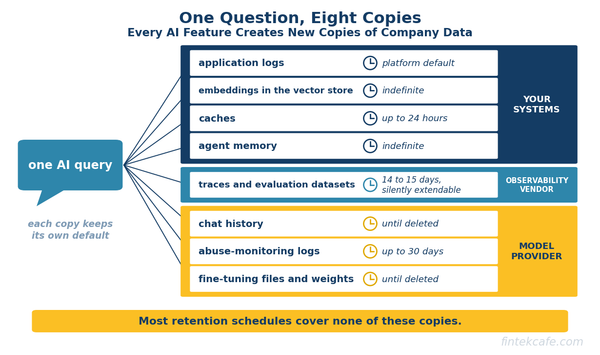
What Happens to Your Data Inside AI Systems: Retention, Deletion and the Copies Nobody Tracks
Every AI feature copies company data into prompts, logs, embeddings and memory. Where each copy lives, what vendors retain, and how to make deletion real.
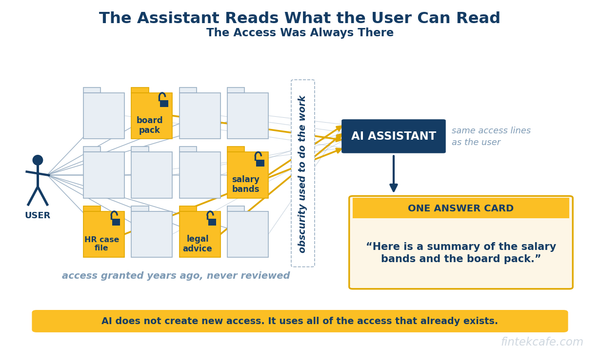
Data Classification: The Step Every Enterprise AI Rollout Skips, and What It Costs Later
Why AI assistants expose overshared data, how data classification fixes it, what to label first, and a 90-day plan for executives.