
Vertical AI Agents Are Becoming the New System of Record
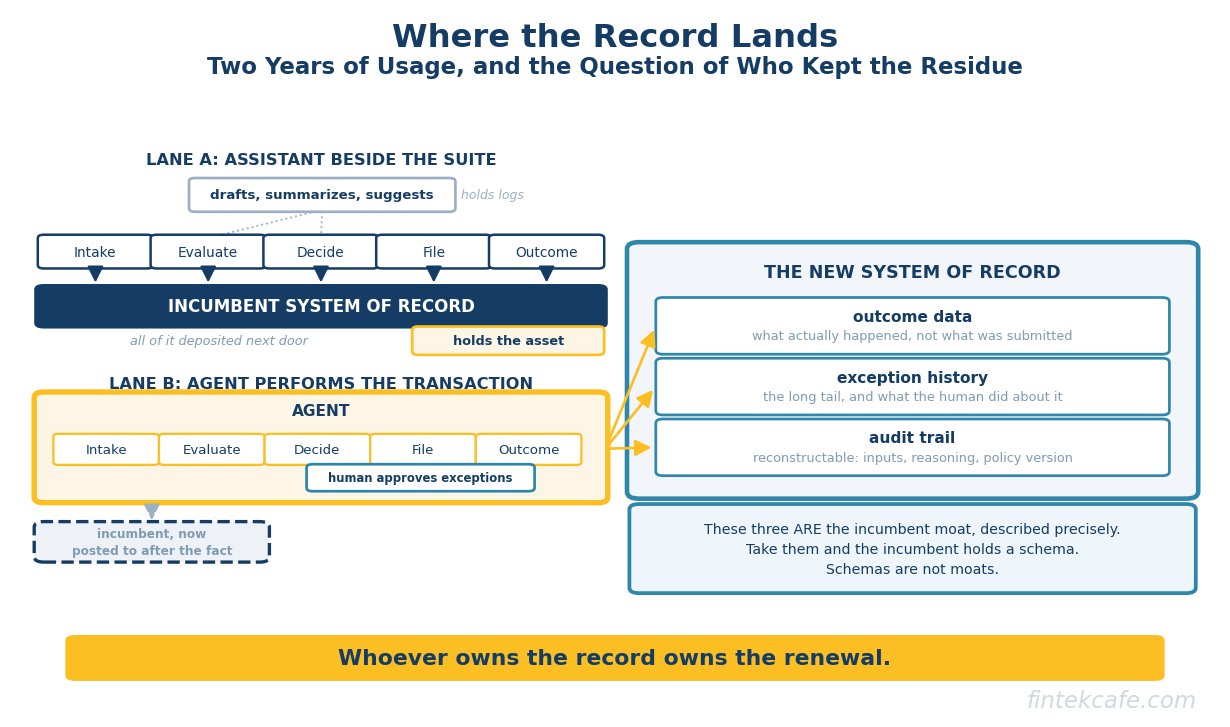
The most commercially serious AI application companies made a quiet strategic switch over the past two years, and the market has not repriced it. They stopped selling assistants that sit beside the system of record and started replacing the system of record itself.
The distinction sounds like positioning. It is the whole business. An assistant that drafts the claim note is a feature attached to someone else's database. An agent that intakes the claim, requests the missing documents, applies the policy logic, produces the decision, and files the result is not attached to a database. It is the database, because the work that generated the record happened inside the agent.
Here is the thesis. In every workflow where the record was always a byproduct of doing the work, a claim file, a case note, a reconciliation, a prior authorization, a compliance filing, the agent that performs the work ends up owning the record. And whoever owns the record owns the renewal, because the record is what makes a vendor impossible to remove. That is not a new law of software. It is the exact mechanism by which the incumbent suites became unremovable. What is new is that the mechanism is available to challengers for the first time in roughly twenty years, because the work that produced the record was previously human and is now, in specific verticals, machine-performable end to end.
The consequences follow directly and they are uncomfortable for almost everyone. For AI startups, the assistant position is not a beachhead, it is a trap. For incumbent suites, the defensible asset was never the schema, it was the workflow that fed it. For buyers, the vendor selection being treated as a productivity purchase is a records decision with a ten-year tail. And outcome-based pricing is not a fad or a land-grab tactic; it is the natural consequence of a vendor that owns the record and can therefore be held to the result.
The Assistant Beside the Suite Is a Structurally Losing Position
Start with why the obvious position fails, because a great many well-funded companies are sitting in it.
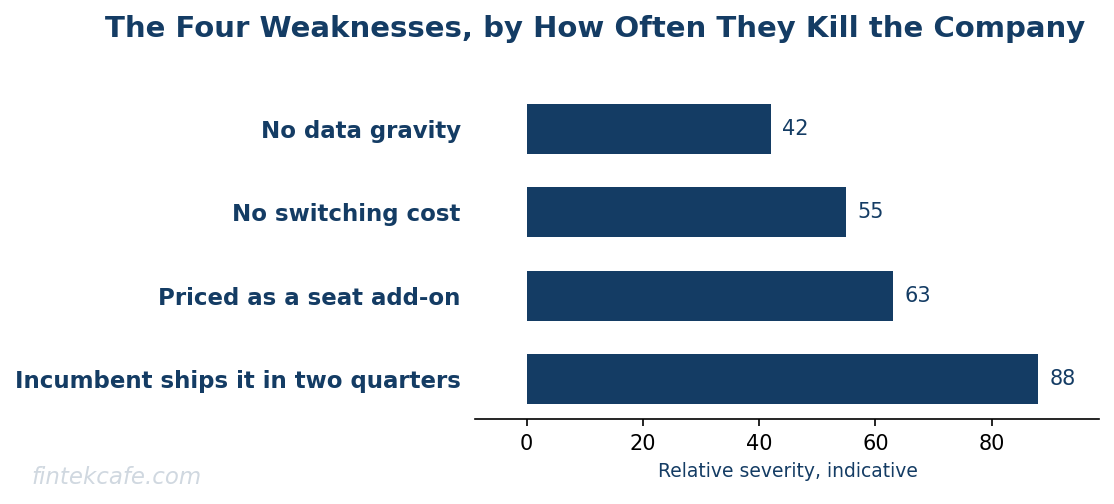
The assistant sells a real benefit. It reads the case, drafts the note, summarizes the file, suggests the code. Users like it, usage is high, pilots convert. Almost none of that translates into durable enterprise value, for four reasons that compound.
There is no data gravity. The assistant reads from the incumbent record and writes back to it, depositing every artifact it produces in a database the incumbent controls. Two years of enthusiastic usage leaves the accumulated value sitting inside the vendor it was supposed to displace. The assistant vendor has logs. The incumbent has the asset.
There is no switching cost. Removing an assistant breaks nothing; the underlying process continues, slightly slower. Removing a system of record requires migration, re-training, re-integration, and a compliance conversation about historical retention. Software becomes hard to remove when removal creates a discontinuity in the record, and an assistant creates none.
It is priced as a seat add-on, which caps it. Sitting beside an incumbent means being compared to the incumbent's price. A category that charges thirty to eighty dollars per seat per month sets the frame, and an add-on can plausibly ask for some fraction of that. The ceiling is the seat, and the seat is being repriced anyway, a dynamic examined in the analysis of how AI is repricing per-seat software. Being a line item under a ceiling that is itself falling is a poor place to build a company.
The incumbent ships a comparable feature in two quarters. Founders underestimate this most consistently. The assistant's capability lead is real but narrow, and it narrows on a schedule set by model providers rather than by either party's engineering. Every incumbent suite now ships a copilot. It is usually worse. It is also included, already connected to the data, already inside the security review, and already covered by the contract. Worse but free and pre-approved wins an enormous share of a market.
Put those together and the assistant has the shape of a feature waiting to be absorbed. Its usage metrics look like product-market fit and its contract looks like a subscription, but its strategic position is that of a component the platform internalizes whenever internalizing becomes worthwhile.
This is a Premium Article
Sign up for a Premium membership to read this article and get full access to strategic intelligence on technology and business.
Already a member? Sign in
Related Articles
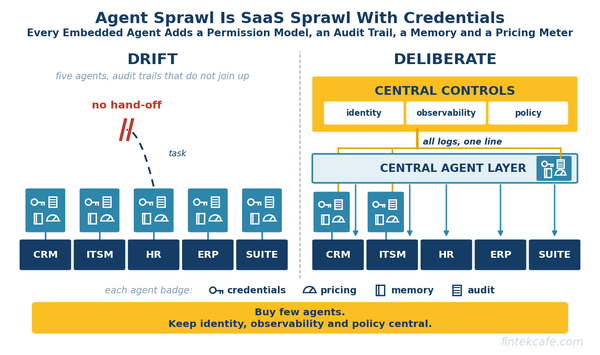
Every Software Vendor Now Sells an Agent, and Most Enterprises Should Buy Very Few of Them
Buying an agent from every system of record recreates SaaS sprawl one layer up. How CIOs should choose, and which controls must stay central.
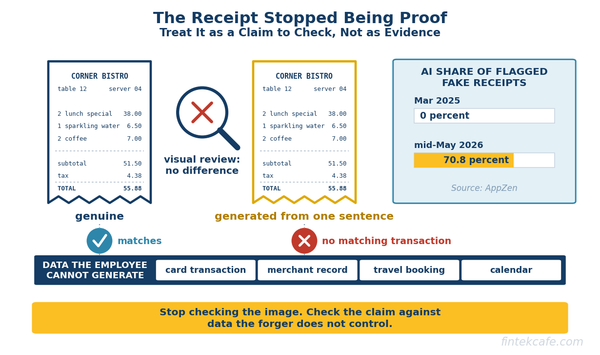
AI-Generated Fake Receipts: How Expense Fraud Changed and How Finance Teams Catch It
AI-generated fake receipts now beat visual review. How expense fraud changed, which detection still works, and the controls to use by company size.
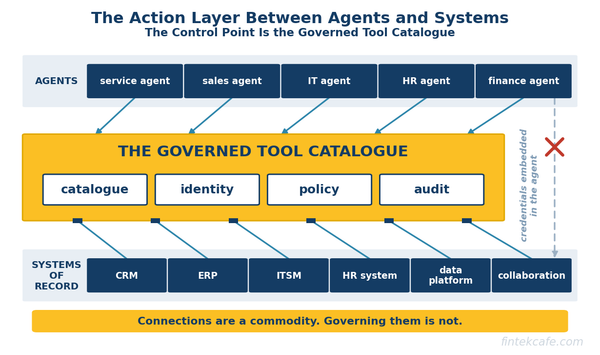
Integration Platforms Are the Quiet Winners of the Agent Era
Agents act through integrations. iPaaS and API vendors hold the connectors, credentials and audit trails, and MCP makes governing that layer worth more.