
Embedded Lending: The Question Is Always Who Holds the Loan
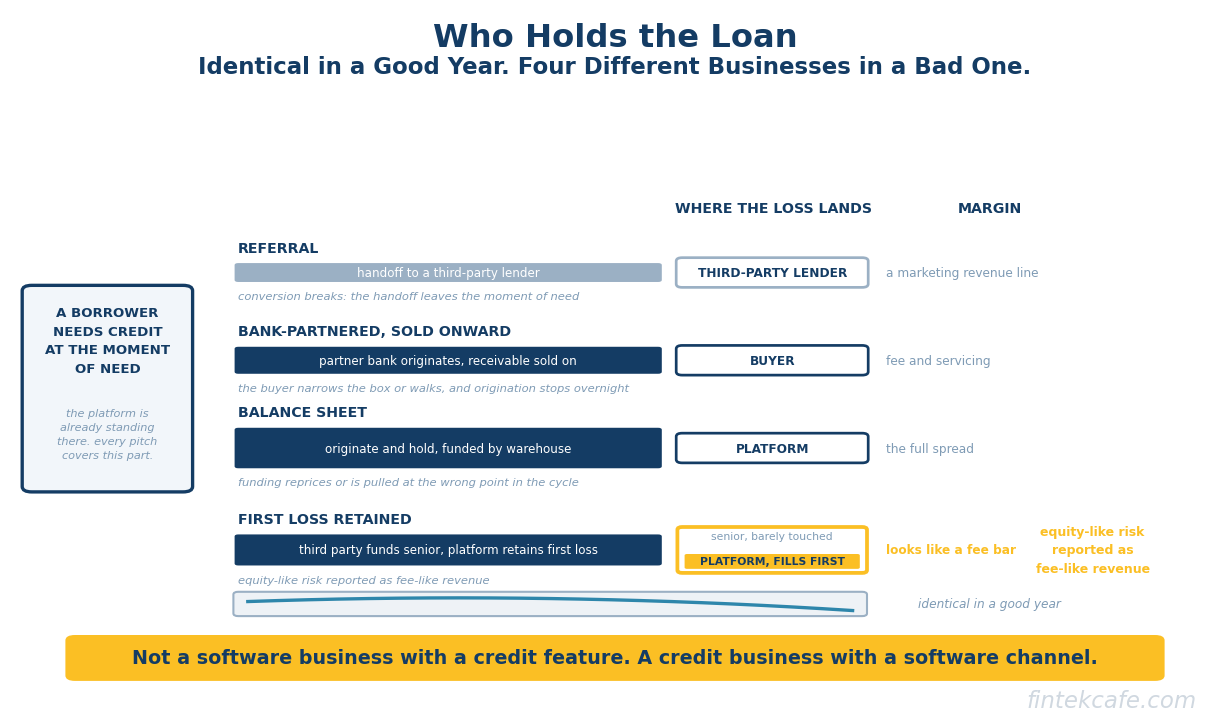
Every embedded lending pitch opens the same way. The platform already processes the merchant's payments, so it sees revenue before the merchant's own accountant does. It knows which customers are growing and which are stalling. It sits at the exact moment the borrowing need appears, which is the checkout screen, the invoice, the equipment order. Acquisition cost is near zero because the borrower is already inside the product. All of that is true, and none of it is the business.
The business is on the balance sheet, and the pitch almost never gets there. When the cycle turns, and it always turns, somebody absorbs the losses on a book of loans originated into a strong economy and repaid, or not repaid, into a weak one. Which entity that is, and whether it was paid enough in the good years to survive the bad one, is the only question that separates the embedded lending programmes that compound from the ones that become a restructuring.
The framing that survives contact with a downturn is this: embedded lending is not a software business with a credit feature attached. It is a credit business with a software distribution channel. Software businesses have gross margins in the seventies and eighties and a cost structure that scales sublinearly. Credit businesses have a cost of funds, a loss curve, a capital requirement, and a correlation to the macro cycle that no amount of product design removes. A platform that adds lending has changed what kind of company it is, and the market values the two differently once the credit cost shows up.
The Four Structures Are Not Interchangeable
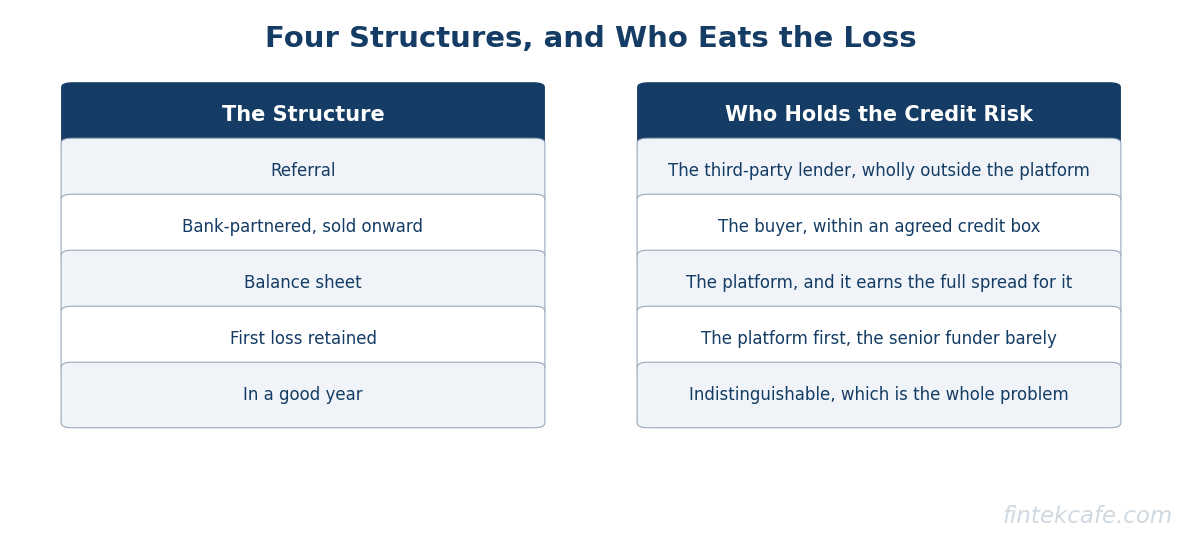
Most coverage of embedded finance treats these as implementation variants on the same idea, which is the source of most of the confusion. They are four different businesses with four different risk profiles, and the choice between them is the single largest strategic decision in the category.
Referral. The platform identifies a borrower, hands the lead to a lender, and collects a fee. No balance sheet, no credit risk, no capital requirement, and almost no margin: a referral fee is a marketing revenue line. The honest description is lead generation with better targeting than an advertising network can achieve. It is the correct starting structure for nearly everyone, and it is where the platform learns whether its data predicts anything, which is the only question that matters before climbing further.
Bank-partnered origination, loan sold onward. The platform controls the experience, a partner bank is the legal originator, and the receivable is sold to the bank or to a forward-flow buyer shortly after origination. The platform earns origination and servicing economics, keeps the customer relationship, and does not hold the credit risk. What it does hold is operational and reputational risk, which is chronically underestimated. If the servicing is bad, the collections are aggressive, or the disclosures are wrong, the platform's brand absorbs it and the partner bank's regulator arrives to ask why its third party was running a lending programme this way. The credit risk sits elsewhere. The consequence of doing it badly does not.
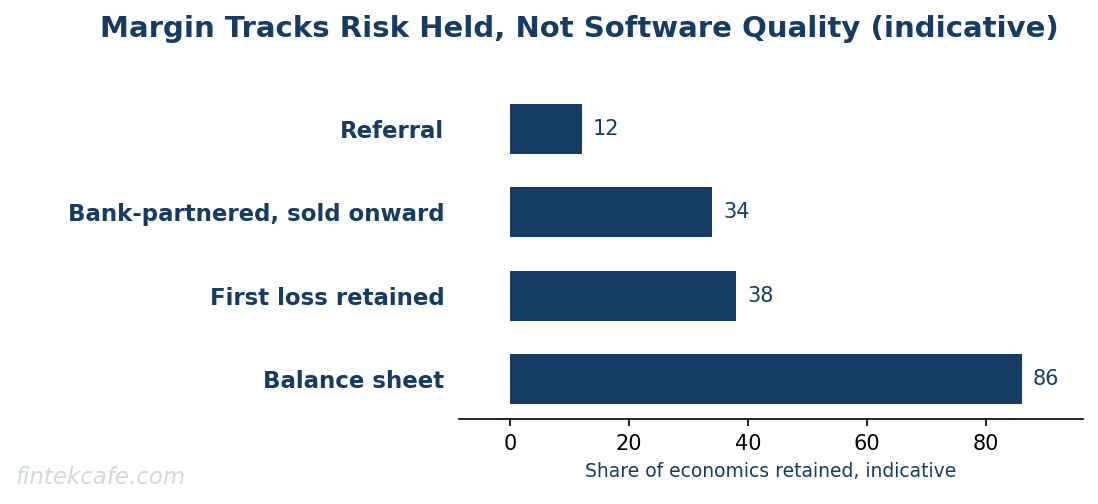
Balance-sheet lending. The platform originates and holds, funded by equity, a warehouse facility, or a securitisation. It earns the full spread, keeps every dollar of the economics, and eats every dollar of the loss. This is a genuine lending business with genuine capital requirements, and it is the only structure where the platform's returns justify the risk it is taking. It is also the structure that converts a software company's valuation multiple into something closer to a specialty finance multiple, which is a conversation most management teams have with their investors later than they should.
Risk retention and first loss. The middle ground, and the one that produces the quiet blowups. The platform does not fund the book but agrees to absorb the first portion of losses, or holds a residual tranche in a securitisation, or guarantees a minimum performance level to the funding partner. This is where a company can hold equity-like risk while reporting fee-like revenue, and the two only diverge when losses arrive. First-loss positions are leveraged exposure by construction: a book performing three points worse than expected can wipe out a first-loss piece entirely while the senior funder is barely touched.
| Structure | Who originates | Who funds | Who eats the loss | Margin | Characteristic failure |
|---|---|---|---|---|---|
| Referral | Third-party lender | Third-party lender | Third-party lender | Lowest, a marketing line | Conversion is poor because the handoff breaks the moment of need |
| Bank-partnered, sold onward | Partner bank | Bank or forward-flow buyer | Buyer, within the agreed box | Moderate, fee and servicing based | The buyer changes the credit box or walks, and origination stops overnight |
| Balance sheet | Platform | Equity, warehouse, or securitisation | Platform, all of it | Highest, the full spread | Funding reprices or the facility is pulled at exactly the wrong point in the cycle |
| First loss or risk retention | Partner bank or platform | Third party, senior | Platform, up to the first-loss limit | Looks like fee income, behaves like equity | Losses run a few points over plan and the retained piece is gone while reported revenue still looks fine |
The table's last column is the useful one. Each structure has a characteristic way of failing, and in every case the failure arrives through the funding relationship rather than through the product.
This is a Premium Article
Sign up for a Premium membership to read this article and get full access to strategic intelligence on technology and business.
Already a member? Sign in
Related Articles
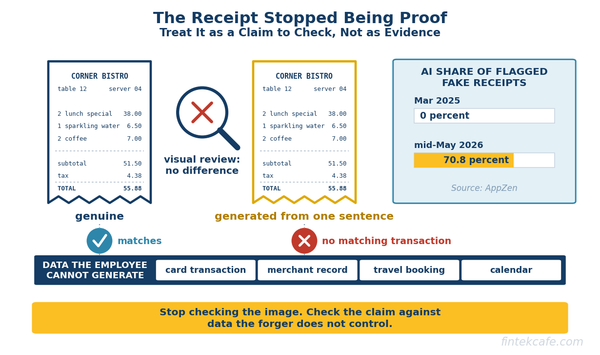
AI-Generated Fake Receipts: How Expense Fraud Changed and How Finance Teams Catch It
AI-generated fake receipts now beat visual review. How expense fraud changed, which detection still works, and the controls to use by company size.
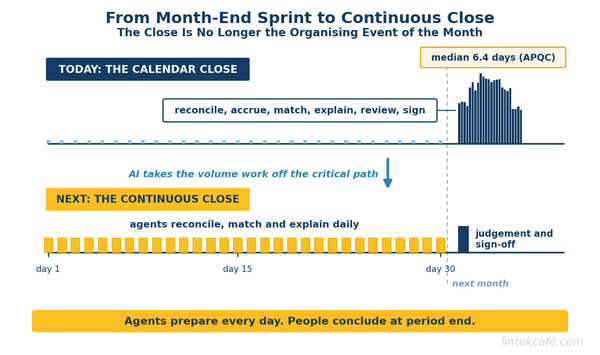
The Monthly Close Is Becoming Continuous, and the Finance Calendar Will Not Survive It
AI is taking the bottleneck work out of the month-end close. The close becomes continuous with a short sign-off, and finance, audit and the board change.
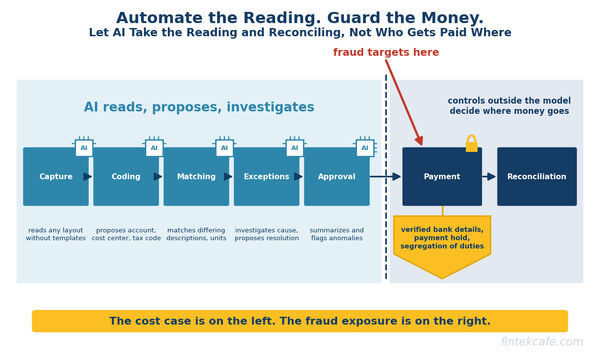
Accounts Payable Automation: What AI Can Actually Take Over in Invoice-to-Pay
What AI can take over in accounts payable, step by step from capture to payment, where the fraud risk grows, and which controls must stay outside the model.