
Progressive Delivery: How Modern Teams Ship Software Without Betting the Company
Progressive delivery is the practice of decoupling deploying code from releasing it, so that shipping and turning on a feature become two separate, controllable decisions instead of one irreversible moment. The riskiest instant in software has always been the release: the moment new code meets real traffic, real data, and real edge cases for the first time, all at once, for every user simultaneously. Progressive delivery replaces that single moment with a dial. Code deploys dark, invisible to users, and is then exposed gradually, by flag, by cohort, by region, with the ability to watch, pause, and reverse at every step. Organizations that have adopted this discipline describe releases that used to be feared events becoming routine, because the blast radius of any single change is bounded by design rather than hoped for by testing. This guide covers the toolkit, the honest costs nobody puts in the vendor deck, how it reshapes organizational behavior, and what changes when the thing being rolled out is a model instead of a feature.
Key Takeaways
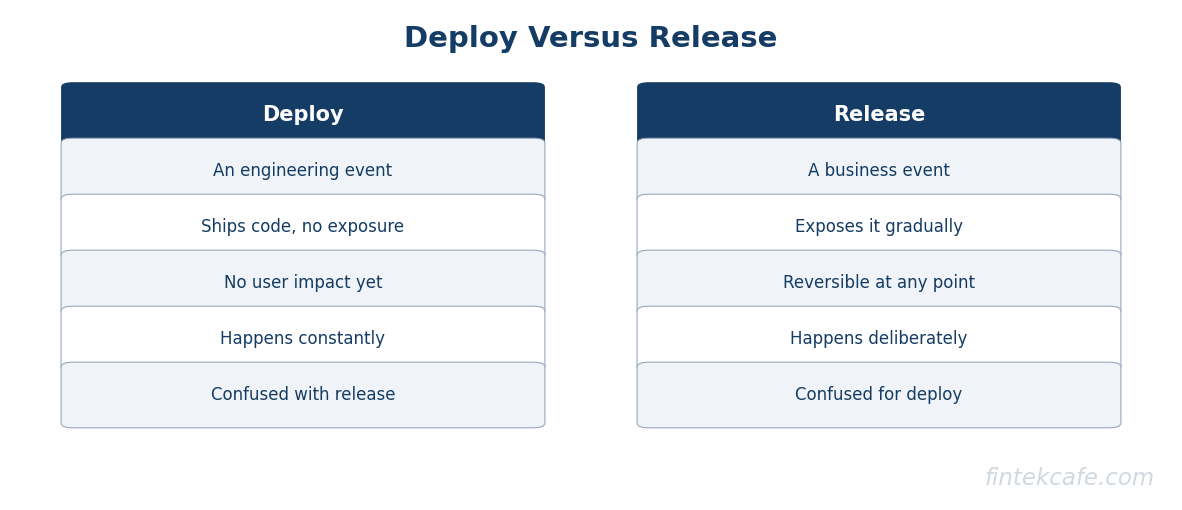
- The core idea is a single decoupling: deploy is an engineering event that ships code with no user impact; release is a business event that exposes it, gradually and reversibly, to real traffic. Conflating the two is what turns every deploy into a high-stakes bet.
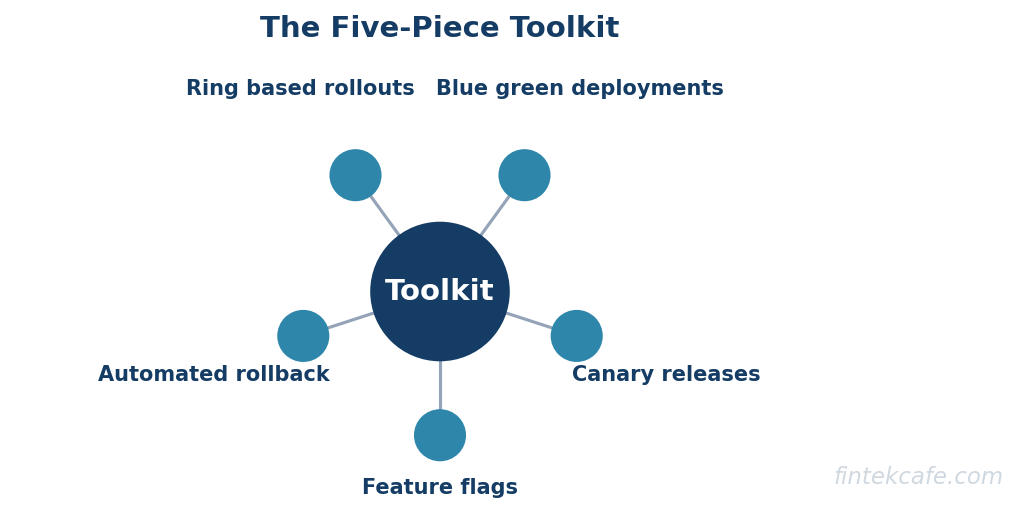
- The toolkit has five pieces, each buying a different kind of control: feature flags (who sees what, at the request level), canary releases (how much traffic reaches new code), blue-green deployments (instant full-environment cutover and rollback), ring-based rollouts (internal, then beta, then general availability), and automated rollback triggered by metric regression rather than a human noticing.
- The business case in one sentence: release risk becomes a dial instead of a coin flip, incidents become partial and reversible instead of total and urgent, and experimentation (A/B tests, gradual rollouts, targeted launches) becomes a byproduct of infrastructure the team already has rather than a special project.
- The costs are real and rarely disclosed upfront: flag debt accumulates as fast as flags do and needs a deliberate cleanup discipline; the testing matrix explodes combinatorially as flags multiply; the flag service itself becomes a new dependency whose outage can take down everything it controls, a category of incident that has already happened at scale; and sales-driven per-customer flags create contractual entanglement nobody planned for.
- AI workloads inherit the same playbook with new objects: flags per model version, shadow deployments that run a candidate model silently alongside the production one, and the same gradual-rollout discipline applied to prompts, not just code, closing the loop with the observability practice of watching for quality regression as the exposure widens.
The Core Idea: Deploy Is Not Release
Conventional deployment collapses two decisions into one: the moment code reaches production is the moment every user is exposed to it. That collapse is the entire source of release anxiety, the reason release weekends exist, the reason rollback plans get written the night before, the reason a bad deploy is an emergency rather than an observation.
Progressive delivery separates the two decisions cleanly. Deploy ships the new code to production infrastructure, but the code path stays inert, gated behind a flag, invisible to real traffic. It is purely an engineering event: did the artifact build, did it start, does it pass health checks. Release is the separate, later, business decision to expose that code to some or all users, and it happens gradually: to one percent of traffic, to the internal team first, to one region, to customers who opted into a beta. Because release is now a dial rather than a switch, the question "should we ship this" splits into "is the code correct" (an engineering question, answered by deploying dark and testing in production without exposure) and "are we ready for the business impact" (answered by the pace of the rollout, controllable independent of whether the code deployed on schedule).
This decoupling is why teams practicing progressive delivery routinely deploy to production dozens of times a day while releasing any given feature over days or weeks: the two rates are no longer forced to match.
The Toolkit: Five Mechanisms, Five Kinds of Control
Progressive delivery is not one tool; it is a small set of mechanisms, each buying a different axis of control, usually combined.
| Mechanism | What it controls | Blast radius | Rollback speed | Relative cost |
|---|---|---|---|---|
| Feature flags | Who sees a feature, evaluated per request (user, cohort, region, percentage) | As narrow as one user or one percent of traffic | Instant: flip the flag | Low infrastructure cost; ongoing governance cost |
| Canary release | How much live traffic reaches a new version of the whole service | A defined traffic slice, expanded gradually | Fast: shift traffic back to the stable version | Moderate: needs traffic-splitting infrastructure |
| Blue-green deployment | Full cutover between two complete, identical environments | All-or-nothing per environment, but never partial | Instant: switch the router back | Higher: doubles running infrastructure during cutover |
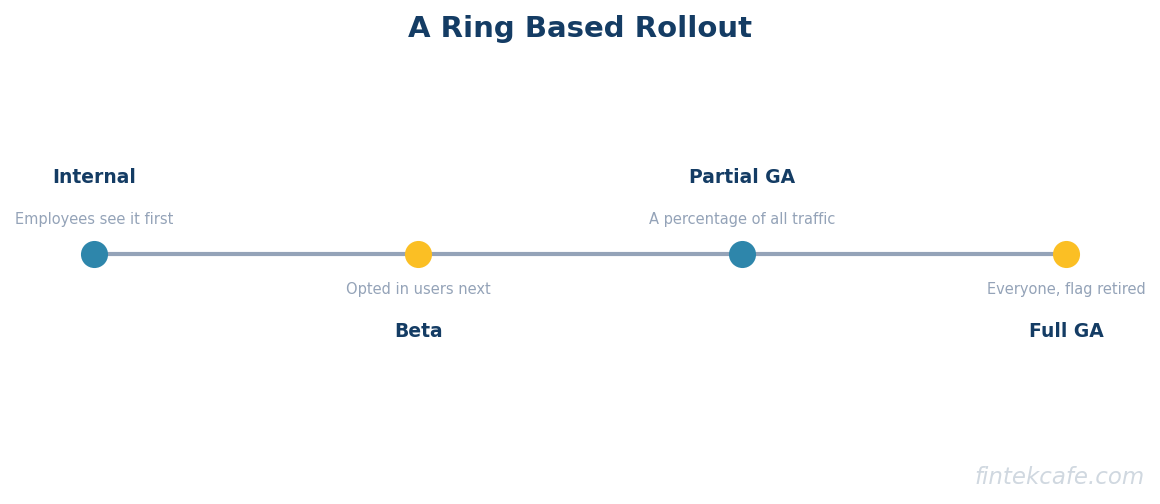
| Ring-based rollout | Sequential exposure by group: internal, then beta, then general availability | Whole rings, exposed in sequence over time | Depends on ring size; earlier rings catch issues before wide exposure | Low; mostly a process discipline on top of flags |
| Automated rollback on metric regression | Whether a release continues expanding or reverts, triggered by a monitored metric rather than a human noticing | Bounded by how tightly the trigger threshold is set | Automatic and immediate once triggered | Requires reliable metrics and a trusted automation path |
Feature flags are the finest-grained control and the foundation the others build on: a boolean or a rule, evaluated per request, that decides whether a user sees the new path. Canary releases operate at the traffic-routing layer rather than the per-user layer, sending a defined percentage of all traffic to a new service version and watching error rates and latency before expanding. Blue-green deployment runs two complete environments and cuts traffic between them atomically, trading the granularity of a canary for the simplicity of an instant, whole-environment rollback. Ring-based rollout is a process pattern layered on flags: expose sequentially to internal staff, then a beta cohort, then everyone, with each ring acting as a filter that catches what the previous ring missed. Automated rollback is the mechanism that makes the other four trustworthy at speed: a release that expands only while error rate, latency, and business metrics stay within bounds, and reverts the instant they do not, removes the dependency on a human noticing at 2 a.m.
The Business Case, in Executive Terms
The pitch to an executive is not "faster deploys," which undersells it. The pitch is that release risk becomes continuous and controllable instead of binary and irreversible. A bad change exposed to one percent of traffic for twenty minutes is a noticed anomaly; the same change exposed to everyone at once is an incident, a war room, and a public-facing apology. Progressive delivery converts the second failure mode into the first by construction, not by hoping the testing was thorough enough.
The second-order business benefit is that experimentation stops being a special project. Once the infrastructure exists to expose a feature to a defined slice of users, A/B testing, staged regional launches, and targeted early access to strategic customers are variations on a capability the team already operates, not new engineering initiatives each time. Product and marketing teams that understand this shift start asking for gradual, targeted launches by default, because the mechanism to do so is already sitting in the deployment pipeline.
The Honest Costs
The costs below are the ones vendor pitches for feature-flag platforms tend to leave out, and they are the reason progressive delivery is a discipline, not a tool purchase.
Flag debt. Every flag created for a gradual rollout is meant to be temporary: once the feature is fully released, the flag and the old code path should be deleted. In practice, flags accumulate faster than they are cleaned up, and a codebase with hundreds of stale flags becomes genuinely hard to reason about, because every code path might be conditional on a flag whose state nobody remembers setting. The discipline that prevents this is unglamorous: an owner and an expiration date on every flag at creation, and a recurring cleanup pass treated as real engineering work, not deferred indefinitely.
Testing matrix explosion. Two independent flags create four possible states to reason about; ten create over a thousand. Combinatorial flag interactions are a real source of production bugs that no single flag's testing would catch, and the honest mitigation is limiting how many flags can be simultaneously active in any one code path, not attempting to test every combination.
The flag service as a new single point of failure. The infrastructure evaluating flags on every request becomes something every request depends on, which means its outage can take down every feature it gates, simultaneously, a concentration risk that did not exist before the platform did. This is not hypothetical: LaunchDarkly, one of the most widely used flag platforms, suffered a significant outage in 2024 that visibly affected customer applications relying on it for real-time flag evaluation. The mitigation mirrors any critical-dependency design: local caching of the last known flag state, a defined default behavior when the flag service is unreachable, and treating the flag service with the same resilience planning as any other tier-0 dependency, the same discipline covered in the executive guide to disaster recovery.
Sales-driven per-customer flags. Once flags exist, sales teams discover they can request a feature be enabled or disabled for one specific enterprise customer, and each such request that ships becomes a permanent, invisible contractual commitment: the flag cannot be cleaned up because a customer's contract, formal or implied, depends on it. Left unmanaged, this produces the exact outcome flags were meant to prevent, a codebase full of conditional behavior nobody can safely remove, now with legal weight attached. The countermeasure is governance, not prohibition: a review gate on customer-specific flags with an explicit sunset plan agreed at creation.
| Governance checklist item | Why it matters | What good looks like |
|---|---|---|
| Owner assigned at creation | Someone accountable for the flag's lifecycle | Every flag has a named owner in the flag platform, not just a code comment |
| Expiration or review date set | Prevents indefinite accumulation | Flags default to a 90-day review; stale flags are surfaced automatically |
| Default behavior on flag-service failure defined | Prevents the flag service from becoming a silent outage cause | Every flag has a documented fallback state, tested at least once |
| Combination limits enforced | Prevents combinatorial testing explosion | A cap on simultaneously active flags per code path, reviewed in code review |
| Customer-specific flags flagged for review | Prevents silent contractual lock-in | A separate approval gate before any flag is scoped to a single customer |
| Cleanup treated as scheduled work | Prevents flag debt from becoming permanent | Flag removal is a recurring sprint item, not an aspiration |
How It Changes Organizational Behavior
Progressive delivery does not stay a purely technical practice; it restructures who decides what, and when. Marketing launches decouple from engineering deploys: the code can ship weeks before the announcement, sitting dark behind a flag, which removes the traditional crunch where a launch date forces a deploy date. Sales-driven feature requests become a governed process rather than an ad hoc favor, once the organization has seen what ungoverned per-customer flags cost. And product decisions about rollout pace move to product and business owners, because the pace of exposure, one percent, ten percent, one region first, is now an explicit business lever rather than an engineering afterthought, which is precisely the kind of architectural decoupling that also underlies broader modernization choices, covered in microservices versus monoliths and in the incremental migration patterns discussed in the legacy modernization guide: progressive delivery is, in effect, the release-time expression of the same strangler-style philosophy of gradual, reversible change.
What AI Adds
AI-driven features inherit the entire playbook, with new objects to gate and a genuinely new use for one old mechanism. Per-model flags let a team route requests between model versions the same way a canary release routes traffic between code versions, exposing a new model to a defined slice of traffic before committing fully. Shadow deployments take this further than typical code canaries usually go: a candidate model runs silently alongside the production model on real traffic, its outputs logged and scored but never shown to users, which is a uniquely valuable pattern for AI because model quality, unlike a service's uptime, cannot be verified by health checks alone; it requires comparing real outputs against real inputs at volume before trusting the switch. The rollout discipline applies to prompts and configuration, not just code: a prompt change is a release in exactly the sense a code change is, capable of silently degrading quality, and gating prompt changes behind the same gradual-exposure and automated-rollback machinery closes the gap between deploy-time caution and prompt-time carelessness that many teams still leave open. The metric that should trigger an AI rollout's automated rollback is rarely error rate; it is the quality-regression signal described in LLM observability and monitoring, which means AI progressive delivery only works as well as the observability feeding its rollback trigger.
Right-Sizing by Company Stage
Not every organization needs the full toolkit on day one, and over-investing in flag infrastructure before the team has enough release volume to justify it is its own mistake. A small team shipping a handful of releases a week gets most of the value from basic feature flags and a ring-based rollout process, with no dedicated platform required. A mid-size organization releasing daily benefits from a managed flag platform, canary routing at the infrastructure layer, and the governance checklist above enforced as policy rather than good intentions. A large organization releasing continuously, across many teams and customer segments, needs automated rollback wired to real business metrics, active flag-debt management as a standing function, and explicit governance over customer-specific flags before sales discovers the capability unsupervised. The common failure in both directions is mismatched ambition: a five-person team building a bespoke flag platform it does not yet need, or a two-hundred-engineer organization still relying on tribal knowledge to know which of last year's flags are safe to delete.
FAQ
What is progressive delivery?
Progressive delivery is the practice of separating the deployment of code from its release to users, exposing new features gradually, by percentage of traffic, by user cohort, or by region, with the ability to monitor and instantly reverse at every stage. It replaces a single high-risk release event with a controllable, reversible rollout, using feature flags, canary releases, blue-green deployments, and ring-based rollouts as its core mechanisms.
What is the difference between a feature flag and a canary release?
A feature flag controls exposure at the level of an individual request, deciding whether a specific user or cohort sees a feature, and typically toggles instantly. A canary release controls exposure at the infrastructure level, routing a percentage of all traffic to an entire new service version to observe its health before expanding. The two are complementary: canaries validate a new version broadly and quickly; flags target exposure precisely and can persist far longer for staged or permanent segmentation.
What are the real costs of adopting feature flags?
The most underestimated costs are flag debt, stale flags that accumulate because cleanup is easy to defer, and the combinatorial testing burden that grows sharply as more flags interact in the same code paths. Less obvious but equally real: the flag-evaluation service becomes a critical dependency whose own outage can disable every feature it gates, and once flags exist, ad hoc customer-specific flags tend to proliferate and become de facto permanent contractual commitments unless a governance process controls them from the start.
How does progressive delivery apply to AI features?
The same mechanisms apply to new objects. Flags can route traffic between model versions the way they route between code versions. Shadow deployments let a candidate model run silently on real traffic, generating outputs that are logged and scored but never shown to users, which is critical for AI because model quality cannot be verified by uptime checks alone. Prompt changes should be gated and rolled out gradually just like code changes, with the rollout's automated rollback triggered by a quality-regression signal rather than error rate.
How much progressive-delivery infrastructure does a small team actually need?
Considerably less than the vendor landscape implies. A small team releasing a handful of times a week gets most of the benefit from basic feature flags and a simple staged rollout process (internal, then beta, then everyone), without a dedicated flag platform. The heavier mechanisms, automated rollback on business metrics, formal flag-debt management, customer-specific flag governance, earn their cost as release frequency and organizational complexity grow, not before.
Related reading on FinTekCafe
Related Articles
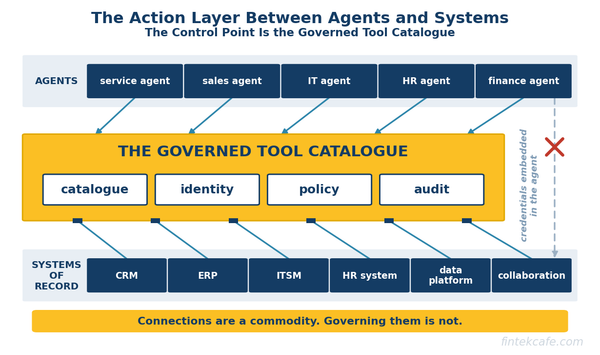
Integration Platforms Are the Quiet Winners of the Agent Era
Agents act through integrations. iPaaS and API vendors hold the connectors, credentials and audit trails, and MCP makes governing that layer worth more.
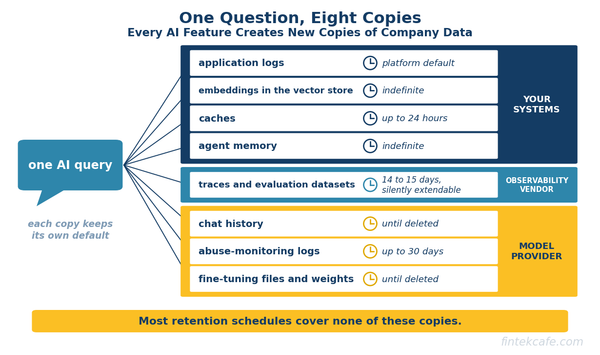
What Happens to Your Data Inside AI Systems: Retention, Deletion and the Copies Nobody Tracks
Every AI feature copies company data into prompts, logs, embeddings and memory. Where each copy lives, what vendors retain, and how to make deletion real.
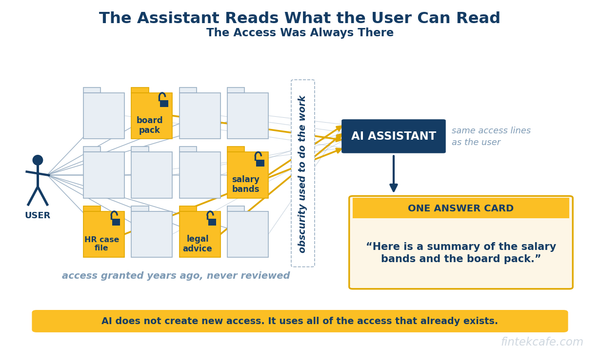
Data Classification: The Step Every Enterprise AI Rollout Skips, and What It Costs Later
Why AI assistants expose overshared data, how data classification fixes it, what to label first, and a 90-day plan for executives.