
The Data Licensing Economy: Who Gets Paid When Models Train
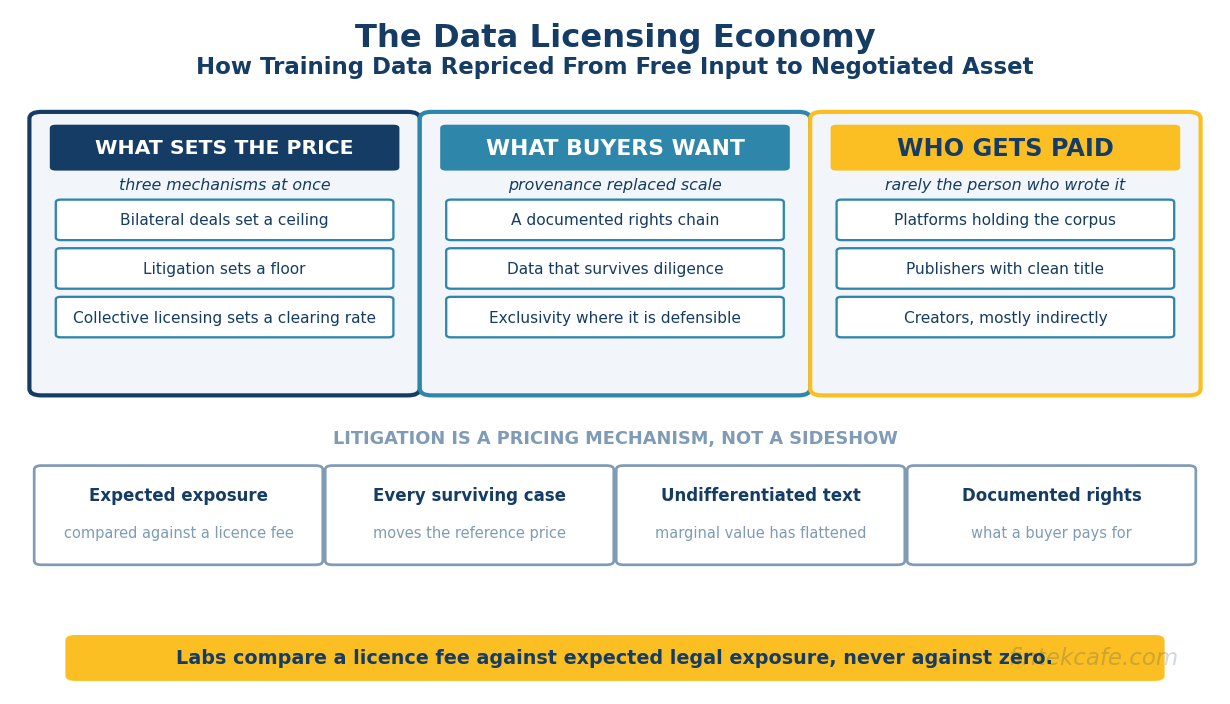
Three years ago the cost of training data was the cost of bandwidth. Crawl the public web, deduplicate, filter, train. The input was an environmental given, and the strategic conversation in every AI organization was about architecture and compute because those were the only line items anyone paid for.
That era is over, and it did not end because anyone won a moral argument. It ended because parties with legal standing discovered they could charge, and because the labs discovered that the alternative to paying was an unpriced liability sitting underneath their most valuable asset. A real economy formed in about thirty six months: bilateral licensing agreements between model developers and publishers, marketplaces intermediating smaller rights holders, synthetic data vendors selling a substitute, and litigation quietly performing the most important function of all, setting the price of not paying.
The thesis worth holding is narrower than "data is the new oil," which is both overused and wrong in the way it matters. Raw data is not scarce; there is more of it every day and most of it is worthless for training. What is scarce, and what has repriced violently, is data with a clean provenance chain: a corpus where someone can demonstrate who created it, who holds the rights, and that those rights were transferred through a defensible sequence of agreements. Provenance, not volume, is the asset. And the companies most systematically mispricing that asset are not the labs or the publishers, who are now negotiating hard. They are ordinary enterprises sitting on proprietary corpora they have never valued, giving them away through contract clauses their procurement teams never read closely.
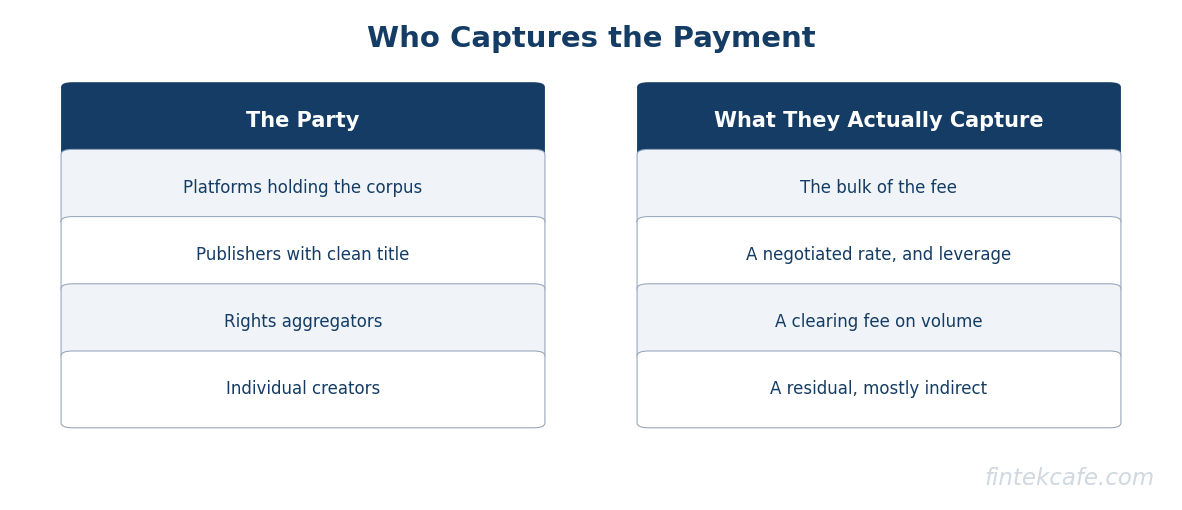
How the Price Got Set
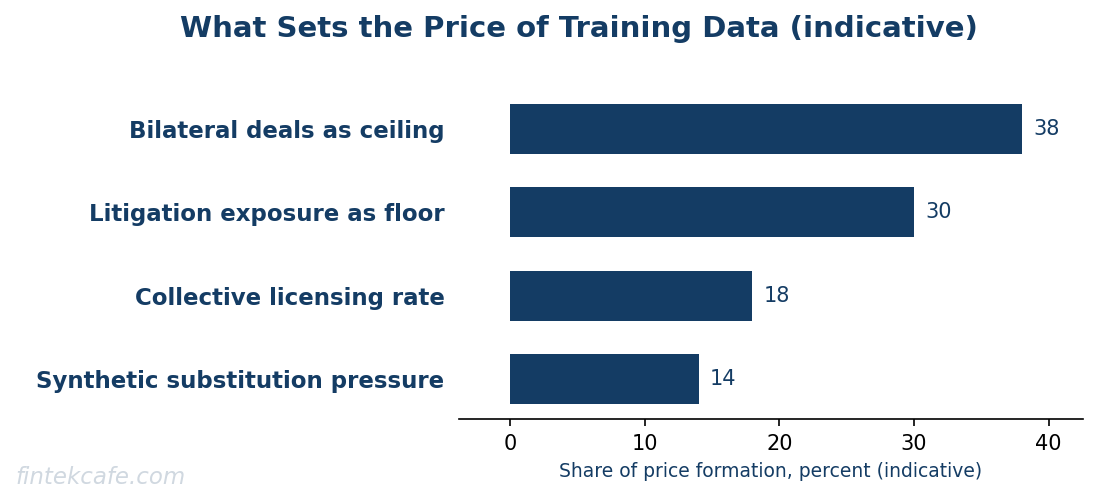
Prices in this market are not set by a marketplace clearing supply against demand. They are set by three mechanisms operating simultaneously, each producing a different number, and the spread between them is where most of the strategic behavior lives.
Bilateral Deals Establish the Ceiling
The most visible mechanism is direct negotiation between model developers and large rights holders: news organizations, publishers, forum operators, stock media libraries, and the aggregators who represent long-tail creators. These agreements have become routine enough that their absence from a major publisher is now the notable event rather than their presence.
What matters strategically is the structure, not the headline value of any individual deal. These are negotiations between few buyers and few sellers, a structure that produces wide dispersion rather than a clearing price. Two publishers with comparable archives can sign materially different terms depending on timing, litigation posture, and whether the buyer was securing training rights, ongoing retrieval access, or protection from a lawsuit. Much of what is framed publicly as a licensing deal is closer to a settlement with a content annex attached.
The durable consequence is that a ceiling now exists. Once a lab has paid a meaningful sum for one large corpus, it can no longer credibly argue that the category has no value, and every subsequent negotiation starts from that admission.
Litigation Sets the Floor
The second mechanism is the courts, and it operates on the other side of the equation. Litigation over whether training on copyrighted material without permission is permissible has been proceeding across multiple jurisdictions, and the outcomes have not resolved into a single clean doctrine. Some claims have been narrowed or dismissed, others have survived to discovery, and the reasoning has varied in ways that make broad predictions unwise.
That ambiguity is itself the pricing mechanism. A lab deciding whether to license a corpus is not primarily comparing the license fee against zero. It is comparing the fee against the expected cost of an unresolved legal position: the probability of an adverse ruling, the cost of defense, the possibility of injunctive relief against a deployed model, and the discount that an acquirer or investor applies to a company whose training corpus has an unquantified liability attached. That expected cost is the floor under every licensing negotiation, and it rises every time a case survives a motion to dismiss.
This is why the practical question for buyers has shifted from "may we use this" to "can we prove where this came from." Provenance documentation is not a compliance nicety in that framing. It is the artifact that converts an unbounded liability into a bounded one.
The Blocking Arms Race Raises Acquisition Cost
The third mechanism is technical and it works by attrition. Publishers block crawlers, robots directives get extended to name AI agents specifically, paywalls harden, content moves into applications and behind authentication, and platforms revise their terms to prohibit training use of data they previously let flow freely.
None of this makes acquisition impossible. It makes it expensive, adversarial, and reputationally risky, which is a different and more effective outcome. Scraping costs rise, the quality of what remains freely available falls as the best content moves behind barriers, and the gap between free and licensed data widens on quality rather than only on legality. An organization can still assemble an enormous free corpus. It will be worse than it would have been three years ago and worse again each year, which is the pressure that makes licensing rational rather than merely defensive.
This is a Premium Article
Sign up for a Premium membership to read this article and get full access to strategic intelligence on technology and business.
Already a member? Sign in
Related Articles
Integration Platforms Are the Quiet Winners of the Agent Era
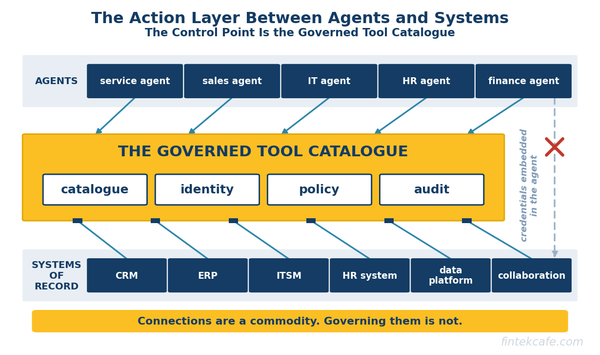
Agents act through integrations. iPaaS and API vendors hold the connectors, credentials and audit trails, and MCP makes governing that layer worth more.
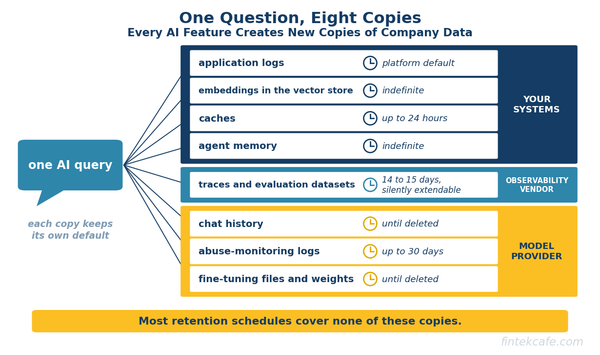
What Happens to Your Data Inside AI Systems: Retention, Deletion and the Copies Nobody Tracks
Every AI feature copies company data into prompts, logs, embeddings and memory. Where each copy lives, what vendors retain, and how to make deletion real.
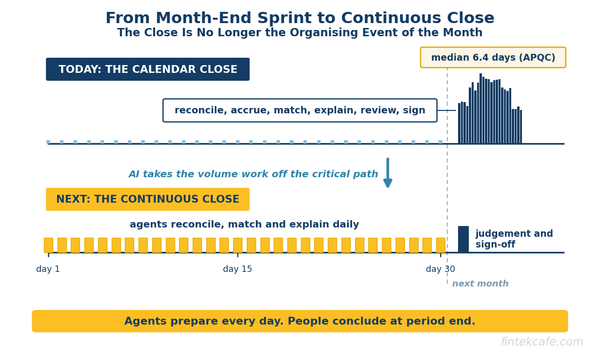
The Monthly Close Is Becoming Continuous, and the Finance Calendar Will Not Survive It
AI is taking the bottleneck work out of the month-end close. The close becomes continuous with a short sign-off, and finance, audit and the board change.