
The AI Memory Layer: Why Context Persistence Is the Next Lock-In
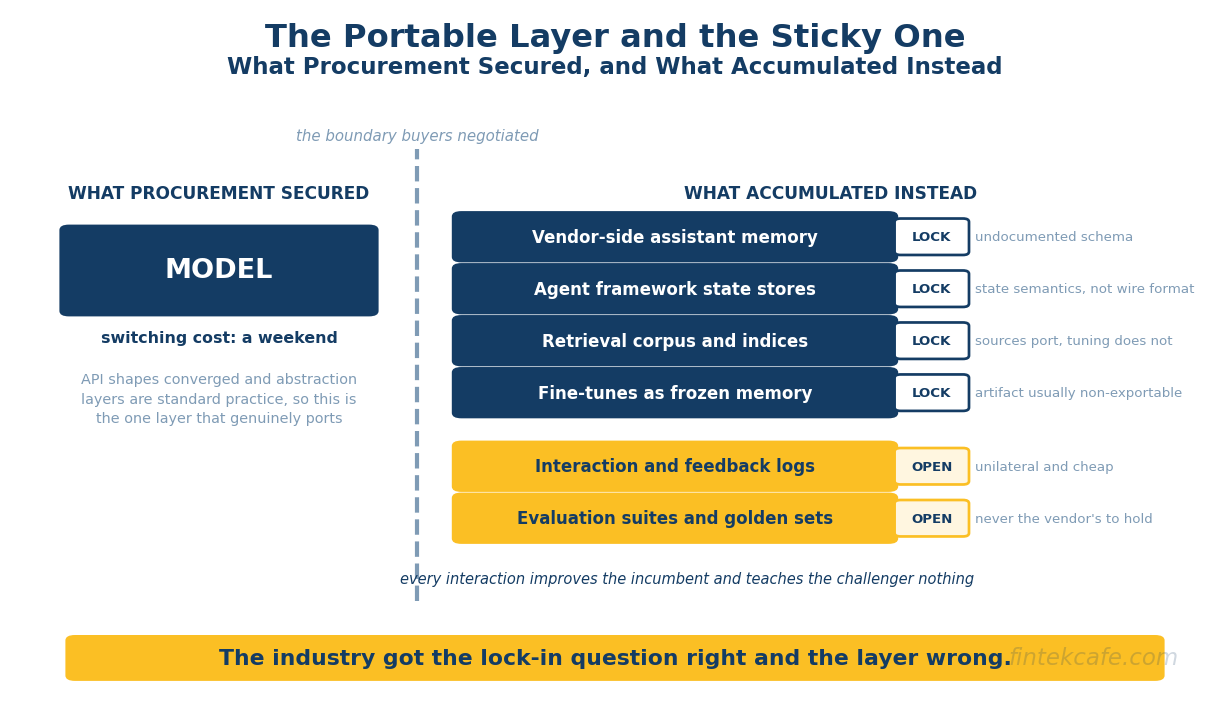
Switching model vendors is a weekend. That sentence would have sounded reckless two years ago and is close to literally true now: the API shapes have converged, the prompt formats port with modest rewriting, the quality gap between the top few providers on most enterprise tasks has narrowed to something an evaluation suite has to work to detect, and every serious platform team has already built or rented an abstraction that makes the swap a configuration change. The industry spent two years worrying about model lock-in, and in the process the model became the most portable component in the entire stack.
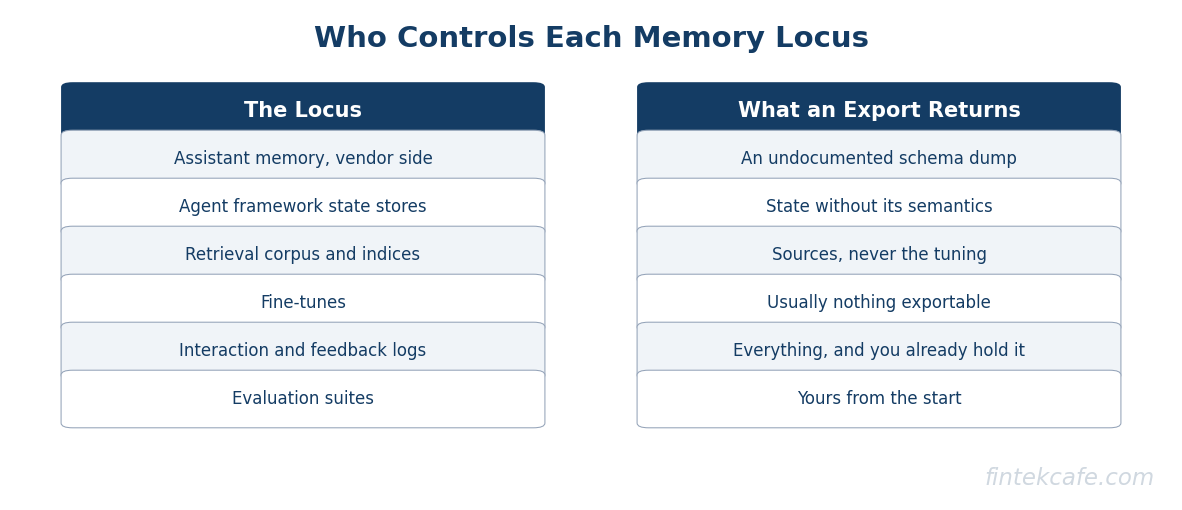
What is not portable is everything the vendor has learned about the organization along the way. The preferences an assistant has accumulated across ten thousand employee conversations. The state an agent framework holds about half-finished workflows, tool permissions, and which approach failed last time. The retrieval corpus, chunked and embedded against one provider's embedding model, with a year of relevance tuning layered on top. The fine-tune that froze last spring's institutional knowledge into weights. None of that is the model, all of it accumulates, and almost none of it moves cleanly.
The thesis is that memory is becoming the stickiest layer in the AI stack precisely because nobody is treating it as a layer. It has no procurement category, no named owner in most organizations, no line in the architecture diagram, and no clause in the contract. It is being accumulated as a byproduct of using the product, which is exactly how the most durable lock-in has always been built. Cloud lock-in was never about compute; it was about the data with gravity and the operational muscle memory built around one provider's primitives. The AI equivalent is arriving now, one remembered preference at a time, and the organizations most exposed are the ones that congratulated themselves on staying model-agnostic.
Why Memory Compounds and Models Do Not
The asymmetry that makes memory a moat is simple: every interaction improves the incumbent and teaches the challenger nothing.
A model gets better on a release schedule set by a lab, and that improvement is available to every customer and every competitor simultaneously. It is a rising tide, which is another way of saying it is not an advantage to anyone. Memory improves on a usage schedule set by the customer's own activity, and that improvement is available only inside the system that captured it. Two organizations using the same frontier model diverge in capability over eighteen months not because one has a better model but because one has a system that remembers what worked.
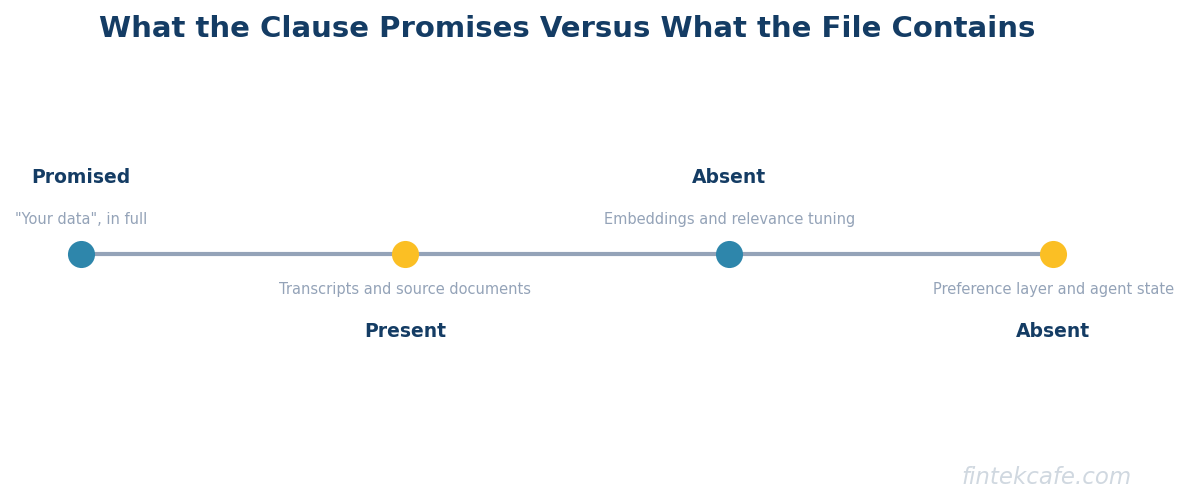
This inverts the accumulation logic that governed the previous decade of software. In classic SaaS, the vendor's product improved for everyone at once and the customer's data was a passive record, which is why data export requirements were a solvable procurement problem: the data was inert, and moving it meant moving rows. Memory in an AI system is not inert. It is a set of derived artifacts, embeddings, summaries, learned routing preferences, state graphs, whose value is entangled with the machinery that produced them. Exporting the rows gets the raw material back. It does not get the accumulated judgment back, because the judgment was never stored as rows.
The compounding runs the other direction too, and this is the part buyers underestimate. A challenger vendor evaluated in a bake-off against an eighteen-month incumbent is not being compared on model quality. It is being compared cold against a system that knows the organization's terminology, its document structure, its escalation paths, and its past failures. The challenger loses the bake-off, the incumbent's position is confirmed by what looks like an objective test, and the actual variable being measured was never disclosed to anyone in the room.
This is a Premium Article
Sign up for a Premium membership to read this article and get full access to strategic intelligence on technology and business.
Already a member? Sign in
Related Articles
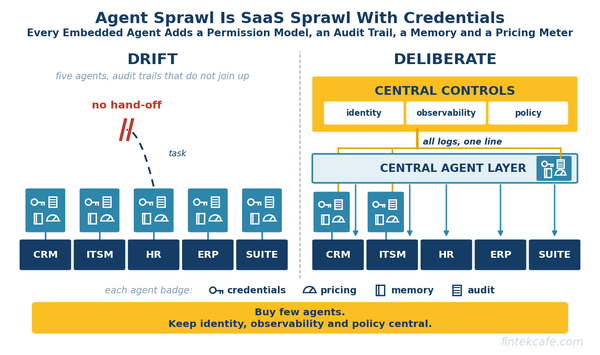
Every Software Vendor Now Sells an Agent, and Most Enterprises Should Buy Very Few of Them
Buying an agent from every system of record recreates SaaS sprawl one layer up. How CIOs should choose, and which controls must stay central.
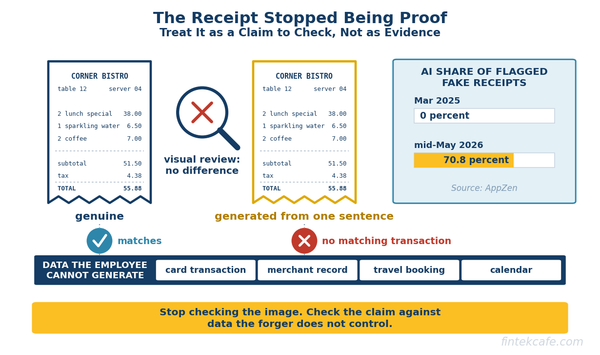
AI-Generated Fake Receipts: How Expense Fraud Changed and How Finance Teams Catch It
AI-generated fake receipts now beat visual review. How expense fraud changed, which detection still works, and the controls to use by company size.
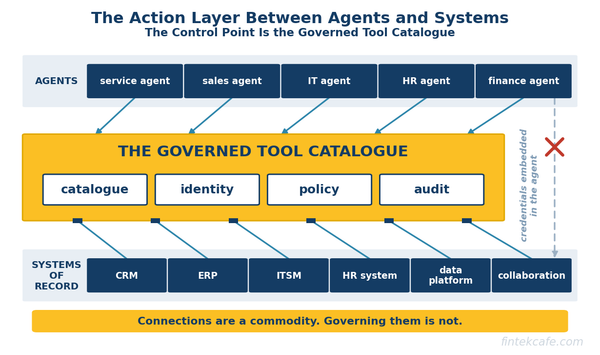
Integration Platforms Are the Quiet Winners of the Agent Era
Agents act through integrations. iPaaS and API vendors hold the connectors, credentials and audit trails, and MCP makes governing that layer worth more.