
Private Credit Meets Fintech: The Technology Stack Funding the Boom
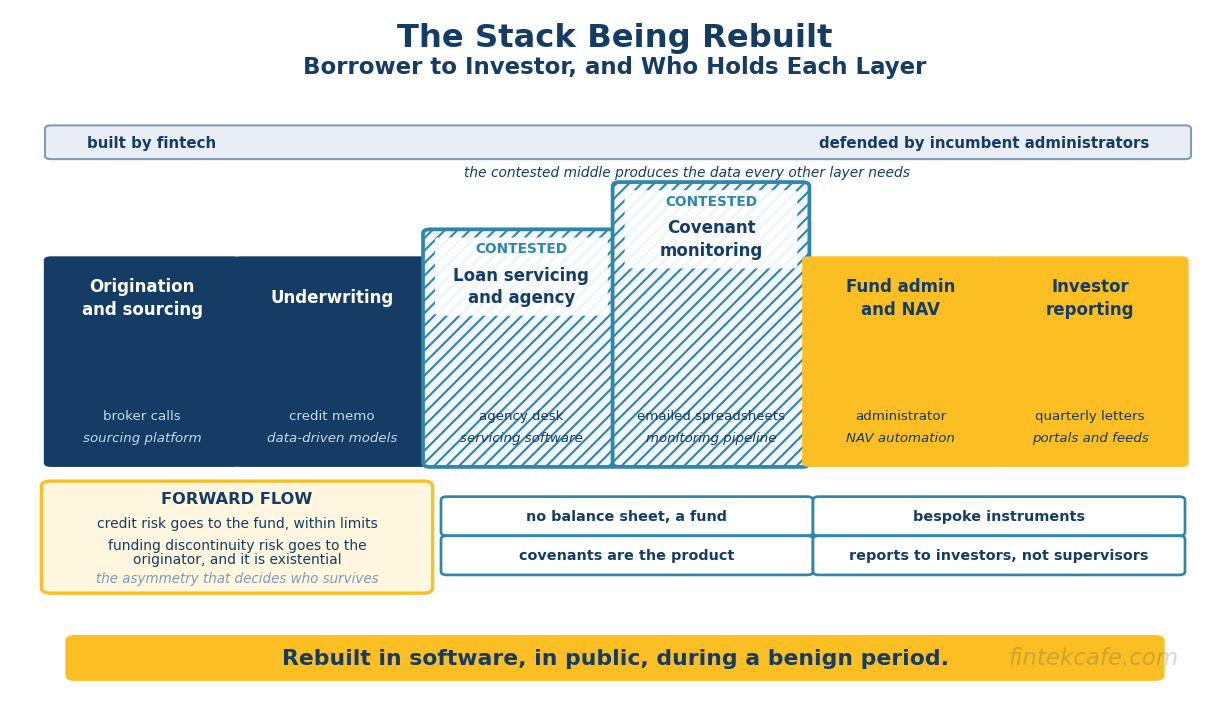
Private credit spent the last decade absorbing the middle-market lending that banks walked away from, and grew into a multi-trillion asset class doing it. The narrative attention has gone almost entirely to the capital: how much has been raised, what it is displacing, whether the spreads justify the risk, and how badly it ends when the cycle turns. That is a reasonable set of questions and it is not the interesting one for anyone who builds or buys financial technology.
The interesting question is that an asset class of this size is running on infrastructure that mostly does not exist. A regional bank making the same loans has a core banking system, a regulator-mandated reporting stack, decades of servicing software, and an ecosystem of vendors who have solved each problem several times over. A private credit fund making those loans has a fund administrator, a law firm, a data room, and an extraordinary quantity of spreadsheets. The asset class scaled faster than its plumbing, and the gap between the two is now large enough to be a category.
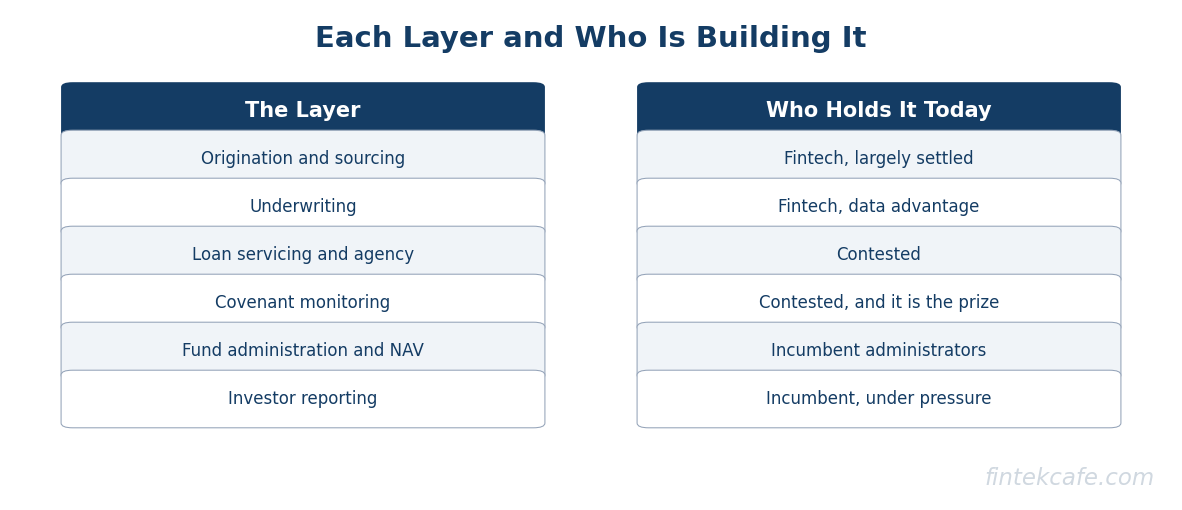
The thesis is that private credit is not being disrupted by fintech; it is being constructed by it. Origination, underwriting, servicing, and fund administration are each being rebuilt as software, largely by vendors selling into funds rather than by funds building for themselves, and the resulting stack is quietly determining which managers can scale, which fintech originators survive the next credit cycle, and how much of the transparency problem regulators keep flagging is actually a data problem wearing a governance costume.
Why Bank Lending Software Does Not Transfer
The instinct that private credit should just buy what banks use fails on four structural differences, and understanding them is what separates the vendors selling into this market successfully from the ones adapting bank products and losing.
There is no balance sheet, there is a fund. A bank holds loans against deposits on one continuous balance sheet with one regulatory reporting regime. A private credit manager holds loans inside a set of funds and separately managed accounts, each with its own investors, its own fee terms, its own leverage facility, and its own reporting calendar. Every loan has to be allocated across vehicles at origination according to allocation policy, and every subsequent cash flow has to be attributed back through that structure. This is not a feature banks needed, so bank software does not have it, and it is the single largest reason bank lending platforms do not port.
Covenant monitoring is the product, not a compliance chore. Middle-market private credit lends against businesses whose performance is not observable from public filings, which makes the lender's ongoing information rights the core of the credit. Borrower reporting packages arrive monthly or quarterly, in whatever format the borrower's finance function produces, and the covenant tests that determine whether a credit is performing are computed from them. A bank running standardized products against standardized data treats covenant tracking as a downstream control. A private credit manager treats it as the primary sensing apparatus for the entire portfolio, and doing it on spreadsheets is why so many managers cannot answer portfolio-level questions quickly.
Every loan is bespoke. Bank lending scaled by standardizing the instrument. Private credit's competitive proposition is the opposite: structure, speed, and flexibility relative to a syndicated process. That means unique documentation per deal, negotiated covenants, payment-in-kind toggles, delayed draw facilities, and amendment traffic throughout the life of the loan. Software that assumes a product catalog cannot represent this, which is why so much of the category's early tooling was really document management with a lending vocabulary bolted on.
The reporting obligation points at investors, not regulators. A bank's reporting stack is built around supervisory requirements with stable schemas and fixed deadlines. A manager's is built around limited partners who each want something slightly different, on their own template, with a quarterly capital account statement, a valuation narrative, and increasing demands for look-through into the underlying credits. The output is bespoke, the deadline pressure is quarterly, and the process at most managers is heroic rather than automated.
This is a Premium Article
Sign up for a Premium membership to read this article and get full access to strategic intelligence on technology and business.
Already a member? Sign in
Related Articles
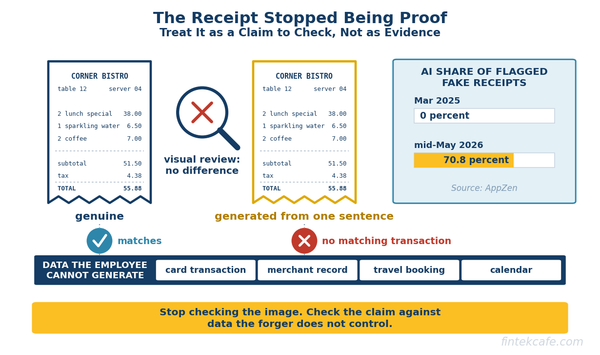
AI-Generated Fake Receipts: How Expense Fraud Changed and How Finance Teams Catch It
AI-generated fake receipts now beat visual review. How expense fraud changed, which detection still works, and the controls to use by company size.
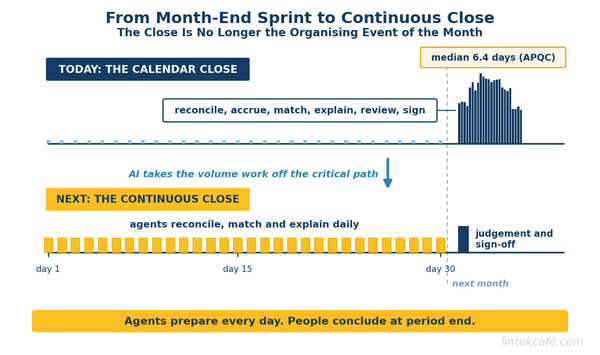
The Monthly Close Is Becoming Continuous, and the Finance Calendar Will Not Survive It
AI is taking the bottleneck work out of the month-end close. The close becomes continuous with a short sign-off, and finance, audit and the board change.
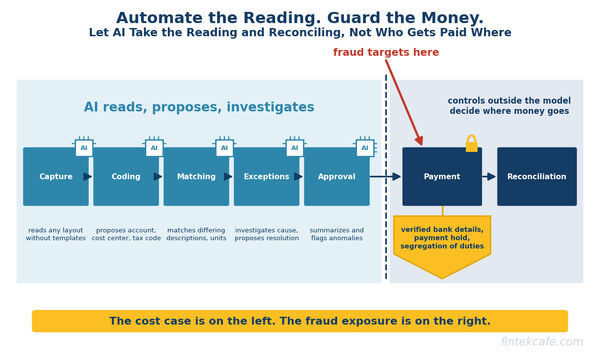
Accounts Payable Automation: What AI Can Actually Take Over in Invoice-to-Pay
What AI can take over in accounts payable, step by step from capture to payment, where the fraud risk grows, and which controls must stay outside the model.