Why Postgres Is Eating the Database Stack (Again) in 2026
Postgres is winning workloads it had no business winning in 2020. A framework for CTOs evaluating data-platform consolidation around one engine in 2026.
Section 1033 sets the US open-banking trajectory through 2030. A framework for what it mandates and what it changes for banks, fintechs, and aggregators.
Per-token prices look comparable. They are not. Three hidden cost drivers reshape the real LLM inference economics for enterprise buyers in 2026.
Observability spend now rivals compute at many fintech and SaaS firms. A framework for what drives the bill, the vendor landscape, and how to fix it.
BNPL was invisible to the bureaus. That invisibility is ending in 2026, and the repricing of the model is just beginning. Three structural shifts.
Three patterns compete for enterprise LLM budgets. A framework for fine-tuning, RAG, and long-context across cost, latency, refresh, and governance.
This week: RAG architecture and costs, service mesh in 2026, ISO 20022 stack impact, plus three Pro pieces on FedNow, AI agent frameworks, and confidential computing.
Confidential computing moved from PowerPoint to procurement in 2025. In 2026 the actual fintech use cases are showing up. A CISO and treasurer playbook.
The SWIFT MT to MX coexistence window closed November 2025. A framework for the bank tech-stack rewiring that follows through 2027.
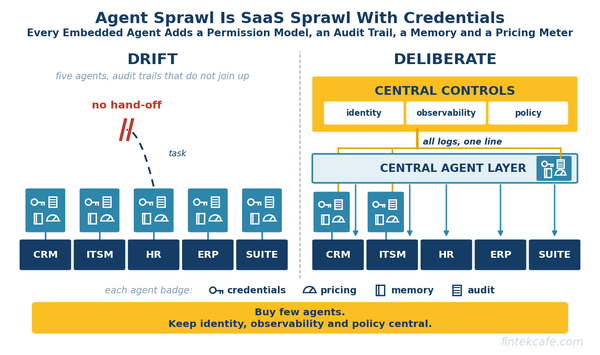
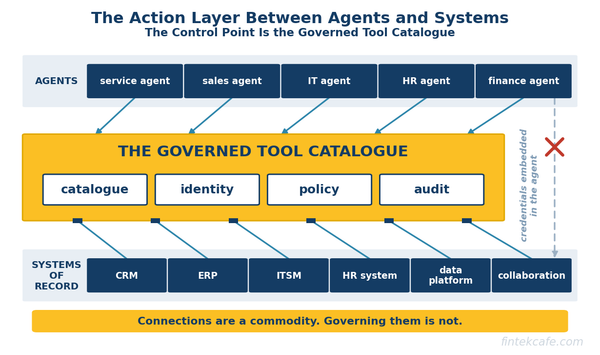
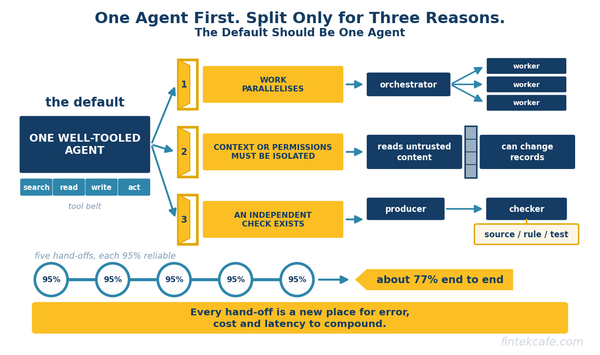
AI agent frameworks demo well and break in production. Three structural failure modes, a comparison of LangGraph, CrewAI, AutoGen, and what to use instead.
Service mesh adoption stalled in 2023. In 2026 the picture is different. A framework for Istio vs Linkerd vs Cilium for financial workloads.
FedNow crossed 1,400 institutions but mid-sized banks have stalled. Three friction points explain why, and a 2026 decision framework for boards.