
Why FedNow Adoption Has Stalled at Mid-Sized Banks: The Three Friction Points No One Wants to Name
FedNow crossed fourteen hundred participating institutions in early 2026. That number sounds healthy until the cohort is decomposed. The growth curve is being carried by two groups: the top fifteen banks who joined for prestige and strategic optionality, and the long tail of community banks under five billion in assets who took the FIS, Jack Henry, or Fiserv core-vendor turnkey package. The band in the middle, banks in the fifty to five hundred billion asset range, has gone quiet. Internal pipeline trackers at the major core vendors, which industry observers have cross-referenced against the Federal Reserve's monthly institution list, show that the mid-band has been adding roughly six to eight new originators per quarter for the last three quarters. Receive-only participation does not count. Originator capability is the only thing that matters for revenue.
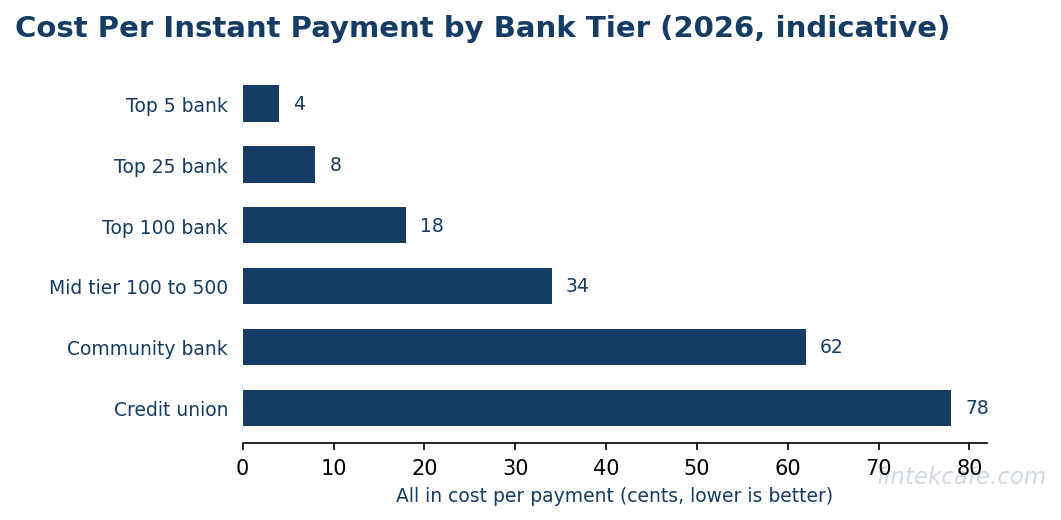
The standard explanation is that mid-sized banks are slow and cautious. That explanation is wrong, or rather, it is incomplete in a way that obscures the actual decision. Mid-sized banks have moved faster than this on Zelle, on RTP, on Apple Pay, on every previous payments rail. They are not stalling because they are slow. They are stalling because the FedNow originator economics, fraud architecture, and customer experience requirements collide with the operating model of the mid-band in a way that nobody at the Federal Reserve modeled and nobody at the core vendors has admitted in public. This piece names the three friction points, contrasts them with what the early movers got right, and offers a decision framework for boards who have to choose between 2026 priority, 2027 fast-follow, or 2028 commodity.
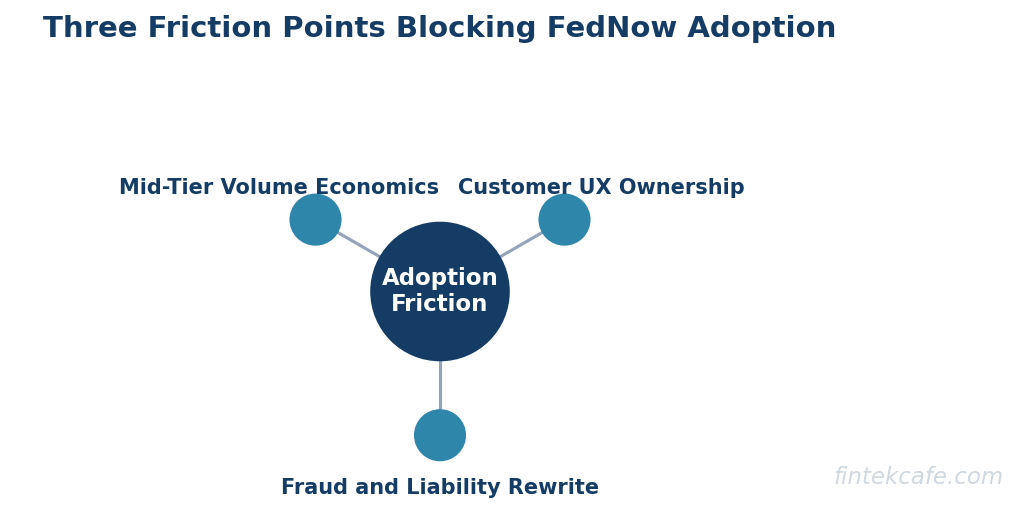
Friction Point One: The Originator-Side Fraud and Liability Rewrite
The receive side of FedNow is a configuration change. The originate side is a rewrite. Every mid-sized bank that has scoped the originator project has run into the same wall, and the wall is fraud-and-liability.
Send-side instant payments inherit the structural problem that ACH avoided for fifty years: the bank takes irrevocable settlement risk in seconds, with no clearing window in which to claw back a fraudulent transaction. FedNow's design pushes liability to the sending institution under almost every fraud scenario. Authorized push payment fraud, which the United Kingdom Payment Systems Regulator estimates at roughly four hundred and sixty million pounds in 2024 across UK Faster Payments, has been the dominant loss vector on every comparable rail globally. Brazil's Pix has the same pattern at scale. India's UPI has it. Sweden's Swish has it. There is no instant-payments rail anywhere in the world that has avoided this loss curve.
The bank's fraud stack has to be rewritten for three reasons that do not show up in the marketing material:
- Latency budget collapses from hours to milliseconds. The fraud-screening systems most mid-sized banks operate were built for ACH and wire, with batch scoring windows measured in minutes for wire and hours for ACH. FedNow demands a synchronous decision in under one second end to end. Half of that budget is consumed by the network. The bank gets four hundred milliseconds, give or take, to score the transaction and decide.
- Behavioral models need re-training on a rail with no history. A fraud model on ACH or wire was trained on years of labeled outcomes. The bank's FedNow model has no labeled outcomes for its own customers, so the first eighteen months of operation are effectively the training set. Loss provisions during that window have to absorb the model's learning curve.
- The dispute and chargeback playbook does not exist. ACH has Regulation E. Wires have UCC 4A. Cards have Visa and Mastercard rules. FedNow has none of that built up, which means each authorized-push-payment fraud case is litigated on first principles with the bank's own counsel and the FedNow operating rules. That is expensive every time.
The banks that solved this early, JPMorgan and BNY Mellon among the top tier, did it by absorbing the fraud rebuild into a separate program with separate funding and a separate executive sponsor, typically the Chief Risk Officer rather than the head of payments. Cross River solved it by being structurally a payments-first bank with the fraud stack already designed for real-time. The mid-sized bank that tries to do this as a line item inside the standard payments roadmap, with the existing fraud team, will find that the program slips by six to nine months minimum, and that the realized losses in year one exceed the budget by a factor of two to four.
This is a Premium Article
Sign up for a Premium membership to read this article and get full access to strategic intelligence on technology and business.
Already a member? Sign in
Related Articles
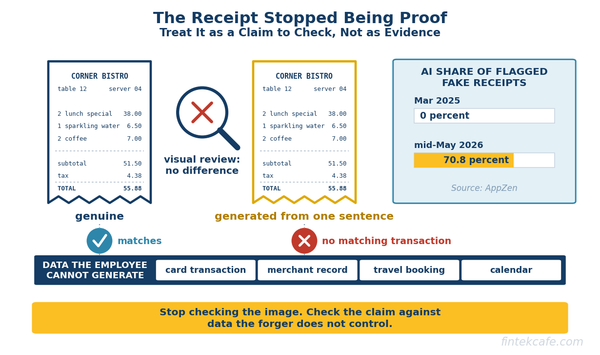
AI-Generated Fake Receipts: How Expense Fraud Changed and How Finance Teams Catch It
AI-generated fake receipts now beat visual review. How expense fraud changed, which detection still works, and the controls to use by company size.
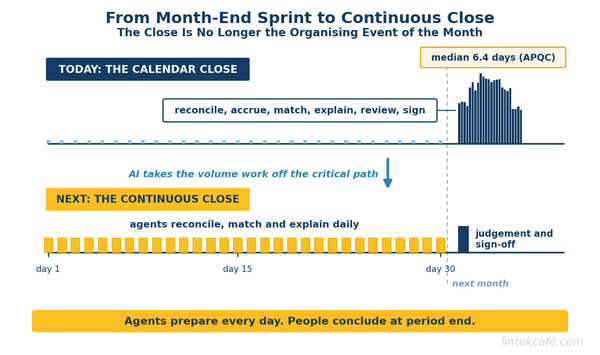
The Monthly Close Is Becoming Continuous, and the Finance Calendar Will Not Survive It
AI is taking the bottleneck work out of the month-end close. The close becomes continuous with a short sign-off, and finance, audit and the board change.
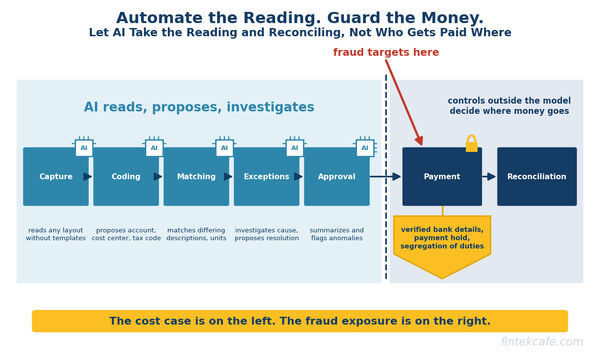
Accounts Payable Automation: What AI Can Actually Take Over in Invoice-to-Pay
What AI can take over in accounts payable, step by step from capture to payment, where the fraud risk grows, and which controls must stay outside the model.