
The Quiet Rise of Confidential Computing in Fintech: TEEs, Enclaves, and Why Treasury Teams Care
Confidential computing spent the back half of the last decade as a slide in vendor decks. Through 2024 and 2025 it migrated into procurement workflows, with several Tier 1 banks running RFPs that specifically required attested execution environments for one or more workloads. In 2026 the production deployments are quietly accumulating, and the use cases that actually justify the operational cost have separated from the ones that do not.
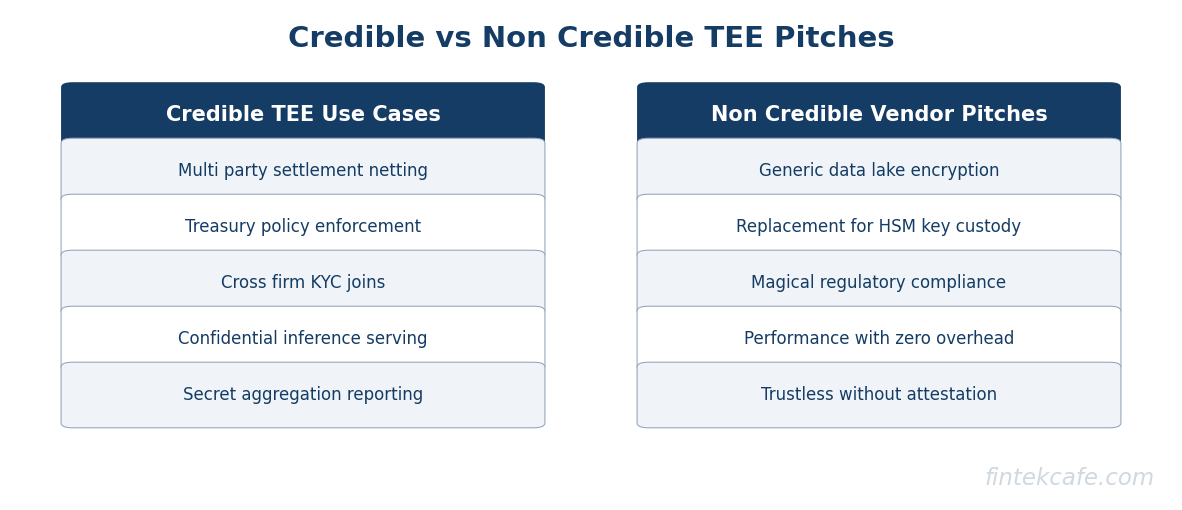
This piece is the CISO and treasurer read on what changed, which workloads inside a fintech genuinely benefit from a trusted execution environment (TEE), where the technology is still marketing rather than substance, and how to think about build versus buy when the procurement deck lands on the desk.
What Confidential Computing Actually Is
The data security stack until very recently protected data in two states. Data at rest was encrypted on disk. Data in transit was encrypted on the wire. The third state, data in use (loaded into memory, decrypted, being operated on by an application), has historically been protected only by the trust boundary of the operating system and the hypervisor. If an attacker, a malicious insider, or a compromised cloud-provider engineer reached the host kernel, they reached the cleartext.
Confidential computing closes that third gap. A TEE is a hardware-isolated region of memory and CPU state that the host kernel and hypervisor cannot read, even with root privileges. The application running inside the enclave can prove its identity and the integrity of the code that is executing through an attestation process. The party sending data into the enclave can verify the attestation before releasing the encryption keys. The result is a deployment model where the cloud operator, the kernel maintainer, and any administrator on the host machine are no longer in the trust boundary for the workload running inside the enclave.
The credible substrates in 2026 are four:
- Intel TDX (Trust Domain Extensions), the successor to SGX, which protects entire virtual machines rather than process-level enclaves. TDX shipped on Intel Xeon 5th and 6th generation and is the default confidential VM offering on Microsoft Azure and Google Cloud.
- AMD SEV-SNP (Secure Encrypted Virtualization with Secure Nested Paging), the AMD equivalent for whole-VM confidentiality. SEV-SNP is the substrate under AWS confidential EC2 instances and Azure confidential VMs on AMD silicon.
- AWS Nitro Enclaves, a process-level enclave model that uses the Nitro hypervisor to carve isolated compute environments out of a parent EC2 instance, with no persistent storage and no external network. Nitro Enclaves predate the VM-level Intel and AMD offerings and remain the workhorse for AWS-native deployments.
- Nvidia Hopper and Blackwell confidential GPUs, which extend the TEE boundary across the CPU-to-GPU PCIe link so that model weights and inference inputs stay encrypted on the accelerator. This is the substrate that makes confidential AI serving practical at production latency.
On top of these substrates sit the container and orchestration layers: Azure Confidential Containers (on AKS), Google Cloud Confidential Space, and the open-source Confidential Containers project that wraps Kubernetes pods inside an enclave-backed runtime. These are the actual touch points for an engineering team adopting the technology, because nobody wants to rewrite an application to run as a raw VM.
This is a Premium Article
Sign up for a Premium membership to read this article and get full access to strategic intelligence on technology and business.
Already a member? Sign in
Related Articles
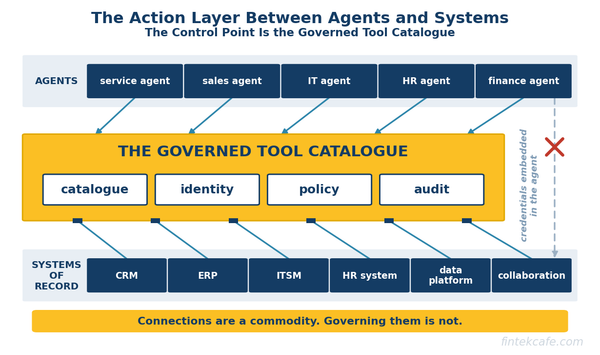
Integration Platforms Are the Quiet Winners of the Agent Era
Agents act through integrations. iPaaS and API vendors hold the connectors, credentials and audit trails, and MCP makes governing that layer worth more.
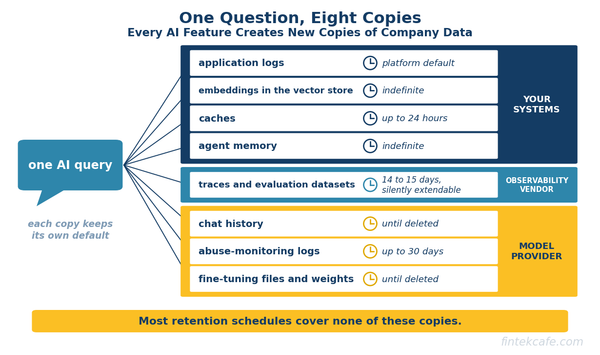
What Happens to Your Data Inside AI Systems: Retention, Deletion and the Copies Nobody Tracks
Every AI feature copies company data into prompts, logs, embeddings and memory. Where each copy lives, what vendors retain, and how to make deletion real.
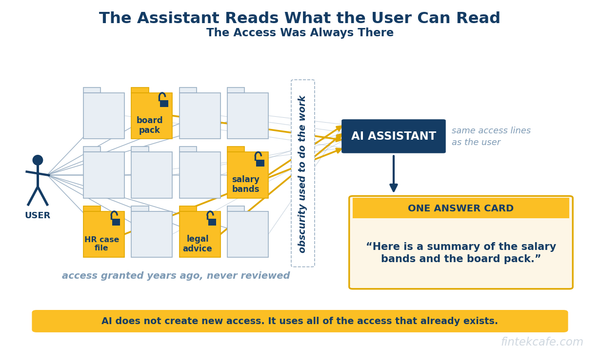
Data Classification: The Step Every Enterprise AI Rollout Skips, and What It Costs Later
Why AI assistants expose overshared data, how data classification fixes it, what to label first, and a 90-day plan for executives.