
Why Postgres Is Eating the Database Stack (Again) in 2026
The "use Postgres for everything" pattern was an opinionated minority position in 2020. By the end of 2024 it had become a quietly dominant procurement default. In 2026 it is the active consolidation thesis behind a meaningful share of the data-platform rewrites underway at mid-sized fintechs, banks, and SaaS operators. Workloads that five years ago required a dedicated document store, a dedicated search cluster, a dedicated vector database, a dedicated time-series engine, a dedicated queue, and a dedicated cache are increasingly being collapsed into a single managed Postgres deployment plus a small set of well-chosen extensions.
This piece is the CTO and head-of-platform read on why the consolidation is happening now, which adjacent categories are actually being squeezed (and which are not), where the consolidation breaks, and how to think about the build-versus-buy and stay-versus-migrate decisions in 2026.
What Changed Between 2020 and 2026
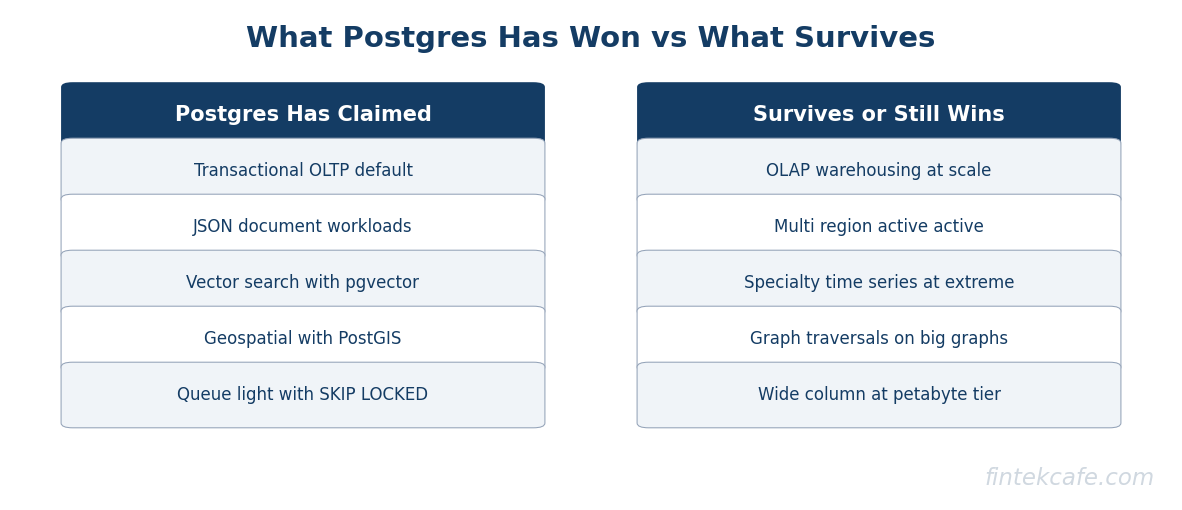
The case for polyglot persistence in the 2015 to 2020 window was straightforward. Postgres was a competent relational engine, but it lacked first-class support for the workload shapes that the modern stack demanded: schemaless documents, vector similarity search, time-series compaction, full-text relevance ranking, durable queueing without external infrastructure, and column-oriented analytics. Each of those gaps spawned a specialist engine and a procurement line item. The combined operational tax (separate clusters, separate failover stories, separate auth and access models, separate replication, separate observability) was the cost of getting a workload-appropriate engine for each shape.
Three things changed in the back half of the last decade and accelerated through 2024 and 2025.
Extension ecosystem maturity. The pgvector extension reached production-grade scale through versions 0.5 to 0.7, with HNSW indexing, parallel index builds, and meaningful query-planner integration. TimescaleDB matured into a credible time-series engine running inside Postgres rather than alongside it. The pg_search extension (built on tantivy, the same Rust-based search library that powers many modern indices) closed enough of the gap to Elasticsearch for most operational search workloads. Citus, after Microsoft's acquisition and continued open-source investment, made distributed Postgres a procurement reality rather than a research project. The DuckDB FDW and the pg_duckdb extension brought column-oriented analytics inside the Postgres process. Each extension on its own was a marginal improvement. The aggregate effect was that the gap to specialist engines closed on workload after workload.
Cloud-managed Postgres scale ceiling raised dramatically. AWS Aurora Postgres, Google Cloud AlloyDB, Azure Cosmos DB for PostgreSQL (the Citus-based offering), and the independents (Neon, Crunchy Data, Supabase, Tembo) collectively pushed the practical scale ceiling for a managed Postgres deployment from the low single-digit terabytes of 2020 to the tens of terabytes for OLTP and the low hundreds of terabytes for distributed deployments. The constraint that historically forced a workload off Postgres at scale (operational complexity of running it well above a few terabytes) became someone else's problem.
AI workloads made "one engine, many shapes" structurally attractive. The 2023 and 2024 AI deployments that bolted a vector database next to a transactional database next to a feature store next to a metadata store created an operational shape that the platform teams running them quickly came to regret. Every retrieval call crossed two or three engines. Every consistency question turned into a distributed-transaction question. Every embedding refresh had to coordinate across separate replication topologies. The teams that, by 2025, had moved the vectors back into Postgres alongside the source records reported a meaningful reduction in operational incidents and a step-function improvement in retrieval-pipeline simplicity. The what-is-vector-search-embeddings-ai piece walks through the underlying retrieval mechanics; the operational lesson of 2024 to 2026 is that keeping the vectors next to the source-of-truth records, in the same engine with the same consistency model, is worth a lot more than the marginal query-performance advantage of a dedicated vector database.
This is a Premium Article
Sign up for a Premium membership to read this article and get full access to strategic intelligence on technology and business.
Already a member? Sign in
Related Articles
Integration Platforms Are the Quiet Winners of the Agent Era
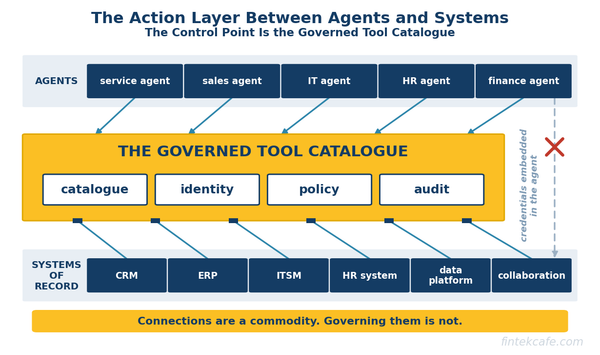
Agents act through integrations. iPaaS and API vendors hold the connectors, credentials and audit trails, and MCP makes governing that layer worth more.
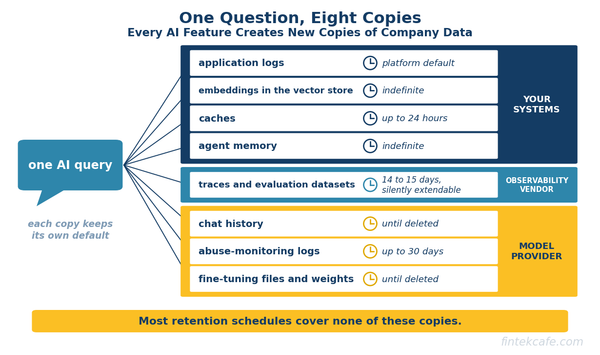
What Happens to Your Data Inside AI Systems: Retention, Deletion and the Copies Nobody Tracks
Every AI feature copies company data into prompts, logs, embeddings and memory. Where each copy lives, what vendors retain, and how to make deletion real.
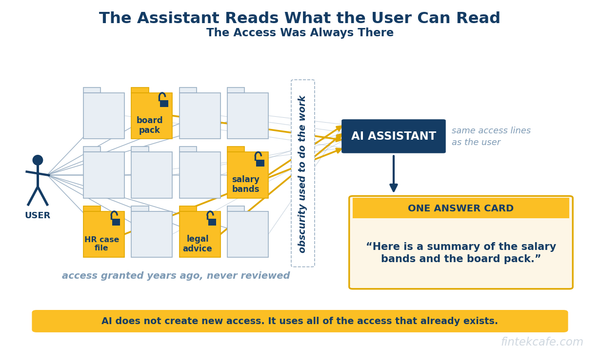
Data Classification: The Step Every Enterprise AI Rollout Skips, and What It Costs Later
Why AI assistants expose overshared data, how data classification fixes it, what to label first, and a 90-day plan for executives.