
Why Buy-Now-Pay-Later Is Quietly Becoming a Credit Bureau Problem
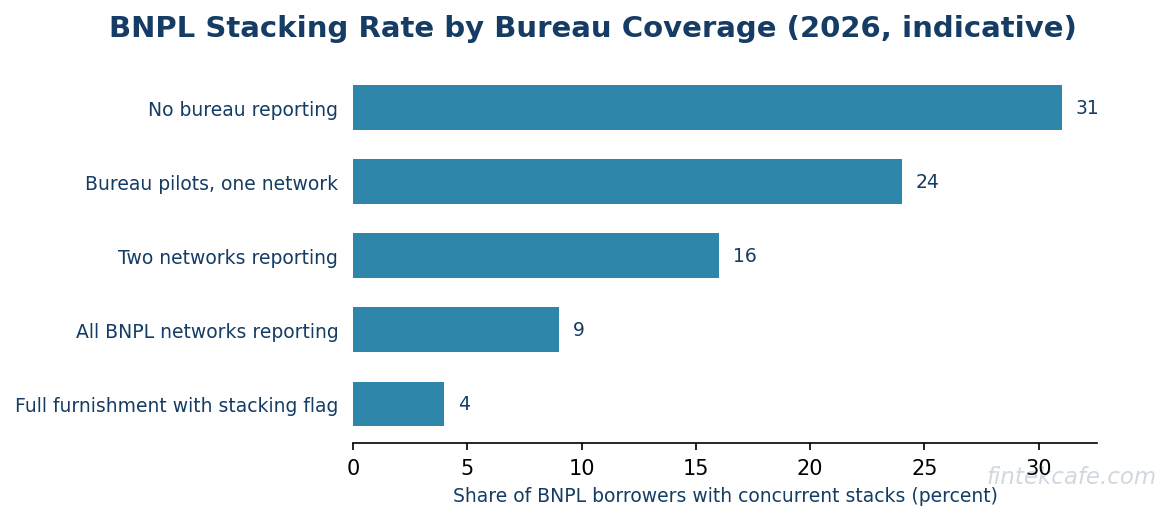
The story buy-now-pay-later vendors have told the market for the last five years rests on one structural fact that is about to stop being true. Klarna, Affirm, Afterpay, Zip, and the assorted bank-issued imitators all built their consumer credit-risk models on a starting condition that the bureaus could not see them. A consumer who held three open BNPL plans across three providers showed up on the Equifax, Experian, and TransUnion files as a consumer with no recent installment-credit activity. Each provider underwrote each new plan on its own thin private view of the borrower. The result, taken in aggregate, was a stacked-credit problem invisible to every underwriter individually and visible only to the consumer, who quietly absorbed the obligation.
That invisibility is ending in 2026. FICO published BNPL-inclusion guidance covering pay-in-four and longer-tenor installment plans in late 2025, with the FICO 10 BNPL-inclusive variant scheduled for lender adoption through mid-to-late 2026. VantageScore released a parallel framework. Equifax has been accepting BNPL trade lines on a voluntary basis since 2022 and is moving to a more uniform reporting standard. Experian and TransUnion are close behind. The Consumer Financial Protection Bureau confirmed in early 2026 that BNPL providers meeting threshold volumes will be supervised as larger participants in the consumer credit market, with examination authority over reporting practices among the items in scope. The Apple Pay Later sunset in 2024 was the early signal that the unregulated, off-bureau version of this product had a limited shelf life. The infrastructure for putting BNPL on the bureau is now mostly built.
The consequences for the BNPL business model, for the banks that competed against it, and for consumer credit scores at the population level are not what either the BNPL providers or the bank consumer-credit teams have been planning for. Three structural changes follow from the reporting shift, and each of them is large enough to reshape the next two years of consumer credit strategy.
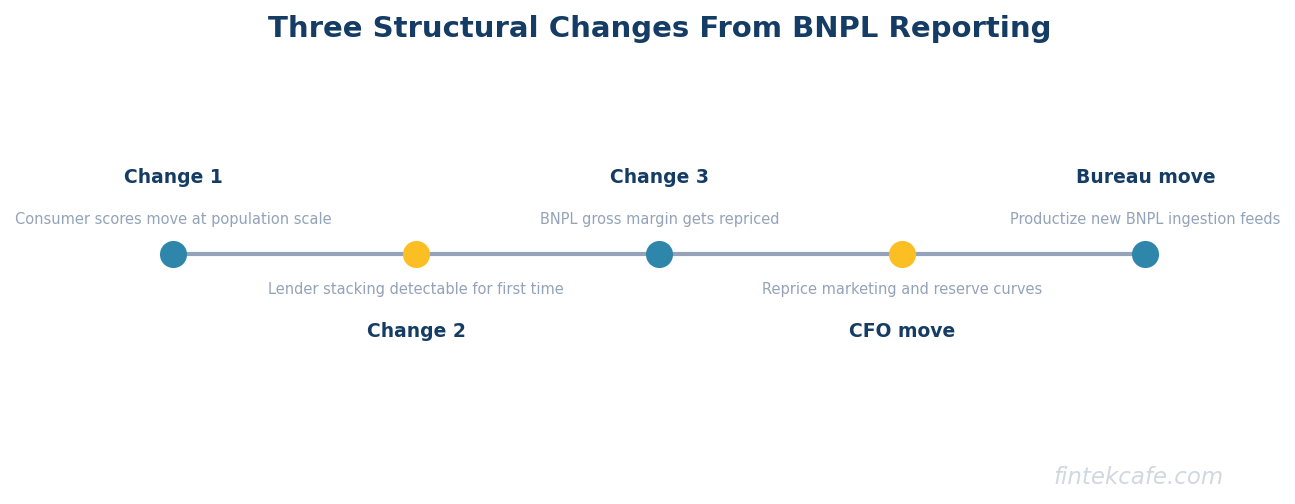
Structural Change One: Consumer Credit Scores Move, Visibly, at Scale
The first change is the one that will be visible in monthly score-distribution data within twelve months of the reporting shift completing. BNPL is large enough to move the aggregate. Industry estimates from the CFPB, Federal Reserve consumer credit surveys, and major BNPL provider disclosures put the active BNPL borrower base in the United States at roughly seventy-five to ninety million unique consumers in 2025, with a comparable concentration among consumers in the lower and middle income deciles. Average outstanding balance per active borrower is small relative to revolving card debt, but the count of open trade lines is the variable that matters for score modeling, not the dollar balance.
Three distinct cohorts move when BNPL trades land on the file:
- Thin-file consumers gain credit visibility. A consumer who held BNPL plans but no other recent installment activity gains a positive signal. The score impact in modeling done by FICO on test populations runs in the range of plus ten to plus thirty-five points for the cleanly-paying thin-file cohort. This is the cohort the BNPL industry has been emphasizing in its public communications, because the story is favorable.
- Heavily-stacked consumers lose score. A consumer who held three or more concurrent BNPL plans at peak balance, with even one paid late, loses score. The same FICO modeling work shows minus twenty to minus sixty points for this cohort once the trades report, depending on the count of open plans and the severity of any late events. Mid-prime and near-prime consumers are most exposed because the marginal points lost can pull them across pricing thresholds.
- Active prime borrowers see modest movement. A consumer who used BNPL occasionally, paid on time, and held only one to two plans concurrently sees small movement in either direction depending on the bureau's exact attribution. The center of the distribution is mostly stable.
The cohorts are not symmetric in size. Industry estimates suggest the stacked-and-strained cohort is the smaller share, perhaps fifteen to twenty percent of active BNPL borrowers, but it accounts for a disproportionate share of the outstanding balance and a much larger share of the realized loss curve at the BNPL providers. The aggregate score-distribution shift will look modest in summary statistics, but the policy and pricing consequences for the heavily-stacked cohort will be sharp at the lender level.
The lender-side implication is concrete. Card issuers, auto lenders, and mortgage underwriters who have been pricing off pre-BNPL scores will see their book of decisioning move under them as the new scores propagate. Lenders that have already updated their pricing tiers to absorb the FICO 10 variant absorb the change cleanly. Lenders that have not, and there are many in the regional and community bank segment, see a misalignment between their published pricing tiers and the underlying borrower risk for one to three quarters. That misalignment is mostly a margin-quality issue for the lender, not a consumer-facing one, but it shows up in net interest margin variance that is harder to explain to investors than it is to fix internally.
This is a Premium Article
Sign up for a Premium membership to read this article and get full access to strategic intelligence on technology and business.
Already a member? Sign in
Related Articles
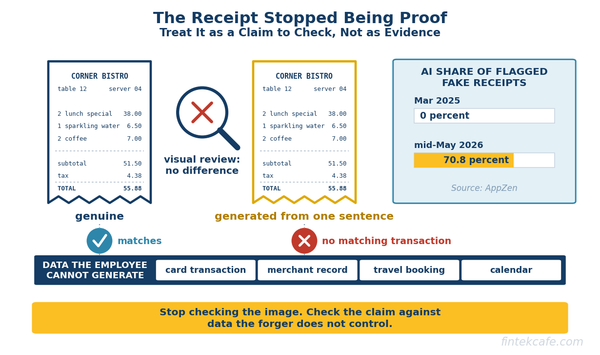
AI-Generated Fake Receipts: How Expense Fraud Changed and How Finance Teams Catch It
AI-generated fake receipts now beat visual review. How expense fraud changed, which detection still works, and the controls to use by company size.
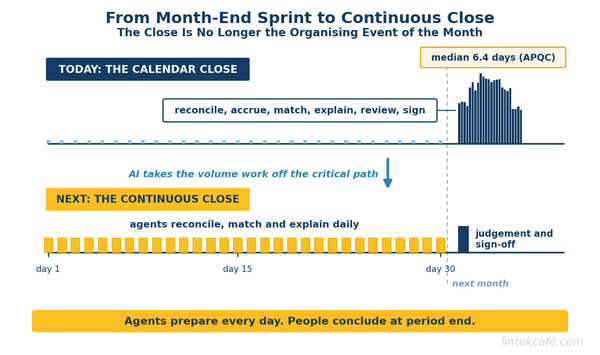
The Monthly Close Is Becoming Continuous, and the Finance Calendar Will Not Survive It
AI is taking the bottleneck work out of the month-end close. The close becomes continuous with a short sign-off, and finance, audit and the board change.
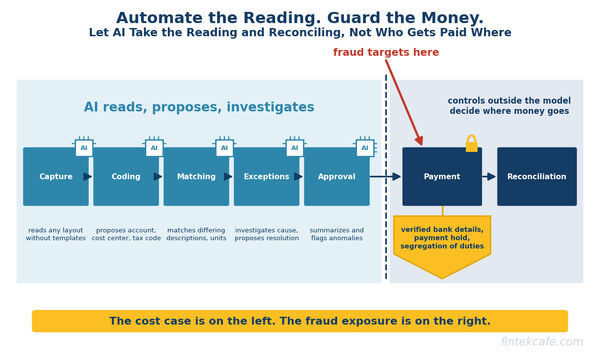
Accounts Payable Automation: What AI Can Actually Take Over in Invoice-to-Pay
What AI can take over in accounts payable, step by step from capture to payment, where the fraud risk grows, and which controls must stay outside the model.