
ai
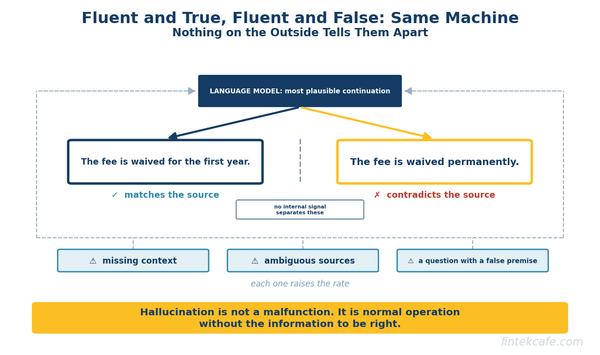
AI Hallucinations: Why Models Make Things Up, and Which Controls Actually Reduce It
Why LLMs hallucinate, the three kinds of AI hallucination, and which controls actually reduce it, ranked by cost and matched to the cost of an error.
Why LLMs hallucinate, the three kinds of AI hallucination, and which controls actually reduce it, ranked by cost and matched to the cost of an error.
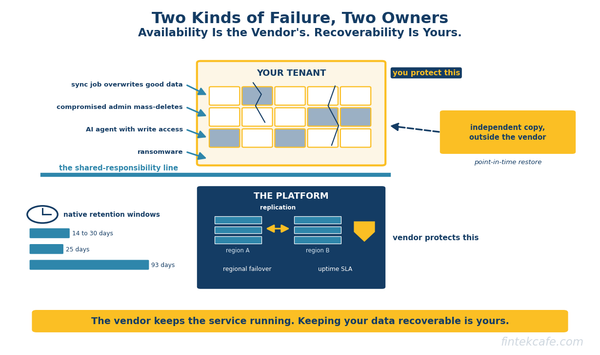
SaaS vendors keep the service up. Keeping your records recoverable is usually your job. The shared-responsibility gap, and how boards should close it.
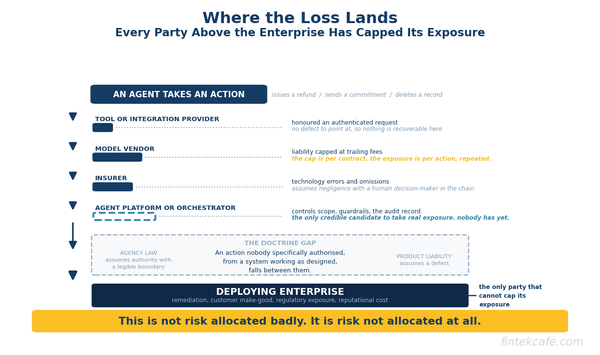
When an agent moves money or promises a customer something, the loss lands wherever the contract is silent. That gap is a deployment constraint.
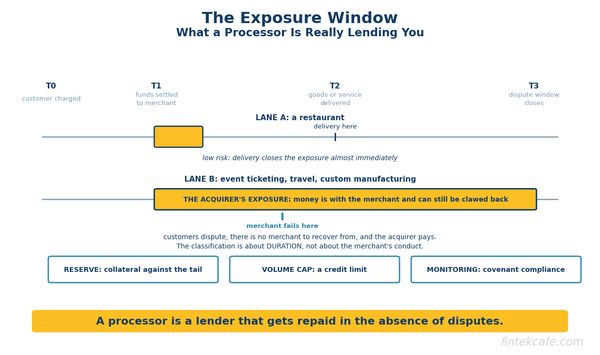
Processors underwrite credit risk, not just fraud. Why delivery timing drives rejections, how reserves work, and the founder playbook for approval.
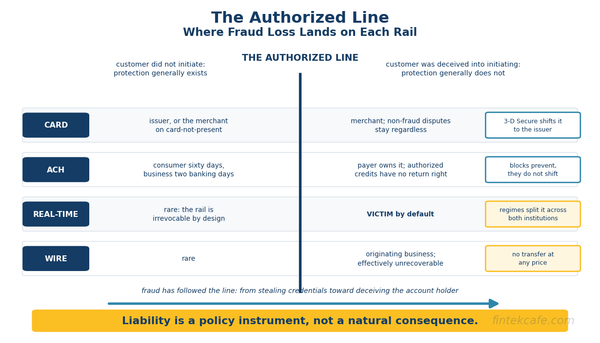
Fraud losses land where the rules put them. How liability differs across cards, ACH, real-time rails, and wires, and what shifts it.
Treasury for growing companies: the maturity progression, the lessons that stuck after 2023, operational controls, new instruments, and when to buy a TMS.
Progressive delivery explained: feature flags, canary and blue-green releases, the honest costs, org impact, and what AI adds to the rollout playbook.
AI red-teaming explained: the attack taxonomy, how an exercise is structured, what agentic systems add, regulatory pull, cadence, and build-vs-hire.
The four payment models compared: who holds tax, chargeback, and compliance liability as merchant of record, payfac, marketplace, or processor, and which fits.
Why AI policies fail as documents and work as controls: a three-tier governance model, ownership patterns, EU AI Act duties, and metrics that matter.
Instant payments removed the float fraud teams relied on. A 2026 framework for sub-second scoring, the model stack, and build versus buy.
Deep analysis across the systems, strategies, and economics that shape modern technology.
Premium Members Get: Exclusive deep-dive research · Architecture playbooks · Executive briefings · Full archive access