
How Modern Data Teams Are Structured (And Why Most Companies Get It Wrong)
Key Takeaways
- The three dominant data team models (centralized, embedded, hybrid) each solve different problems. Choosing the wrong one creates organizational friction that no amount of hiring fixes.
- The analytics engineer role has become the connective tissue between data engineering and business intelligence. Organizations that skip this role create a permanent bottleneck.
- Data mesh is a decentralization philosophy, not an architecture pattern. It works in a narrow set of conditions and fails everywhere else.
- Team sizing follows a rough heuristic: one data professional per 8 to 15 engineers in early-stage companies, shifting to 1 per 5 to 8 at scale.
- Reporting lines determine whether the data team builds products or runs reports. The distinction matters enormously.
Why Most Data Teams Underperform
The failure mode is nearly universal. By 2026, the third year of the post-modern-data-stack era, the pattern is well documented: a company hires talented data professionals, gives them access to a data warehouse, and waits for insights to appear. Six months later, the data team is drowning in ad hoc requests, the business units complain about slow turnaround, and the CEO wonders why the expensive analytics investment has not produced the promised results.
The problem is rarely talent. It is structure. Where the data team sits in the organization, who it reports to, what roles it contains, and how it interacts with engineering and business teams determine its outcomes far more than the technical skills of its members.
Industry surveys consistently find that data professionals spend 40 to 60 percent of their time on tasks that a different organizational structure would eliminate: hunting for data, resolving conflicting metrics, rebuilding pipelines that another team already built, and fielding repetitive dashboard requests that a self-service tool should handle.
The Three Models Explained
Centralized Data Team
All data professionals report to a single leader (Head of Data, VP of Data, or Chief Data Officer). Business units submit requests, and the centralized team prioritizes, executes, and delivers.
How it works in practice: A product manager in the payments team needs a churn analysis. The request enters the central team's backlog, gets prioritized against 30 other requests, and an analyst is assigned. The analyst spends two days understanding the payments domain, three days building the analysis, and one day presenting findings.
Strengths:
- Consistent standards. One team means one data model, one set of metric definitions, one style guide for dashboards. When the CEO asks "what is our churn rate?" there is one answer, not three conflicting numbers from three different teams.
- Efficient resource allocation. The central team can shift analysts between projects based on priority. During a product launch, five analysts focus on launch metrics. During a quiet period, they work on infrastructure improvements.
- Career development. Data professionals learn from each other. Junior analysts have senior mentors. The team can invest in shared tools and training.
Weaknesses:
- The bottleneck problem. Every request flows through one team. Response times grow as the organization grows. Business units start building shadow analytics to work around the queue.
- Shallow domain knowledge. Analysts rotate between domains. The person analyzing payments churn this week was analyzing marketing attribution last week. They never develop the deep domain expertise that produces truly valuable insights.
- Misaligned incentives. The central team is measured on throughput and quality. Business units are measured on revenue and growth. These metrics can conflict: a thorough analysis that takes three weeks is high quality but may arrive too late to influence the decision it was meant to support.
Best for: Companies with fewer than 200 employees, early-stage data teams (fewer than 10 people), or organizations where data consistency is the primary concern.
Embedded Data Team
Data professionals sit within business units and report to business unit leaders. There is no central data organization.
How it works in practice: The payments team has two dedicated analysts and a data engineer. They sit in the same stand-ups, understand the product roadmap, and can start an analysis without a two-day domain ramp-up. The marketing team has its own data engineer and analyst with the same arrangement.
Strengths:
- Deep domain expertise. Embedded analysts become experts in their domain. They know the data quirks, the business context, and the stakeholder preferences. This expertise compounds over time and produces insights that a generalist cannot match.
- Fast turnaround. No queue, no prioritization committee. The payments analyst starts on a churn analysis the same day the PM requests it.
- Strong alignment. The analyst is measured on the same goals as the business unit. Their incentives are perfectly aligned.
Weaknesses:
- Duplicated work. The payments team builds a customer segmentation model. The marketing team builds a different customer segmentation model. Neither team knows the other exists. The organization pays twice for the same capability.
- Inconsistent metrics. Without a central authority, different teams define the same metric differently. "Monthly active users" means one thing to the product team and something else to the marketing team. When leadership asks for a company-wide number, reconciliation becomes a multi-day project.
- Fragmented infrastructure. Each embedded team makes its own tool choices. One team uses Looker, another uses Tableau, a third uses Metabase. Data pipelines are built with different frameworks. Maintenance cost multiplies with every new tool.
- Talent isolation. Embedded analysts lack peers. A single analyst on a five-person marketing team has no one to review their SQL, no one to discuss modeling approaches with, and no clear career path within the data profession.
Best for: Large organizations (5,000 or more employees) with mature data infrastructure where business units have the technical sophistication and budget to manage their own data teams.
Hybrid Model (Recommended for Most Organizations)
A central data platform team owns infrastructure, standards, and shared tools. Embedded analysts and analytics engineers sit within business units but follow the platform team's standards and use its infrastructure.
How it works in practice: The central platform team maintains the data warehouse, the transformation framework (typically dbt or similar), the BI tool, and the metric definitions layer. Embedded analysts in the payments team write their own analyses using the platform team's infrastructure. When they need a new data source, the platform team ingests it. When they define a new metric, it goes through the platform team's review process to ensure consistency.
Strengths:
- Domain expertise with consistency. Embedded analysts develop deep domain knowledge. The platform team ensures that everyone uses the same metric definitions, the same data models, and the same tools.
- Scalable infrastructure. One team maintains the warehouse, the pipelines, and the BI tools. Embedded teams consume these services without duplicating the infrastructure work.
- Career mobility. Analysts can move between embedded roles and platform roles. The platform team provides a community of practice for data professionals across the organization.
Weaknesses:
- Coordination complexity. The dotted-line relationship between the platform team and embedded analysts requires deliberate management. Without regular syncs, standards drift and the model collapses back into either centralized or fully embedded.
- Political tension. Business unit leaders want full control over their embedded analysts. The platform team wants consistency. Navigating this tension requires strong leadership on both sides.
Best for: Organizations with 200 to 5,000 employees and data teams of 10 to 50 people.
Model Comparison Table
| Dimension | Centralized | Embedded | Hybrid |
|---|---|---|---|
| Metric consistency | High | Low | High |
| Domain expertise | Low | High | High |
| Response time | Slow | Fast | Moderate to fast |
| Infrastructure duplication | None | High | Low |
| Talent development | Strong | Weak | Strong |
| Coordination overhead | Low | None | Moderate |
| Best company size | Under 200 | 5,000+ | 200 to 5,000 |
| Best team size | Under 10 | 30+ | 10 to 50 |
Roles Explained Without Jargon
The modern data team contains more specialized roles than it did five years ago. Each role exists because a specific bottleneck emerged as data teams matured. Understanding what each role actually does (and does not do) prevents hiring mistakes.
Data Engineer
What they do: Build and maintain the pipelines that move data from source systems (databases, APIs, event streams) into the data warehouse. Ensure data arrives reliably, on time, and in a usable format.
What they do not do: Analyze data, build dashboards, or train machine learning models. A data engineer who spends significant time on analysis is a sign of missing roles elsewhere on the team.
When to hire: As soon as the data team has more than two analysts. Before this point, analysts can manage simple data pipelines. Beyond this point, pipeline work starts consuming analyst time and creating reliability problems.
Analytics Engineer
What they do: Transform raw data in the warehouse into clean, documented, tested data models that analysts and business users can query directly. This role sits at the intersection of data engineering and business analysis. Analytics engineers write SQL and use tools like dbt to create a curated data layer.
What they do not do: Build ingestion pipelines (that is the data engineer's job) or produce business analyses (that is the analyst's job). The analytics engineer builds the reliable foundation that makes both of those roles more productive.
Why this role matters: Before analytics engineers existed, every analyst wrote their own SQL against raw tables, each interpreting the schema slightly differently. The analytics engineer creates a single source of truth: a set of well-documented, tested models that everyone queries.
When to hire: When the data team exceeds five people or when metric inconsistency becomes a recurring problem. This is the role that most growing data teams hire too late.
Data Analyst
What they do: Answer business questions using data. Build dashboards, run analyses, identify trends, and present findings to stakeholders. The analyst translates data into decisions.
What they do not do: Build data infrastructure or maintain pipelines. An analyst who spends more than 20 percent of their time on data preparation is working around an infrastructure gap.
When to hire: From the beginning. This is usually the first data role an organization fills.
Machine Learning Engineer
What they do: Build, deploy, and maintain machine learning models in production. This role combines software engineering with applied machine learning. ML engineers care about model serving, latency, monitoring, and retraining pipelines as much as they care about model accuracy.
What they do not do: Conduct exploratory research or build proof-of-concept models without a path to production. If the organization needs someone to evaluate whether ML is feasible for a problem, that is a data scientist. If it needs someone to get a model running reliably at scale, that is an ML engineer.
When to hire: Once the organization has at least one ML model that needs to run in production. Not before.
Data Product Manager
What they do: Define the roadmap for data products (internal platforms, customer-facing analytics, ML features) with the same rigor that a product manager applies to user-facing software. They prioritize the platform team's backlog, gather requirements from embedded teams, and ensure the data team builds what the organization actually needs.
What they do not do: Write SQL, build dashboards, or manage data engineers' day-to-day work. The data PM operates at the product strategy level.
When to hire: When the data platform serves more than five internal teams or when competing priorities from business units create chronic prioritization conflicts.
Data Platform Engineer
What they do: Build and maintain the infrastructure layer beneath the data team: the warehouse, the orchestration system, access controls, compute optimization, and the developer experience for data practitioners. Think of this role as DevOps for the data stack.
What they do not do: Build business-facing data models or analyses. Platform engineers ensure that the tools and infrastructure work. Other roles use those tools to produce business value.
When to hire: When the data team exceeds 15 people or when infrastructure reliability becomes a significant drag on productivity.
Reporting Lines: Where the Data Team Sits Matters
Organizational placement determines culture, priorities, and outcomes. Three common patterns exist.
Reports to Engineering (CTO)
Outcome: The data team prioritizes infrastructure quality, reliability, and technical excellence. Pipelines are well-engineered. The data warehouse is fast. Code quality is high.
Risk: The team optimizes for technical metrics rather than business impact. Business stakeholders feel underserved because the team prioritizes infrastructure work over their analytical requests.
Reports to a Business Function (CFO, CMO, COO)
Outcome: The data team is tightly aligned with business needs. Analyses ship quickly. Stakeholders feel well-served.
Risk: Infrastructure investment is chronically underfunded. The team accumulates technical debt because the business leader does not understand or prioritize pipeline reliability, data quality, and platform work. This creates a slow degradation: analyses ship fast today, but the foundation erodes.
Reports to a Dedicated Data Leader (CDO, VP of Data)
Outcome: The data team balances infrastructure and business value under a leader who understands both. Career paths are clear. Investment in platform and analytics is deliberate.
Risk: A dedicated data leader role can become politically isolated if it lacks executive sponsorship. If the CDO does not have a seat at the leadership table, the data team's priorities get overridden by engineering or business functions.
Recommended approach: For organizations with more than 15 data professionals, a dedicated data leader (VP of Data or CDO) who reports to the CTO or CEO provides the best balance of technical rigor and business alignment.
Budget Ownership
Who pays for the data team determines what it builds.
Centrally funded: The data team's budget comes from a corporate allocation, not from business unit budgets. This allows investment in shared infrastructure and long-term capabilities. The risk is that the team may pursue technically interesting projects without clear business sponsors.
Business-unit funded: Each business unit pays for its own data resources. Strong business alignment, but shared infrastructure is underfunded because no single unit wants to bear the cost.
Recommended model: Central funding for the platform team and shared infrastructure. Business units fund their embedded analysts. This ensures the foundation gets built while keeping embedded teams accountable to business outcomes.
The Data Mesh Debate
Data mesh, introduced by Zhamak Dehghani, proposes decentralizing data ownership to domain teams. Instead of a central data team managing all data, each business domain owns, produces, and serves its own data as a product. A central team provides the self-serve data platform but does not own the data itself.
When Data Mesh Works
- The organization has more than 50 data professionals.
- Multiple business domains produce and consume data independently.
- Domain teams have the technical maturity to own their data pipelines and quality.
- A strong platform team can provide self-serve tooling that makes domain ownership practical.
- The organization is willing to invest in the cultural change required to make domain teams accountable for data quality.
When Data Mesh Fails
- The organization has fewer than 30 data professionals. The overhead of domain ownership exceeds the benefits.
- Domain teams lack the technical skills or willingness to own data products.
- The self-serve platform does not exist, and building it would take 12 or more months. Without the platform, decentralization creates chaos.
- Leadership expects data mesh to reduce headcount. It does not. It redistributes work and, in the short term, increases the total investment required.
The Practical Reality
Most organizations that claim to implement data mesh actually implement a hybrid model with stronger domain involvement. True data mesh requires a level of organizational maturity, platform investment, and cultural alignment that fewer than 10 percent of companies have. For the other 90 percent, the hybrid model with centralized infrastructure and embedded domain analysts produces better outcomes with lower risk.
Sizing Heuristics by Company Stage
The right team size depends on the organization's stage, data complexity, and ambition. The following heuristics provide a starting point, not a formula.
Early Stage (Under 100 Employees, Pre-Product-Market-Fit)
Team size: 1 to 2 data professionals
Composition: One data analyst who can also write basic pipelines. Possibly one data engineer if data volume is already significant.
Ratio: 1 data professional per 30 to 50 engineers.
Priority: Answer the most critical business questions. Do not invest in infrastructure beyond a basic warehouse setup.
Growth Stage (100 to 500 Employees, Product-Market-Fit Established)
Team size: 5 to 12 data professionals
Composition: 2 to 3 data engineers, 1 to 2 analytics engineers, 2 to 4 analysts, 1 data platform engineer.
Ratio: 1 data professional per 8 to 15 engineers.
Priority: Establish the data platform, implement consistent metric definitions, and staff embedded analysts in the two or three highest-priority business units.
Scale Stage (500 to 5,000 Employees)
Team size: 15 to 50 data professionals
Composition: Platform team of 5 to 10 (data engineers, platform engineers, analytics engineers). Embedded teams of 2 to 4 in each major business unit. ML engineers if the organization has production ML workloads. A data PM.
Ratio: 1 data professional per 5 to 8 engineers.
Priority: Hybrid model with strong platform and embedded teams. Formal governance, career ladders, and a dedicated data leader.
Enterprise Stage (5,000+ Employees)
Team size: 50 to 200+ data professionals
Composition: Centralized platform organization. Embedded teams in every major business unit. ML engineering team. Data governance team. Possibly exploring data mesh principles for the most mature domains.
Ratio: 1 data professional per 4 to 6 engineers.
Priority: Scalable self-serve platforms, federated governance, cross-domain data products, and talent development programs.
Sizing Summary Table
| Stage | Employees | Data Team Size | Ratio to Engineers | Model |
|---|---|---|---|---|
| Early | Under 100 | 1 to 2 | 1:30-50 | Centralized |
| Growth | 100 to 500 | 5 to 12 | 1:8-15 | Centralized transitioning to hybrid |
| Scale | 500 to 5,000 | 15 to 50 | 1:5-8 | Hybrid |
| Enterprise | 5,000+ | 50 to 200+ | 1:4-6 | Hybrid or data mesh |
Frequently Asked Questions
Should data engineers report to the data team or the software engineering team?
Data engineers belong on the data team. When they report to software engineering, their work gets deprioritized in favor of product features. The pipeline that breaks on Saturday gets fixed on Monday because the sprint backlog is full of feature work. Dedicated data engineering within the data organization ensures that infrastructure reliability is a first-class priority.
When should a company hire its first data hire?
Once the organization has a product in market and at least one recurring business question that requires data to answer. For most startups, this is around employee 30 to 50. Hiring earlier creates a data professional with nothing to analyze. Hiring later means critical business decisions are made on intuition when data is available.
How do analytics engineers differ from data engineers?
Data engineers move data from point A to point B. Analytics engineers transform data at point B into something business users can understand and trust. A data engineer builds the pipeline that ingests raw transaction data into the warehouse. An analytics engineer transforms those raw transactions into a clean, tested, documented table called "monthlyrevenueby_product" that any analyst can query confidently.
Is the Chief Data Officer role necessary?
For organizations with more than 20 data professionals, yes. Without a dedicated data leader, the data team's priorities are set by whoever has the most organizational power, usually engineering or a dominant business function. A CDO ensures balanced investment between infrastructure and business value, provides career paths for data professionals, and represents the data function in executive decisions.
How do you prevent the central platform team from becoming a bottleneck?
Three mechanisms work in combination. First, the platform team builds self-serve tools so embedded teams can handle routine tasks (new dashboards, new data models, simple pipeline changes) without platform team involvement. Second, the platform team publishes clear SLAs for different request types so business units know what to expect. Third, embedded analytics engineers handle the transformation layer, reducing the platform team's scope to infrastructure and ingestion only.
What is the biggest mistake companies make when building data teams?
Hiring analysts before building the infrastructure they need. A talented analyst working with unreliable data, undefined metrics, and manual pipelines produces unreliable insights slowly. The right sequence is: basic data infrastructure first (warehouse, ingestion), then analytics engineering (data models, metric definitions), then analysts. Reversing this order is the most common and most expensive mistake in data team building.
Internal Links
Related Articles
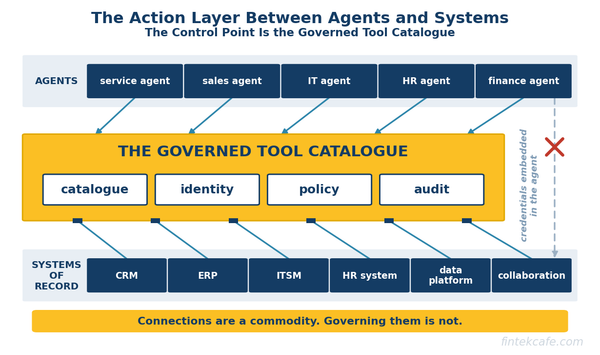
Integration Platforms Are the Quiet Winners of the Agent Era
Agents act through integrations. iPaaS and API vendors hold the connectors, credentials and audit trails, and MCP makes governing that layer worth more.
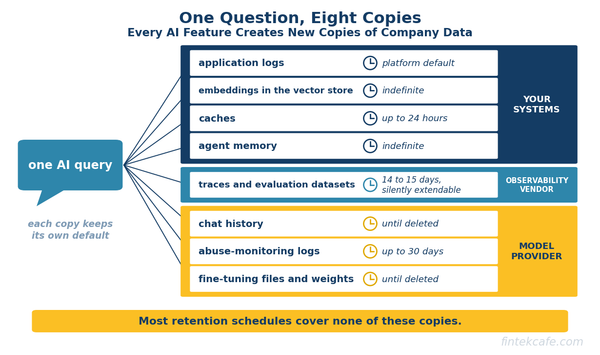
What Happens to Your Data Inside AI Systems: Retention, Deletion and the Copies Nobody Tracks
Every AI feature copies company data into prompts, logs, embeddings and memory. Where each copy lives, what vendors retain, and how to make deletion real.
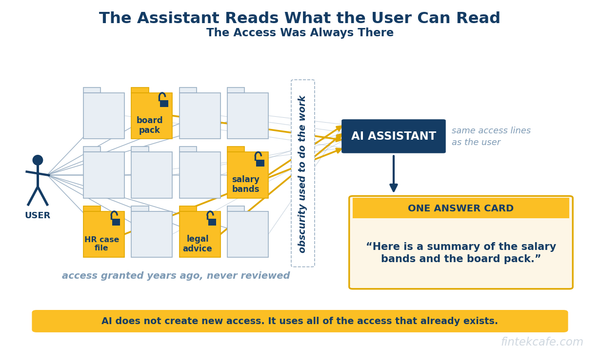
Data Classification: The Step Every Enterprise AI Rollout Skips, and What It Costs Later
Why AI assistants expose overshared data, how data classification fixes it, what to label first, and a 90-day plan for executives.