
AI Sales Agents and AI SDRs: What They Actually Deliver, and Where They Damage the Pipeline
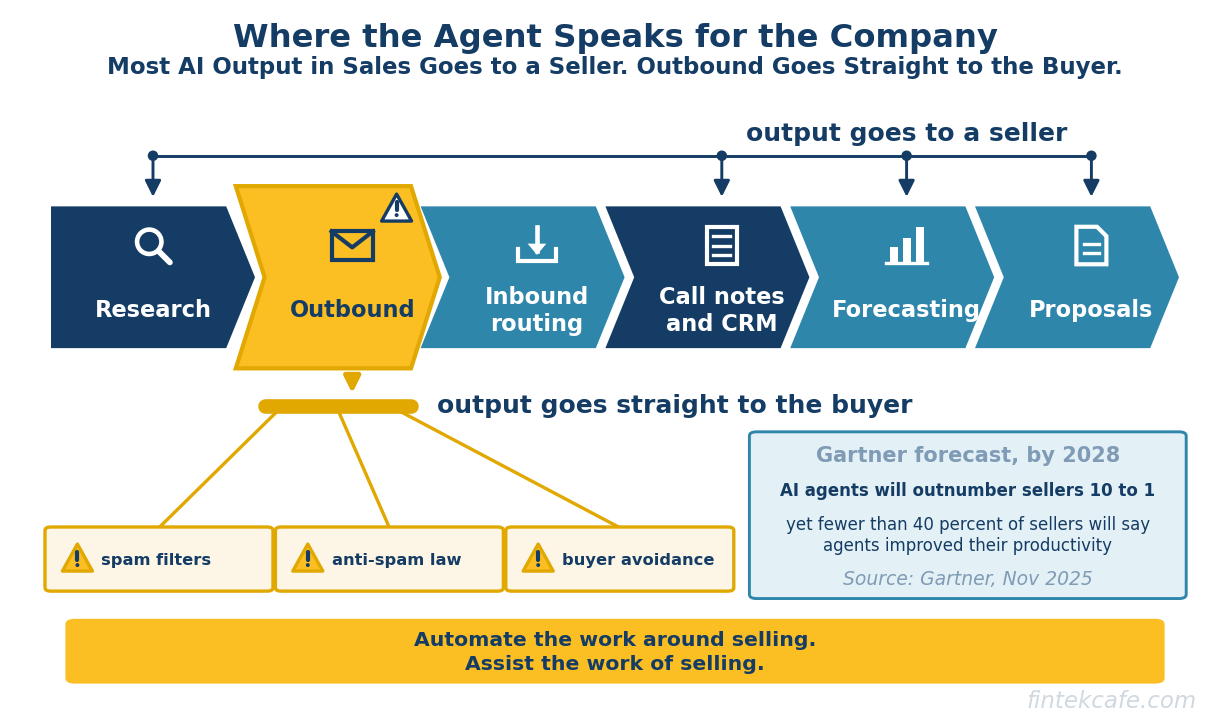
An AI SDR is an AI agent that does the work of a sales development representative: it researches accounts, writes and sends outbound messages, follows up, answers replies and books meetings for human sellers, with little or no human review of each message. It is the most heavily marketed use of autonomous agents in the enterprise, and the one with the loudest backlash. Gartner predicted in November 2025 that by 2028 AI agents will outnumber human sellers ten to one, yet fewer than 40 percent of sellers will say agents improved their productivity. The position taken here: AI earns its place across the revenue cycle as an assistant to sellers and as automation for the clerical work around selling. Replacing the human SDR motion with autonomous outbound works only for small, transactional deals, and even there it carries a deliverability and brand cost that most business cases leave out.
Key Takeaways
- AI is valuable in sales today for account research, call notes, CRM hygiene, inbound routing and proposal drafts. These save seller time without putting the brand in the hands of an unsupervised agent.
- Time saved is not the same as value created. Gartner's May 2026 survey found AI saves sellers 4.8 hours a week, but 72 percent of sales organizations fail to reinvest that time in high-value work.
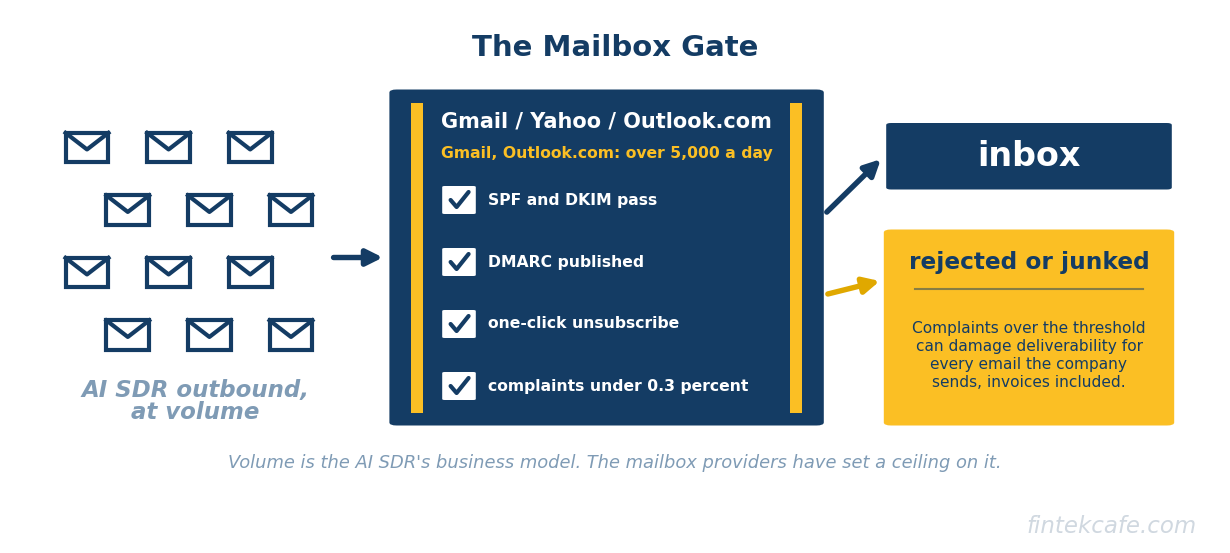
- Fully autonomous outbound runs into hard limits: Google, Yahoo and Microsoft now reject or junk bulk mail that fails authentication or draws too many spam complaints, and buyers punish irrelevant outreach.
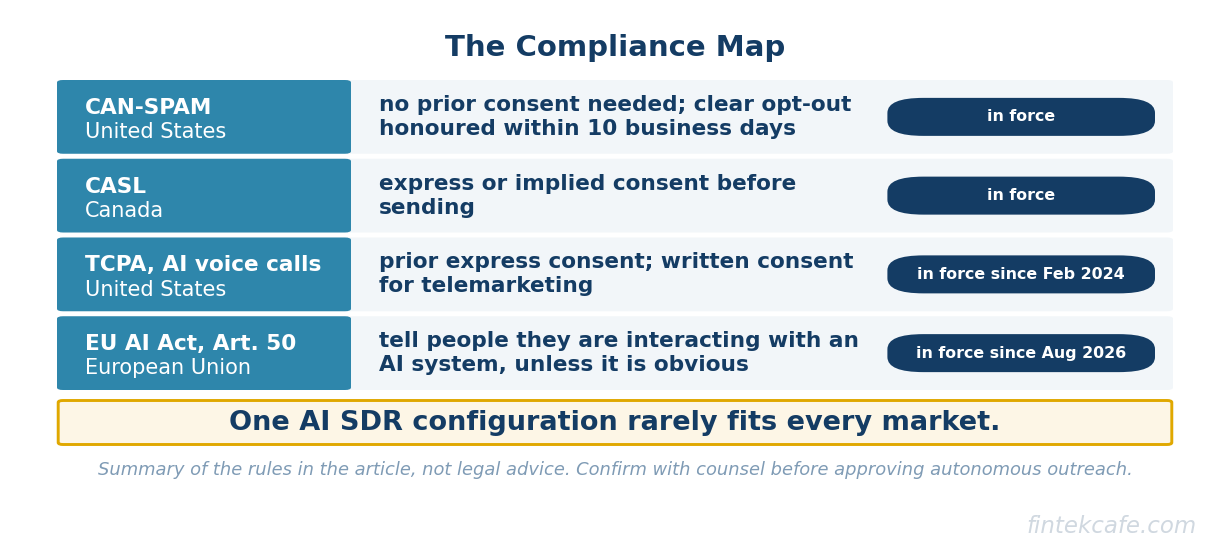
- The compliance edges are real and differ by country. CAN-SPAM allows unsolicited business email with an opt-out, Canada's CASL requires consent, AI-voice calls in the US need prior consent, and the EU AI Act requires disclosure when people interact with AI from August 2026.
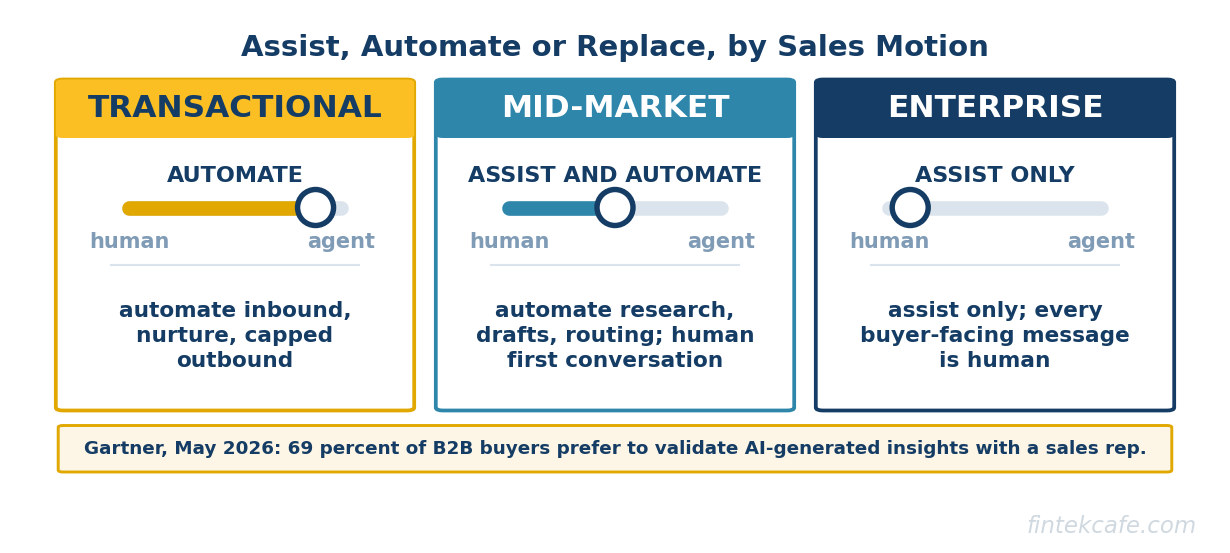
- Decide by sales motion: automate more in transactional sales, assist in mid-market, and keep humans in front of every enterprise buyer.
What AI Does Across the Revenue Cycle
Sales leaders often treat "AI for sales" as one decision. It is at least six, with very different risk profiles.
Research and account prioritisation
Agents can read company filings, news, hiring patterns, technology footprints and intent signals, then rank accounts and summarise why each matters now. This is high-value, low-risk work: the output goes to a human seller, who decides what to do with it.
Outbound sequencing
This is the core of the AI SDR pitch: the agent picks prospects, writes personalised emails or LinkedIn messages, sends them and follows up. It is also where most of the damage happens, because the agent's output goes straight to the buyer and to the mailbox providers' spam filters.
Inbound qualification and routing
When a prospect fills in a form or opens a chat, an agent can answer basic questions, qualify the lead against set criteria and route it to the right seller within minutes. Speed to lead matters, and inbound prospects have already asked to talk, so the brand risk is lower.
Call notes and CRM hygiene
Agents transcribe calls, summarise next steps, update opportunity fields and log activity. This removes the administrative work sellers most dislike and improves the data that every other AI use depends on.
Forecasting
AI can score deal health from activity, email sentiment and stage history, and flag deals at risk. It helps sales leaders challenge the forecast but should not replace the seller's and manager's call on large deals.
Proposal and RFP drafting
Language models produce first drafts of proposals, security questionnaires and RFP responses from a library of approved content. The time saved is large; the risk is a confident wrong statement about the product or its terms, so every draft needs review.
What the Evidence Says About Results
Separating vendor claims from independent data matters more in sales AI than almost anywhere, because the sellers of AI SDR tools are themselves running outbound campaigns.
| Finding | Source and date | Independent or vendor |
|---|---|---|
| By 2028 AI agents will outnumber sellers ten to one; fewer than 40 percent of sellers will say agents improved their productivity | Gartner, November 2025 | Independent |
| AI saves sellers 4.8 hours a week; 72 percent of sales organizations report low reinvestment of that time; 25 percent report a return of 50 percent or more on AI investments, and 20 percent a negative return of 50 percent or more | Gartner survey of 210 sales leaders, May 2026 | Independent |
| AI agents for sales sit at the Peak of Inflated Expectations | Gartner Hype Cycle for Sales Transformation, 2025, October 2025 | Independent |
| Sellers who partner effectively with AI are 3.7 times more likely to meet quota | Gartner survey of 1,026 B2B sellers, September 2024 | Independent |
| Reps spend 40 percent of their week selling; 54 percent of sales teams already use agents; 46 percent of those with agents say data quality hurts their sales | Salesforce State of Sales, 7th edition, survey of 4,050 sales professionals, February 2026 | Vendor |
| 88 percent of organizations use AI in at least one function; only 39 percent report any enterprise-level EBIT impact | McKinsey State of AI, November 2025 | Independent |
| Generative AI raised customer-support productivity 15 percent, with less-experienced workers gaining about 30 percent | Brynjolfsson, Li and Raymond, Quarterly Journal of Economics, 2025 | Independent |
Two patterns stand out. The independent evidence supports AI as an assistant: the gains are largest for less experienced staff, and sellers who work with AI outperform those who do not. The evidence for autonomous replacement of SDRs is thin and mostly comes from vendors.
The market itself gives a warning. In March 2025 TechCrunch reported, based on nearly two dozen sources, that 11x, a prominent AI SDR startup backed by leading venture firms, had listed companies as customers that said they were not, and that employees described losing most customers during trial periods. ZoomInfo told TechCrunch it had not given permission to use its logo and was not a customer. Those were reported allegations, but they match the pattern buyers describe: impressive pilots, then cancellation once pipeline quality is measured. Gartner's broader June 2025 forecast, that over 40 percent of agentic AI projects will be cancelled by the end of 2027, applies to sales with particular force.
What Backfires
Volume burns domains
The economics of AI outbound push toward volume: if a message costs almost nothing to write, send more. The mailbox providers have closed that door.
- Google requires senders of more than 5,000 messages a day to Gmail accounts to authenticate with SPF, DKIM and DMARC, offer one-click unsubscribe for marketing mail, and keep spam complaint rates below 0.3 percent, with a recommended target under 0.1 percent. The rules took effect in February 2024, and Google said it began ramping up enforcement, including temporary and permanent rejections, in November 2025.
- Yahoo set matching requirements from February 2024, including honouring unsubscribes within two days.
- Microsoft applied similar authentication rules to Outlook.com, Hotmail and Live senders above 5,000 messages a day from May 2025, and rejects non-compliant mail.
An AI SDR sending at scale from the company's main domain can push complaint rates over the threshold and damage deliverability for every email the company sends, including invoices and customer service. Many vendors advise using separate sending domains, which limits the damage but also signals to filters and buyers what the mail is.
Buyers notice and punish irrelevance
A Gartner survey of 632 B2B buyers, published in June 2025, found 61 percent prefer a rep-free buying experience and 73 percent actively avoid suppliers who send irrelevant outreach. Personalisation that consists of a scraped job title and a reference to a recent post does not read as relevant. Response rates reported by outbound vendors are low and, by some measures, falling: one agency, Belkins, measured a 0.45 percent reply rate across 7.5 million cold emails in 2025, down from 0.50 percent in the first half of the year to 0.40 percent in the second.
Disclosure changes the result
Research published in Marketing Science in 2019 by Luo, Tong, Fang and Qu randomised more than 6,200 customers to outbound sales calls from a chatbot or a human. Undisclosed bots sold as well as proficient human workers, but disclosing that the caller was a bot cut purchase rates by more than 79 percent. That gap is the commercial temptation behind undisclosed AI outreach, and it is exactly what disclosure rules now target.
Garbage CRM data in, garbage outreach out
Agents act on the data they are given. Validity's 2025 survey of 602 CRM users, from a data-quality vendor, found 76 percent said less than half of their CRM data was accurate and complete. An agent working from stale titles, wrong companies and duplicate contacts sends embarrassing messages at machine speed. Gartner has estimated that poor data quality costs organizations 12.9 million US dollars a year on average, a 2020 figure from a sample of data-quality customers.
The Legal and Compliance Edges
None of this is legal advice, and rules change. The points below are the ones an executive should confirm with counsel before approving autonomous outreach.
| Rule | What it requires | Status |
|---|---|---|
| CAN-SPAM Act (United States) | No prior consent needed, and no exception for business email; accurate headers and subject lines, a physical postal address, a clear opt-out honoured within 10 business days | In force. Penalty up to 53,088 US dollars per non-compliant email, the 2025 level, which the FTC said in September 2026 would carry over without a 2026 adjustment |
| CASL (Canada) | Express or implied consent before sending a commercial electronic message; sender identification; unsubscribe actioned within 10 business days | In force. Penalties up to 10 million Canadian dollars per violation for organisations. The private right of action written into the law was repealed before ever coming into force, effective end of 2025 |
| TCPA and AI voices (United States) | The FCC ruled in February 2024 that AI-generated voices are "artificial" under the TCPA, so such calls need prior express consent, or prior express written consent for telemarketing | In force. A separate FCC proposal from August 2024 to require AI disclosure on calls has not been finalised |
| Call recording consent (United States) | About 11 to 13 states require all parties to consent to recording, including California, Florida, Illinois, Pennsylvania and Washington | In force; counts vary by source, so check each state |
| UK PECR | Email marketing to corporate subscribers needs no consent but must identify the sender and offer an opt-out; sole traders are treated as individuals | In force. Maximum fines rose to 17.5 million pounds or 4 percent of global turnover from February 2026 |
| EU GDPR | Direct marketing may rely on legitimate interest; recipients have an absolute right to object | In force |
| EU AI Act, Article 50 | People must be told they are interacting with an AI system unless it is obvious | Applies from 2 August 2026; the 2026 Digital Omnibus delayed high-risk rules but not this duty |
The practical reading for a multinational sales team: an AI SDR configured for US norms will breach Canadian and many European expectations, and an AI voice agent that does not identify itself is a legal risk in the US and the EU, not just a reputational one.
The Use-Case Table
| Task | Value | Risk | Recommendation |
|---|---|---|---|
| Account research and prioritisation | High: sellers start with context | Low: output goes to a human | Deploy broadly |
| Call notes and CRM updates | High: removes admin, improves data | Low, with privacy and recording consent checks | Deploy broadly |
| Inbound qualification and routing | High: faster response to interested buyers | Medium: poor answers lose warm leads | Automate with clear handoff rules |
| Proposal and RFP drafts | High: large time savings | Medium: wrong claims about product or terms | Automate drafts, require human review |
| Deal scoring and forecast support | Medium: flags risk earlier | Medium: false confidence in the number | Use to challenge, not replace, the forecast call |
| Outbound email drafting with human send | Medium: faster personalisation | Medium: generic messages at volume | Assist, with seller approval of each sequence |
| Fully autonomous outbound email | Low to medium: volume without quality | High: domain reputation, brand, compliance | Restrict to transactional segments with strict volume caps |
| Autonomous AI voice outbound | Low | High: TCPA consent, disclosure, recording rules | Avoid unless consent and disclosure are airtight |
The Decision: Assist, Automate or Replace
The right answer depends on the value of a deal and how buyers buy. The general framework for when an autonomous agent beats a fixed workflow is set out in the agent vs workflow decision guide; in sales, the motion decides most of it.
| Sales motion | Typical deal | Buyer behaviour | AI stance | What stays human |
|---|---|---|---|---|
| Transactional | Small, short cycle, often self-serve | Buys online, rarely wants a call | Automate: inbound handling, nurture, some autonomous outbound under volume caps | Escalations, pricing exceptions, brand and compliance oversight |
| Mid-market | Moderate, a few stakeholders, weeks to months | Researches alone, then wants a credible person | Assist and automate low-value steps: research, drafts, routing, CRM | First meaningful conversation, discovery, negotiation |
| Enterprise | Large, many stakeholders, months to a year | Relationship-driven; checks claims with people | Assist only: account intelligence, meeting prep, proposal drafts, notes | All buyer-facing outreach and every commitment |
Gartner's May 2026 finding that 69 percent of B2B buyers prefer to validate AI-generated insights with a sales rep supports this split. The more a buyer has at stake, the more they want a person to stand behind the claim.
Where autonomous SDRs can work
Replacement is defensible when deals are small enough that a human SDR's cost cannot be justified, the target market is large, the messages are tightly governed, volume is capped below the mailbox providers' thresholds, and every message carries the required identification and opt-out. Even then, measure pipeline quality and conversion to revenue, not meetings booked. A meeting with the wrong buyer costs an account executive an hour.
Where they damage the pipeline
In mid-market and enterprise sales, an autonomous agent spending the company's brand on cold, generic outreach to buyers who may later become important accounts is a poor trade. The damage is quiet: buyers mark the domain as spam, ignore the next message from a real seller, and remember the company as one that sends AI-written mail.
How to evaluate the tools
Treat AI SDR vendors with the scepticism the 11x reporting warrants. Ask for references you choose, not ones they choose. Pilot on a limited segment from a separate domain, and measure complaint rates, reply quality, meetings that convert to qualified opportunities, and revenue. The AI vendor evaluation framework covers the wider questions. Where several agents hand work to each other, for example research, writing and scheduling, the coordination risks described in the multi-agent systems design guide apply.
The Position, and Its Tradeoff
The recommended stance is to automate the work around selling and assist the work of selling, and to replace the SDR motion only in transactional segments where the economics leave no alternative. Fund research, notes, CRM hygiene, routing and drafting first. Hold autonomous outbound to strict volume, consent and disclosure rules.
The tradeoff is speed and headcount cost. A company that keeps humans in its outbound motion will book fewer first meetings for each unit of sales spend than a competitor running AI SDRs at full volume, at least for a while. Its SDR team still costs money, and some of its sellers will resist new tools. The bet is that pipeline quality, domain reputation and brand are worth more than the meetings an autonomous agent books, and that the evidence from buyers, mailbox providers and regulators all points the same way. For the basics of how these agents work under the hood, see what AI agents are and how they work.
Frequently Asked Questions
Do AI SDRs work?
They work for narrow tasks and narrow markets. Independent evidence supports AI as an assistant to sellers, with large gains in research, notes and drafting. Evidence that fully autonomous AI SDRs produce better pipeline than human SDRs is thin, mostly from vendors, and complicated by deliverability limits and buyer resistance to irrelevant outreach.
Can AI replace sales development representatives?
In small-deal, high-volume transactional sales, AI can replace much of the SDR workload if outreach is capped, compliant and measured on revenue. In mid-market and enterprise sales, buyers want a credible person, and replacing SDRs with autonomous agents risks brand and domain reputation for a modest gain.
Is AI-generated cold email legal?
In the United States, CAN-SPAM permits unsolicited commercial email, including business email, if it has accurate headers, a physical address and a working opt-out honoured within ten business days. Canada's CASL requires consent first. The EU and UK apply their own rules, and the EU AI Act requires disclosure when people interact with an AI system from August 2026.
What is the safest first use of AI in a sales team?
Call notes, CRM updates and account research. Their output goes to a seller rather than a buyer, they save time sellers resent spending, and they improve the data that any later automation depends on.
The Bottom Line
The AI SDR was sold as the end of a job. The evidence so far shows something narrower: AI makes good sellers faster and new sellers competent sooner, and it handles the clerical work that surrounds every deal. Where it is pointed at buyers without a person in the loop, it meets spam filters, anti-spam law and buyers who avoid suppliers that waste their time.
The executive decision is not whether to use AI in sales. It is where to let the agent speak for the company. Keep that boundary close to the transactional end of the market, measure revenue rather than meetings, and spend the time AI saves on the conversations that only people can have.
Related Articles
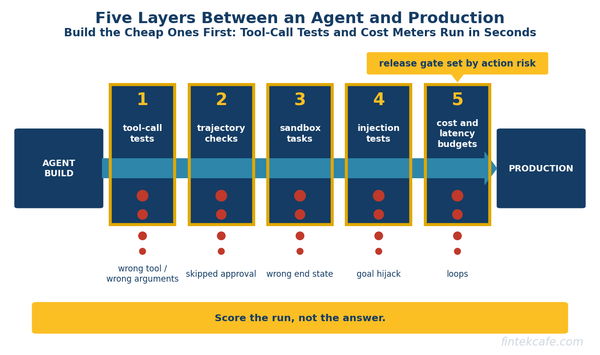
How to Test an AI Agent Before It Touches Production
Agent evals must score a sequence of actions, not one answer. The five test layers, pass^k reliability, graders and release gates by action risk.
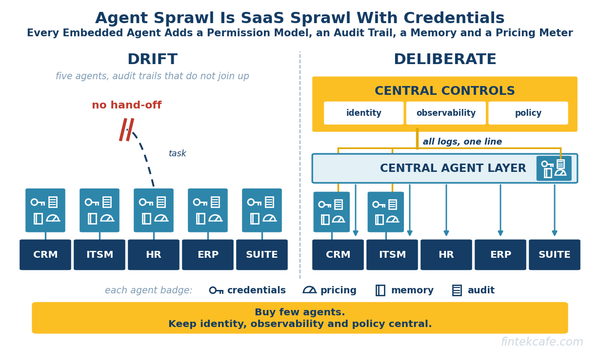
Every Software Vendor Now Sells an Agent, and Most Enterprises Should Buy Very Few of Them
Buying an agent from every system of record recreates SaaS sprawl one layer up. How CIOs should choose, and which controls must stay central.
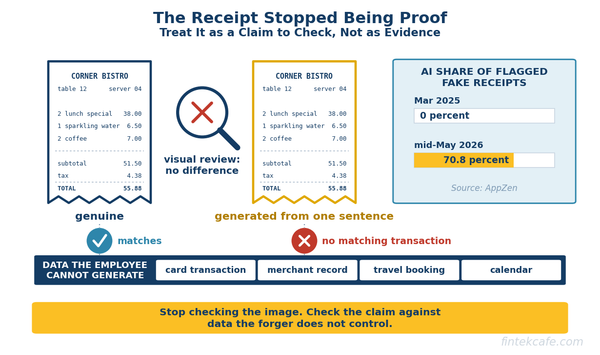
AI-Generated Fake Receipts: How Expense Fraud Changed and How Finance Teams Catch It
AI-generated fake receipts now beat visual review. How expense fraud changed, which detection still works, and the controls to use by company size.