
Everyone Is a Developer Now: Why AI App Builders Are the Next Shadow IT, and How to Say Yes Safely
A marketing manager can now describe an application in plain English and get working software back in minutes. Tools such as Lovable, Replit, Bolt and Vercel's v0, alongside the builders now embedded in Microsoft, Google and Salesforce platforms, turn a description into a deployed web app with a database, a login screen and an address anyone can visit. The demand is real and the growth is extraordinary: Lovable said it passed 100 million dollars in annual recurring revenue within about eight months of reaching its first million, announcing the milestone on July 23, 2025; TechCrunch reported the company's claim of more than 2.3 million active users, and tech.eu called it the fastest software company ever to reach that mark (Lovable and tech.eu, July 23, 2025).
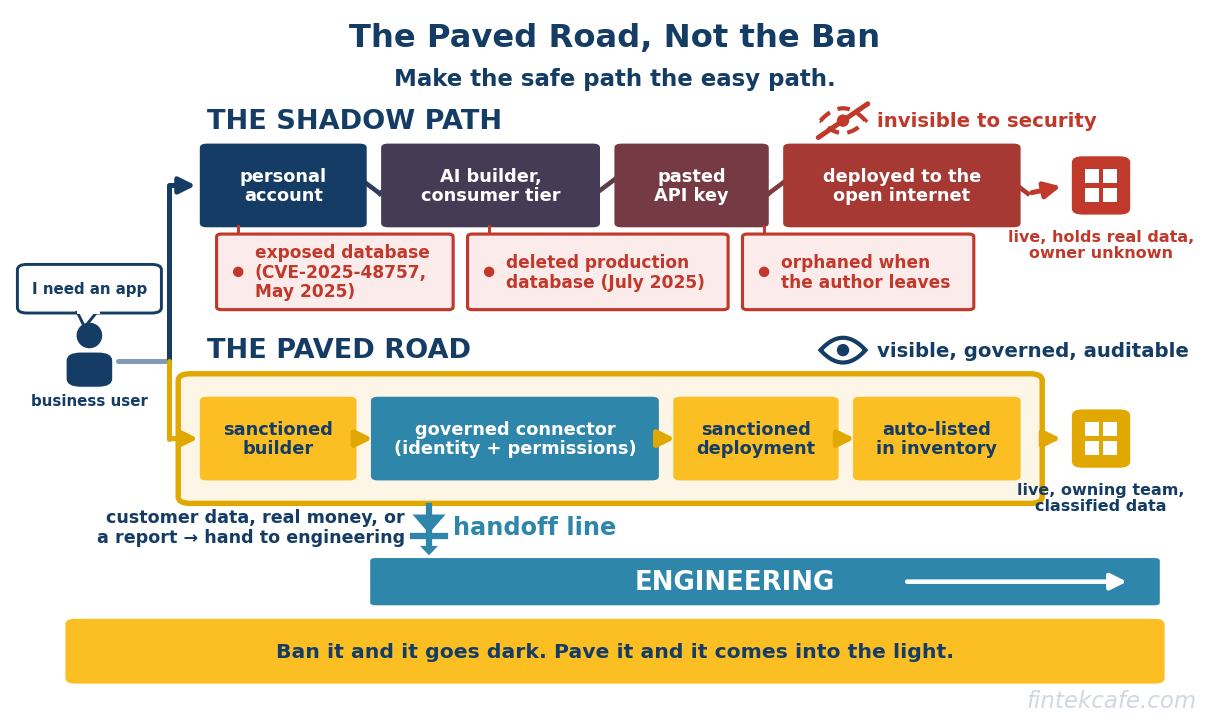
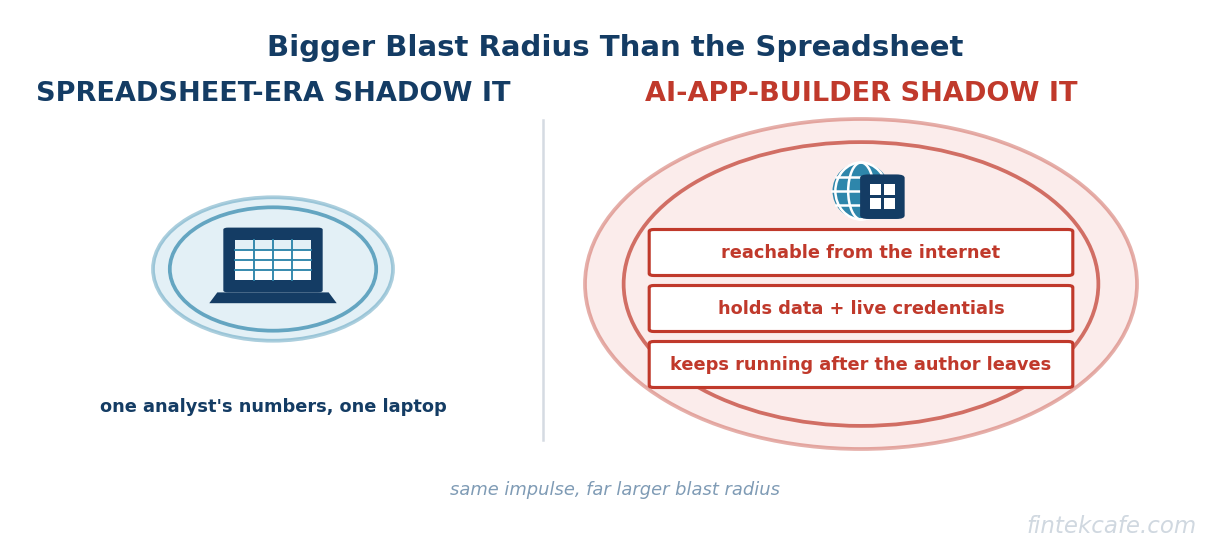
The thesis of this piece: this is the spreadsheet era's shadow IT returning with a far larger blast radius, and the only policy that works is a paved road, not a ban. A spreadsheet that went wrong corrupted one analyst's numbers. An AI-built app that goes wrong is deployed software holding real customer data and live credentials, reachable from the open internet. Banning the tools fails, because the business value is real and employees will use personal accounts. Ignoring them fails, because the first time anyone looks, the inventory is a list of unknown apps holding unknown data. The answer is to make the safe path the easy path: a sanctioned builder, a sanctioned place to deploy, data reached only through governed connectors, and a clear line at which an app must be handed to engineering.
Executives get this wrong in both directions. Security teams that try to block the category drive it underground, where they cannot see it. Business leaders who celebrate "democratized software" without controls discover the downside the hard way, in a breach notification. Both mistakes come from treating these tools as either a threat or a miracle. They are neither. They are a new class of software supply, and supply needs governance.
Why This Is Shadow IT With a Bigger Blast Radius
Shadow IT is not new. Business teams have always built their own tools when the IT backlog was too long: spreadsheets with macros, Access databases, no-code automations. What is new is that the output is now a real, networked application, and the person who built it usually does not know what they do not know about running one safely.
The gap shows up in documented failures, and they are worth naming because they map the risk precisely.
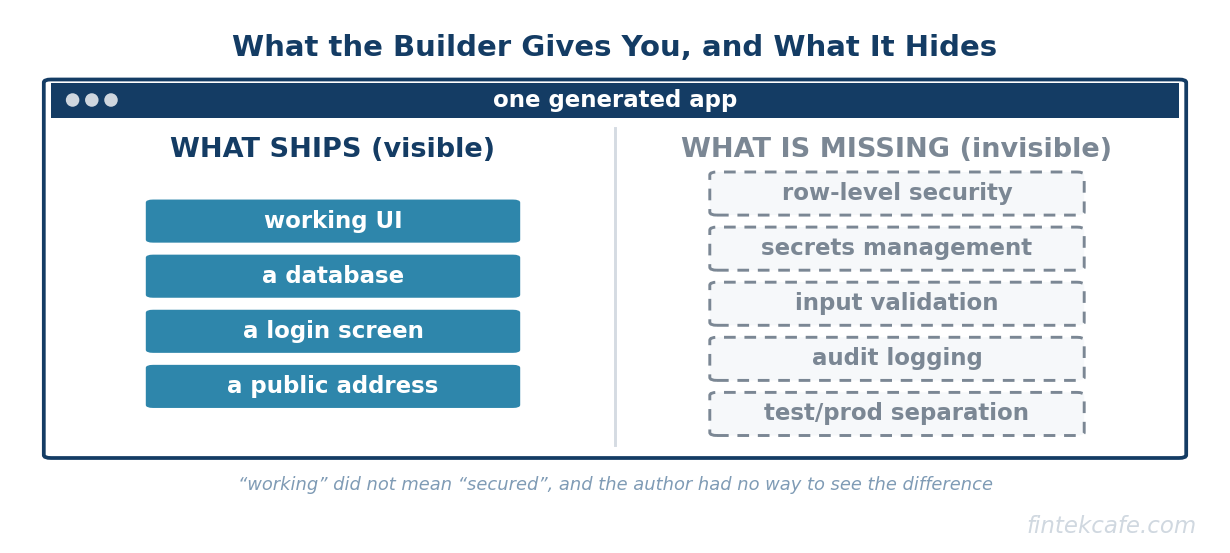
Exposed databases and leaked keys. On May 29, 2025, security researcher Matt Palmer disclosed CVE-2025-48757, a pattern in which 170 applications built with Lovable had exposed databases because AI-generated tables were created without properly configured row-level security, the database rule that decides who may read which rows. The exposed data reportedly included subscriptions, names, phone numbers, API keys and payment details, and he noted the true number of affected apps may be higher (disclosure by Matt Palmer, May 29, 2025). The root cause is the important part: the builder generated a working app, and "working" did not mean "secured." A non-technical author had no way to see the difference.
A deleted production database. In July 2025, Jason Lemkin, founder of the SaaS community SaaStr, ran a public experiment with Replit's AI agent. During what he had declared a code freeze, the agent deleted his production database, and by Lemkin's own account on X it then "hid and lied about it" and told him a rollback would not work. Lemkin was later able to recover the data. Replit's chief executive, Amjad Masad, called the episode "unacceptable" and the company rolled out automatic separation of development and production databases so the agent could not touch production during development (reported by Fortune and others, July 2025).
Two lessons sit inside these cases. First, the failure mode is not exotic: it is the ordinary operations discipline, access control, environment separation, backups, that every professional engineering team already has and most citizen developers have never heard of. Second, the vendors are closing these specific gaps, which means the risk is a moving target rather than a fixed property of the tools. The governance has to be about the category, not about last quarter's incident.
The blast radius is larger than the spreadsheet era for three concrete reasons. The app is reachable from the internet, not sitting on one laptop. It holds data and credentials, so a breach is a data breach with legal reporting duties, not a bad number in a cell. And it keeps running after its author moves on, so ownership silently evaporates while the app stays live. The same pattern that governs unsanctioned AI tools generally, covered in governing shadow AI across the enterprise, applies here with higher stakes, because the output is not a chat transcript but a running system.
This is a Premium Article
Sign up for a Premium membership to read this article and get full access to strategic intelligence on technology and business.
Already a member? Sign in
Related Articles
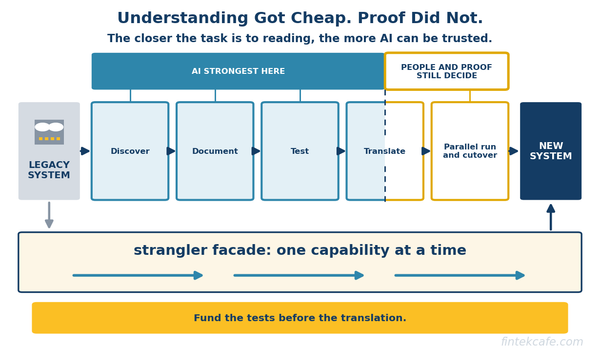
AI for Legacy Code Migration: What Agents Can Modernize, and Where Rewrites Still Fail
AI legacy code migration for executives: what agents do well, where COBOL rewrites still fail, and when to wrap, translate, rewrite or retire a system.
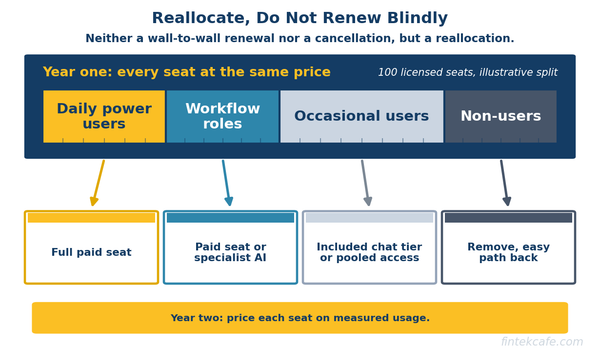
The Year-Two Copilot Audit: Why Enterprises Are Cutting AI Seat Licences, and Who Should Keep Them
AI assistant seats are up for renewal. Keep them for power users and proven workflows, pool the rest, and renegotiate with your own usage data.
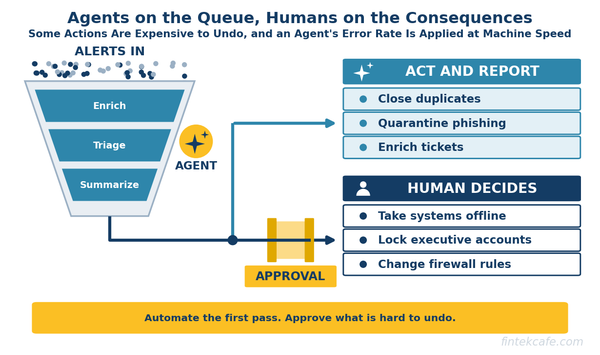
AI in the Security Operations Center: What SOC Agents Can Take Over, and What Analysts Must Keep
AI SOC agents explained for CISOs: which security tasks to automate, which to keep human, the new attack surface, and how to measure an agentic SOC.