
Stablecoins Are Becoming Bank Infrastructure: What the GENIUS Act Really Changes
The headlines framed the GENIUS Act as a win for crypto. The first federal framework for payment stablecoins in the United States, signed into law and giving digital dollars a clear set of rules, read like vindication for an industry that had spent a decade asking for legitimacy. The crypto-native issuers celebrated. The token prices moved.
The headline missed the point. The moment a dollar-denominated token comes with mandated reserve composition, monthly attestation, redemption-at-par guarantees, and a defined federal or state supervisory regime, it stops being a speculative asset and becomes something far more consequential: regulated settlement infrastructure. And regulated settlement infrastructure is not a business that crypto-native firms are structurally positioned to win. It is a business that favors balance sheets, distribution, and existing payment relationships.
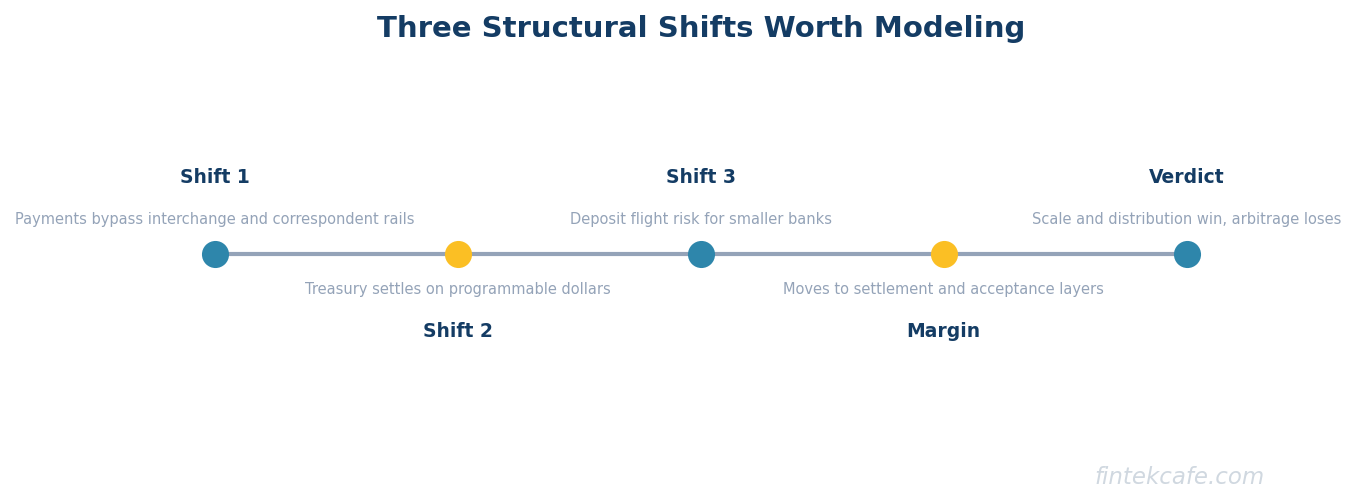
The contrarian read is straightforward. The GENIUS Act does not primarily benefit the firms that lobbied for it. It benefits banks, card networks, and the largest merchants, who can now treat a compliant dollar token as a payment rail rather than a trade. The losers are the issuers who assumed that regulatory clarity would protect their float, and the smaller banks whose deposit base was never priced to compete with yield-bearing programmable cash. What follows is the structural map of who captures the margin and who gets disintermediated, and what treasury heads and fintech finance leaders should be modeling before the third quarter.
What the Act Actually Mandates, and Why the Mandates Are the Story
The substance of a stablecoin framework is not the permission to issue. It is the cost of issuing. The GENIUS Act establishes that a permitted payment stablecoin issuer must hold reserves on a one-to-one basis in high-quality liquid assets, segregate those reserves from operating funds, publish regular third-party attestations of reserve composition, honor redemption at par, and operate inside a supervisory perimeter that looks a great deal like banking supervision. Issuers above a defined size threshold fall under federal oversight. Below it, a state regime applies under federal standards.
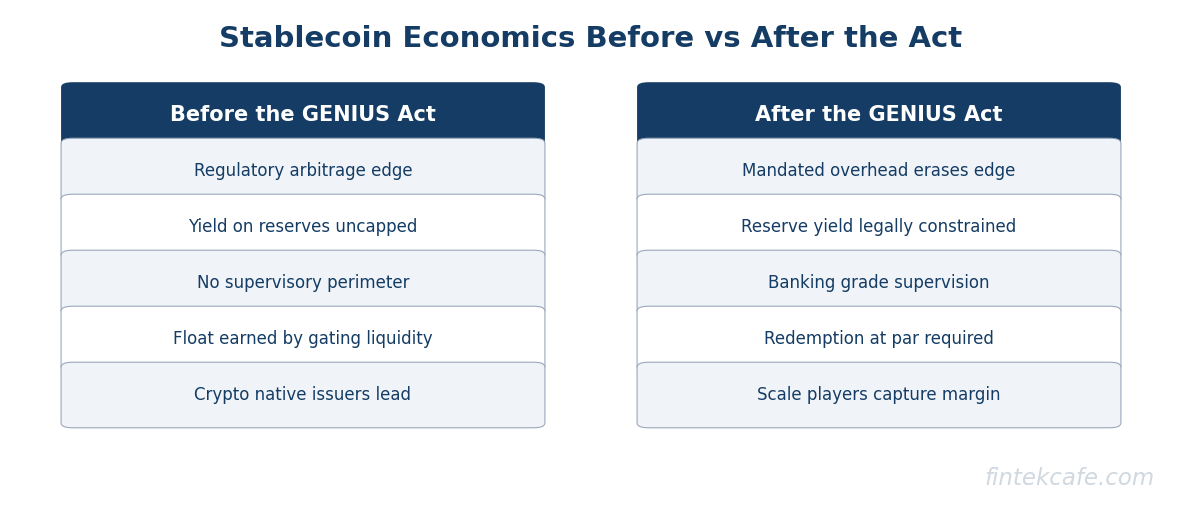
Read as a compliance checklist, that is a set of obligations. Read as economics, it is a moat with a specific shape. Each requirement raises the fixed cost of operating an issuer and lowers the variable margin per token. Reserve segregation and attestation impose audit and custody costs that do not scale down. Redemption at par removes the ability to earn a spread by gating liquidity. The supervisory perimeter requires a compliance function comparable to a regulated financial institution. None of these costs are large for an organization that already runs them. All of them are punishing for a firm whose entire prior advantage was operating outside that perimeter.
The result is an inversion of the competitive logic. Before the Act, the crypto-native issuer's edge was regulatory arbitrage: it could earn yield on reserves while a bank deposit earned the customer nothing, and it carried none of the supervisory overhead. After the Act, the yield on reserves is still there, but it is now legally constrained in how it can be shared, the overhead is mandated, and the institutions best equipped to absorb that overhead are precisely the banks and networks that already carry it as the cost of doing business. The Act did not level the field. It tilted it toward scale.
This is a Premium Article
Sign up for a Premium membership to read this article and get full access to strategic intelligence on technology and business.
Already a member? Sign in
Related Articles
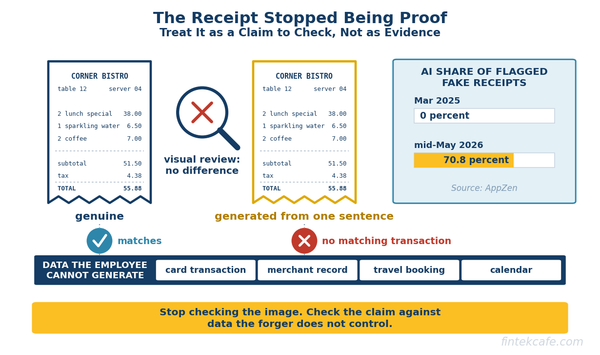
AI-Generated Fake Receipts: How Expense Fraud Changed and How Finance Teams Catch It
AI-generated fake receipts now beat visual review. How expense fraud changed, which detection still works, and the controls to use by company size.

The Monthly Close Is Becoming Continuous, and the Finance Calendar Will Not Survive It
AI is taking the bottleneck work out of the month-end close. The close becomes continuous with a short sign-off, and finance, audit and the board change.
Accounts Payable Automation: What AI Can Actually Take Over in Invoice-to-Pay
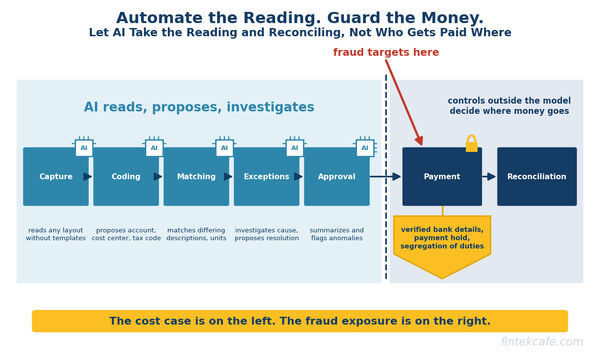
What AI can take over in accounts payable, step by step from capture to payment, where the fraud risk grows, and which controls must stay outside the model.