
The Shadow AI Problem: Why Security Teams Are Losing Control of Enterprise AI in 2026
Every prior wave of unsanctioned technology gave security teams something to point at. Shadow IT meant a SaaS subscription on a corporate card, a server under a desk, a Dropbox account syncing customer files. The artifact was discoverable, the network traffic was distinguishable, and the response, while never easy, was at least legible. Find the thing, assess it, block it or bring it inside the perimeter.
Shadow AI broke that model, and most security organizations have not yet absorbed how completely. Employees adopted generative AI faster than any technology in the history of enterprise computing, and the overwhelming majority of that adoption is invisible to the controls built for the last problem. It hides in personal accounts opened from a phone, in browser extensions that quietly relay page content to a model, in AI features that approved vendors shipped into already-sanctioned software without a procurement event, and in agents wired to corporate systems through API keys that no one is tracking. The traffic looks like ordinary web browsing. There is no server to find.
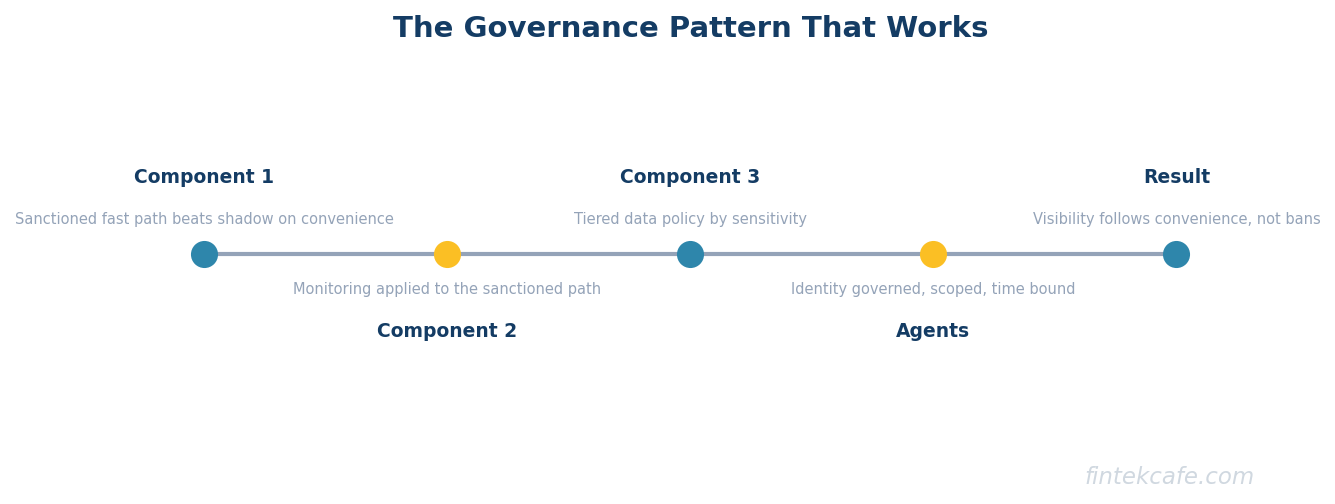
The reflexive responses are both wrong. The first reflex is the blanket ban, which fails because it drives usage further underground and forfeits the productivity that competitors are capturing. The second reflex is to buy a tool, on the assumption that the right platform will surface and gate the activity. That fails too, because shadow AI is fundamentally a behavioral phenomenon, and a behavioral phenomenon cannot be fully solved by a control that the behavior is specifically motivated to route around. What CISOs and CIOs should fund in 2026 is neither the ban nor the single platform. It is a governance pattern that makes the sanctioned path faster than the shadow one. This piece maps the real exposure surface, explains why the standard tooling underperforms on AI traffic, and lays out the pattern that works.
The Exposure Surface Is Wider Than the Chat Window
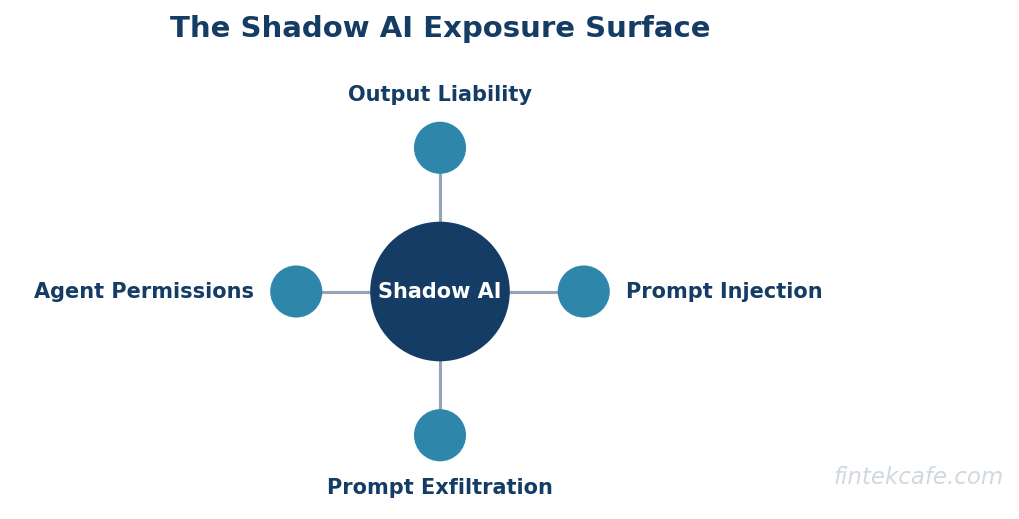
The popular image of shadow AI is an employee pasting a confidential document into a consumer chatbot. That happens, and it matters, but treating it as the whole problem is the mistake that lets the larger exposures persist. The surface has at least four distinct faces, and they fail in different ways.
The first is direct data exfiltration through prompts. An employee, trying to do legitimate work, pastes source code, customer records, unreleased financials, or privileged correspondence into a model running under a personal account with no enterprise data agreement. The data has now left the perimeter, may be retained, and in the consumer tiers of some services may be eligible to influence future model behavior. The intent is productive. The exposure is total.
The second is prompt injection through ingested content. As employees connect models to documents, web pages, emails, and tickets, the model begins acting on text it did not originate. A malicious instruction embedded in an ingested document or a web page can hijack the model's behavior, causing it to exfiltrate context, take an unintended action, or produce manipulated output. This is a genuinely new class of vulnerability, where the attack arrives inside the data the model is asked to process rather than through a conventional interface, and it scales precisely as the organization connects models to more of its information.
The third is model-output liability. A model produces a confident, plausible, and wrong answer, and an employee acts on it: ships the code, sends the advice to a client, files the analysis. The organization owns the consequence regardless of where the text originated. Output that is fabricated, that infringes, or that is simply incorrect becomes an operational and legal exposure that does not appear on any network monitor because nothing was exfiltrated. The harm flows the other direction.
The fourth, and the one that should most worry a security leader in 2026, is unmanaged agent permissions. The frontier of adoption is no longer the chat window. It is agents: software that takes actions, calls tools, reads and writes to systems, and chains operations with limited human oversight. When an employee or a team wires an agent into corporate data and systems through an API key provisioned outside any identity-governance process, the organization has created a non-human actor with standing access and no clear owner, no lifecycle, and frequently no logging. An over-permissioned agent is a far more dangerous artifact than a leaked prompt, because it persists and it acts.
This is a Premium Article
Sign up for a Premium membership to read this article and get full access to strategic intelligence on technology and business.
Already a member? Sign in
Related Articles
Integration Platforms Are the Quiet Winners of the Agent Era
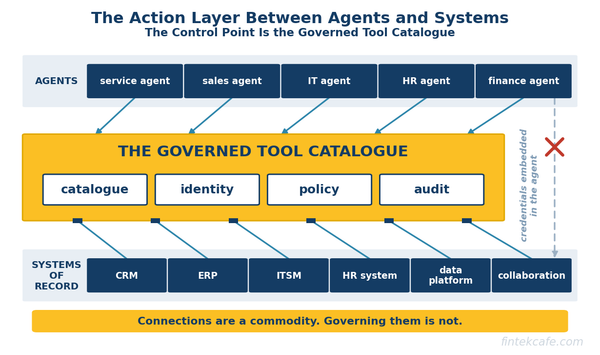
Agents act through integrations. iPaaS and API vendors hold the connectors, credentials and audit trails, and MCP makes governing that layer worth more.
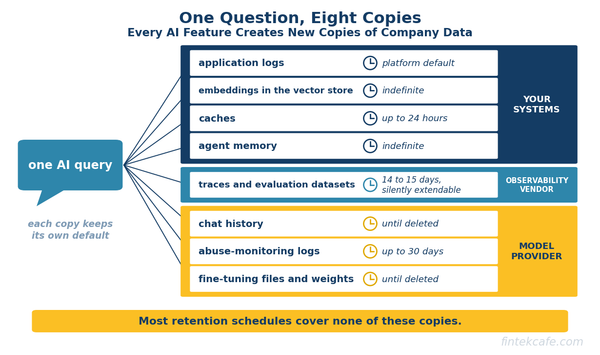
What Happens to Your Data Inside AI Systems: Retention, Deletion and the Copies Nobody Tracks
Every AI feature copies company data into prompts, logs, embeddings and memory. Where each copy lives, what vendors retain, and how to make deletion real.
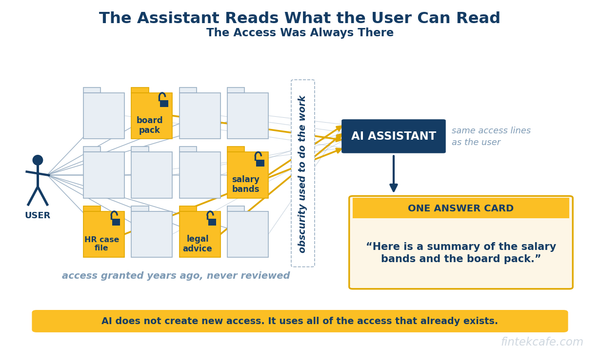
Data Classification: The Step Every Enterprise AI Rollout Skips, and What It Costs Later
Why AI assistants expose overshared data, how data classification fixes it, what to label first, and a 90-day plan for executives.