
Why Most Treasury AI Pilots Stall: The Three Hidden Constraints CFOs Don't Plan For
The 2025 wave of treasury AI procurement is hitting its first wall in 2026 and the wall is not where most CFOs expected it to be. Cash forecasting copilots, foreign-exchange hedging optimizers, and accounts-payable automation tools were funded across the second half of 2024 and into 2025 on the strength of vendor demos that showed twenty to forty percent reductions in working-capital buffer requirements, fifteen to thirty basis points of FX cost savings, and the operational labor savings that the CFO already needed to defend the headcount line. By the second quarter of 2026 a meaningful share of those pilots are in some version of the same conversation: the system is technically working, the vendor is responsive, but the program has not delivered the business outcomes the original capex committee was promised, and the question of whether to renew is harder than expected.
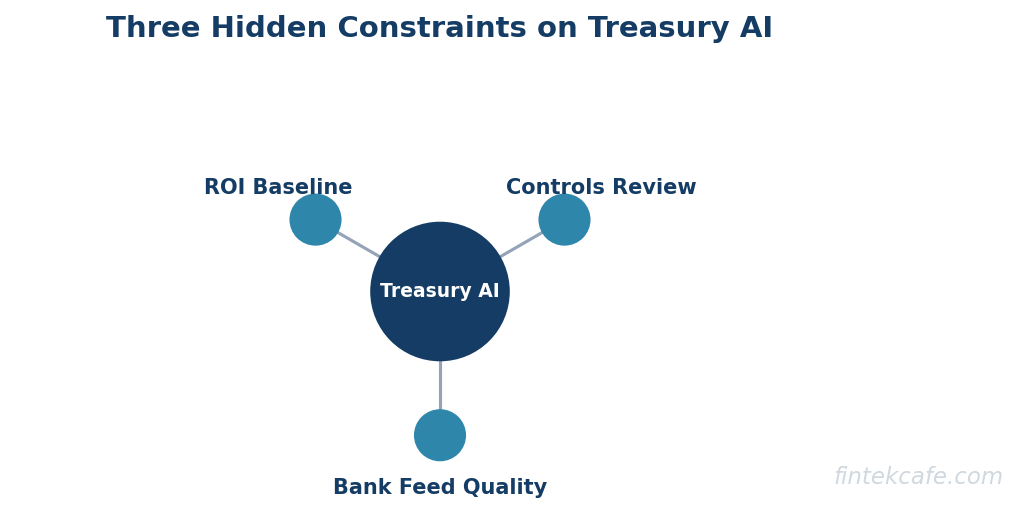
The pattern is recurrent enough to be diagnosable. Three hidden constraints account for the gap between the demo and the production result. They are not the constraints the vendor due diligence anticipated, they are not the ones the AI risk framework was scoped to handle, and they are difficult to surface during procurement because each is invisible until the pilot is months deep. The disciplined response is to plan for them at funding rather than to discover them at the renewal review.
This article walks through the three constraints, what JPMorgan, Stripe Treasury, and Brex have publicly shared about how their internal pilots converged on a different operating posture, and a decision framework that separates the treasury AI use cases that are ready in 2026 from the ones that are still two to three years out.
Constraint One: Bank-Feed Data Quality Is Worse Than the Demos Assume
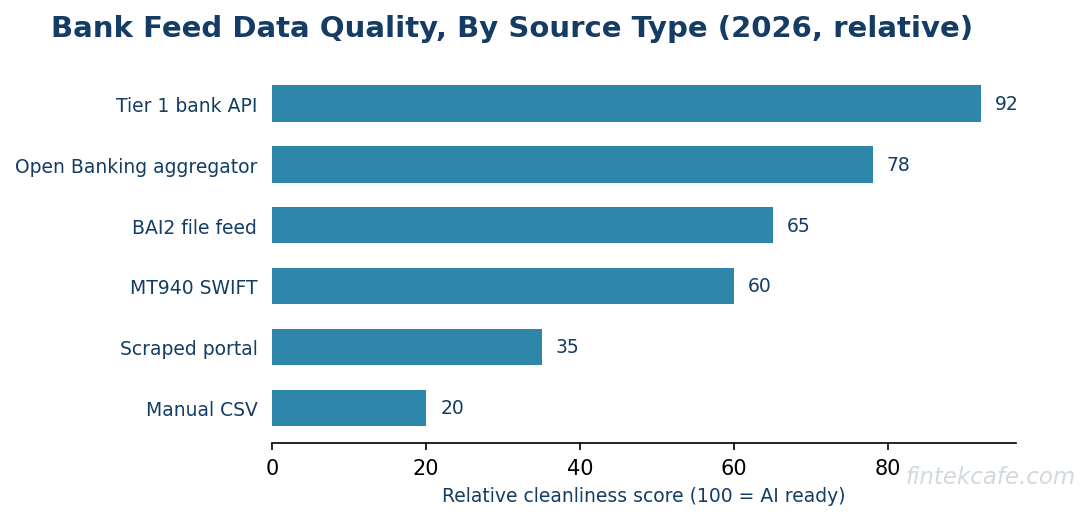
The first and most consequential constraint is data quality at the bank-feed layer. A vendor demo is a story about model capability on clean data; the customer's production data is materially noisier than the demo assumed.
The noise lives in five recurring places:
Inconsistent transaction descriptions. The same recurring payment shows up as "ACME PAYROLL EFT" at one bank, "PAYROLL ACH ACME CORP" at another, and a structured remittance code at a third. Cash-forecasting models trained on demo data implicitly assume consistency and degrade materially on real data.
Counterparty identifier fragmentation. The same legal entity has different identifiers across feeds, sometimes within the same feed by originating subsidiary. Entity resolution is hard, and most vendors scope it as a customer responsibility while pricing as if it were solved.
Missing or wrong purpose codes on cross-border payments. ISO 20022 promises structured purpose codes; in 2026 production reality they are populated correctly on a meaningful share of payments and incorrectly or not at all on the rest. Models that depend on purpose codes underperform on the mis-coded long tail, which is the tail that matters most.
Reconciliation gaps between bank feed and ERP. Treasury teams have lived with a few-percent gap for years. AI models often assume the gap is zero; recommendations are silently wrong on transactions in the gap, and the errors look correct because nothing compares against them.
Time-zone and value-date inconsistencies. The same payment shows up with different timestamps across feeds. Models that learn settlement-pattern timing on demo data behave erratically on customer data with inconsistent labels.
The collective effect is a model that performs well in the demo, adequately in the first production month with carefully selected accounts, then degrades over the following ninety days as dirty data accumulates. Vendors usually attribute the degradation to "data quality issues at the customer side": technically correct and operationally useless, because the issues are inherent to the bank-feed layer and were always going to be present.
The pattern that works: teams that scope data-quality remediation (bank-feed normalization, entity resolution, purpose-code enrichment, reconciliation rules) as part of the pilot rather than as a downstream problem get materially better outcomes. The honest 2026 number is that remediation is comparable in cost and timeline to the AI work itself, and programs that fund only the AI hit the wall described above.
This is a Premium Article
Sign up for a Premium membership to read this article and get full access to strategic intelligence on technology and business.
Already a member? Sign in
Related Articles
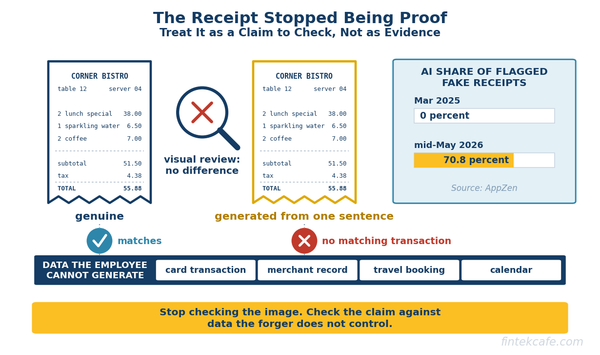
AI-Generated Fake Receipts: How Expense Fraud Changed and How Finance Teams Catch It
AI-generated fake receipts now beat visual review. How expense fraud changed, which detection still works, and the controls to use by company size.
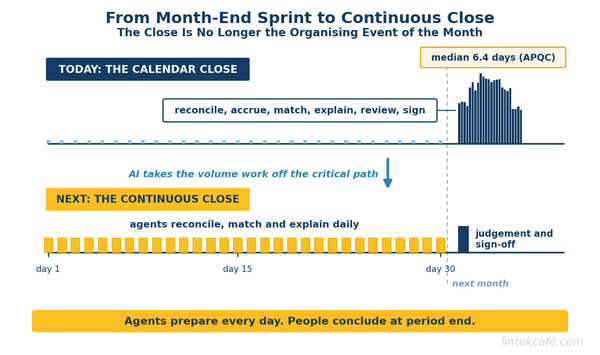
The Monthly Close Is Becoming Continuous, and the Finance Calendar Will Not Survive It
AI is taking the bottleneck work out of the month-end close. The close becomes continuous with a short sign-off, and finance, audit and the board change.
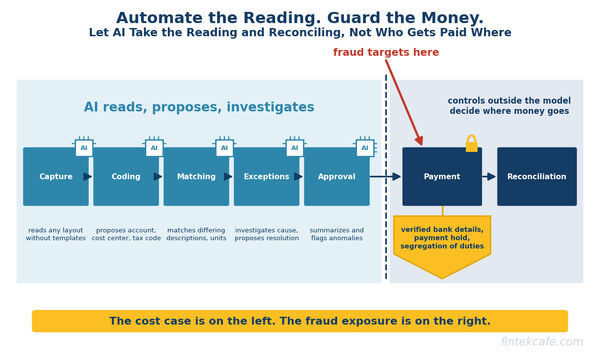
Accounts Payable Automation: What AI Can Actually Take Over in Invoice-to-Pay
What AI can take over in accounts payable, step by step from capture to payment, where the fraud risk grows, and which controls must stay outside the model.