
Why Embedded Finance Quietly Stalled: The B2B SaaS Companies Killing Their Banking Roadmaps
For five years embedded finance was the slide every B2B SaaS company put in their board deck. The pitch was identical regardless of the underlying product. The vertical SaaS vendor would attach a bank account to its software, capture interchange on the card spend that its customers were already running through it, and convert a one-time license relationship into a financial-services annuity. The total addressable market chart always pointed at a number that was at least one order of magnitude larger than the core software opportunity.
In 2026 that slide is being deleted. Not loudly, not with press releases, but in the operating reviews where roadmap commitments get revisited. The dynamic is quiet because the companies pulling back have no incentive to announce it. The pattern is consistent enough across the sector that it now constitutes the dominant story in embedded finance, even though the public narrative has not yet caught up.
The thesis was wrong in three specific ways. The unit economics never justified the regulatory burden once interchange splits with sponsor banks were honestly modeled. The supervisory environment after the Synapse collapse converted what was a moderate compliance overhead into an existential one. And the most successful embedded plays turned out to be payments-only, not deposits or lending, which means the part of the thesis that mattered for revenue compression at banks was always the part that did not work.
What Happened to the Sponsor-Bank Layer
The Banking-as-a-Service stack that made embedded finance possible was never as resilient as the API documentation suggested. A SaaS company offering checking accounts to its customers was not actually a bank. It was a software vendor sitting on top of a middleware provider that was sitting on top of a sponsor bank. The customer's deposits lived at the sponsor bank but were tracked across at least two ledgers, sometimes three. The reconciliation problem was not an implementation detail. It was the entire risk surface.
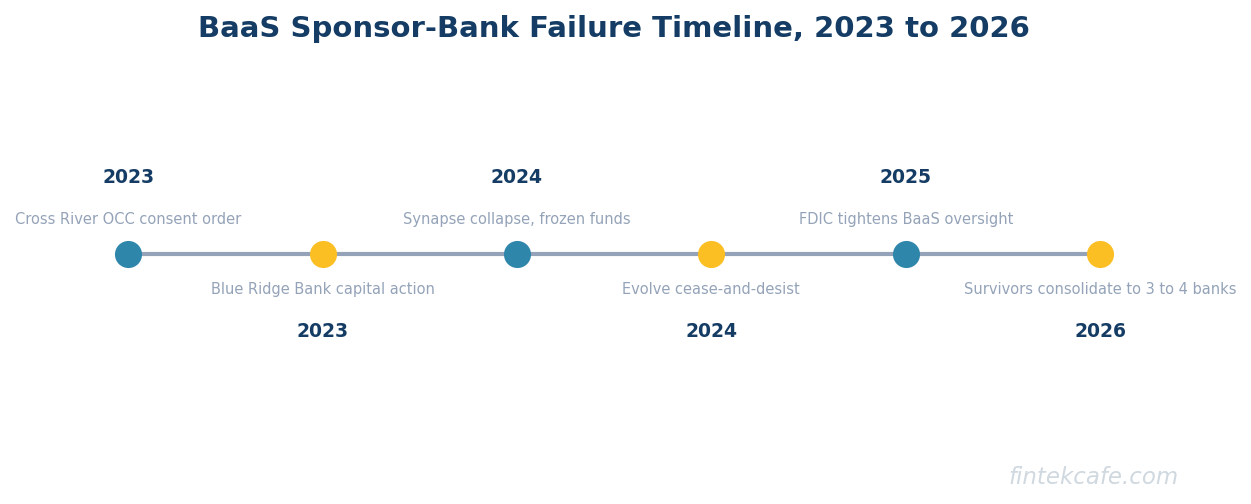
The Synapse failure in 2024 was the event that forced regulators to treat the structure as a category rather than a series of vendor-specific incidents. Customer funds at fintechs sitting on top of Synapse were unreachable for months. The shortfall between what Synapse's records showed and what partner banks held was reported in the range of sixty-five to ninety-five million USD, depending on which receiver filing was being read. The FDIC's resulting position was unambiguous: sponsor banks would be held responsible for the operational integrity of every fintech sitting in their stack, with no ability to outsource that responsibility to a middleware layer.
Evolve Bank received a consent order in 2024 that required, among other things, board-level approval for new fintech partnerships, dedicated compliance staff per partner, and direct contractual relationships with each end fintech rather than acceptance of intermediation through a BaaS provider. Cross River and Blue Ridge received earlier consent orders covering similar ground. The economic effect across the sponsor-bank layer was immediate. Banks that had partnered with thirty to fifty fintechs through middleware providers cut those numbers to under ten. The remaining partnerships repriced. Setup fees that had been forty to seventy-five thousand USD moved to a quarter to half a million USD with annual minimums attached. Per-account fees doubled or tripled.
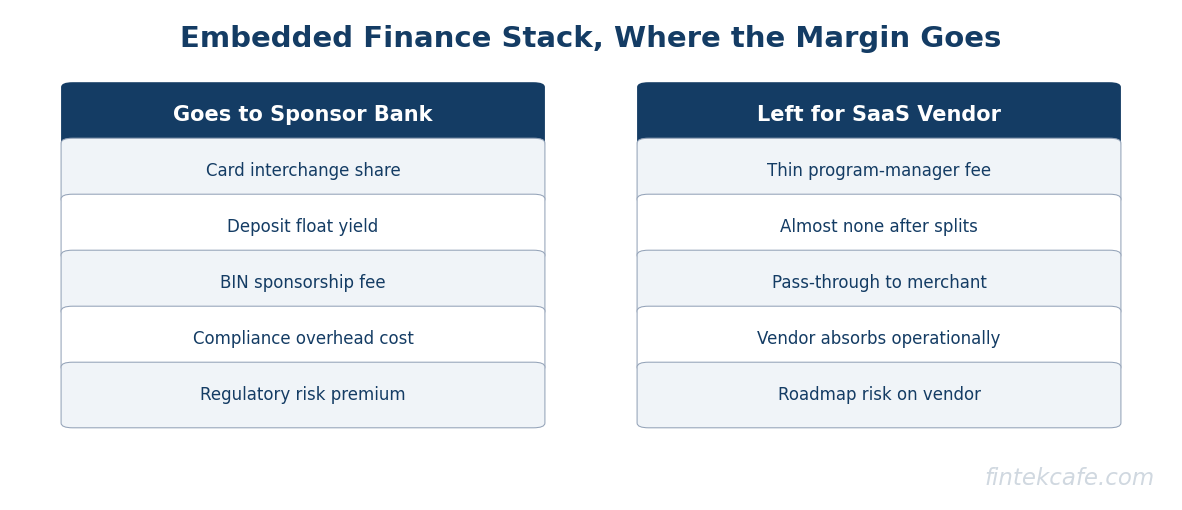
That repricing was the moment the embedded-finance unit economics broke for most B2B SaaS companies. The operative number had always been the interchange split. A typical embedded debit card program ran at roughly one hundred and twenty to one hundred and forty basis points of interchange on signature transactions, materially less on PIN-debit. The sponsor bank kept thirty to fifty percent of that. The middleware provider took another fifteen to twenty-five percent. The card network took a slice. The processor took a slice. Compliance and fraud cost something. What reached the SaaS vendor's contribution margin, after the post-Synapse repricing, was often under twenty basis points on transactions that the vendor's customers might also have been running through their existing banking relationship with no friction at all.
A B2B SaaS company with a forty-percent gross margin on its core software had to decide whether to bolt on a banking line that contributed twenty basis points of interchange and required a dedicated compliance function, ongoing audit costs, and direct exposure to regulatory action against its sponsor bank. Increasingly, the answer is no.
This is a Premium Article
Sign up for a Premium membership to read this article and get full access to strategic intelligence on technology and business.
Already a member? Sign in
Related Articles
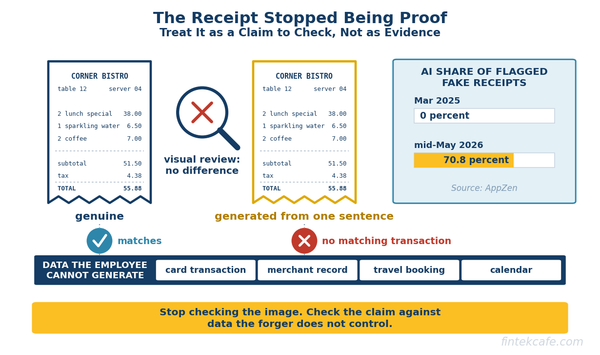
AI-Generated Fake Receipts: How Expense Fraud Changed and How Finance Teams Catch It
AI-generated fake receipts now beat visual review. How expense fraud changed, which detection still works, and the controls to use by company size.
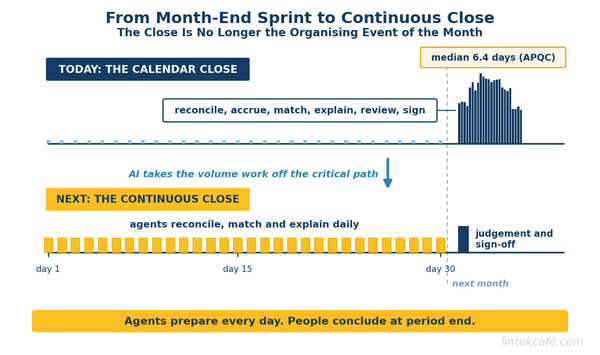
The Monthly Close Is Becoming Continuous, and the Finance Calendar Will Not Survive It
AI is taking the bottleneck work out of the month-end close. The close becomes continuous with a short sign-off, and finance, audit and the board change.
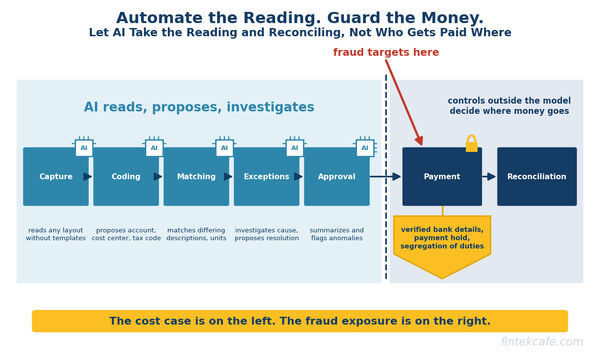
Accounts Payable Automation: What AI Can Actually Take Over in Invoice-to-Pay
What AI can take over in accounts payable, step by step from capture to payment, where the fraud risk grows, and which controls must stay outside the model.