
The AI Depreciation Question: How Long the Chips Really Last, and Who Pays When the Answer Changes
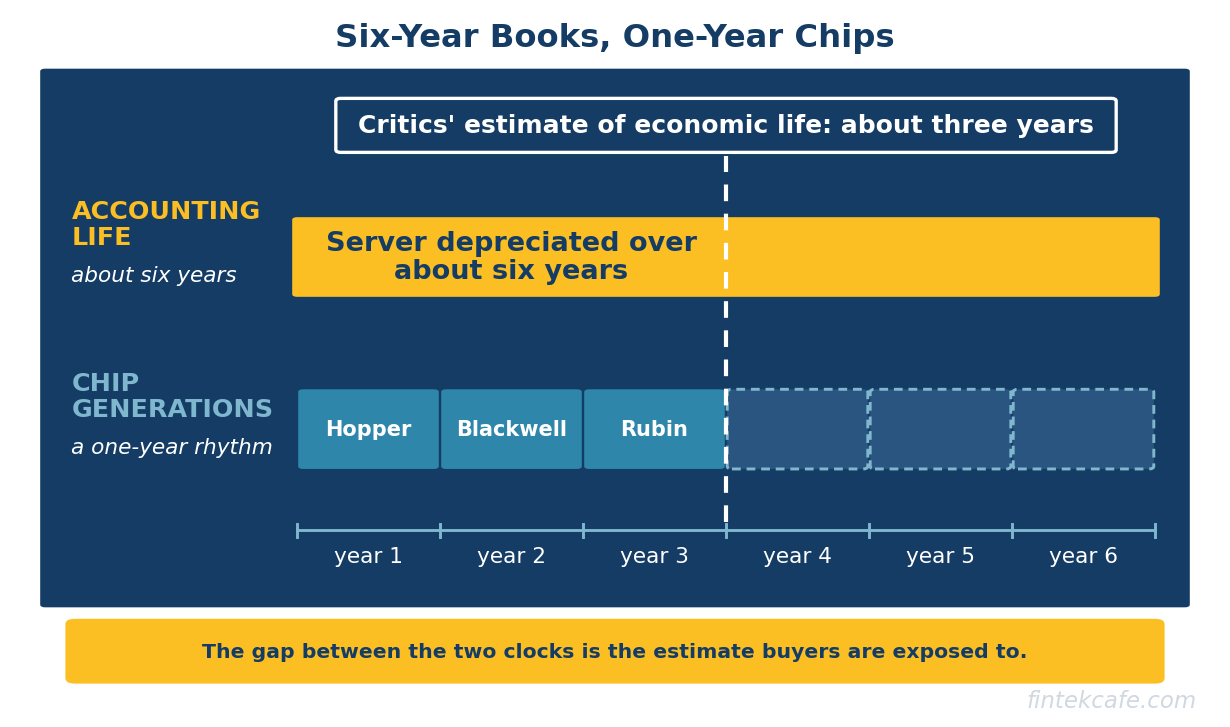
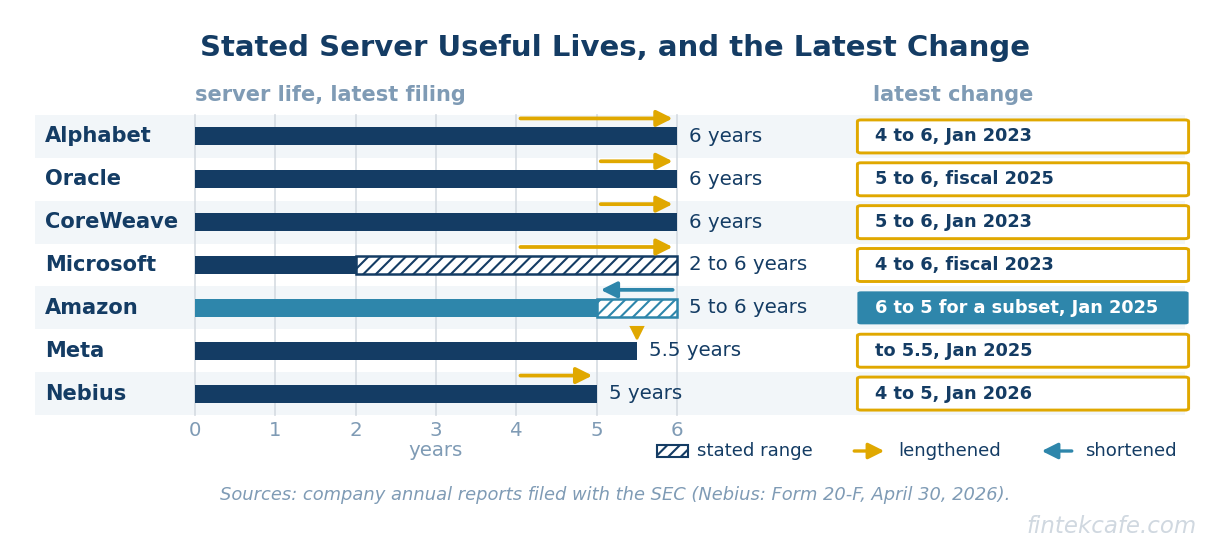
Alphabet depreciates its servers "generally over a period of six years" (Alphabet annual report for 2025). Oracle and CoreWeave use six years for their computing equipment, Microsoft up to six, Meta five and a half, and Amazon five to six. Nvidia, which makes most of the chips inside those servers, runs on a different clock: its chief executive, Jensen Huang, said in June 2024 that "our company has a one-year rhythm," and Nvidia began production shipments of its Vera Rubin systems in August 2026, two generations after the Hopper chips that many of those six-year schedules still carry.
That gap between a six-year accounting life and a one-year product cycle is the single most important estimate in the AI build-out. It decides how much of the spending shows up as cost each year, how profitable AI cloud businesses look, how much debt a GPU can secure, and how long today's prices for compute and models can hold. Most commentary treats it as a question for hyperscaler shareholders. It is also a question for every enterprise that buys AI capacity, because the estimate sits on the supplier's balance sheet and the consequences arrive in the customer's contract.
The argument here is not that a crash is coming. The estimate may be right; there is real evidence on both sides. The argument is that buyers should know the estimate, the range around it, and who bears the cost if it moves, and should write contracts that do not depend on it being right.
The Estimate That Decides the AI Build-Out
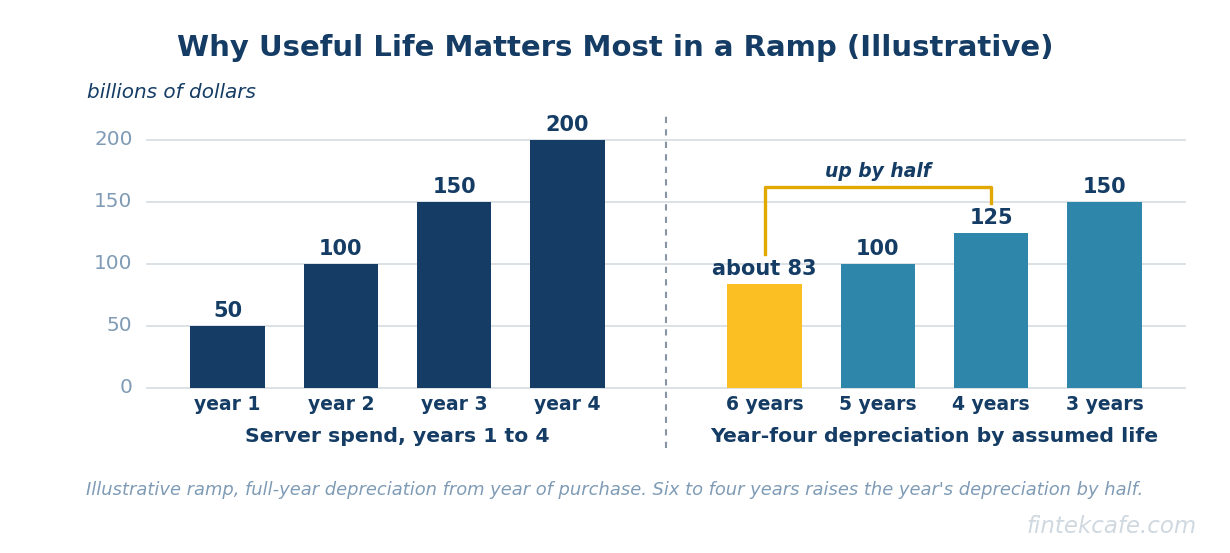
Depreciation spreads the cost of an asset over the years it is expected to earn. A server bought for 6 billion dollars and depreciated over six years puts 1 billion dollars a year on the income statement; over three years it would put 2 billion. Nothing about the cash changes. What changes is how much of the spending counts as cost in each year, and therefore how much profit is reported.
Useful life is a management estimate, and under US accounting rules a change in it is applied prospectively: it affects the current and future years, and earlier years are not restated. That makes it one of the few levers that moves reported earnings by billions without a single change to the business. Over the past four years the largest providers have pulled it, almost always in the direction of longer lives.
| Company | Current server life (latest filing) | Most recent change and stated effect |
|---|---|---|
| Microsoft | Two to six years for servers and network equipment | Extended from four to six years from fiscal 2023; added 3.7 billion dollars to operating income that year |
| Alphabet | Generally six years | Servers extended from four to six years in January 2023; expected about 3.4 billion dollars less depreciation in 2023 |
| Amazon | Five to six years | Extended to six years from January 2024; cut back to five for a subset of servers and networking from January 2025 |
| Meta | 5.5 years for most servers and network assets | Extended to 5.5 years from January 2025; cut 2025 depreciation by 2.92 billion dollars |
| Oracle | Six years | Extended from five to six years from fiscal 2025; cut operating expenses by 733 million dollars |
| CoreWeave | Six years for technology equipment | Extended from five to six years from January 2023 |
| Nebius | Five years | Extended from four to five years from January 2026; expected about 167.6 million dollars less depreciation in 2026 |
Sources: each company's annual report on Form 10-K (Nebius: Form 20-F, April 30, 2026), as filed with the SEC.
Amazon is the only large provider to have moved the other way, and its explanation is the clearest statement of the risk in any filing. In its annual report filed February 7, 2025, Amazon said it was shortening the life of a subset of its servers and networking equipment from six years to five, and booking accelerated depreciation for early retirements, and that "these two changes above are due to an increased pace of technology development, particularly in the area of artificial intelligence and machine learning." The 2025 cost was an increase in depreciation of 1.4 billion dollars and a reduction in net income of 1.0 billion, mostly in AWS (Amazon annual report for 2025). In their filings through the third quarter of 2026, none of the other large providers has followed, and the only 2026 change found among the providers above, at Nebius, lengthened lives.
For an enterprise buyer, the table is the starting point for one question: is the price being offered for AI capacity built on a six-year assumption about hardware whose technology turns over every year or two?
This is a Premium Article
Sign up for a Premium membership to read this article and get full access to strategic intelligence on technology and business.
Already a member? Sign in
Related Articles
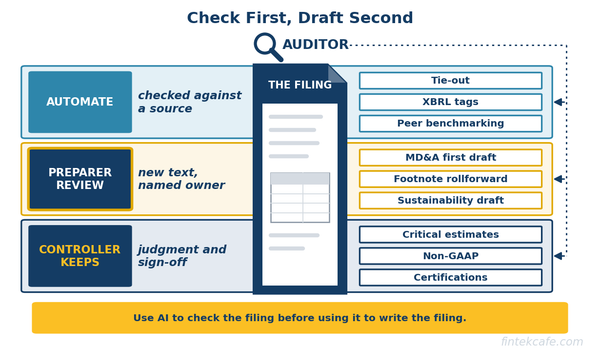
AI in Financial Reporting: What Controllers Can Automate in Filings and Disclosures, and What Auditors Will Ask
AI in financial reporting for controllers: what to automate in filings and disclosures, what needs review, and the questions auditors will ask about AI.
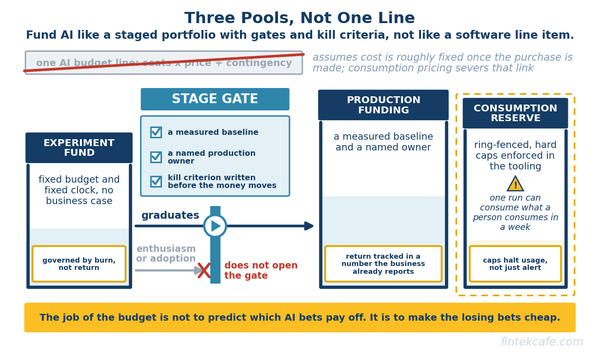
Budget Season for AI: How CFOs Should Fund Next Year's AI Without Funding Every Pilot
AI requests arrive from every function at once, priced in seats, consumption and services. Fund AI like a staged portfolio, not a software line item.
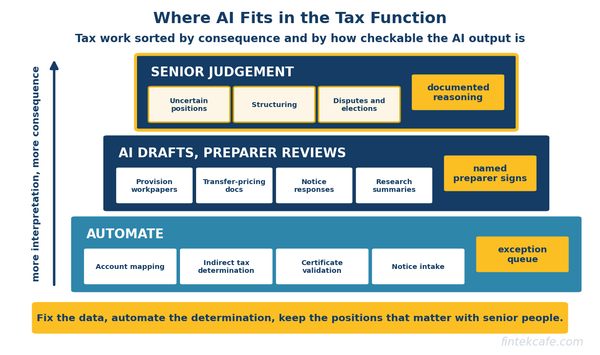
AI in the Tax Function: What Corporate Tax Teams Can Automate, and Where Judgement Stays
AI in corporate tax: what to automate, what needs preparer review, what stays with senior judgement, plus a data-readiness check for heads of tax and CFOs.