
Pricing AI Into a Deal: How Acquirers Should Value a Company When AI Can Rebuild Its Product
On February 3, 2026, the market repriced a whole category of companies in one session. In late January, Anthropic had released plug-ins for its Claude Cowork agent covering legal, sales, marketing and data analysis work. Over the next trading days, investors sold anything that looked like it charged for that work. RELX fell 14 percent, its largest drop since 1988. LegalZoom lost almost 20 percent, Wolters Kluwer about 13 percent and FactSet 10.5 percent, and Thomson Reuters, down nearly 18 percent during the session, was on track for its worst day on record (Reuters, February 3, 2026). The S&P 500 software and services index was down 26 percent from its October peak, with about 830 billion dollars of market value gone in six sessions (Reuters, February 5, 2026).
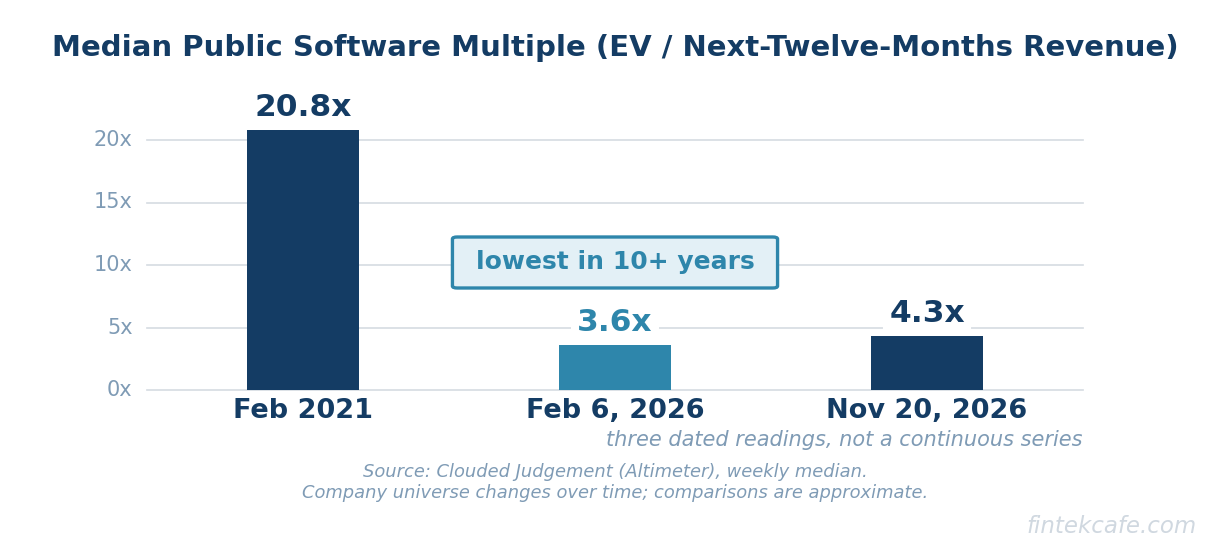
The private markets felt it more slowly and more expensively. The median public software company traded at 3.6 times next-twelve-months revenue on February 6, which Altimeter's Jamin Ball, who tracks the figure weekly in his Clouded Judgement newsletter, called "the lowest it's been in the last 10+ years." In February 2021 the same median was 20.8 times. On November 20, 2026, it stood at 4.3 times. Every private equity fund that bought software at 2021 prices, and every lender that financed those deals, now holds an asset whose exit multiple was reset by a question nobody modelled at entry.
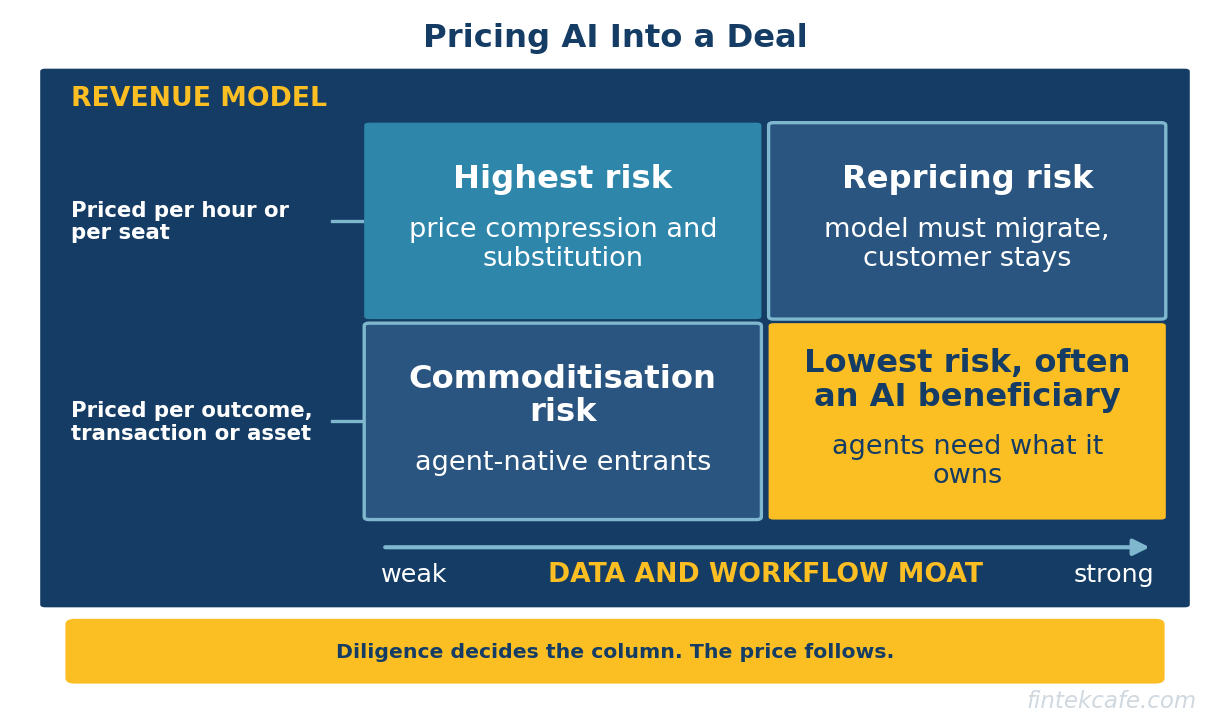
That question is now part of every deal: could AI make this company's product, workforce model or moat obsolete before the buyer exits? The argument here is that AI disruption risk belongs in diligence and in the price as explicitly as customer concentration or key-person risk. It should be a named line in the investment memo, sized with evidence and reflected in structure, not a paragraph of reassurance in the market section. The targets most exposed are the ones that sell labour by the hour or software by the seat for tasks an agent can now do. The targets AI makes more valuable are the ones that own the data, the system of record or the control point that agents need. Most targets have some of both, which is why the work is in the diligence and not in the headline.
AI Risk Is Already in the Price, Just Not in the Model
Buyers have moved faster in what they say than in how they model. The commentary from the largest investors is unambiguous.
PitchBook's February 17, 2026 analyst note on private equity's software exposure concluded that "AI disruption risk is clearly the primary driver of the recent reset." Software has been about 14 percent of US private equity deal value over the past decade and about 18 percent in 2025, so this is not a niche problem for the asset class. Jon Gray, Blackstone's president, said on February 3 that AI disruption was "top of the page" and asked "What's going to happen to all sorts of rules-based businesses?" (Reuters). David Sambur, co-head of private equity at Apollo, wrote on April 5 that the firm had "maintained zero exposure to growth software in our last two private equity vintages," and that "the old assumption that seats, annual recurring revenue and multiples would expand predictably is being challenged." Bain's midyear M&A report in June put it as a rule: "Every deal thesis should answer how AI will impact the target's business model."
Deals have already moved on the question. In February, Apax walked away from a possible offer of about 575 million pounds for Pinewood Technologies, a UK automotive software company, citing "prevailing challenging market conditions" days after the sell-off; Pinewood's shares fell nearly 30 percent (UK press coverage, February 13 to 16, 2026). The credit side has repriced too. Business development companies have lent about 115 billion dollars to software firms, "about a fifth of all their lending" (Bank for International Settlements Bulletin 128, July 14, 2026). Houlihan Lokey data cited by Reuters in September showed business development companies had written down 81 percent of their software loans during 2026, against 40 percent of loans outside software.
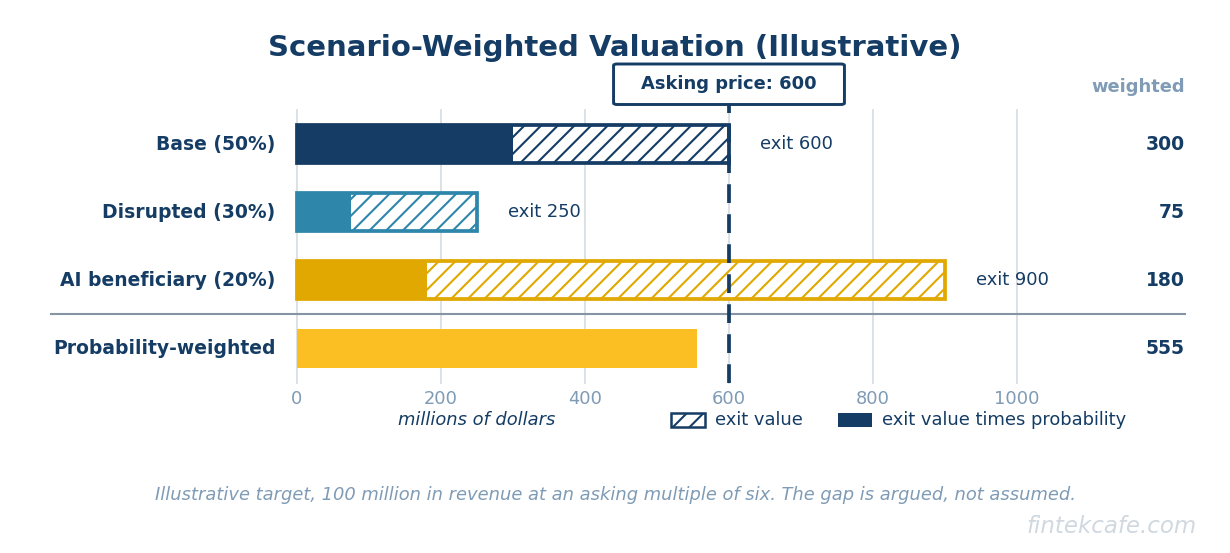
So the risk is in the price. The problem is that it arrives as a blunt discount to the whole category, applied after the fact by public markets and lenders, rather than as a specific estimate made by the buyer before signing. A blunt discount overcharges the company whose moat is real and undercharges the company whose revenue is about to compress. That spread is where acquirers either lose money or make it. The rest of this piece is about narrowing it.
This is a Premium Article
Sign up for a Premium membership to read this article and get full access to strategic intelligence on technology and business.
Already a member? Sign in
Related Articles
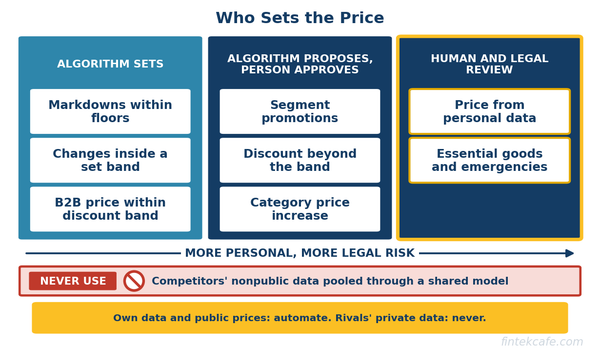
AI in Pricing: What Dynamic and Agent-Driven Pricing Can Decide, and Where It Creates Legal Risk
AI pricing for executives: what dynamic and agent-driven pricing can decide alone, where it creates legal risk, and which data must never feed it.
The AI Depreciation Question: How Long the Chips Really Last, and Who Pays When the Answer Changes
Hyperscalers depreciate AI servers over five to six years while chips turn over yearly. Why that estimate sets your cloud prices and supplier risk.
AI in Financial Reporting: What Controllers Can Automate in Filings and Disclosures, and What Auditors Will Ask
AI in financial reporting for controllers: what to automate in filings and disclosures, what needs review, and the questions auditors will ask about AI.