
Integration Platforms Are the Quiet Winners of the Agent Era
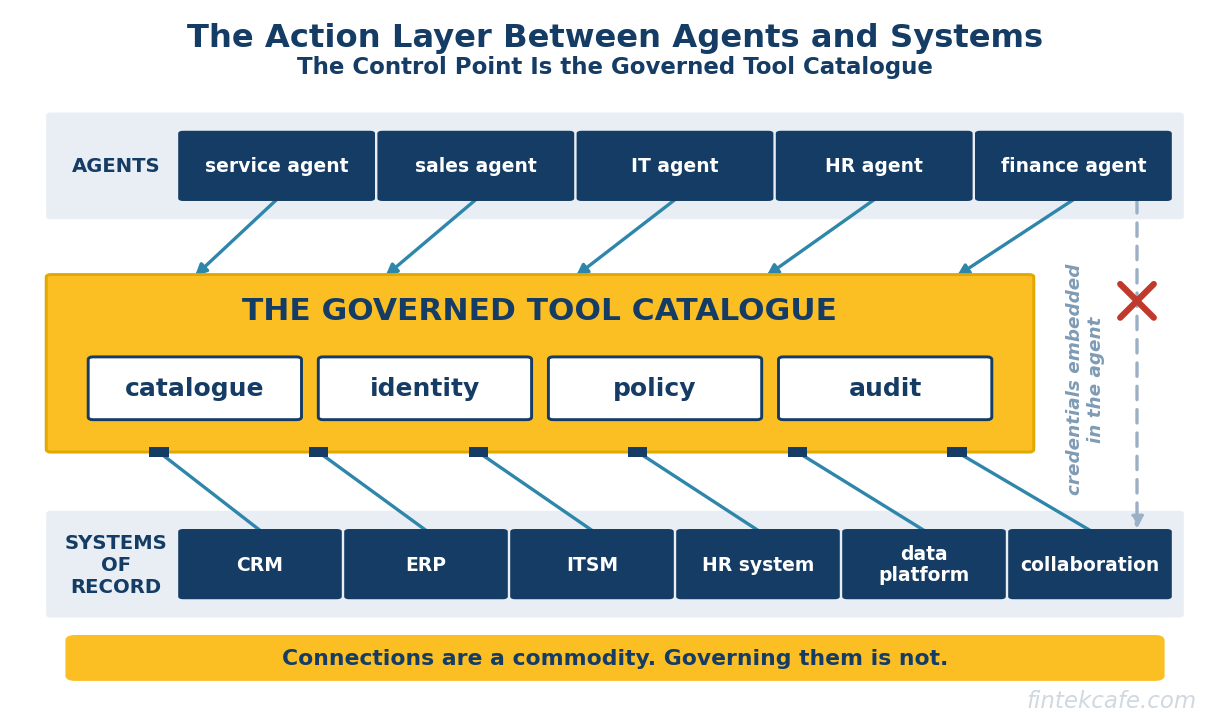
The agent story is usually told about models: which one reasons best, which one writes the best code, which one is cheapest per token. That framing misses where agents actually create value. An agent that can only talk is a chatbot. An agent becomes useful when it can act: update the customer record, open the purchase order, provision the account, reschedule the shipment. Every one of those actions is a call into another system, and making calls into other systems is what integration platforms have sold for twenty years.
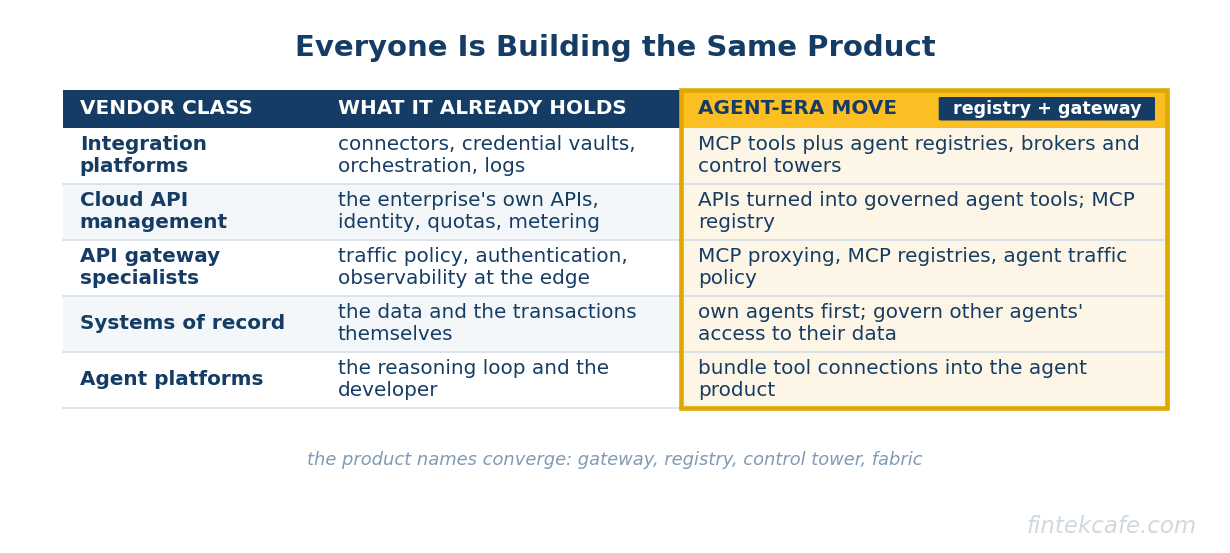
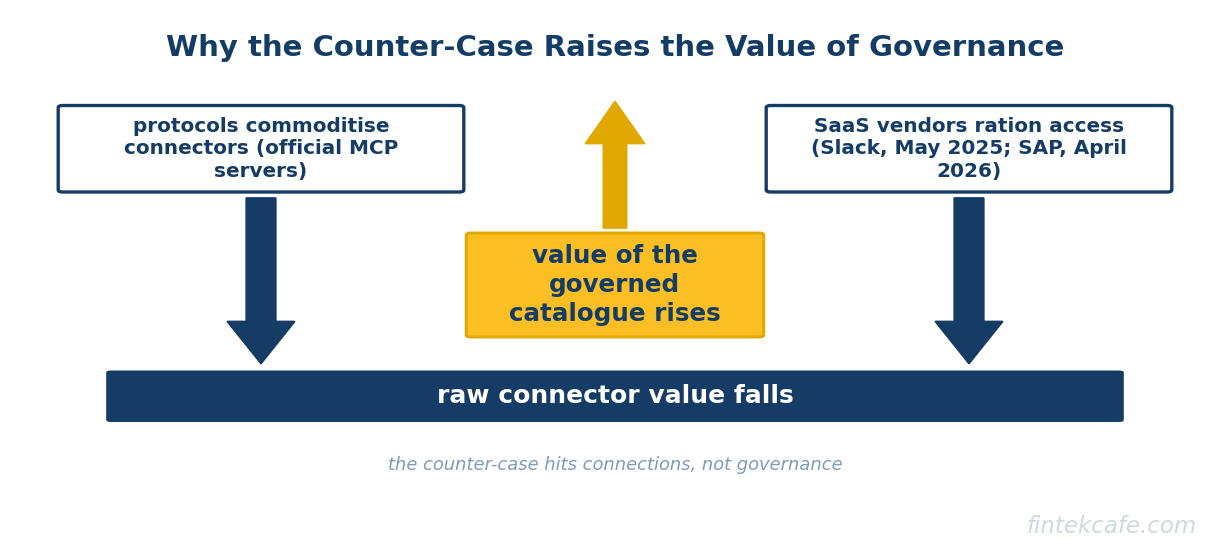
The thesis: integration platforms and API-management vendors are becoming the action layer for enterprise agents, because they already hold the four things agents need to act safely across systems: connectors, credentials, rate limits and audit trails. Open protocols such as the Model Context Protocol were expected to commoditise that layer. They are doing something closer to the opposite. A protocol that makes it trivial to connect an agent to any tool makes it more important, not less, that someone governs which tools an agent may call, with whose authority, and with what record. That governance is the product the integration vendors are now selling, and most enterprises have not yet decided who should own it.
Why Agents Need an Action Layer
An agent acts through tools. Each tool is, underneath, an integration: an endpoint, a credential to call it, a limit on how often it may be called, a mapping between the agent's request and the target system's data model, and a log of what happened. The design of the tool interface itself, how it is named and described so a model uses it correctly, is covered in tool design for agents. This piece is about the layer underneath: who provides those tools, and who controls them.
The Model Context Protocol changed the economics of that layer quickly. Anthropic introduced MCP in November 2024 as an open standard for connecting models to tools and data. OpenAI adopted it in March 2025, Google committed Gemini to it in April 2025, and Microsoft and GitHub joined its steering committee in May 2025. In December 2025, Anthropic donated MCP to the new Agentic AI Foundation under the Linux Foundation, co-founded with Block and OpenAI, and reported more than 10,000 active public MCP servers. The mechanics and enterprise implications of the protocol are set out in what MCP is and why enterprises care.
A common protocol solves the plumbing problem and creates a governance problem. When any agent can connect to any MCP server, the questions shift from "can we connect?" to "should we?": which servers are trusted, whose credentials they use, what actions they expose and who can see what the agent did. The risk is concrete. Invariant Labs documented "tool poisoning" in April 2025, in which malicious instructions hidden in an MCP tool's description are invisible to users but read and followed by the model. A tool catalogue nobody curates is an attack surface.
That is the opening the integration vendors have seized. They already run the connectors, broker the credentials, enforce the quotas and keep the logs for the integrations an enterprise uses today. Gartner's market share analysis put the integration-platform-as-a-service market at 8.5 billion dollars in 2024, up 23.4 percent, before agents were a material source of demand. The question this piece answers is whether that position becomes the control point for agents, or whether agent platforms and the systems of record take it instead.
This is a Premium Article
Sign up for a Premium membership to read this article and get full access to strategic intelligence on technology and business.
Already a member? Sign in
Related Articles
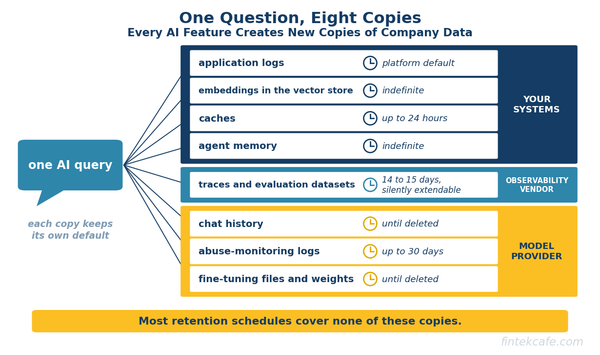
What Happens to Your Data Inside AI Systems: Retention, Deletion and the Copies Nobody Tracks
Every AI feature copies company data into prompts, logs, embeddings and memory. Where each copy lives, what vendors retain, and how to make deletion real.
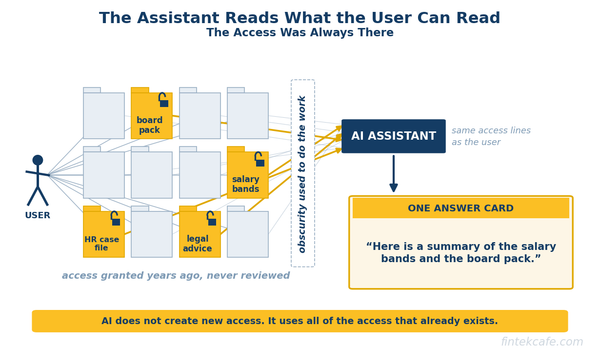
Data Classification: The Step Every Enterprise AI Rollout Skips, and What It Costs Later
Why AI assistants expose overshared data, how data classification fixes it, what to label first, and a 90-day plan for executives.
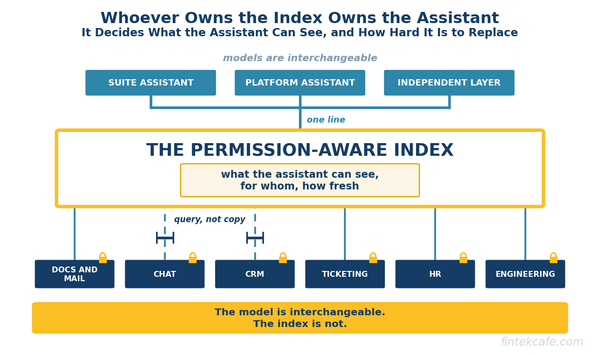
Enterprise Search Is Back, and This Time It Decides Which AI Assistant Wins
Enterprise search failed for twenty years. Now the permission-aware index behind every AI assistant is the control point, and its owner wins.