
The Year-Two Copilot Audit: Why Enterprises Are Cutting AI Seat Licences, and Who Should Keep Them
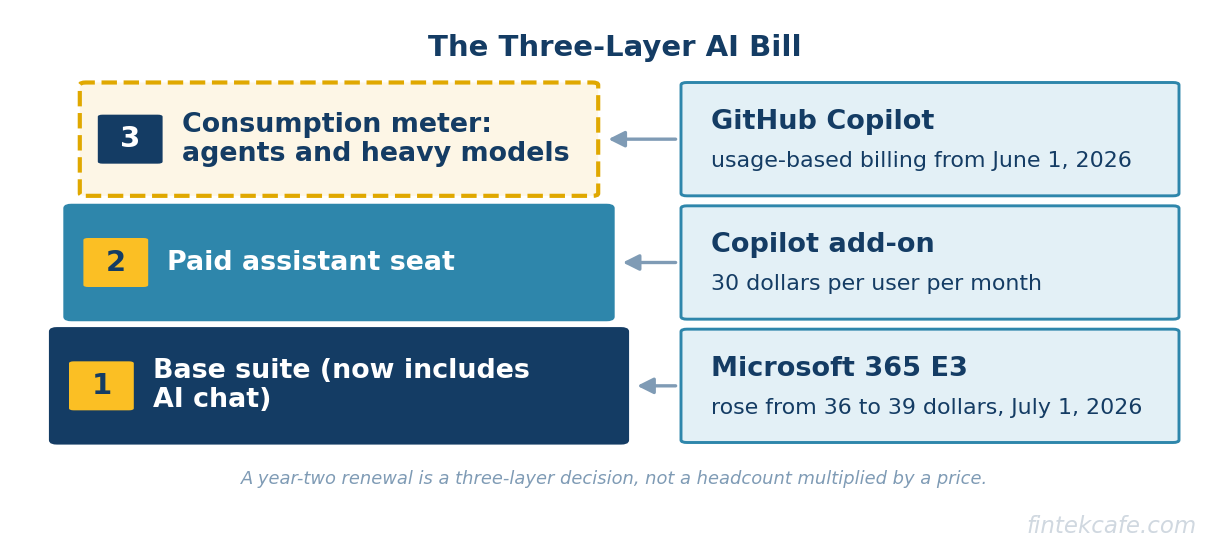
Microsoft 365 Copilot still lists at 30 dollars per user per month on an annual commitment (Microsoft enterprise pricing page, November 2026). A company that bought 5,000 seats is paying 1.8 million dollars a year for them, before any of the new consumption meters. Many of those contracts were signed in the first big wave of AI assistant buying and are now at, or close to, their first renewal. The same is true for Google's Gemini in Workspace, GitHub Copilot, ChatGPT Enterprise and the AI tiers inside sales, service and HR software.
At renewal, the buyer has something it did not have at signing: a year of telemetry showing who actually uses the tool.
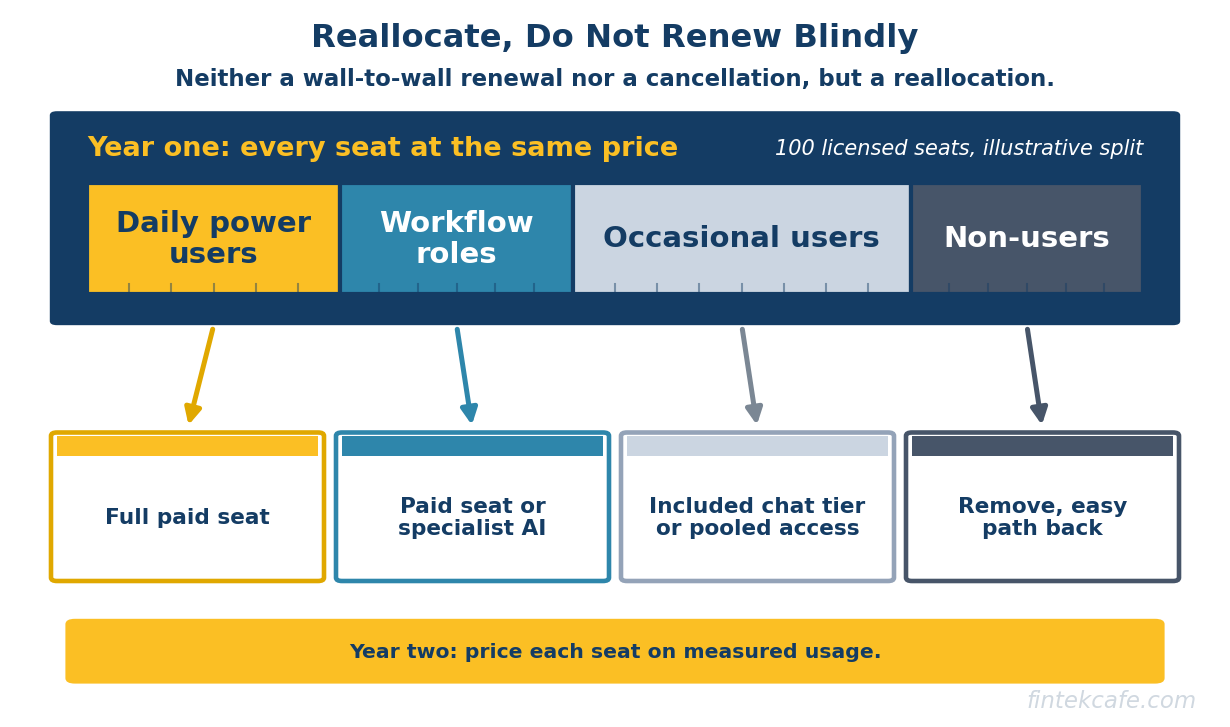
The thesis of this piece: the usage data at renewal will show a split workforce, and the right response is neither a wall-to-wall renewal nor a cancellation, but a reallocation. Keep paid seats for the measured daily users and for roles where a specific workflow has been shown to improve. Move occasional users to the AI already bundled into the base suite, or to pooled and metered access. Then negotiate on the evidence, not the vendor's adoption deck.
Executives get this decision wrong in two directions. Some renew everything because cutting seats looks like admitting the AI bet failed. Others cancel everything because the productivity case never closed, and lose the users who were getting real value. Both mistakes come from treating "the AI licence" as one purchase. It is really several, and they should be priced differently.
The Renewal Data Will Not Support a Wall-to-Wall Renewal
The best public evidence on how employees use AI assistants comes from government trials, because governments publish their results whether or not they are flattering. They show the same pattern: a committed group of daily users, a larger group of occasional users, and a long tail who barely use the tool.
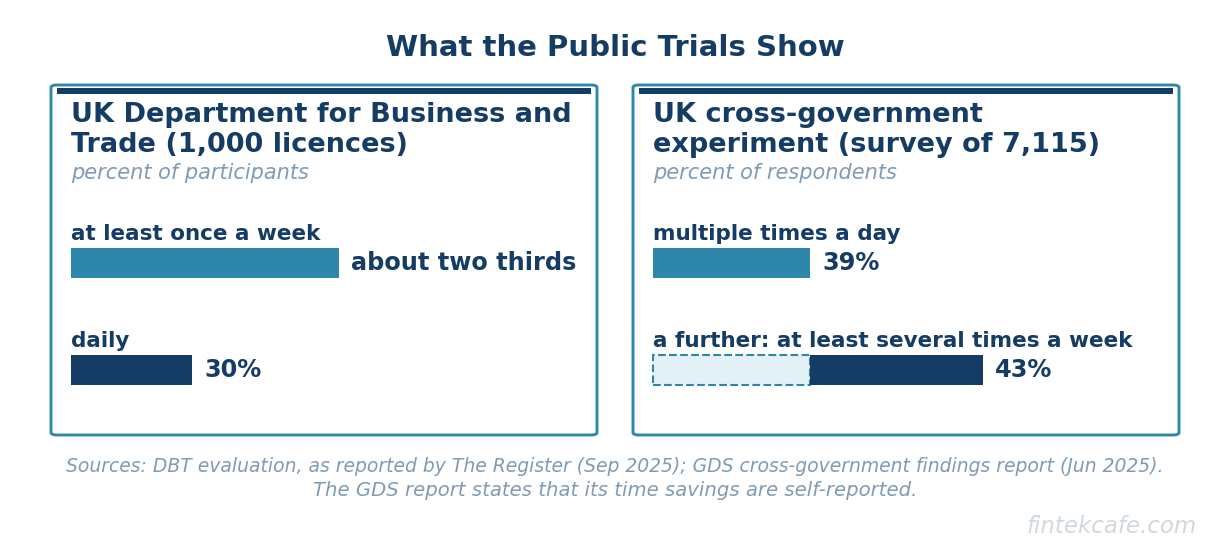
The UK Department for Business and Trade gave out 1,000 Microsoft 365 Copilot licences from October to December 2024. According to the department's evaluation, as reported by The Register on September 4, 2025, about two thirds of participants used the tool at least once a week, but only 30 percent used it daily. The most common tasks were summarising meetings, drafting emails and summarising written messages. On its central question, the evaluation said: "We did not find robust evidence to suggest that time savings are leading to improved productivity."
The larger cross-government experiment run by the UK Government Digital Service covered 20,000 employees in 12 organisations from September 30 to December 31, 2024. In its survey of 7,115 respondents, 39 percent said they used Copilot multiple times a day and a further 43 percent at least several times a week. Participants reported saving an average of 26 minutes a day. The report states plainly that these savings are self-reported (GDS, Microsoft 365 Copilot Experiment: Cross-Government Findings Report, June 2025).
Put the two findings together and the shape is clear. Somewhere between a third and two fifths of licence holders are heavy users. Most of the rest open the tool a few times a week, mainly for meeting summaries. Low weekly usage is not the same as low value, but a 30 dollar seat used mainly to summarise a weekly meeting is hard to justify at list price.
In year one, the purchase was a bet on adoption. In year two, adoption has been measured. Microsoft 365, Google Workspace and GitHub all give administrators usage reports. A renewal that ignores that data gives the vendor the benefit of every doubt the buyer is now able to settle.
The question is no longer "is AI worth it?" It is "for which seats, at what price, and on what meter?"
This is a Premium Article
Sign up for a Premium membership to read this article and get full access to strategic intelligence on technology and business.
Already a member? Sign in
Related Articles
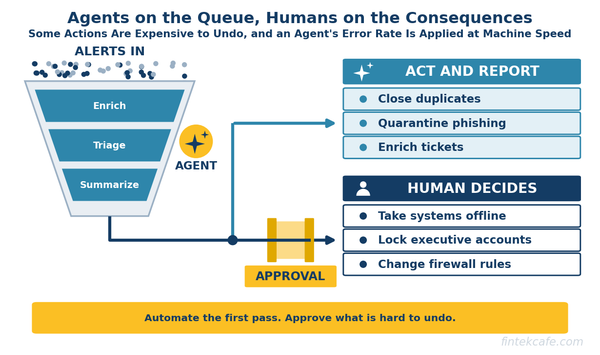
AI in the Security Operations Center: What SOC Agents Can Take Over, and What Analysts Must Keep
AI SOC agents explained for CISOs: which security tasks to automate, which to keep human, the new attack surface, and how to measure an agentic SOC.
The Data Platforms Want to Run Your Agents, and That Is a Lock-In Decision Disguised as Convenience
Snowflake, Databricks and the hyperscalers want to host your agents. Keep data controls there; keep the agent runtime separable. A layer-by-layer guide.
RPA vs AI Agents: Which Automation Fits Which Process, and When to Use Both
RPA vs AI agents for enterprise automation: where bots still win, where agents earn their cost, the hybrid pattern, and how to triage a bot portfolio.