
The Stablecoin Endgame: Why Banks Are Quietly Building What They Said Was a Threat

For five years, the official position of every major bank on stablecoins was the same. Reckless. Unregulated. A systemic risk to monetary sovereignty. Bank chief executives gave Congressional testimony warning about the dangers. Industry associations published white papers calling for restrictions. Risk committees added stablecoin exposure to their watch lists.
Meanwhile, those same banks were quietly building stablecoins.
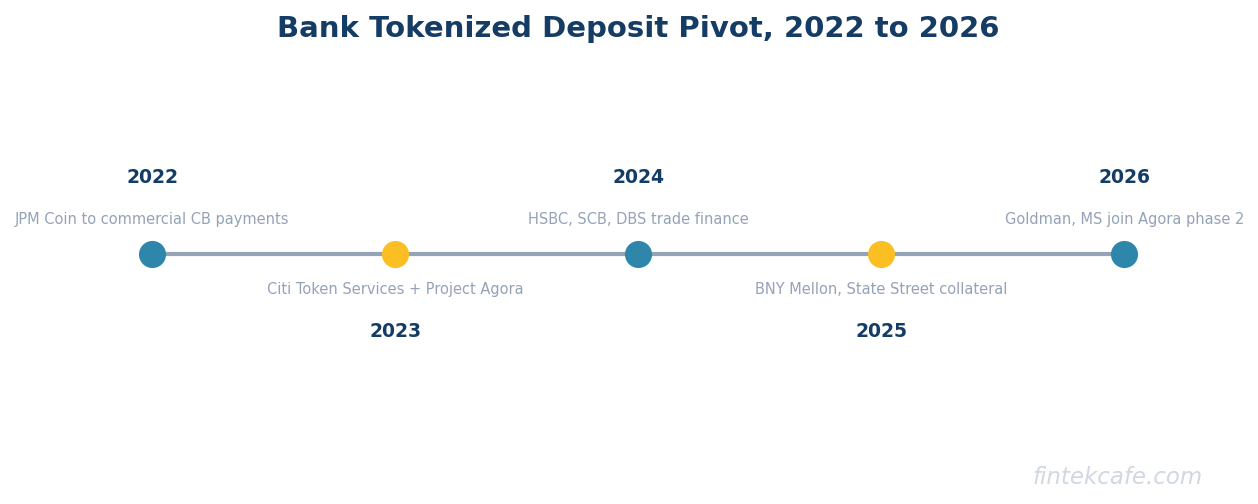
JPMorgan now settles tens of billions of dollars per day through JPM Coin. Citi has launched Citi Token Services across multiple jurisdictions. The Bank for International Settlements coordinates Project Agora, a wholesale settlement experiment involving seven central banks and a syndicate of major commercial banks. The European Union's Markets in Crypto-Assets regulation, which industry coverage framed as a stablecoin clampdown, contains provisions for tokenized deposits that banks have spent two years quietly preparing to exploit.
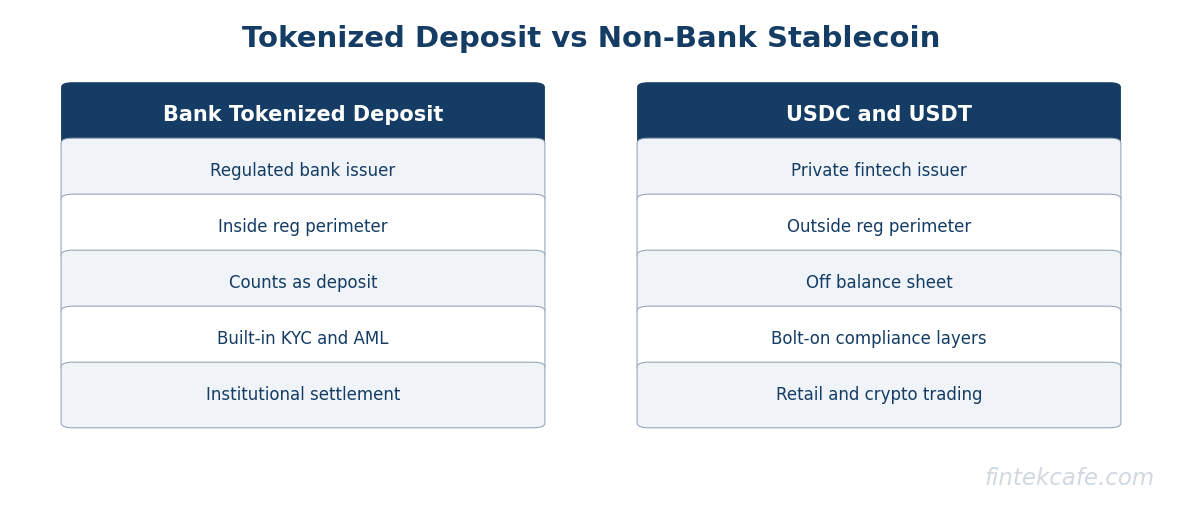
The standard narrative is that stablecoins threaten banks. The actual story is the opposite. Banks did not lose the stablecoin debate. They won it by changing what stablecoins are.
The Disintermediation Threat That Was Real
The first wave of stablecoins (Tether's USDT in 2014, Circle's USDC in 2018) emerged as crypto market plumbing. They existed to solve a narrow problem: traders needed dollar-denominated value inside crypto exchanges without the friction of repeatedly moving fiat through banking rails. The product worked. By the end of 2024, the combined stablecoin float exceeded one hundred sixty billion dollars.
For most of that decade, banks treated stablecoins as a curiosity confined to crypto. The disintermediation risk was theoretical. If stablecoins stayed inside crypto exchanges, they were not competing with bank deposits.
The risk became concrete around 2022. Three things happened in rapid succession. First, stablecoin issuers began earning meaningful yield on their reserves as interest rates rose, which created a structural cost advantage over zero-yield deposit accounts. Second, fintech companies started routing payments through stablecoin rails instead of correspondent banking, which demonstrated that the rails could carry more than crypto trading. Third, regulators in multiple jurisdictions began signaling that stablecoins were likely to be permitted under specific frameworks rather than banned.
The combination changed the math. A regulated stablecoin issuer, earning four to five percent on reserves, with a payment use case beyond crypto, was no longer a curiosity. It was a parallel monetary system capturing float that previously belonged to bank deposits.
Internal research at the largest banks during 2022 and 2023 reached a conclusion that has not been publicly stated but has been widely reported in industry coverage. If stablecoin issuance was going to happen, banks needed to be the issuers. Otherwise, they would lose the deposit base that funds their lending.
This is a Premium Article
Sign up for a Premium membership to read this article and get full access to strategic intelligence on technology and business.
Already a member? Sign in
Related Articles
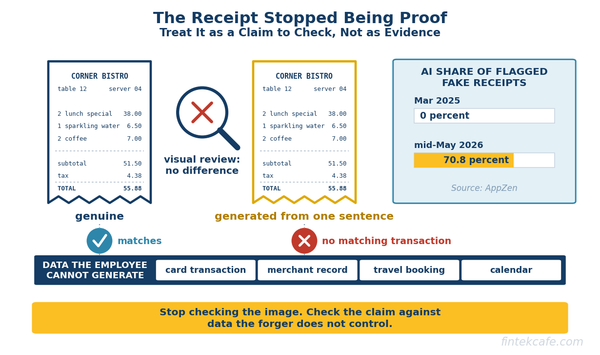
AI-Generated Fake Receipts: How Expense Fraud Changed and How Finance Teams Catch It
AI-generated fake receipts now beat visual review. How expense fraud changed, which detection still works, and the controls to use by company size.

The Monthly Close Is Becoming Continuous, and the Finance Calendar Will Not Survive It
AI is taking the bottleneck work out of the month-end close. The close becomes continuous with a short sign-off, and finance, audit and the board change.
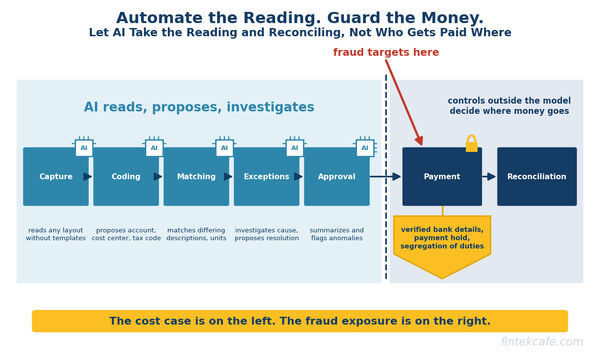
Accounts Payable Automation: What AI Can Actually Take Over in Invoice-to-Pay
What AI can take over in accounts payable, step by step from capture to payment, where the fraud risk grows, and which controls must stay outside the model.