
The CFO Now Owns the AI Business Case, and Most Finance Teams Cannot Measure the Return
AI spending has left the IT budget. It now sits in customer service, sales, HR, engineering, procurement and finance itself, usually as a mix of licences, consumption charges and the people needed to run it. As the spend spreads, the board's question has become simple: what does it return? The question lands on the CFO, and at most companies the honest answer is that nobody can say.
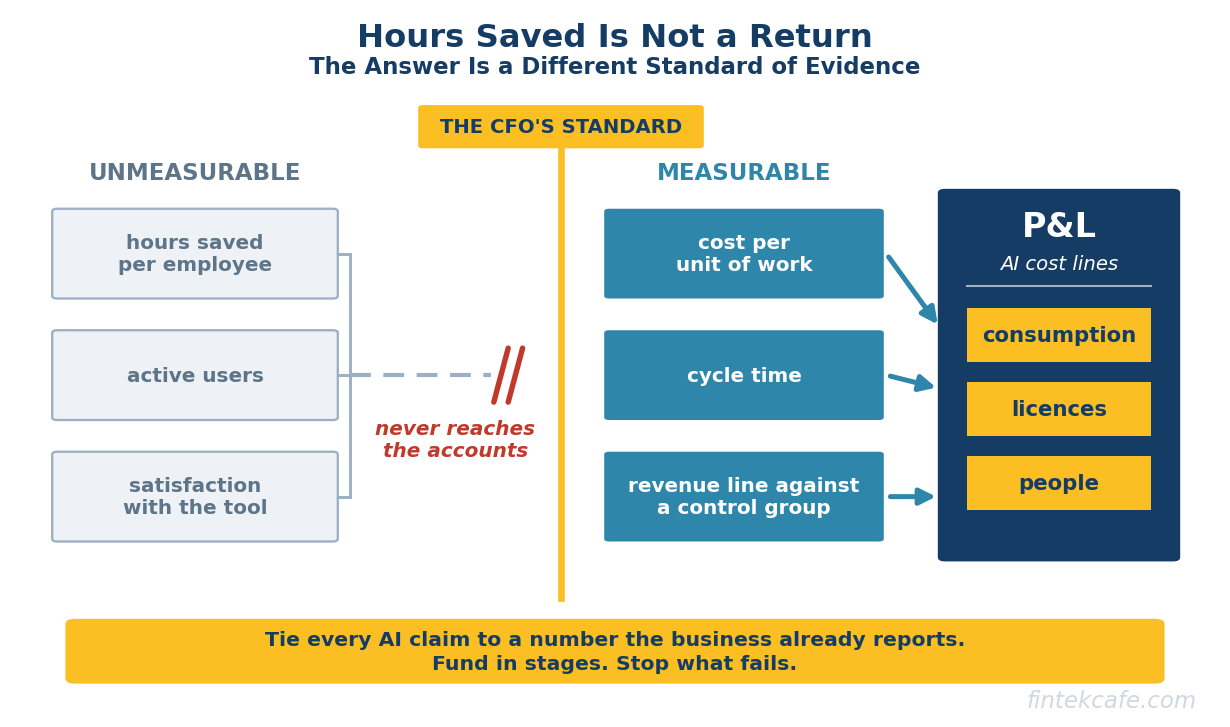
The thesis of this piece: AI return is unmeasurable when it is claimed as hours saved, and measurable when it is tied to a unit cost, a cycle time or a revenue line that the business already reports. The difference is not a matter of better dashboards. It is a standard the CFO has to set, across every function, before the next budget cycle, and then enforce by funding against it and stopping what fails it.
This is a finance job because no other function is placed to do it. Business units have every incentive to report adoption as value. Technology teams measure usage and uptime. Only finance owns the numbers that the business already trusts, and only finance can insist that an AI claim show up in them.
The Evidence: Adoption Is High, Measured Value Is Not
The gap between AI use and AI return is now well documented, and the most rigorous sources agree.
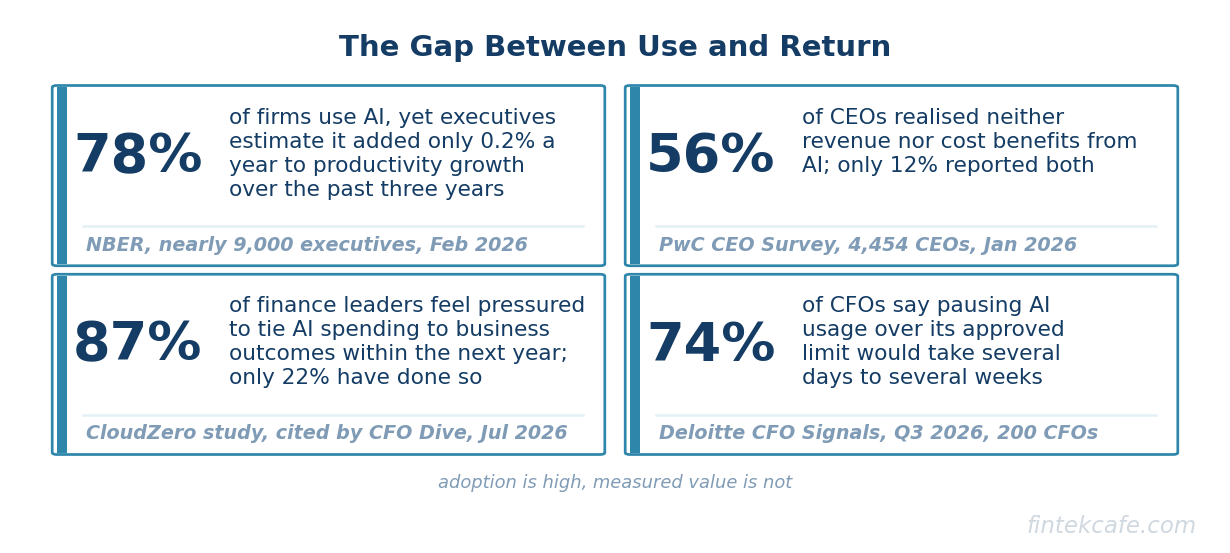
The largest firm survey finds little measured effect so far. A National Bureau of Economic Research working paper, "Firm Data on AI," surveyed nearly 9,000 CFOs, chief executives and senior executives in the United States, the United Kingdom, Germany, Australia, Canada, Mexico and South Africa. It found that 78 percent of firms use AI, but executives estimate AI raised annual labour productivity growth by only 0.2 percent over the past three years, and that AI "has had essentially no net effect on firm employment." They expect a larger 0.6 percent annual boost over the next three years (NBER Working Paper 34836, February 2026, revised October 2026).
Most chief executives report no financial benefit. PwC's 29th Global CEO Survey of 4,454 chief executives in 95 countries and territories, released in January 2026, found that 56 percent had realised neither revenue nor cost benefits from AI. Only 12 percent reported both (PwC 29th Global CEO Survey, January 2026).
Finance leaders feel the pressure and mostly cannot meet it. A Gartner survey of more than 200 finance executives, conducted in February and March 2026, found that 45 percent said their finance AI investments are aimed primarily at productivity, against 20 percent aimed at decision quality, and the decision-quality investments were nearly twice as likely to deliver significant value (31 percent against 17 percent). Gartner's Shankar Keshav warned of "a perception gap, where finance leaders report progress on AI adoption, but boards see limited strategic impact." The same report cites a study by CloudZero, which sells AI cost and return tooling: 87 percent of finance leaders feel pressured to tie AI spending to business outcomes within the next year, but only 22 percent have done so (CFO Dive, July 21, 2026).
The cost side is not under control either. Deloitte's CFO Signals survey for the third quarter of 2026, covering 200 North American CFOs at companies with at least 1 billion dollars in revenue, found that nearly 80 percent say finance has a formal role in AI decisions. Yet 53 percent say their primary practice is to review AI usage costs retrospectively, through bills and reports, rather than in real time, 38 percent cite limited timely insight into token usage and unit costs, and 74 percent say it would take several business days to several weeks to pause AI usage that exceeded its approved limit (Deloitte CFO Signals, Q3 2026).
Put those findings together and the position of a typical CFO is clear. Finance has been given authority over AI decisions. The benefits are reported as adoption or as time saved, which the P&L does not show. The costs are seen weeks late and are hard to stop. And the board has started to ask for a number.
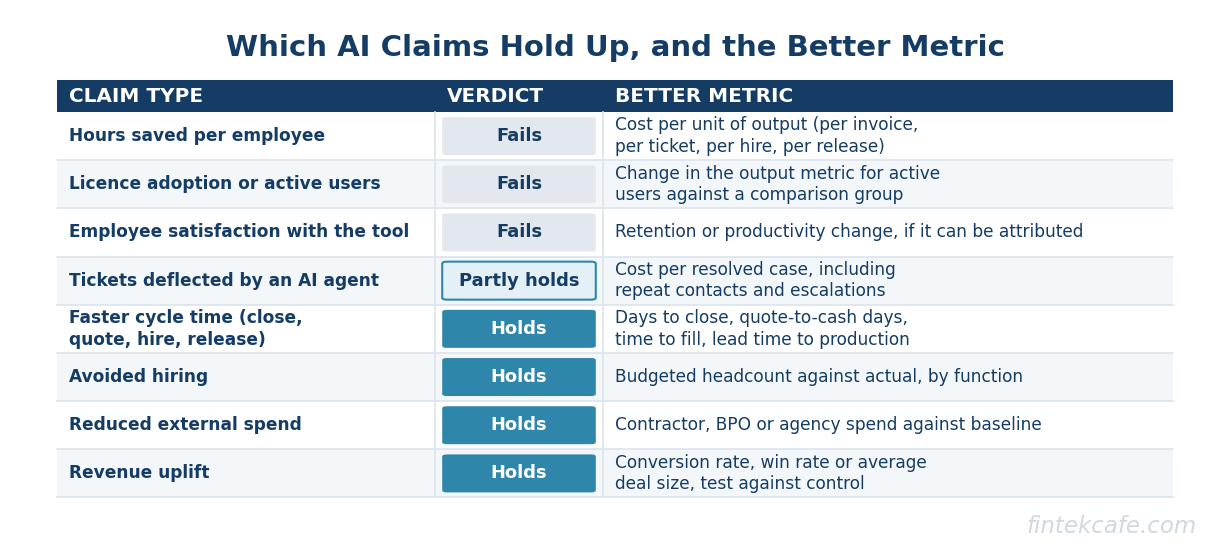
The answer is not a better estimate of hours saved. It is a different standard of evidence. The rest of this piece sets out why time-saved metrics fail, which measurement designs hold up, how AI costs belong in the P&L, and an operating model for funding, measuring and stopping AI initiatives.
This is a Premium Article
Sign up for a Premium membership to read this article and get full access to strategic intelligence on technology and business.
Already a member? Sign in
Related Articles
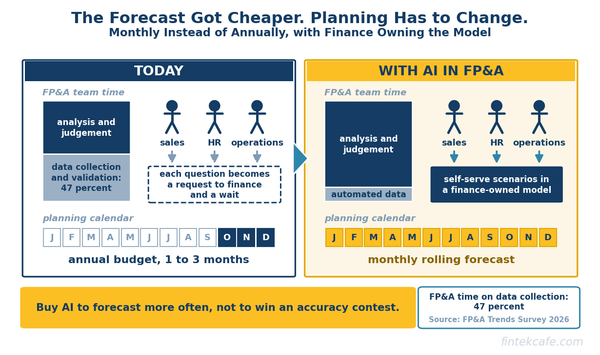
AI in FP&A: What Forecasting and Planning AI Actually Changes for the Finance Team
What AI in FP&A changes: where forecasting and planning AI works, where it fails, the controls the board needs, and a maturity path for the finance team.
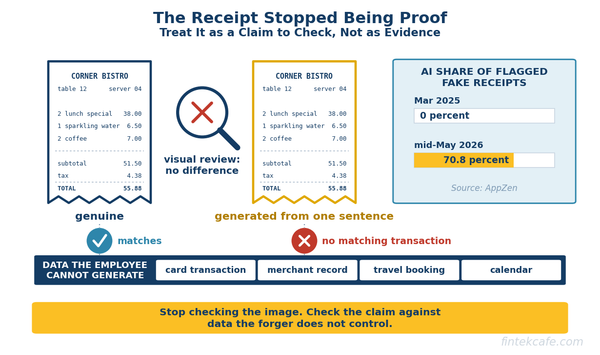
AI-Generated Fake Receipts: How Expense Fraud Changed and How Finance Teams Catch It
AI-generated fake receipts now beat visual review. How expense fraud changed, which detection still works, and the controls to use by company size.
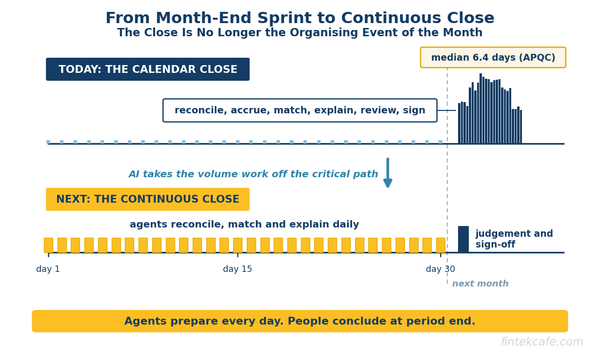
The Monthly Close Is Becoming Continuous, and the Finance Calendar Will Not Survive It
AI is taking the bottleneck work out of the month-end close. The close becomes continuous with a short sign-off, and finance, audit and the board change.