
AI Coding Assistants Hit the Productivity Wall: What the Data Actually Shows
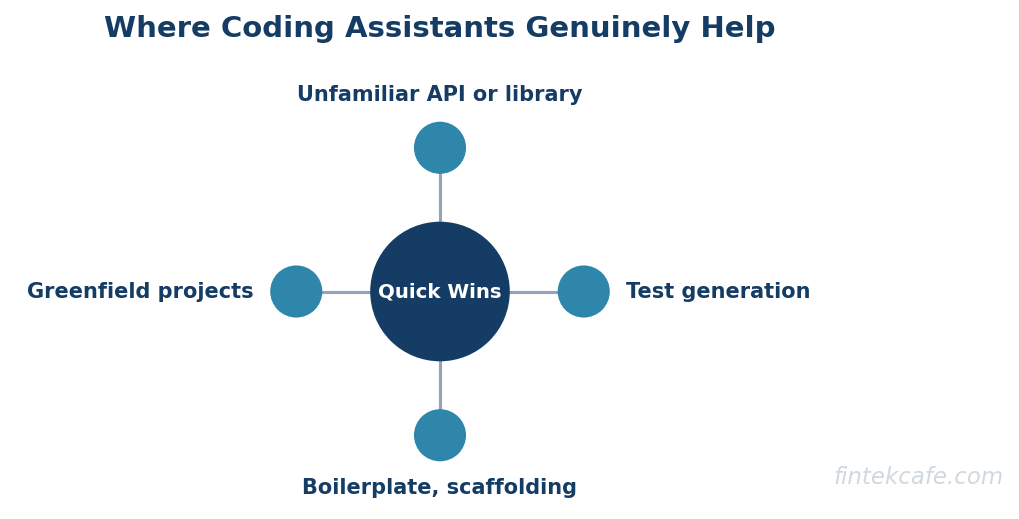
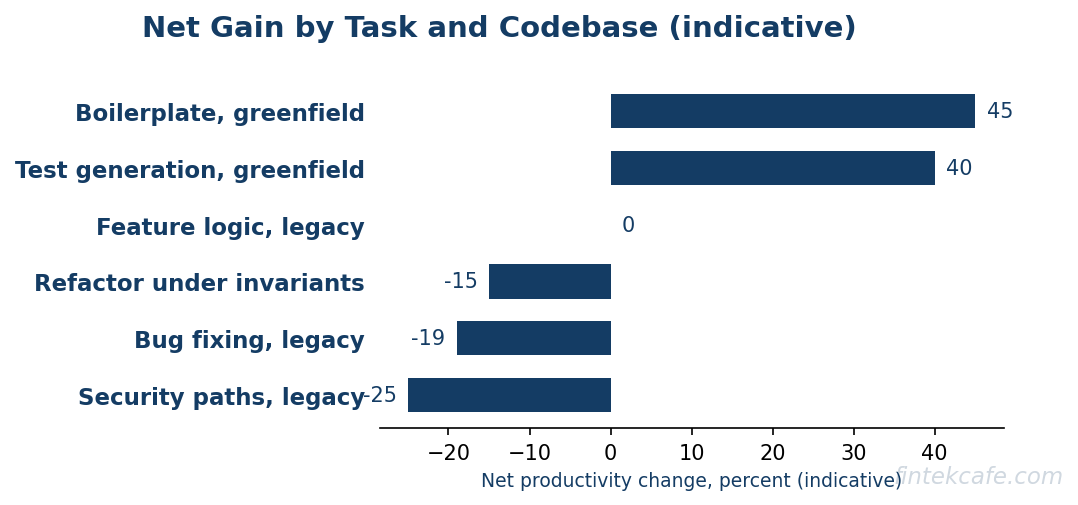
The vendor pitch for AI coding assistants is linear: more assistance produces more developer productivity, and the only question is how fast a team can roll it out. The data through 2026 does not support that line. The evidence shows a curve that bends, not a ramp that keeps climbing, and the bend has a cause. Assistants reliably accelerate the act of writing code, but writing was never the bottleneck for most mature engineering organizations. The bottleneck is review, integration, debugging of machine-authored code, and long-run maintenance, and those costs rise as generated volume rises. Net productivity therefore depends almost entirely on two variables the marketing ignores: the type of task and the age of the codebase. On greenfield work and well-bounded tasks the gain is real and large. On large legacy systems with subtle correctness and security constraints, the same tool can quietly run negative.
This is the productivity wall. It is not a claim that the tools fail. It is a claim that the headline metrics used to justify them, acceptance rate and lines of code generated, measure output volume rather than throughput, and that the gap between the two is where the wall sits. Engineering leaders who plan their 2026 adoption against volume metrics will overstate the return and under-resource the downstream work that decides whether the return ever materializes. Leaders who measure the full value stream, from prompt to merged-and-maintained change, will deploy the same tools and get a genuinely different result.
The Measurement Trap: Output Volume Is Not Throughput
Start with the numbers vendors cite, because they are real and they are misleading at the same time. Controlled studies and large field deployments have reported task-completion speedups in the range of twenty to fifty-five percent on isolated, well-specified coding tasks, with the upper end concentrated in greenfield exercises and unfamiliar-API work. Suggestion-acceptance rates of roughly thirty percent are common in published assistant telemetry. These figures are accurate descriptions of a narrow thing: how fast a developer produces accepted code in a controlled slice of work.
They are not descriptions of how fast an organization ships working, maintainable software. The most cited cautionary result of the period is a 2025 randomized study of experienced open-source developers working in large repositories they knew well, in which participants completed tasks about nineteen percent slower with AI assistance, even though those same developers believed they had been roughly twenty percent faster. The perception gap is the finding that matters. The tool felt productive because typing felt fast, while the real time went into reviewing, correcting, and reconciling suggestions against a codebase the model did not fully understand.
The mechanism behind the trap is straightforward. A line-of-code or acceptance metric counts what the assistant produces. Throughput counts what the organization can review, merge, run safely, and maintain. When generation gets cheap, the constraint moves to the steps that did not get cheaper, and total volume can rise while net delivery stays flat or falls. The table below separates the two kinds of metric.
| Metric | What it measures | Why it misleads | What to use instead |
|---|---|---|---|
| Suggestion acceptance rate | How often a developer takes a completion | Accepted code is not verified code | Change-failure rate on assisted changes |
| Lines of code generated | Raw output volume | Volume is a cost as much as a product | Lead time from request to merged change |
| Self-reported speedup | Perceived effort | Perception overstates gain, per the evidence | Cycle time measured from version control |
| Time to first commit | Speed of starting | Ignores review and rework downstream | Time to a reviewed, deployed, stable change |
The right-hand column is the point. None of the durable metrics live at the moment of typing. They live downstream, which is exactly where the assistant moved the work.
This is a Premium Article
Sign up for a Premium membership to read this article and get full access to strategic intelligence on technology and business.
Already a member? Sign in
Related Articles
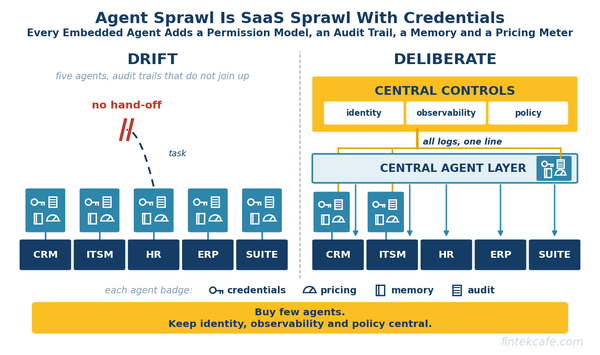
Every Software Vendor Now Sells an Agent, and Most Enterprises Should Buy Very Few of Them
Buying an agent from every system of record recreates SaaS sprawl one layer up. How CIOs should choose, and which controls must stay central.
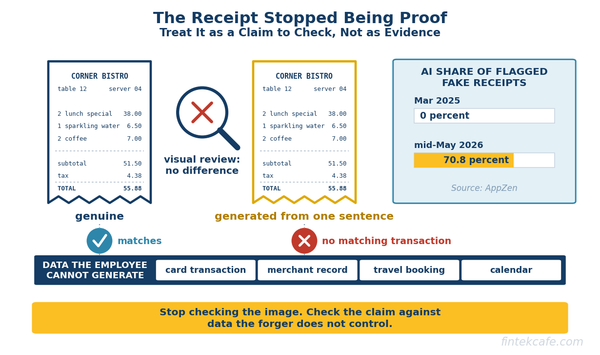
AI-Generated Fake Receipts: How Expense Fraud Changed and How Finance Teams Catch It
AI-generated fake receipts now beat visual review. How expense fraud changed, which detection still works, and the controls to use by company size.
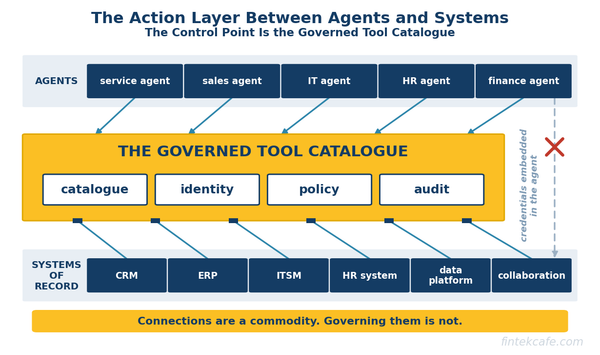
Integration Platforms Are the Quiet Winners of the Agent Era
Agents act through integrations. iPaaS and API vendors hold the connectors, credentials and audit trails, and MCP makes governing that layer worth more.