
The Open-Source Database Squeeze: Why MongoDB, Elastic, and Redis Are All Defending Different Walls in 2026
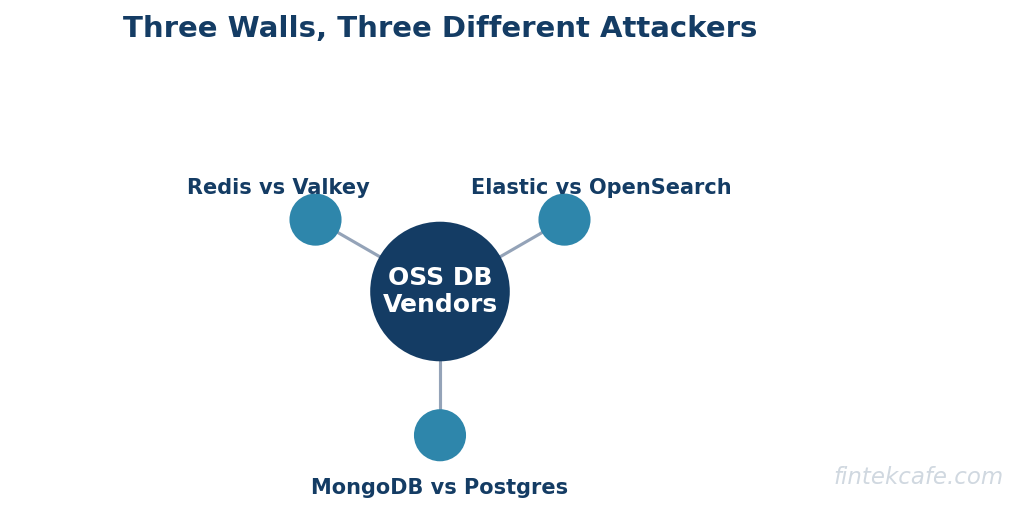
The three companies that defined the modern commercial open-source database playbook are entering the second half of 2026 in materially different positions, and the differences are larger than the market's habit of grouping them together would suggest. MongoDB, Elastic, and Redis each took the same general path during the 2010s. Each built a developer-loved open-source project, monetized it through a managed cloud service, then changed the license to defend against hyperscaler appropriation. The license changes were the visible move. The strategic question that matters in 2026 is what each company has actually built as a moat behind the license, and whether that moat is holding against a different attacker for each.
The contrarian read on this category is straightforward. The three companies are usually discussed as a cohort because they share a business-model lineage. They should be discussed separately because they are facing structurally different threats, and only one of the three has a durable position when the threats land in full force. The frame that explains the difference is that each company's moat depends on a different layer of the stack, and the 2026 attackers are targeting different layers.
MongoDB Faces Postgres With pgvector Eating the Developer Story
MongoDB's original wedge was developer ergonomics. The document model, the flexible schema, the JSON-native interface, and the ease of getting started built a developer base that translated into Atlas, the managed cloud service that now accounts for the substantial majority of MongoDB's revenue. The threat MongoDB has spent most of its history defending against was hyperscaler-bundled NoSQL services, primarily DynamoDB and Cosmos DB.
That is not the threat that matters in 2026. The threat that matters is Postgres, specifically Postgres with the pgvector extension, deployed through managed services like Supabase, Neon, AWS Aurora Postgres, and Google AlloyDB. The Postgres-plus-pgvector stack has eaten the wedge that MongoDB built the company on, which is the ergonomic story for the modern application developer. The 2026 developer who would have reached for MongoDB in 2018 now reaches for managed Postgres because the JSON type has improved, the operational tooling is better, the migration path to relational features is built in rather than retrofitted, and pgvector handles the vector workload that is increasingly part of any new application.
MongoDB's defense is the Atlas bundle. The integrated offering of document storage, vector search, full-text search, time-series, and operational tooling inside a single managed service is genuinely differentiated. The argument MongoDB is making to the 2026 developer is that the bundle reduces the operational surface area of running multiple specialized systems, and that the multi-cloud distribution of Atlas matters in a way that single-hyperscaler Postgres does not. The argument has merit. Atlas is the most distributed managed database service that is not owned by a hyperscaler, which is a real position when the buyer is allergic to single-cloud lock-in.
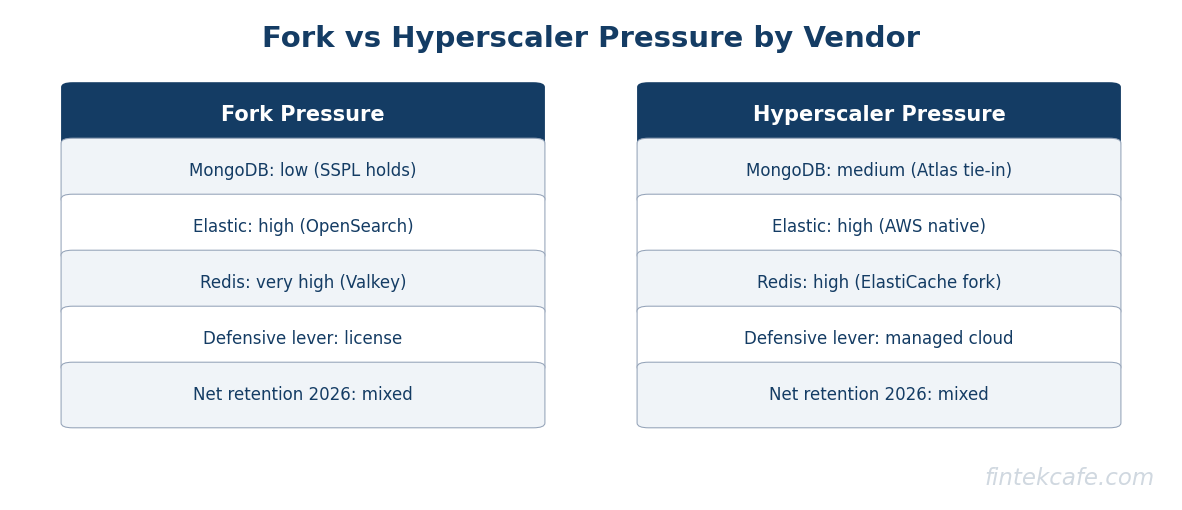
The question is whether the bundle wins enough new workloads to offset the lost wedge. The 2026 evidence is mixed. New greenfield workloads at startups skew toward Postgres-plus-pgvector. New workloads at enterprises that are already on Atlas continue to land on Atlas because the existing footprint creates gravity. The mid-tier, the application that is not greenfield and not embedded in an existing Atlas estate, is the contested ground. MongoDB has to win the contested ground on the bundle story because the wedge story is gone.
This is a Premium Article
Sign up for a Premium membership to read this article and get full access to strategic intelligence on technology and business.
Already a member? Sign in
Related Articles
Integration Platforms Are the Quiet Winners of the Agent Era
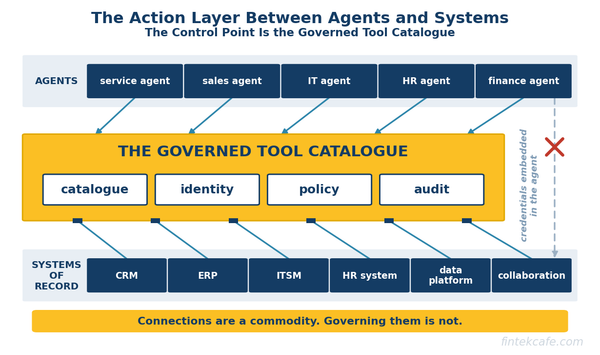
Agents act through integrations. iPaaS and API vendors hold the connectors, credentials and audit trails, and MCP makes governing that layer worth more.
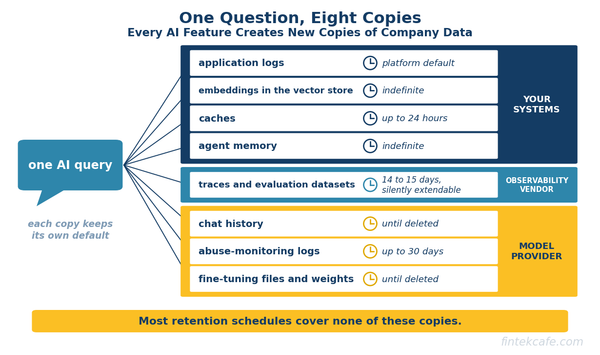
What Happens to Your Data Inside AI Systems: Retention, Deletion and the Copies Nobody Tracks
Every AI feature copies company data into prompts, logs, embeddings and memory. Where each copy lives, what vendors retain, and how to make deletion real.
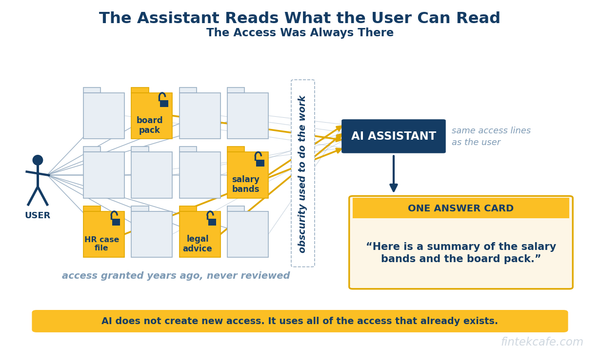
Data Classification: The Step Every Enterprise AI Rollout Skips, and What It Costs Later
Why AI assistants expose overshared data, how data classification fixes it, what to label first, and a 90-day plan for executives.