
Enterprise Search Is Back, and This Time It Decides Which AI Assistant Wins
For two decades, enterprise search was the category that never worked. Companies bought search appliances, intranet portals and federated query tools, and employees went on asking colleagues where the file was. The category produced acquisitions, write-offs and a running joke that the best enterprise search engine was the person who had been at the company longest.
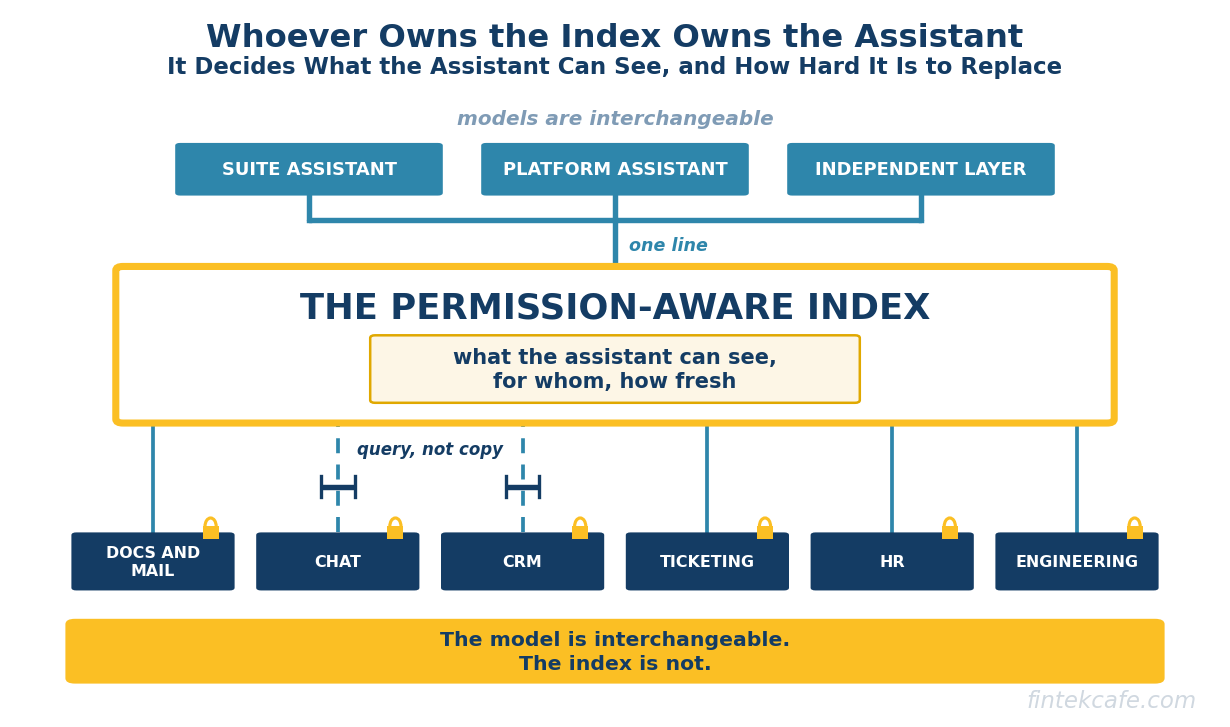
That category is now the most contested ground in workplace AI. The thesis of this piece: an AI assistant or agent is only as good as the permission-aware index of company knowledge behind it, and whoever owns that index owns the assistant. The model is increasingly interchangeable. The index is not. It decides what the assistant can see, whose permissions it respects, how fresh its answers are, and how hard it is to replace.
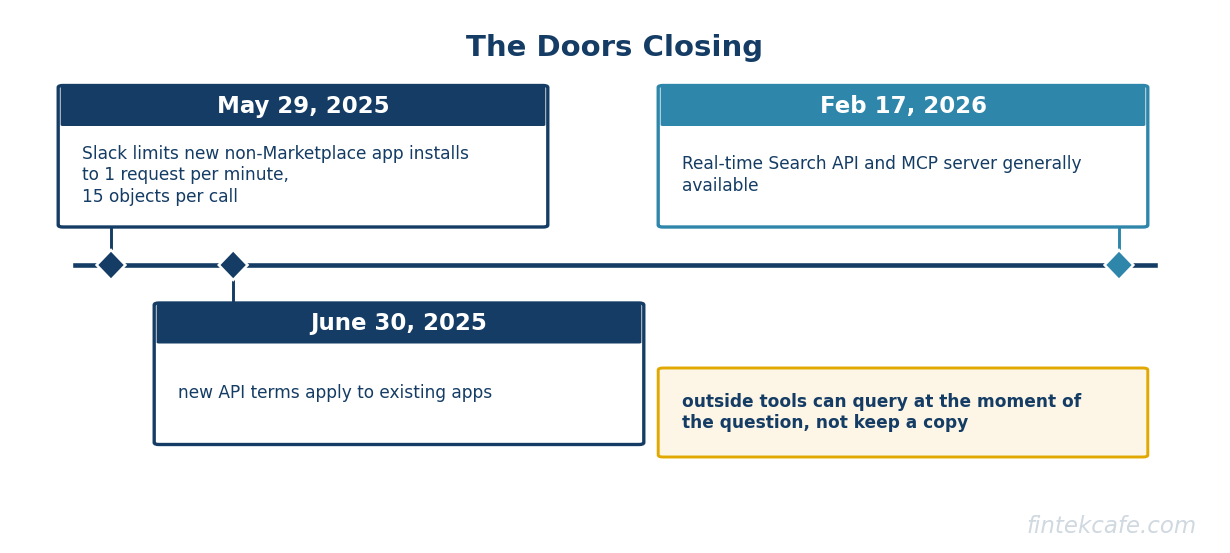
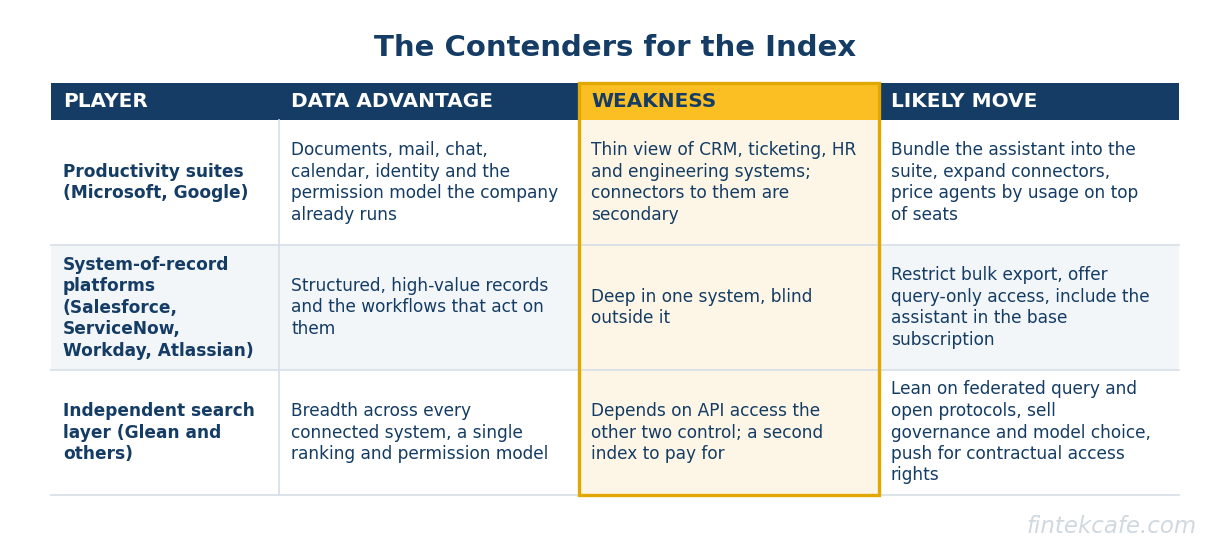
Three groups are fighting for it. The productivity suites (Microsoft, Google, and to a degree Atlassian) want the index to live inside the suite every employee already opens. The large SaaS platforms, led by Salesforce, want their own systems of record to be the place where AI reads their data, and have started restricting outside access to make that true. Independent search layers, led by Glean, argue that only a neutral index can span every system a company runs.
The buyer's decision is not "which chatbot do employees prefer". It is who holds the map of the company's knowledge, on what terms, and how portable it is. That decision is being made right now, often by default, inside renewals that look like ordinary licence add-ons.
Why Search Failed for Twenty Years, and Why the Index Now Matters
Enterprise search failed for reasons that had little to do with ranking algorithms. Web search works because the web is public, heavily linked and full of signals about what matters. Company knowledge is the opposite. It is private, fragmented across dozens of systems, poorly linked, and governed by permissions that differ for every document and every person. A search box that returned a result the user was not allowed to open was a security incident. A search box that returned nothing useful was ignored. Most products managed both.
Generative AI changes the stakes rather than the problem. When an assistant answers a question, it first retrieves the passages it will reason over, a pattern known as retrieval-augmented generation. The quality of the answer is capped by the quality of that retrieval. A model that is given the wrong document, an outdated policy, or a file the user should never have seen will produce a fluent, confident and wrong answer. The retrieval layer, which is enterprise search under a new name, has become the part of the AI stack that determines whether the output can be trusted.
Agents raise the stakes again. An assistant that only answers questions can embarrass a company. An agent that drafts the customer reply, files the ticket, updates the account record or approves the request acts on what it retrieved. The index is now upstream of actions, not just answers.
This is why the market has repriced. Glean, the largest independent player, announced on May 28, 2026 that it had passed 300 million dollars in annual recurring revenue, 15 months after reaching 100 million, and said its Fortune 500 customer count had nearly doubled year over year (Glean press release, May 2026). Its June 2025 Series F valued it at 7.2 billion dollars (TechCrunch, June 10, 2025). A category that was a punchline five years ago now carries one of the more closely watched growth curves in enterprise software.
The suites and platforms have noticed. The question for an executive is no longer whether a company needs enterprise search. It is that every AI assistant the company buys contains one, each vendor wants its index to be the one that matters, and the vendors holding the data have begun to use that position. The rest of this piece examines how the fight is being waged, why permissions are the hard problem, what it costs, and how to decide.
This is a Premium Article
Sign up for a Premium membership to read this article and get full access to strategic intelligence on technology and business.
Already a member? Sign in
Related Articles
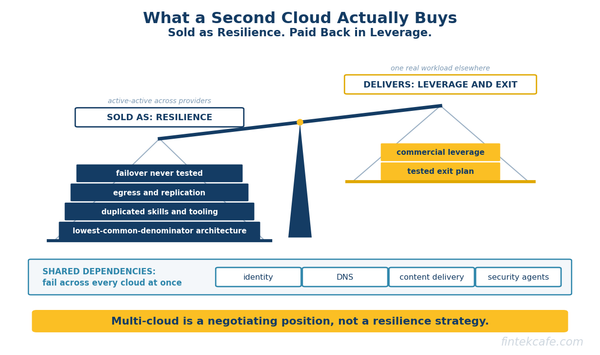
Multi-Cloud Is a Negotiating Position, Not a Resilience Strategy
Running one workload across two clouds rarely pays for itself. A second cloud's real value is leverage and exit evidence. Which workloads need what.
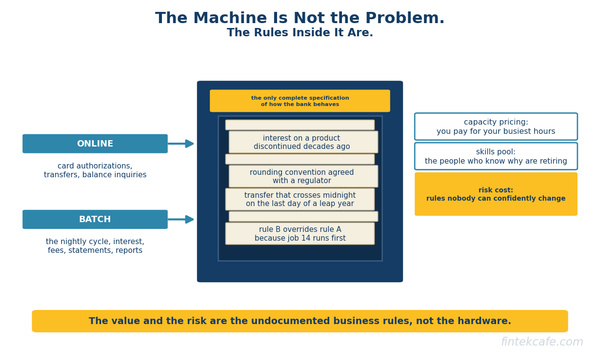
Why Banks Still Run Mainframes, and What Replacing One Actually Costs
Why banks still run mainframes, the real cost of COBOL estates, and which modernization paths work: rehost, refactor, strangler or full core replacement.
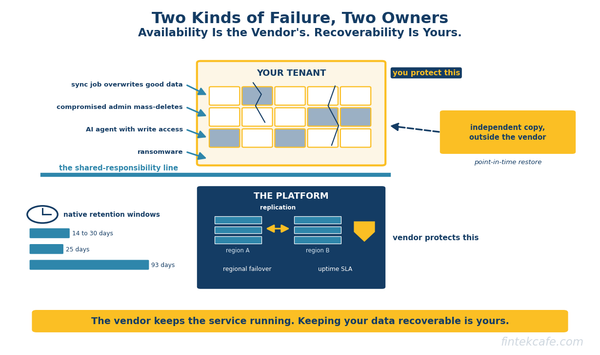
Your SaaS Vendor Is Not Protecting Your Data the Way You Think
SaaS vendors keep the service up. Keeping your records recoverable is usually your job. The shared-responsibility gap, and how boards should close it.