
Why Your Digital Transformation Is Actually a People Problem
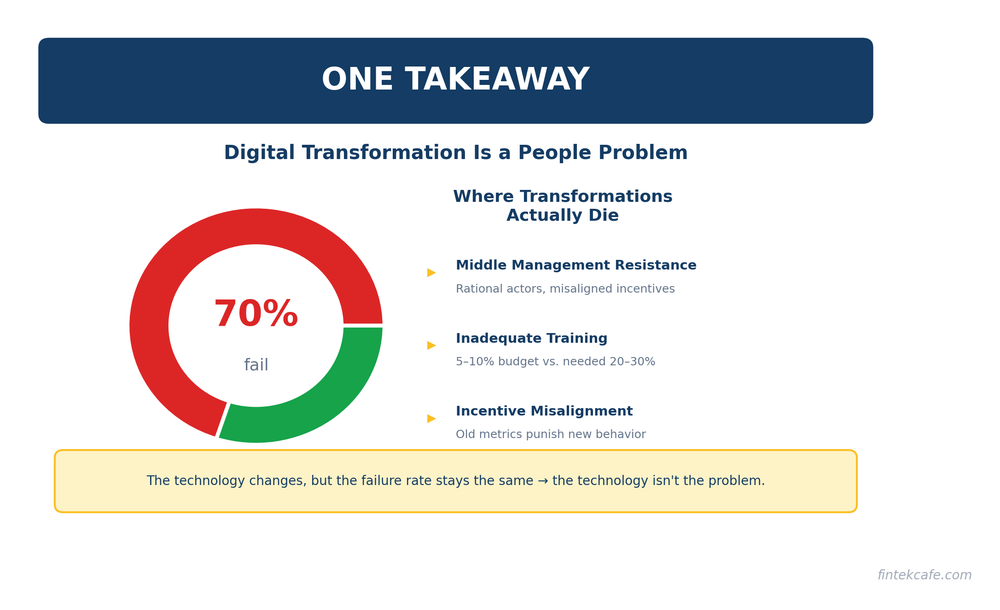
Here's a statistic that should make every CEO uncomfortable: 70% of digital transformations fail. That number has been consistent for a decade, through multiple waves of technology, across every industry, at every company size. It doesn't matter whether you're transforming with cloud, AI, blockchain, or whatever the next thing is. The failure rate stays the same.
That consistency should tell you something. If the technology changes but the failure rate doesn't, the technology isn't the problem.
Years of industry research on transformation programs reveal exactly where they die. They don't die in the server room. They don't die in the architecture review. They don't die because someone picked the wrong vendor or the wrong cloud provider.
They die in the conference room where a middle manager quietly decides not to adopt the new system. They die in the training session that gets scheduled, rescheduled, and eventually cancelled. They die in the incentive structure that rewards the old way of working and punishes the new one.
Digital transformation is a people problem wearing a technology costume. And until leadership teams accept that, the 70% failure rate isn't going anywhere.
The Technology Is the Easy Part
Let me say something that will annoy every vendor and systems integrator: the technology works. It's been working for years.
Cloud migration? The tools are mature, the patterns are well-documented, and there are thousands of companies that have done it successfully. It's not a research problem.
Data platform modernization? Same story. The technology choices are proven. Snowflake, Databricks, BigQuery - pick one, they all work. The architecture patterns are well-understood.
Process automation? RPA tools, workflow engines, low-code platforms - the technology is there. It's not perfect, but it's more than good enough.
AI and machine learning? Even this, the current frontier, has mature tooling, well-understood patterns, and thousands of successful deployments.
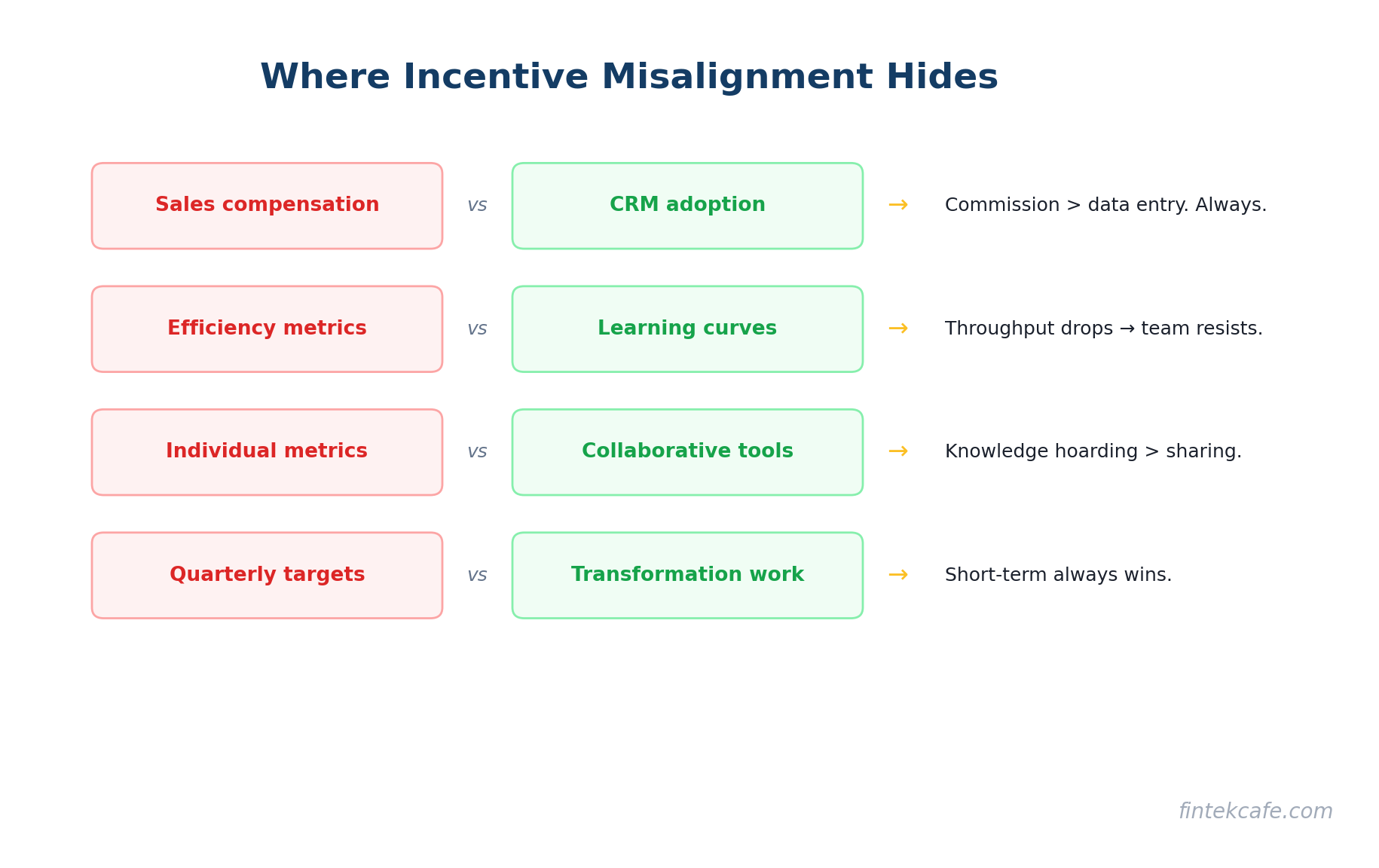
The technology isn't the bottleneck. Brilliant technology deployments fail when nobody uses them. And mediocre technology succeeds spectacularly when the organization rallies around it.
The difference isn't the technology. It's the people.
The Middle Management Resistance Layer
If there's a single point of failure in digital transformation, it's middle management. Not because middle managers are bad people - because they're rational actors responding to rational incentives.
Why Middle Managers Resist
Consider the position of a typical middle manager when a transformation is announced:
Their expertise becomes less valuable. They've spent ten years mastering the current systems and processes. That mastery is their career capital. A new system resets the playing field, and suddenly the person who just joined six months ago is on equal footing.
Their role might not exist. Many transformations explicitly aim to "flatten the organization" or "reduce manual oversight." Middle managers can read between the lines. The new system automates reporting that they currently produce manually. The new process eliminates approval chains that they currently sit in. Their job might not survive the transformation.
They bear the risk but not the reward. If the transformation succeeds, the CIO gets the credit and the promotion. If it fails in their department, the middle manager takes the blame. The rational move is to not be the first adopter - let someone else take the risk.
Nobody asked them. The transformation was designed by consultants and approved by the C-suite. The people who actually run the day-to-day operations weren't in the room. Of course they resist - they're being told to change everything about how they work by people who don't understand how they work.
How Resistance Manifests
Middle management resistance is rarely overt. Nobody stands up in a meeting and says "I refuse to participate in the transformation." Instead, it looks like:
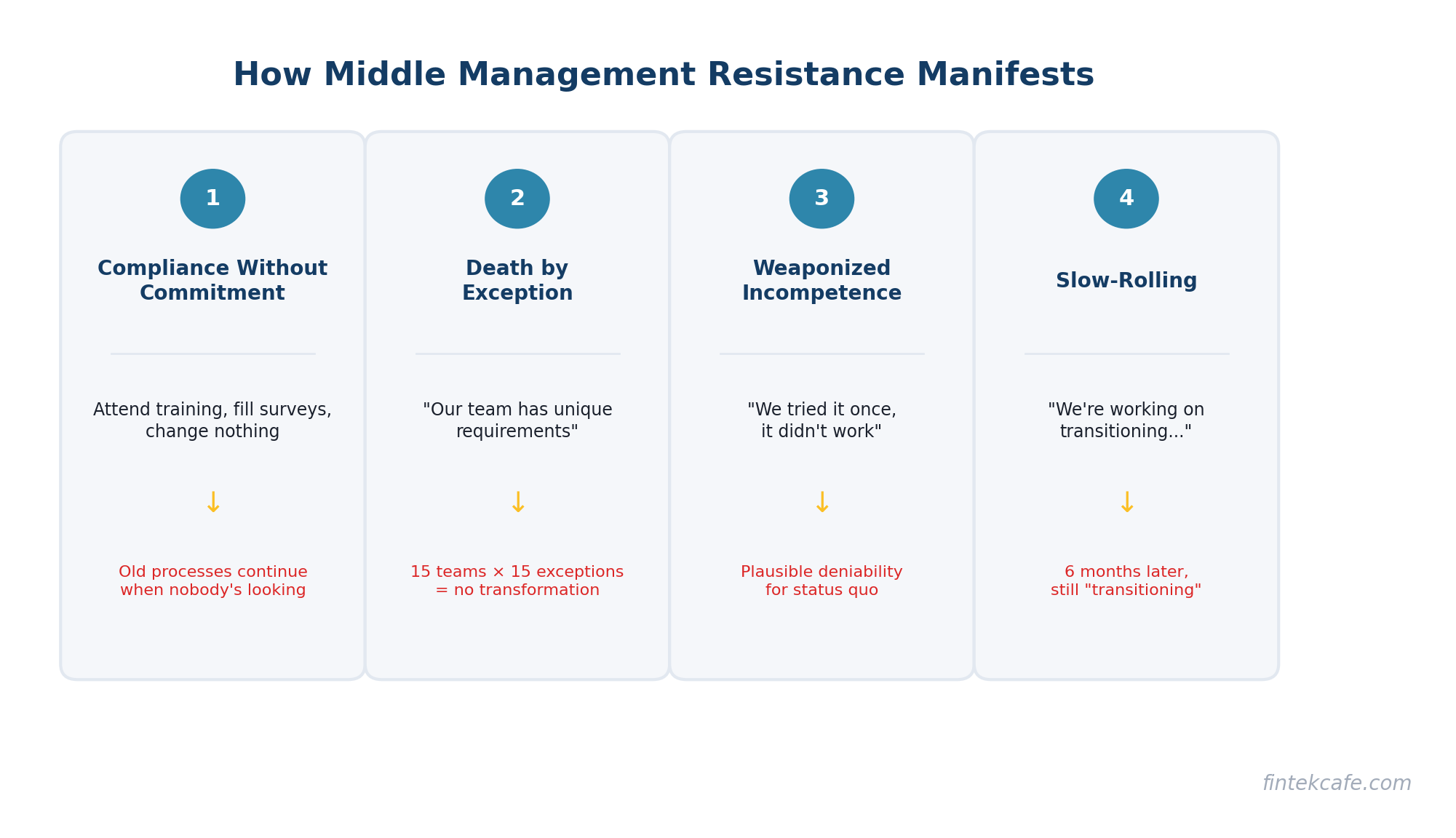
Compliance without commitment. They attend the training sessions. They fill out the surveys. They show up to the meetings. But they don't actually change how their team works. When nobody's looking, the old processes continue.
Death by exception. "The new system works for most cases, but our team has unique requirements." Every middle manager discovers that their team is the exception. Before long, you have 15 teams with 15 exceptions, and the "transformation" is just the old system with a new login page.
Weaponized incompetence. "We tried the new system and it didn't work for us." In practice, they tried it once, didn't invest in learning it, hit the first obstacle, and declared failure. This gives them plausible deniability while maintaining the status quo.
Slow-rolling. "We're working on transitioning to the new system." Six months later, they're still "transitioning." There's always a reason: quarter-end, a big client deliverable, headcount constraints. The transition never quite completes.
How to Actually Address It
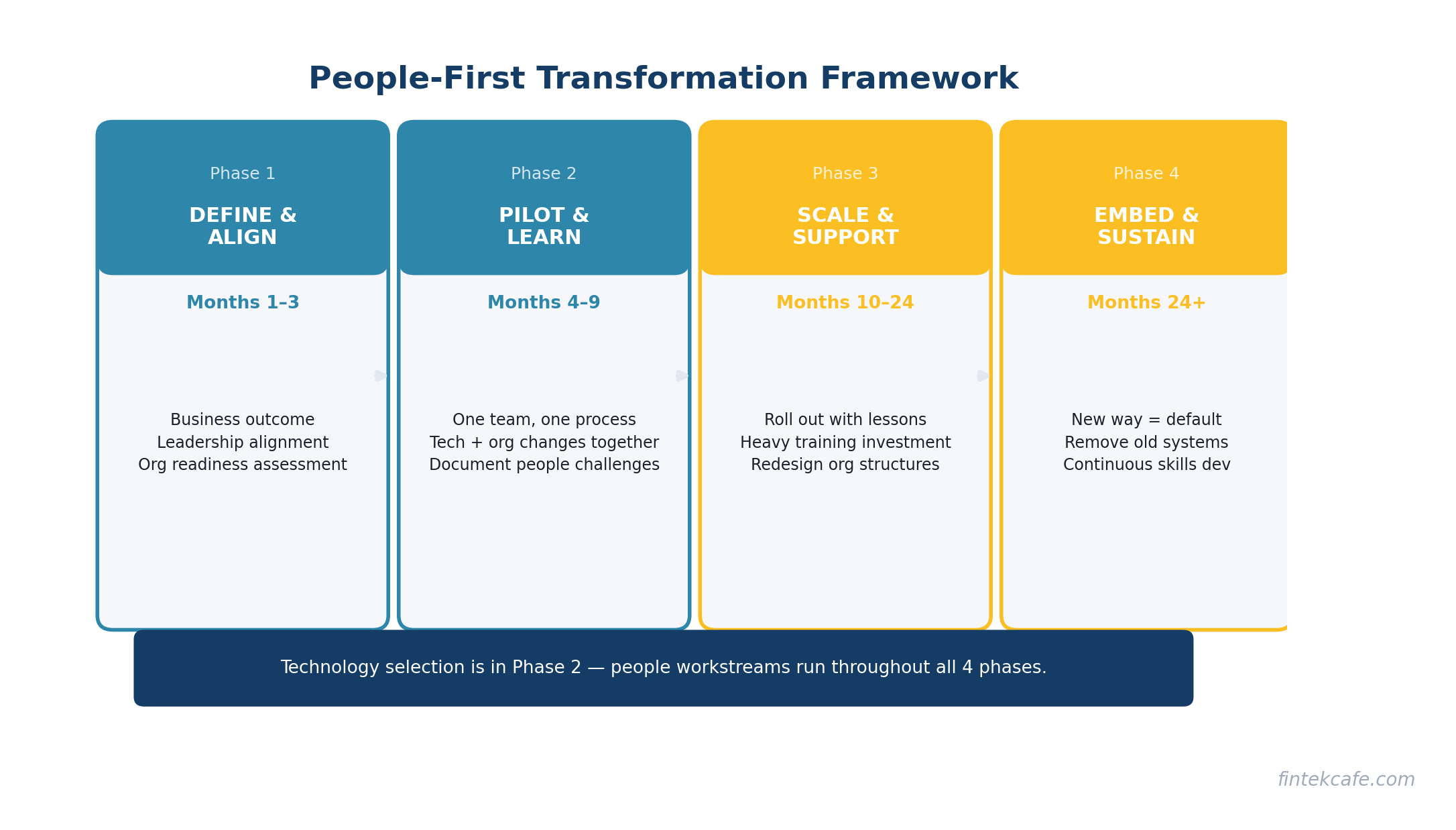
You can't eliminate middle management resistance, but you can reduce it dramatically:
Involve them in the design. Not as an afterthought - as a core part of the process. The people who run the current systems understand the edge cases, the workarounds, and the real requirements better than any consultant. Their input will make the transformation better, and their involvement will make them invested in the outcome.
Make their role in the new world clear. The fastest way to turn a middle manager into a saboteur is to leave them uncertain about their future. Be explicit: here's what your role looks like after the transformation. If the role changes, describe the new role. If the role goes away, be honest about it early enough for them to plan.
Align incentives. If middle managers are evaluated on operational metrics that the transformation will temporarily disrupt, they will resist. Change the metrics. Make adoption and transition progress part of their performance evaluation. Reward the behavior you want.
Create peer pressure. Find the middle manager who's most enthusiastic about the transformation and give them resources, visibility, and support to succeed spectacularly. Their success creates pressure on their peers to follow.
This is a Premium Article
Sign up for a Premium membership to read this article and get full access to strategic intelligence on technology and business.
Already a member? Sign in
Related Articles
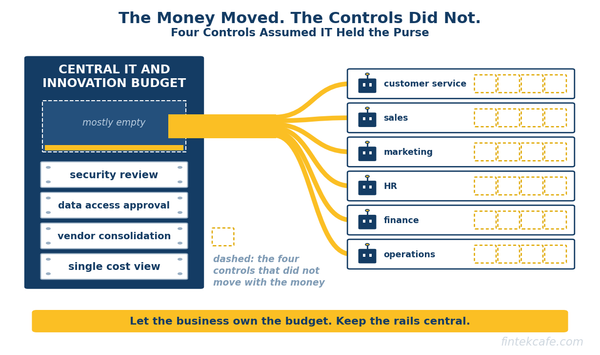
The AI Budget Is Moving From IT to the Business Lines, and Governance Has Not Followed
AI spend is moving from central IT to business lines. That ties cost to outcomes but breaks controls built for an IT-held purse. The model that works.
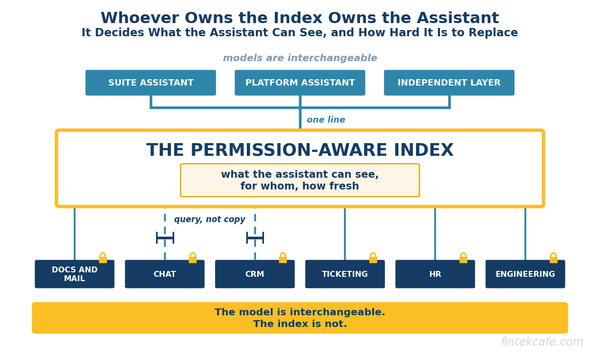
Enterprise Search Is Back, and This Time It Decides Which AI Assistant Wins
Enterprise search failed for twenty years. Now the permission-aware index behind every AI assistant is the control point, and its owner wins.
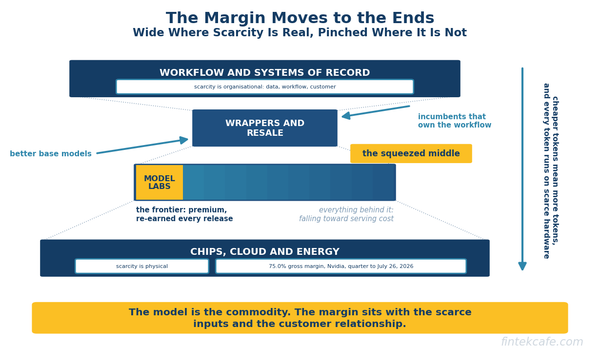
When Models Commoditize, Where Does the Margin Go?
The model layer is commoditizing faster than any software layer before it. The margin is moving to scarce inputs and to whoever owns the workflow.