
The Data Platforms Want to Run Your Agents, and That Is a Lock-In Decision Disguised as Convenience
Every large data platform now sells the same idea: your agents should live where your governed data already lives. Snowflake, Databricks, Google Cloud, Microsoft and AWS have each shipped an agent builder, an agent runtime and a semantic layer since mid-2025. The pitch is simple and partly true. The data is already there, the permissions are already there, and an agent that runs next to the data inherits both.
The money behind the pitch is large. Databricks reported a 7 billion dollar revenue run-rate in August 2026, growing more than 80 percent a year, and raised 5 billion dollars at a 190 billion dollar valuation, with the proceeds directed at Lakebase, its database for agents, and its agent tooling. Snowflake reported 1.49 billion dollars of product revenue for the quarter announced on September 2, 2026, up 37 percent, and said its agent product for knowledge workers had reached 5,800 accounts. Agents are how these companies plan to grow into the next decade, because every agent question becomes a query, and every query is billed.
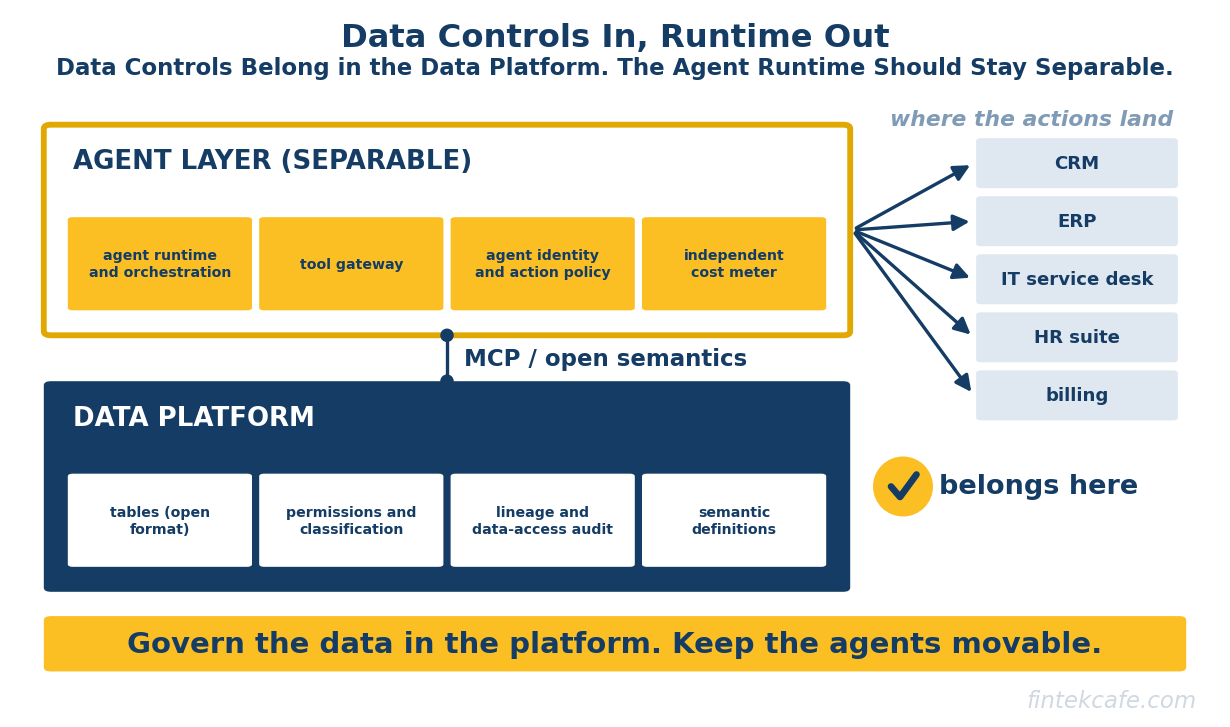
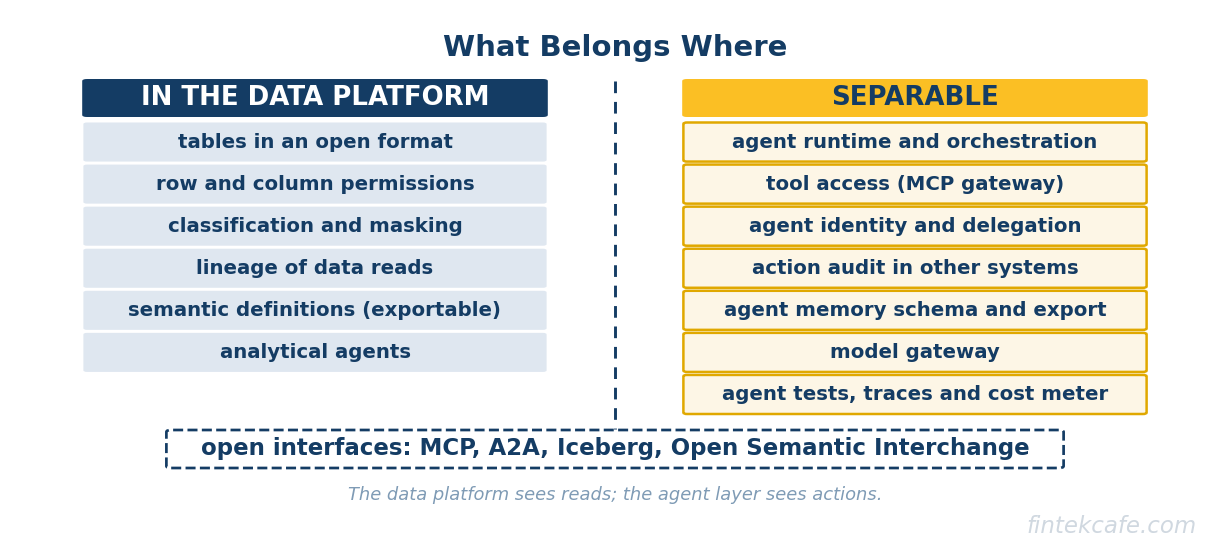
The thesis of this piece: the data platforms are half right. Data controls belong in the data platform: permissions, lineage and semantic definitions. The agent runtime, tool access and orchestration should stay separable, because agents act across every system in the company, not only the analytics estate. A runtime welded to one data vendor repeats the warehouse lock-in of the last decade, at a higher price and one layer closer to the work.
What the Data Platforms Have Announced
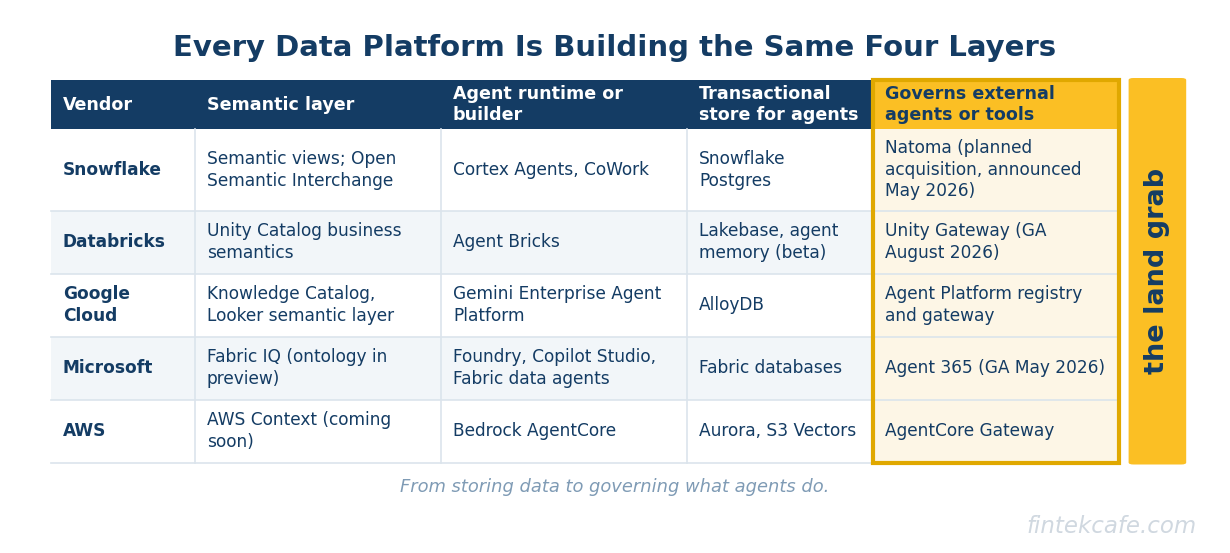
The announcements are now dense enough that the strategy is visible. Each vendor is building the same four layers: a semantic layer that tells agents what the data means, a runtime that hosts agents, a database for agent state, and a gateway that governs what agents can reach.
Snowflake made Cortex Agents, Snowflake Intelligence and a Snowflake-managed Model Context Protocol (MCP) server generally available on November 4, 2025. It bought Crunchy Data in June 2025 and made Snowflake Postgres generally available on February 24, 2026, which gives agents a transactional database inside the platform. At its June 2, 2026 Summit it renamed Snowflake Intelligence to Snowflake CoWork, a personal agent for knowledge workers. On May 27, 2026 it announced its intent to acquire Natoma, which sells a gateway that controls how agents connect to applications, databases and APIs across SaaS, cloud and on-premises systems. Snowflake's announcement said the deal would help enterprises manage "not just their data, but also the actions AI agents take across business workflows." Chief executive Sridhar Ramaswamy put it more directly: "Agents don't just need access to data. They need the right context, permissions and policy guardrails to operate safely inside the enterprise."
Databricks bought Neon, a serverless Postgres company, in May 2025 and made the resulting Lakebase generally available on AWS on February 3, 2026. Its Unity Catalog business semantics, the metric definitions agents query, became generally available on April 2, 2026. At its Data + AI Summit on June 16, 2026, it expanded Agent Bricks into a full agent platform that runs agents written in LangGraph, CrewAI, the Claude Agent SDK and the OpenAI Agents SDK, launched an agent memory service on Lakebase in beta, and announced Unity AI Gateway, which became generally available on August 4, 2026 under the name Unity Gateway. The gateway catalogues and governs models, agents and MCP servers, including those running outside Databricks. Lakebase alone passed a 100 million dollar run-rate by August 2026.
Google Cloud used Next '26 in April 2026 to turn Vertex AI into the Gemini Enterprise Agent Platform and to launch what it calls the Agentic Data Cloud: a Knowledge Catalog it describes as "a universal context engine," and zero-copy federation into Salesforce Data 360, SAP, ServiceNow, Workday and Palantir. The BigQuery Data Engineering Agent reached general availability on April 22, 2026.
Microsoft introduced Fabric IQ, a semantic and ontology layer over OneLake, at Ignite in November 2025. At Build on June 2, 2026, Fabric IQ and Fabric data agents became generally available, while the ontology component stayed in preview. Microsoft Agent 365, its control plane for agents, became generally available on May 1, 2026 at 15 dollars per user per month, with registry sync for agents on AWS Bedrock and Google Cloud in public preview.
AWS made Amazon Bedrock AgentCore, its managed agent runtime, generally available in October 2025, and at its New York Summit on June 17, 2026 added a generally available AgentCore Harness and announced "AWS Context," a knowledge graph of business rules for agents, as coming soon.
| Vendor | Semantic layer | Agent runtime or builder | Transactional store for agents | Governs external agents or tools |
|---|---|---|---|---|
| Snowflake | Semantic views; Open Semantic Interchange | Cortex Agents, CoWork | Snowflake Postgres | Natoma (planned acquisition, announced May 2026) |
| Databricks | Unity Catalog business semantics | Agent Bricks | Lakebase, agent memory (beta) | Unity Gateway (GA August 2026) |
| Google Cloud | Knowledge Catalog, Looker semantic layer | Gemini Enterprise Agent Platform | AlloyDB | Agent Platform registry and gateway |
| Microsoft | Fabric IQ (ontology in preview) | Foundry, Copilot Studio, Fabric data agents | Fabric databases | Agent 365 (GA May 2026) |
| AWS | AWS Context (coming soon) | Bedrock AgentCore | Aurora, S3 Vectors | AgentCore Gateway |
Read the last column carefully. Two years ago the data platforms competed to store and query data. In 2026 three of them are moving into governing what agents do outside the data platform. That is the land grab.
This is a Premium Article
Sign up for a Premium membership to read this article and get full access to strategic intelligence on technology and business.
Already a member? Sign in
Related Articles
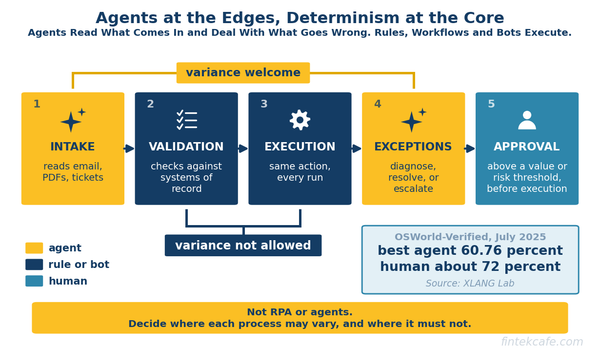
RPA vs AI Agents: Which Automation Fits Which Process, and When to Use Both
RPA vs AI agents for enterprise automation: where bots still win, where agents earn their cost, the hybrid pattern, and how to triage a bot portfolio.
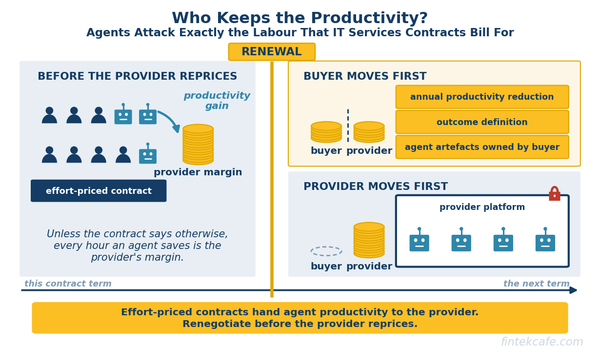
Agents Are Coming for the IT Services Contract, and Buyers Should Renegotiate First
Agents attack the labour IT services and BPO contracts bill for. Why buyers hold the leverage at renewal, and the terms to demand before providers reprice.
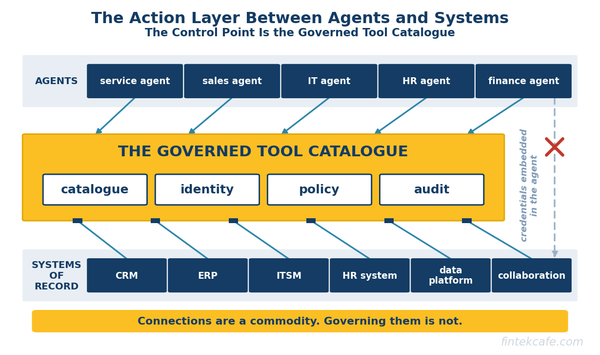
Integration Platforms Are the Quiet Winners of the Agent Era
Agents act through integrations. iPaaS and API vendors hold the connectors, credentials and audit trails, and MCP makes governing that layer worth more.