
The Monthly Close Is Becoming Continuous, and the Finance Calendar Will Not Survive It
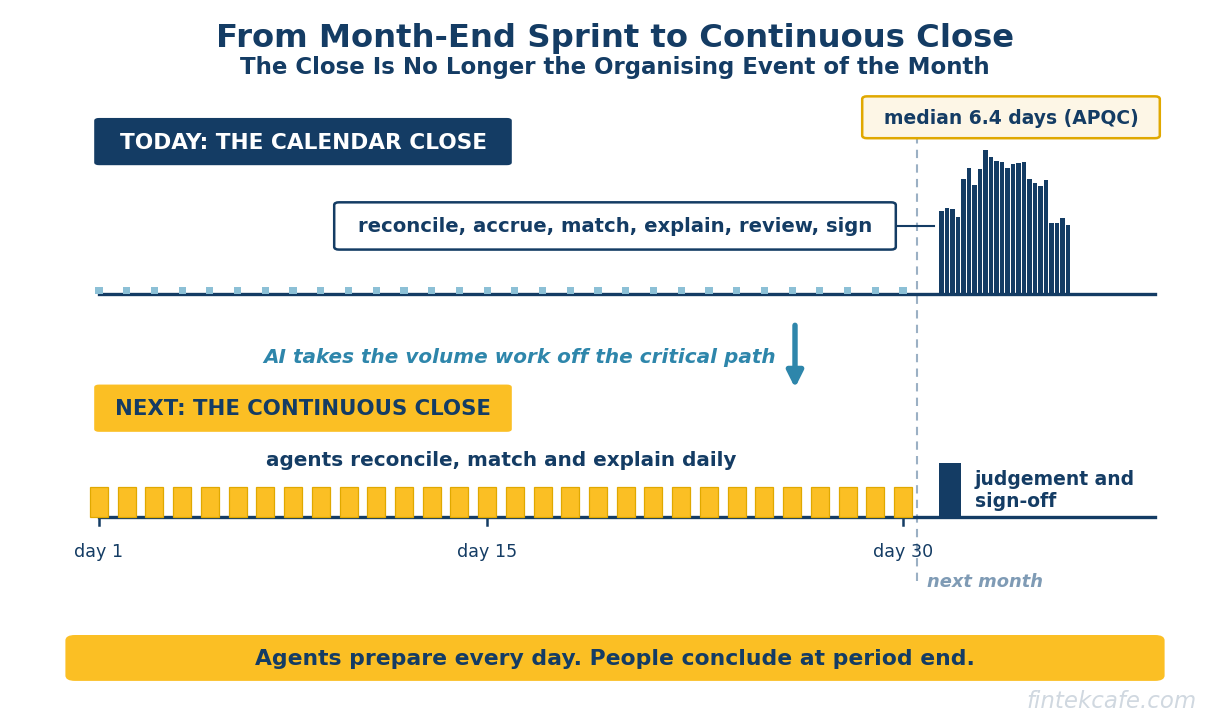
Every finance function runs on a calendar, and the calendar is built around one event: the month-end close. For the first week or two of each month, the team stops most other work to reconcile accounts, book accruals, chase intercompany differences, explain variances and get the numbers signed. The rest of the month is spent recovering from the last close and preparing for the next one.
That calendar was never a law of accounting. It exists because the underlying work was too slow and too manual to do any other way. Reconciliation meant matching thousands of lines by hand. Accruals meant collecting estimates from people who had better things to do. Variance commentary meant an analyst staring at a spreadsheet until the story emerged. Batch it all into one sprint at period end, and the work at least got done.
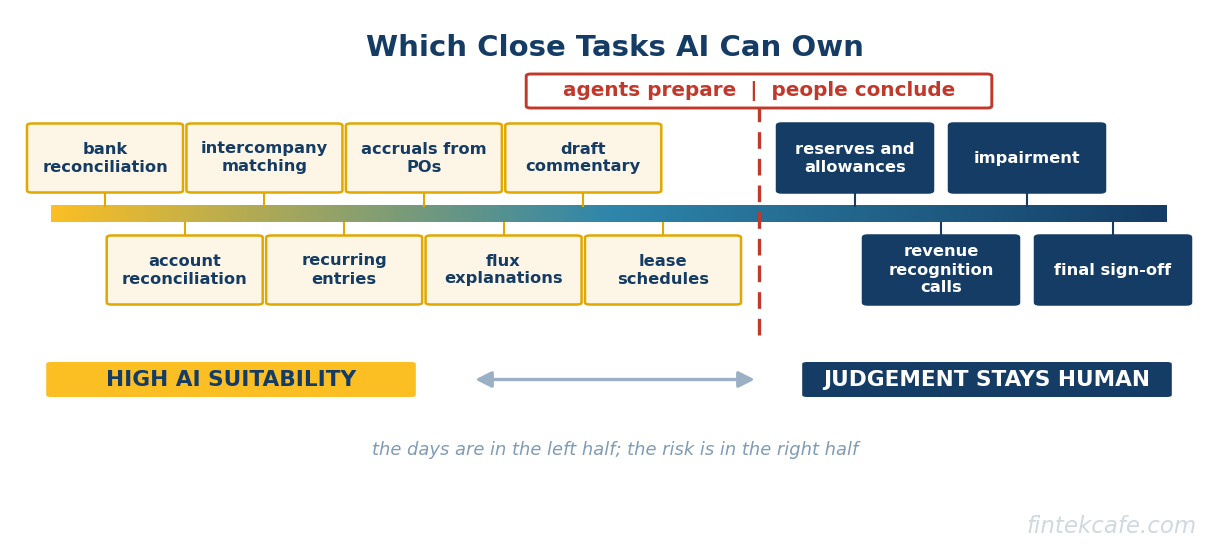
The thesis: AI and agents are removing exactly that bottleneck work, and when they do, the close stops being an event and becomes a continuous process with a short sign-off at period end. Matching, reconciliation, recurring entries, first-pass variance explanation and draft commentary can run every day rather than once a month. What remains at period end is the part that was always the real job: judgement on estimates, review and sign-off. That shift changes what the finance team does, how auditors gather evidence and what the board can see between quarters. It also creates a new risk, because a faster close is not the same as a better one.
Why the Calendar Exists, and How Long It Still Takes
The best-known benchmark for close duration comes from APQC, the benchmarking organisation. Its data, published in 2018 from a sample of 2,300 organisations, measured the time from running the trial balance to completing the consolidated statements: the top quarter of organisations closed the month in 4.8 calendar days or less, the median took 6.4 days, and the bottom quarter needed 10 days or more. Those figures are dated, and the fact that they are still the most widely quoted benchmark says something about how little attention the industry paid to measuring progress.
Ventana Research, now part of ISG, tracked the trend more recently. Its analyst Robert Kugel reported in October 2019 that 61 percent of companies closed their monthly books within six business days, up from 53 percent in 2015. The more telling finding was the split by automation: 88 percent of companies with substantial automation closed within six days, against 40 percent of those with little or none. Automation has always been the main determinant of close speed. AI extends what can be automated.
Speed has also never guaranteed accuracy. A 2017 survey of 259 accounting professionals by FloQast and Dimensional Research found that 75 percent had to reopen the books after close to fix errors. A 2022 survey of 204 professionals by FloQast with the University of Georgia found 85 percent had reopened the books at least once in the year. Kugel has warned of the same pattern: some teams report a fast close and then post material corrections afterwards.
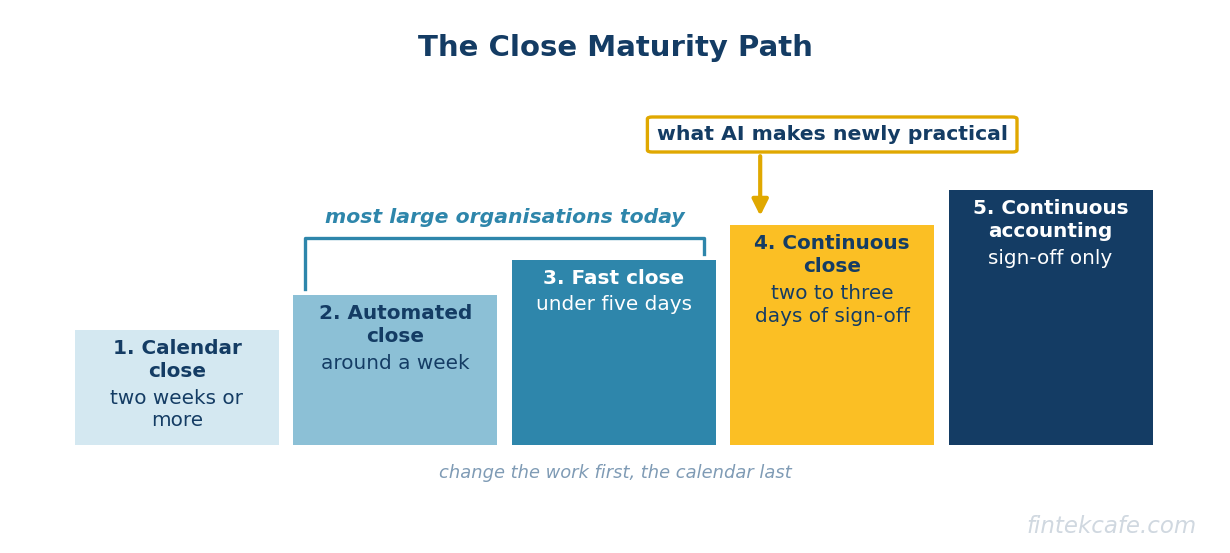
Continuous accounting is the idea that finance work should be spread across the period rather than compressed into the days after it. The term was popularised from the mid-2010s by Kugel at Ventana Research and by the close-software vendor BlackLine. For a decade it remained more aspiration than practice, because the tools could automate the rules-based matching but not the messy middle: the exceptions, the explanations, the documents that did not fit a template.
That middle is now within reach. Gartner predicted in February 2026 that finance organisations using cloud ERP applications with embedded AI assistants will see a 30 percent faster financial close by 2028. The software vendors are shipping the agents to do it. The question for a CFO is no longer whether the close will compress, but what the function looks like once the close is no longer the organising event of its month.
This is a Premium Article
Sign up for a Premium membership to read this article and get full access to strategic intelligence on technology and business.
Already a member? Sign in
Related Articles
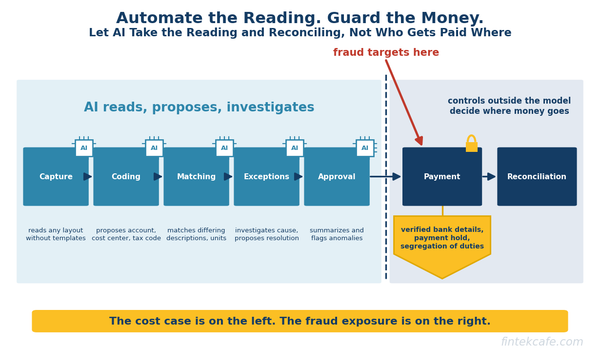
Accounts Payable Automation: What AI Can Actually Take Over in Invoice-to-Pay
What AI can take over in accounts payable, step by step from capture to payment, where the fraud risk grows, and which controls must stay outside the model.
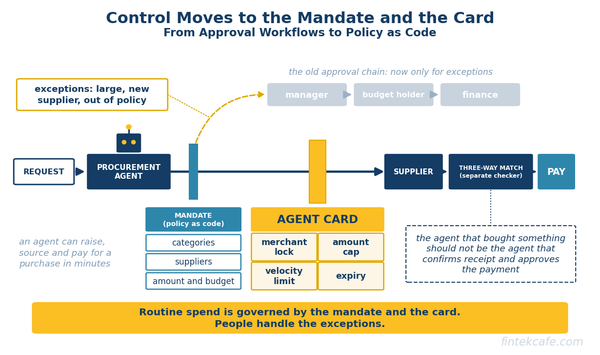
Procurement Is Where Agents Will Spend the Company's Money First
The first agents trusted with company money will buy for the enterprise. Control moves from approval chains to policy as code and card-level limits.
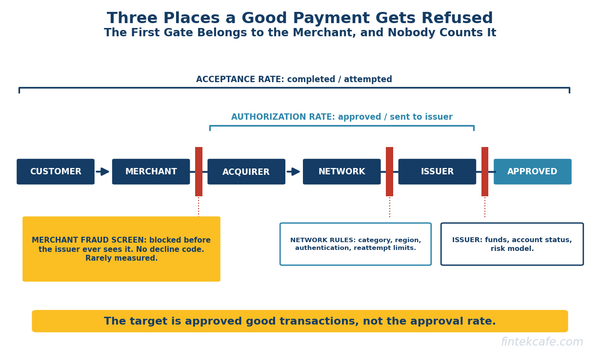
Why Card Payments Get Declined, and How Merchants Raise Their Approval Rate
Why card payments get declined, soft vs hard declines, and the levers that raise authorization rates without letting fraud and chargebacks rise with them.